

Meitong Technology: Dual-Product Strategy Driving the Future of Handheld and Home Ultrasound
In 1816, French physician René Laennec invented the stethoscope, which subsequently became a standard clinical tool for physicians. Today, handheld ultrasound devices are poised to become the new generation “stethoscope” for clinicians, owing to their efficiency, portability, and cost-effectiveness.
Handheld Ultrasound, also known as portable ultrasound, is a smartphone-sized ultrasound device capable of performing examinations that traditionally require large hospital-based B-mode ultrasound systems.
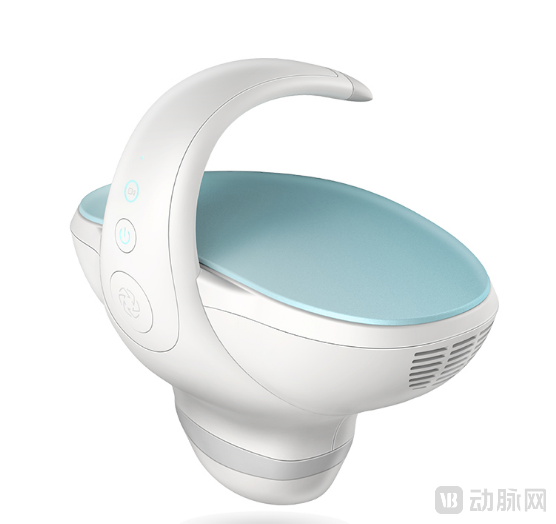
(Maitong Technology Portable Ultrasound Device)
According to data from Probe Capital and Signify Research, the global market size for ultrasound imaging equipment was $7.5 billion in 2015 and is projected to reach $10.5 billion in 2021, representing a compound annual growth rate (CAGR) of 7%. Notably, the handheld ultrasound segment experienced a 40% growth in market size from 2016 to 2017. Driven by improvements in performance and usability, the handheld ultrasound market is expected to grow at an annual rate of 20% from 2017 to 2022.
Industry experts stated, “The latest handheld ultrasound devices have seen significant improvements in performance, gaining widespread recognition for point-of-care diagnosis and achieving a certain level of adoption in departments such as radiology, urology, cardiology, and women’s health.”
Meitong Technology is an innovative enterprise dedicated to the research and development of portable ultrasound imaging technology and ultrasonic medical devices. According to reports, the company operates two main business lines: handheld ultrasound systems for primary healthcare institutions, and home-use ultrasound devices for consumers. Currently, Meitong Technology’s globally first wireless smart handheld 4D ultrasound system has received approval from the National Medical Products Administration (NMPA) for market launch. This product can be used in settings such as primary hospitals, labor and delivery rooms, and field emergency care. Meanwhile, Meitong Technology’s self-developed home-use ultrasound products, including fat thickness meters, are already being sold through e-commerce platforms such as Tmall and JD.com.
So, why did Meitong Technology choose the grassroots medical and home ultrasound markets? What advantages do its products have compared to existing ones on the market? Which clinical and user pain points does it address? To answer these questions, VCBeat conducted an exclusive interview with Tu Youchong, CEO of Meitong Technology.
VCBeat: I heard that you previously worked at Safran Group, a Fortune 500 company. Why did you choose to leave and start your own business?
Tu Youchong: There were multiple reasons for starting my own business. First, I had been working at Safran Group for over ten years, during which time I honed my professional capabilities. At the age of 35, I aspired to pursue more meaningful endeavors, which led me to consider entrepreneurship. At that time, I recognized the Chinese market as vast and full of potential. Moreover, seeing many of my clients and distributor friends successfully launch their own ventures provided additional inspiration.
Second, we observed that overseas markets were already witnessing a trend toward the home use, portability, and miniaturization of ultrasound devices, with the vast U.S. market having validated their feasibility. In contrast, the Chinese market remained an untapped blue ocean. Furthermore, both home-use and portable ultrasound devices offer significant application value for household users and clinicians alike. Therefore, we aimed to make our mark in the ultrasound sector by promoting the development of China’s portable ultrasound industry, enabling Chinese doctors and patients to access domestically produced portable ultrasound devices.
VCBeat: How is Meitong Technology's current product line structured?
Tu Youchong: Meitong Technology primarily targets the primary healthcare market and the home-use ultrasound market. For the primary healthcare institution market, we have developed, launched, or strategically positioned products such as wireless smart handheld 4D ultrasound devices, handheld cardiac ultrasound devices, and 3D ultrasound navigation systems for left arm vasculature. For the home-use ultrasound market, we have developed, launched, or strategically positioned products including fat thickness meters, in vitro ovulation monitors, and fetal cameras.
VCBeat: What are the advantages of handheld ultrasound?
Tu Youchong: For the primary healthcare market, traditional large-scale ultrasound equipment suffers from drawbacks such as bulky size, heaviness, lack of mobility, and high cost. In contrast, handheld ultrasound devices offer advantages in portability, ease of operation, and affordability, facilitating their adoption in clinical departments and penetration into grassroots healthcare settings. Generally, large ultrasound systems are priced at over one million yuan, whereas the cost of handheld ultrasound devices is significantly lower, promoting their widespread use in primary care. In the future, they are expected to become as ubiquitous as the stethoscope.
In terms of quantity, even large tertiary (Grade 3A) hospitals typically procure and equip only around 20 high-end ultrasound systems, indicating limited availability. In contrast, due to their low cost, handheld ultrasound devices can be provided to every team-leading physician in clinical departments. Beyond primary care markets, family doctors can also utilize them for timely diagnosis.
In terms of application, handheld ultrasound can be utilized for point-of-care testing in hospital clinical departments such as intensive care units (ICUs) and emergency rooms, as well as in primary healthcare markets and out-of-hospital disaster emergency response. This represents an incremental market that is difficult for traditional large-scale ultrasound systems to access. Therefore, handheld ultrasound offers a broad range of application scenarios.
Currently, Meitong Technology’s wireless smart handheld 4D ultrasound product can be applied in numerous scenarios, including abdominal, gynecological, obstetric, and urological examinations. Its indications include evaluation of benign prostatic hyperplasia; screening for various types of calculi, internal hemorrhage, and fluid accumulation; assessment of fetal position, amniotic fluid status, and nuchal cord in pregnant women; examination of urinary retention, incontinence, and bladder status; as well as basic assessment of the liver, gallbladder, pancreas, spleen, and kidneys, or follow-up evaluation of cysts.
VCBeat: What are the development opportunities for home-use ultrasound products?
You Youchong: For the home ultrasound market, Meitong Technology has pioneered consumer-grade products such as external ovulation monitors, fetal cameras, skinfold calipers, and body composition analyzers, each tailored to specific application scenarios. For instance, the skinfold caliper can real-time measure subcutaneous fat thickness at various body sites, better assisting users seeking fat loss and weight management with targeted interventions.
Currently, the home-use ultrasound market is experiencing rapid growth and holds immense potential. According to Wind data, the global market size for home medical devices reached $26.2 billion in 2016, with a compound annual growth rate (CAGR) of 6.33% from 2012 to 2016, making it one of the fastest-growing industries projected over the next decade. In China, although the home medical device market remains relatively small, its potential is substantial. Furthermore, home medical devices are largely insulated from volume-based procurement (VBP), alleviating concerns about market compression due to centralized bulk purchasing.
On the other hand, in the home medical device market, common products such as blood pressure monitors and blood glucose meters have already given rise to listed companies like Yuwell Medical and Omron. The home ultrasound equipment market is equally substantial and is expected to foster the emergence of multiple listed companies. Currently, Meitong Technology, a global leader in this field, stands to gain significant opportunities.
VCBeat: What are the differentiating advantages of Meitong Technology's core products compared to similar products?
Tu Youchong: Taking the wireless smart handheld 4D ultrasound as an example, our device is the world’s first portable ultrasound product to achieve 4D functionality. In addition to 4D imaging, this product also provides targeted 2D and 3D imaging capabilities. In terms of image precision, the 2D images from the wireless smart handheld 4D ultrasound can clearly visualize gallstones as small as 4 mm. Regarding operability, the device supports continuous use after a 2-hour charge and has a standby time of 8 hours. In application, the wireless smart handheld 4D ultrasound features 5G transmission capability, enabling primary care hospitals to transmit ultrasound images in real time to clinical experts thousands of miles away for collaborative consultation.
Taking the fat thickness meter as another example, this product not only allows users to monitor their subcutaneous fat thickness in real time but also assesses muscle conditions. The solution comprises both hardware (the fat thickness meter) and software; users can download a dedicated app to view real-time imaging data. If they have difficulty interpreting the images, they can transmit them instantly to clinicians via 5G connectivity for professional interpretation and feedback. In fact, Meitong Technology has established a team of physicians and contracted with a group of medical experts to provide ultrasound image interpretation services for users.
In addition, all hardware products from Meitong Technology are equipped with AI intelligent algorithms. For example, the AI system integrated into the fat thickness meter can automatically identify fat thickness; the AI system accompanying the wireless smart handheld 4D ultrasound device can automatically recognize stone diameter; and the AI system in the external ovulation monitor can automatically detect oocytes, among other features.
VCBeat: Who are the core team members of Meitong Technology, and how do they achieve complementary strengths?
Tu Youchong: I previously served as the Asia-Pacific Sales Manager at Saifeng Group, a Fortune 500 company, where I accumulated extensive experience in marketing and key account management. As a serial entrepreneur whose ventures have achieved profitability at scale, I am primarily responsible for corporate management and overall market coordination. Zhou Chang, CTO of Meitong Technology, has nearly 20 years of R&D experience in the ultrasound field. He formerly served as Director of the R&D Center and Supply Chain Manager at Landwind Medical Equipment Co., Ltd., gaining substantial expertise in R&D and management. The Chief Scientist of Meitong Technology holds a Ph.D. from The Hong Kong Polytechnic University and completed postdoctoral research at Columbia University in the United States. With over a decade of experience in ultrasound research, he also previously served as a Senior Scientist at Philips Research Asia. The Chief Engineer of Meitong Technology, an industry veteran combining innovation with extensive experience, has more than 30 years of professional expertise in ultrasound R&D and was awarded the First Prize for Scientific and Technological Progress by China State Shipbuilding Corporation.
VCBeat: How does Meitong Technology plan to promote its products for two different markets?
Tu Youchong: For the primary healthcare market, Meitong Technology plans to promote its products and drive their adoption through academic conferences, product exhibitions, and offline marketing campaigns. For home-use ultrasound products, the company intends to focus primarily on online promotion and collaborate with leading enterprises in the sports and fitness sectors to jointly market its products.
Selection of the Top 50 Biotech Innovation Enterprises in the Guangdong-Hong Kong-Macao Greater Bay Area
The “Top 50 Biotech Innovation Enterprises in the Guangdong-Hong Kong-Macao Greater Bay Area” selection campaign is hosted by Zhongchuang Industry Research Institute and organized by Guangdong Medical Valley. The initiative aims to cultivate an integrated innovation ecosystem encompassing industry, academia, and research within the Greater Bay Area, promote the in-depth and coordinated development of biotechnology—a strategic emerging industry—across Guangdong, Hong Kong, and Macao, systematically document the evolution of biotech innovation in the region, and drive the growth of the local biotechnology sector.
The selection covers three sectors: medical devices, biopharmaceuticals and technology, and healthcare services. It will comprehensively evaluate participating companies’ technological innovation and future development prospects from three dimensions: innovative technology, market application, and capital. A panel of expert judges, comprising representatives from government agencies, third-party research firms, professional investment institutions, and healthcare organizations, will conduct in-depth on-site visits and due diligence before selecting an authoritative list of innovative enterprises. This initiative aims to identify future unicorns in the biotechnology sector within the Greater Bay Area and showcase the region’s urban clusters’ achievements in the development of the biotechnology industry.
“Top 50 Biotech Innovation Enterprises in the Guangdong-Hong Kong-Macao Greater Bay Area” has garnered extensive attention and coverage from government agencies, scholars and experts, media outlets, and biotechnology companies since its inaugural edition in 2018.