

Droplet Logic Launches Fully Automated Nucleic Acid Testing Device Delivering Results in 35 Minutes

sherpa
Venture Capital Institution
Microfluidics, characterized by “high throughput, environmental friendliness, high sensitivity, and low material consumption,” has been consistently highlighted as a key priority in China’s 13th and 14th Five-Year Plans, drawing widespread public attention to this field.
During the major test of the COVID-19 pandemic in 2020, the “fully automated nucleic acid testing” project under the 13th Five-Year Plan delivered an outstanding performance. Numerous domestic brands of fully automated nucleic acid analyzers shouldered the critical responsibility of nationwide nucleic acid testing, making China the only country in the world to achieve universal nucleic acid testing in epidemic-affected areas.
From a technical implementation perspective, microfluidic chip analysis technology is a key technology for nucleic acid detection. It overcomes the various limitations of traditional detection methods and technologies, representing the future direction of modern analytical detection techniques and instruments toward miniaturization, integration, and digitalization.
According to data from Rock Health, a well-known U.S. digital health investment firm, global digital health investment surpassed $10 billion in 2020, and by the third quarter of 2021, had already exceeded $20 billion. The rapid growth in financing for nucleic acid testing and related fields has been a key driver behind this year’s significant surge in global healthcare venture capital activity.
Meanwhile, the aforementioned microfluidic chip technology and its applications represent, to some extent, the paradigm of “future healthcare,” wherein medical diagnostic scenarios will rapidly shift from a “hospital-centric” treatment model to a “health-centric” preventive model.
Looking at the domestic landscape, the continued advancement of the “Healthy China 2030” strategy, coupled with the penetration and widespread adoption of digital therapeutics, will significantly expand the application scenarios for point-of-care testing (POCT) and increase patient usage frequency. According to the Annual Report on China’s In Vitro Diagnostics Industry (2020 Edition), the market size of China’s in vitro diagnostics (IVD) industry exceeded RMB 100 billion in 2019, representing a year-on-year growth of approximately 15%. Currently, the overall market size of POCT in China accounts for about 10% of the total IVD market, with a growth rate exceeding 20%, far surpassing the global growth rate of 6–7%, making it one of the fastest-growing subsectors within the IVD field. Taking a long-term perspective, as an emerging technology in the POCT field, microfluidics technology and its applications are poised to reach a market scale of tens of billions of yuan.
Among them, numerous innovative companies have also emerged,Jiangsu Droplet Logic Biotechnology Co., Ltd. is one such representative.Founded in 2019, the company is a high-tech enterprise primarily engaged in the R&D, production, and sales of high-end digital microfluidic chips, as well as related molecular diagnostic equipment and reagents. Recently, VCBeat (WeChat ID: vcbeat) interviewed Qian Jiaping, Assistant to the General Manager of Droplet Logic, to discuss the technological advancements in microfluidic chips and the company’s development journey.

Schematic Diagram of Droplet Logic
Qian Jiaping told VCBeat that the company’s founding team hails from renowned overseas institutions and Fortune 500 companies. Su Yang, the Chairman, graduated from the University of Cambridge. In 2017, the startup he led won first prize in the Cambridge Entrepreneurship Competition and secured $1 million in seed funding.
In response to the national call and the urgent domestic demand for core microfluidics technologies and the development of precision medicine, Su Yang returned to China with his team to launch a startup.
In 2019, Su Yang was selected as a candidate for the second batch of the “Mass Entrepreneurship and Innovation” Talent (Team) Program in Kunshan City and Suzhou City, and secured RMB 8 million in angel-round investment from the Kunshan High-Tech Industrial Development Zone. This provided Droplet Logic with first-mover advantages and strong financial backing in terms of R&D investment and technological reserves.
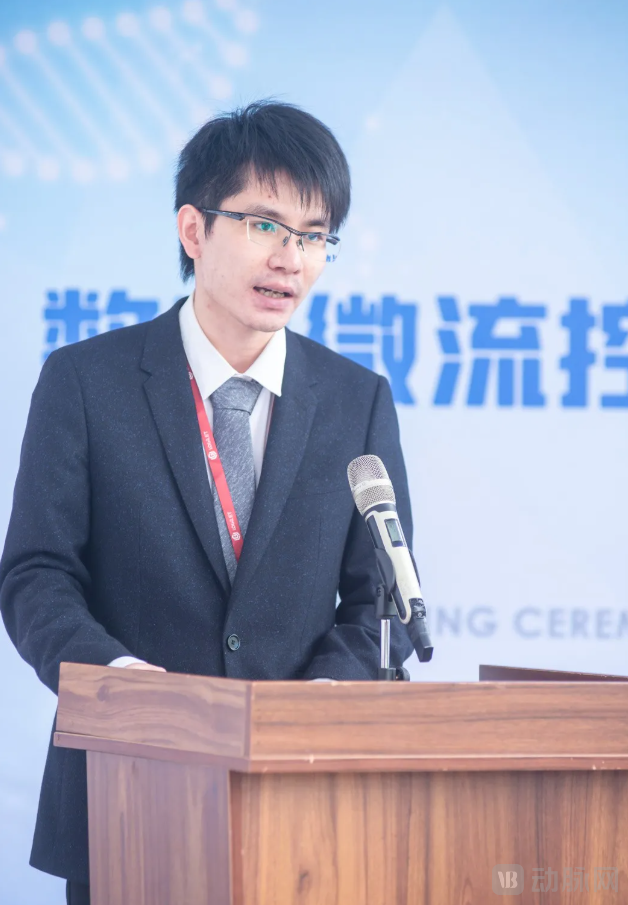
Su Yang, Founder of Droplet Logic
The company’s core team hails from renowned overseas research institutions and Fortune Global 500 companies. It has also attracted and recruited numerous high-caliber professionals from both China and abroad, forming a highly educated talent pool with diverse professional backgrounds. The team possesses extensive R&D, production, and management expertise in chip manufacturing, biomedicine, and opto-mechanical-electrical testing instruments.
The company currently has a team of nearly 50 employees, primarily composed of R&D personnel. It operates a production facility covering approximately 3,000 square meters in the Kunshan High-Tech Industrial Development Zone, which complies with Good Manufacturing Practice (GMP) standards for medical devices.
Qian Jiaping stated that DropLogic seized the opportunity presented by the rapid testing market during the COVID-19 pandemic, accelerating technological breakthroughs in rapid testing. Within just two years, the company developed a novel rapid nucleic acid detection technology with independent intellectual property rights.
In traditional SARS-CoV-2 testing, nucleic acid samples must be sent to specialized laboratories. The preparation, extraction, and amplification of nucleic acid samples require three separate, strictly controlled professional laboratories, resulting in high testing and labor costs as well as low efficiency. Moreover, the extraction of viral nucleic acids from suspected samples is largely performed manually, which not only complicates the workflow and reduces efficiency but also increases the potential risk of infection for frontline healthcare workers.
To address this industry pain point, Droplet Logic has developed, leveraging digital microfluidics technology,Digital Microfluidics-Based Full-Process qPCR Instrument.
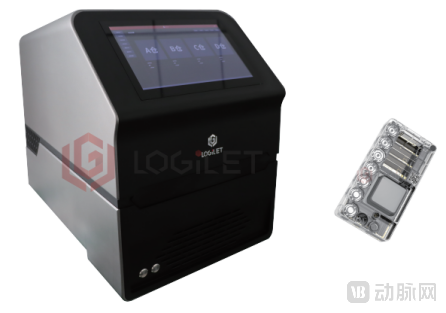
End-to-End Droplet Logic Digital Microfluidics qPCR, Image Provided by the Company
The Droplet Logic Digital Microfluidics Full-Process qPCR Instrument employs digital microfluidics technology to integrate all functionalities, including nucleic acid extraction, amplification, and real-time fluorescence detection, into a sealed chip. This enables precise digital manipulation of liquid samples, with its advantages being evident:
(1) Easy to operate, no professional personnel required.Laboratory personnel, clinicians, nurses, and other staff require no specialized training; with a single click, the system automatically completes the entire monitoring process.
(2) The testing process is rapid, significantly improving detection efficiency and accuracy.In traditional diagnostics, a significant amount of time is wasted on sample transportation, pre-processing, organization, labeling, data entry, and distribution, with the proportion of time dedicated to reaction and analysis being extremely low, resulting in long waiting times for results. In contrast, the digital microfluidics-based full-process qPCR instrument by Droplet Logic requires only a 35-minute wait to achieve a fully automated nucleic acid testing workflow from “sample-in to result-out.” Its user-friendly operation is suitable for any laboratory personnel, minimizing workload, reducing operational errors caused by fatigue, and significantly improving result accuracy and detection efficiency.
(3) Multiplex Testing:A single chip can perform three independent amplification reactions. Combined with the instrument’s four-channel fluorescence detection, it enables simultaneous detection of up to 12 targets per sample.
(4) Pre-loaded detection reagents to prevent cross-contamination.Due to the adoption of fully enclosed, single-use chips, digital microfluidic qPCR instruments based on droplet logic are particularly well-suited for detecting potentially infectious pathogen samples. The pre-loaded detection reagents eliminate the need to open lids, effectively preventing cross-contamination between multiple samples or reactions and avoiding pathogen contamination of the laboratory environment, thereby maximizing the health and safety of operators.
(5) The instrument demonstrates strong environmental adaptability and is suitable for a wide range of application scenarios.This device features a compact size and is portable. It can be used in laboratories, as well as in outpatient clinics, customs checkpoints, ports, and vehicles. It supports testing for respiratory diseases, HPV, and cancer screening.
(6) Low production costs.In terms of manufacturing process, droplet logic utilizes printed circuit board (PCB) technology. This material offers the advantages of technical stability, high reliability, and low cost. As a substrate for chip production, it can reduce manufacturing costs while ensuring product quality.
In addition to the aforementioned advantages, the droplet-based digital microfluidic full-process qPCR instrument offers compatibility with LIS systems, externally configurable negative/positive controls, multi-temperature cycling, rapid reaction speed, high amplification efficiency, and low sample consumption.
Overall, Droplet Logic is dedicated to the development of molecular diagnostic applications for digital microfluidic chips. In addition to its core products mentioned above, it also offers products such as isothermal molecular amplification instruments and DNA/RNA sequencing library preparation systems.
Patent portfolio strategy serves as a technological moat for high-tech enterprises and symbolizes their strength in scientific research and innovation.Droplet Logic has secured over 30 patents in the field of diagnostics within just two years, including three granted invention patents and nine granted utility model patents.
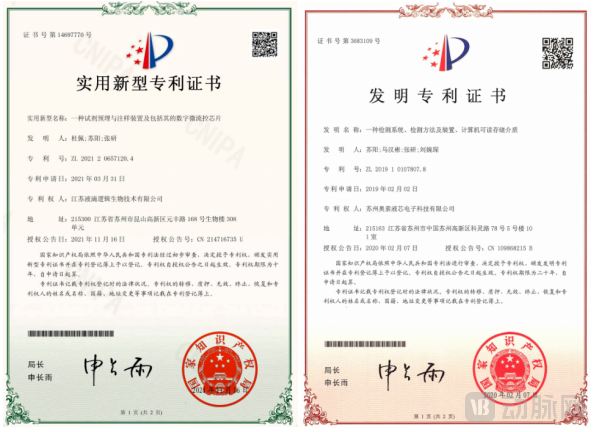
Partial Display of Droplet Logic Patents (Image Provided by Interviewee)
In terms of financing, DropLogic completed its Series A funding round in early 2021, with investment from Vazyme Biotech and Sherpa Healthcare Partners. According to DropLogic, the chips have now entered mass production, with capacity expected to exceed one million units next year, achieving an output value of over RMB 100 million.Currently, Droplet Logic is seeking market collaboration opportunities.Those interested in collaboration may contact the author via WeChat, as listed at the end of the article.
VCBeat believes that, with increasing capital flowing into biotechnology and favorable policy support, the microfluidics-related industry is poised to enter a golden age of development.