

Tianjin's Digital Health Consortium Gains Spotlight at China Healthcare Innovation Forum, Files IPO Prospectus
As the 14th Five-Year Plan ushers in a new journey, China’s new healthcare reforms are being progressively deepened, and the transformation and upgrading of the health service system are receiving unprecedented attention.
On December 11–12, the inaugural China Health and Healthcare Service System Innovation Summit was held. Experts and scholars from government, academia, and industry, both domestic and international, convened under the theme “People-Centered, Proactive Health, Integrated Services” to discuss strategies for advancing the development of a high-quality and efficient healthcare service system.
In his address, Dr. Gauden Galea, WHO Representative in China, stated that the global COVID-19 pandemic has exposed underlying inequalities and disparities. He emphasized that people-centered integrated health services will continually enhance the inclusiveness of health systems and strengthen trust among stakeholders with varying economic levels and across different areas of health service delivery.
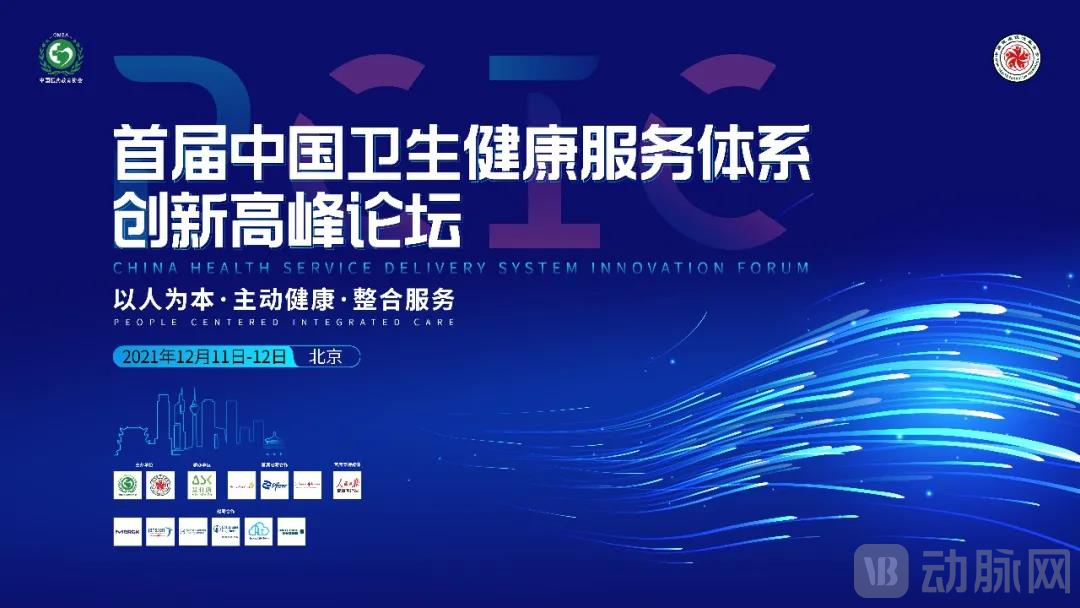
Against the backdrop of increasingly elevated and diversified health demands, establishing a people-centered, efficient, and integrated health stewardship system has become an inevitable trend in the development of China’s healthcare sector. The forum released the Casebook of Innovations in China’s Health and Healthcare Service System 2021: People-Centered and Integrated Health, in which the exploration of the “Tianjin Primary Care Digital Health Consortium” garnered widespread attention from attendees. The conference featured discussions on the trends of People-Centered Integrated Care (PCIC) and its implementation pathways in China. Some participants noted that Tianjin’s exploratory practices in building a digital health stewardship system provide a digital model for reforming integrated medical services.
At the forum, Ou Xiaoli, Director of the Department of Social Development under the National Development and Reform Commission, stated that China’s public health security situation is currently complex and severe. The burden of chronic diseases is increasingly heavy, with a trend toward younger onset ages; occupational mental health issues cannot be overlooked; and as living standards rise and population aging accelerates, public demand for healthcare is growing rapidly. However, structural problems in China’s medical services remain prominent, such as an imperfect public health system, insufficient total volume of high-quality medical resources, and uneven distribution of these resources.
“China needs a 21st-century healthcare service system to address the challenges of the 21st century.” Zhang Shuo, Senior Health Economist at the World Bank, noted that the traditional healthcare delivery system suffers from lack of coordination and fragmentation, leading to disordered patient flow, wastage of medical resources, and declining diagnostic and treatment efficiency. In response, the World Bank, the WHO, and relevant Chinese authorities jointly released the report *Deepening China’s Health System Reform: Building a Value-Based Quality Service Delivery System* in 2016, highlighting that establishing “people-centered integrated health services” is the core of healthcare reform.
Qiu Yue, a researcher at the Development Research Center of the State Council and Director of the Second Research Department of the China Development Research Foundation, believes that the value and significance of PCIC lie not only in addressing the fragmentation of the healthcare service system but, more importantly, in meeting the multi-level, comprehensive, and full-cycle health needs of the population, thereby achieving higher-quality, more sustainable, and more robust service delivery.
As the transition toward value-based healthcare systems has become an international consensus and mainstream trend, the PCIC model has emerged as a globally advocated cutting-edge approach. The World Health Organization (WHO) posits that establishing integrated or unified healthcare delivery systems can organize and manage health services in an orderly manner, providing residents with necessary care through appropriate means, thereby maximizing the cost-effectiveness of medical resource utilization. Many countries have been actively exploring and implementing practices in this field to varying degrees.
Under the guidance of policies such as the Outline of the “Healthy China 2030” Plan, the 14th Five-Year Plan, and the Long-Range Objectives Through the Year 2035, China has continuously clarified that an integrated service system is the future direction of development. In July 2021, four departments, including the National Development and Reform Commission and the National Health Commission, jointly issued the Implementation Plan for the Construction of a High-Quality and Efficient Medical and Health Service System during the 14th Five-Year Plan Period. The plan proposes that by 2025, China will basically establish a high-quality, efficient, and integrated medical and health service system that is complete in structure, rational in layout, clear in division of labor, complementary in functions, closely coordinated, efficient in operation, and resilient.
PCIC is increasingly becoming a clear direction and major issue in China’s deepening healthcare reform and the construction of Healthy China. “How to shift from being healthcare provider-centered to patient-centered? How to reduce resource fragmentation and barriers among medical institutions, across specialties, or between regions? How to strengthen the coordination of medical resources…” Gauden Galea believes that these questions are challenges standing in the way of building PCIC.
China’s top-level design for the new phase of healthcare reform provides a clear answer. In October 2021, the State Council’s Leading Group for Healthcare Reform issued the “Implementation Opinions on Deepening the Promotion of Sanming City’s Experience in Fujian Province and Furthering Healthcare System Reform” (Guo Yi Gai Fa [2021] No. 2), which emphasized “advancing the development of medical consortia” and proposed reforms such as exploring global budget payments for health insurance and encouraging centralized volume-based procurement.
Zhuang Ning, Deputy Director of the Department of System Reform under the National Health Commission, also stated at the conference that “promoting the Sanming experience” has become a key lever for China’s next phase of healthcare reform. According to industry analysis, “Document No. 2” aims to advance the reform of tiered diagnosis and treatment, establish a health maintenance system centered on people’s health, and achieve more effective and efficient health management and care for the entire population.
Guided by the Sanming healthcare reform, various regions have explored their own implementation pathways tailored to local conditions. At the forum, the book *People-Centered, Integrated Health: 2021 Case Studies on Innovation in China’s Healthcare Service System* was released. Among the featured cases, the “Tianjin Primary Care Digital Health Community” represents an innovative practice in achieving People-Centered Integrated Care (PCIC). It draws extensively on the experience of the Sanming healthcare reform to establish a digital-driven, integrated health stewardship system centered on health outcomes.
Li Gang, Deputy Director of the Primary Health Care Division of the Tianjin Municipal Health Commission, stated in his presentation that in January 2021, the Tianjin Municipal People’s Government and WeDoctor Group signed the “Strategic Cooperation Agreement on Digital Health,” reaching agreements on joint initiatives such as building a Digital Health Community. As a result, Tianjin became the first provincial-level administrative region in China to comprehensively launch digital health development. Under the leadership of the Tianjin Municipal Health Commission, the Tianjin Primary Digital Health Community was established as a tightly integrated internet-based medical consortium, led by Tianjin WeDoctor General Hospital and involving the collaboration of 267 primary healthcare institutions across the city.
By implementing four cloud-based platforms—“Cloud Management,” “Cloud Services,” “Cloud Pharmacy,” and “Cloud Diagnostics”—to digitally empower grassroots healthcare, the Medical Community has been exploring payment models such as “global bundled payments” and “disease-specific/per-capita bundled payments” under medical insurance, while providing residents with end-to-end medical and health maintenance services. Furthermore, based on performance assessments of medical and health management quality, it has implemented an incentive and constraint mechanism characterized by “retention of surpluses and no compensation for deficits,” thereby establishing a novel health accountability framework and forming a digitalized health stewardship organization.
Gauden Galea has also observed efforts in certain parts of China to achieve “people-centered integrated health services” by establishing closely-knit internet-based medical consortia. He stated that China is continuously leading policy formulation and organizational innovation, such as providing high-quality healthcare services to residents through medical consortia in the form of urban medical groups and county-level medical communities. He further noted that China is a fertile ground for digital health, with a series of creative and imaginative solutions continually emerging.
Data show that after more than a year of development, the standardized management rate for diabetic patients in pilot primary healthcare institutions within Tianjin’s Grassroots Digital Health Community reached 76.68%. Analysis of patient samples managed for over three months revealed a 21.58% increase in the blood glucose control rate. Furthermore, primary healthcare institutions that have implemented capitation-based payment achieved medical insurance surplus rates ranging from 16% to 31%. With the dual improvement in primary healthcare service capacity and convenience for patients, outpatient visits at pilot primary hospitals within the Health Community increased by 120%. At the 2021 National Conference on Promoting Experience in Deepening Healthcare Reform, Tianjin’s Grassroots Digital Health Community was selected as one of the “Top Ten New Initiatives for Advancing Healthcare Reform and Serving Public Health.”
In her address, Rebecca Ivey, Chief Representative for Greater China at the World Economic Forum, stated that the COVID-19 pandemic has profoundly affected people worldwide, underscoring the need for better preparedness and long-term reforms to establish a more resilient and sustainable healthcare system. The practice of building digital health management systems in Tianjin and other parts of China offers new insights not only for China but also for other regions.