

Vinehealth Files for IPO: The UK Digital Health Startup Behind the World's Highest-Rated Cancer App

Vine Health
Digital Medical Platform Provider
Since its establishment in 2018, Vinehealth, a digital therapeutics startup focused on cancer, has achieved numerous milestones.
One of the most notable honors is being declared the highest-rated cancer app globally by ORCHA, the healthcare app review organization, with Vine Health scoring 93 out of 100—more than 10% higher than other cancer tools.
*Note: ORCHA is a trusted source for recommendations on health apps, helping consumers and NHS (National Health Service) professionals identify safe and reliable applications.
In 2020, Vine Health received an NHSx Techforce19 grant to partner with The Royal Marsden, a world-leading cancer centre, in supporting the mental health of cancer patients during the COVID-19 pandemic.
Moreover, Vinehealth collaborates with leading UK charities—CRUK, Macmillan, and Bowel Cancer UK—providing them with data support.
In this article, you will learn:
Improving adherence among cancer patients is a crucial approach to enhancing their quality of life.
Vinehealth: Breaking Through Cancer Patient Management with Digitalization
Thoughtful Reminders and Empathetic Encouragement to Enhance Patient Adherence
Vine Health’s Age-Friendly Design: More Than Just a “Large-Font Version”
Expanding Business While Actively Competing to Showcase Excellence
Beauty and Brains Join Forces to Help Enterprises Achieve Steady and Long-Term Growth
Three Key Takeaways for Entrepreneurs in China
In healthcare research, nearly all attention is focused on the efficacy of specific drugs and treatments. However, effective cancer treatment involves more than just medication.
Growing evidence indicates that effective cancer treatment extends beyond pharmacotherapy; patient behavior is a critical determinant in enhancing therapeutic efficacy and optimizing oncological outcomes [1]. Up to 50% of outcomes are attributable to patient behaviors [2], encompassing a broad spectrum of activities ranging from symptom monitoring and adherence to correct medication regimens to maintaining proper diet and adequate rest.
According to data from the World Health Organization (WHO), in 2018, one-third of cancer-related deaths were associated with unhealthy lifestyles—such as being overweight, insufficient intake of fruits and vegetables, physical inactivity, and excessive alcohol consumption and tobacco use. Cancer mortality rates decrease when individuals adhere to healthy dietary and physical activity guidelines. Furthermore, improved medication adherence can reduce the incidence of adverse events and mortality among cancer patients, thereby lowering costs for healthcare providers.
Improving patient adherence through behavioral interventions has become a key solution. Vine Health is targeting this unmet patient need.
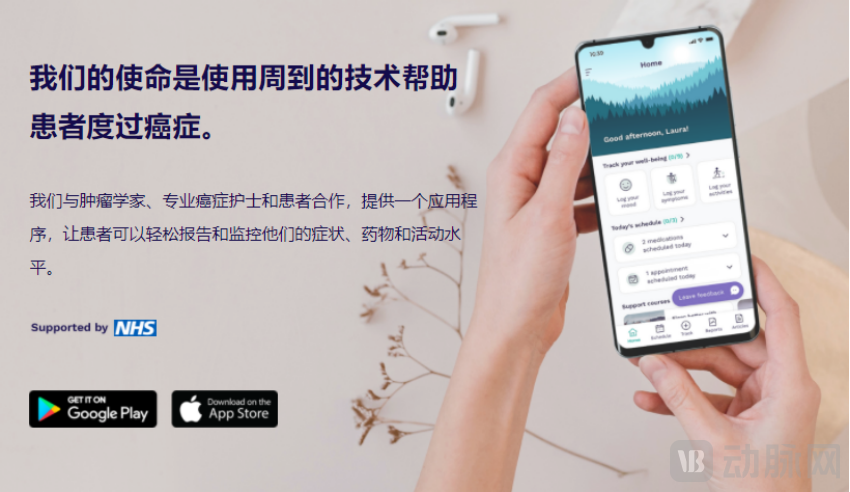
Vinehealth is a digital health startup founded in 2018 and headquartered in London.
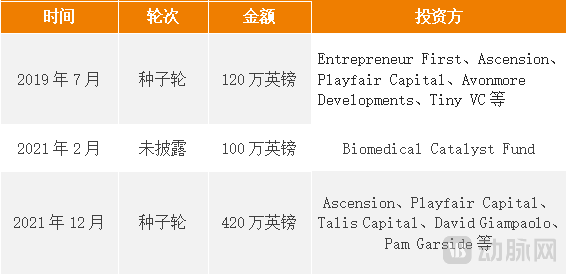
Data source: Crunchbase; chart by VCBeat
Vine Health has two products.“Vinehealth: Cancer Companion (Vinehealth Cancer Companion)” primarily serves patients, empowering cancer patients to take control of their own health status.This software was developed with the collaborative efforts of hundreds of oncologists, specialized cancer nurses, and patients, enabling patients to easily monitor and understand their symptoms, medication regimens, and other health metrics via their mobile phones.
This product was developed using principles of behavioral science to guide cancer patients in adopting appropriate behaviors and improving decision-making regarding treatment adherence and lifestyle choices. Augmented with artificial intelligence, Vine Health provides deep insights into daily cancer care and enables clinicians to access this information.
The app currently holds a 4.4-star rating on the Apple App Store, with reviews predominantly reflecting the experiences of cancer patients. According to publicly available information from the company, the Vinehealth app has been downloaded by approximately 5,000 patients since its launch in 2020.
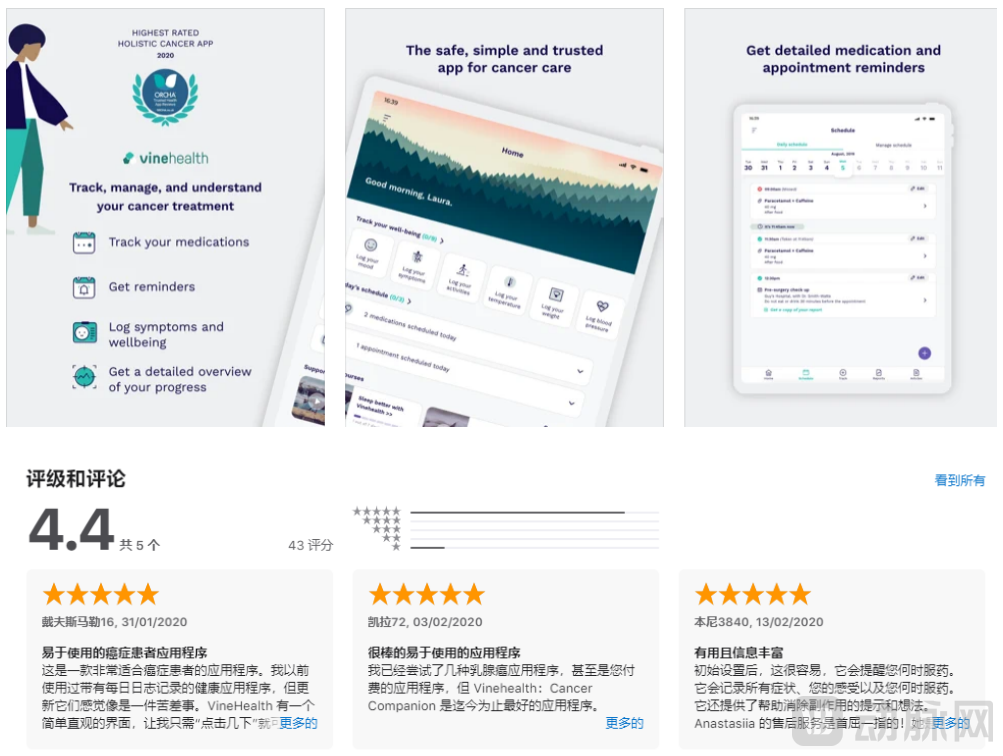
Image source: Vinehealth Cancer Companion App Store description
VinehealthPRO provides services to healthcare providers and pharmaceutical companies,It is interoperable with EHRs and other clinical software, and offers language translation capabilities. Vine Health’s digital ecosystem integrates behavioral science and artificial intelligence to collect rich longitudinal patient-reported outcome measures (PROMs) data, informing service delivery, clinical decision-making, and remote follow-up, thereby improving cancer outcomes.
For pharmaceutical companies, Vinehealth provides SaaS services to help recruit patients for clinical trials and collect patient-reported outcome (PRO) data to support R&D and drug development.
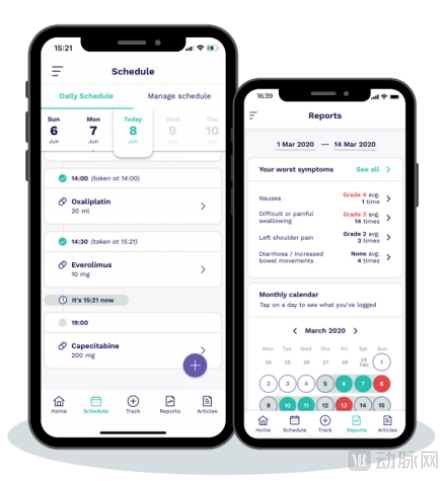
The rich patient-reported data collected by the Vine Health app also brings broader benefits to patients, healthcare providers, and pharmaceutical companies.
For patients, Vine Health’s mobile platform enables closer connections with healthcare providers and access to more professional, high-quality therapeutic services. It also helps them easily track, manage, and understand their symptoms, medication regimens, appointments, and lifestyle factors, thereby empowering them to better manage their health.
For healthcare providers, VinehealthPRO enables care teams to view real-time PROM data and deliver personalized patient information, thereby facilitating better clinical decision-making, remote care, and improved service efficiency. Meanwhile, the software also helps them manage patients, provide more personalized services, enhance adherence, and optimize the allocation of medical resources.
For pharmaceutical companies, Vine Health’s mobile platform enables the collection of rich, objective data generated by patients in real-world, natural living scenarios, providing robust support for optimizing clinical trials and real-world studies.
Data security is a protracted battle that all information-driven enterprises must wage. Vine Health has also leveraged technology to build a robust barrier for information security. Both “Vinehealth: Cancer Companion” and VinehealthPRO have obtained the Class I medical device CE marking in the UK and the EU, NHS UK certification, and Cyber Essentials certification.
Regular monitoring of symptoms is essential for providing personalized, relevant treatment.
Relevant trials have demonstrated [3] that when physicians use weekly email prompts to encourage patients to regularly report their symptoms, it not only yields more clinical information but also significantly improves patients’ quality of life and even extends survival in some patients.
Cancer patients may need to take as many as 15 different medications during treatment. Therefore, when cancer patients first register with Vine Health, they provide information about their prescribed treatments and the timing for administration. The system then prompts patients to take their medications at the appropriate times.
Furthermore, to encourage medication adherence, the system provides feedback on how many other Vine Health users are taking the same action.
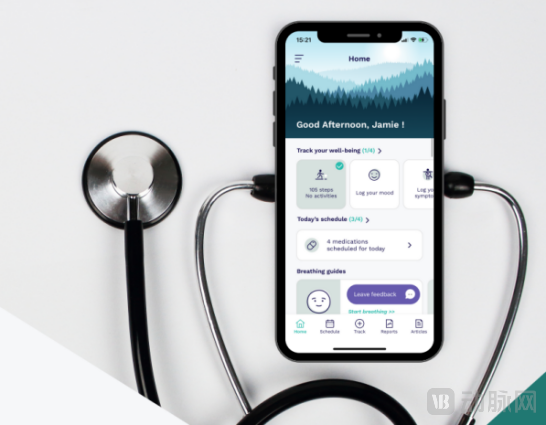
Image source: Vinehealth instructions
Upon registration, patients receive a comprehensive list of common cancer symptoms for self-assessment. Patients can compare these symptoms against patient-friendly versions of clinically validated scales used by oncologists worldwide to gauge the severity of their symptoms and enhance communication with their physicians.
Health data recorded by users via smartphones, evaluated and analyzed through artificial intelligence algorithms, can reflect changes in patients’ health status and provide targeted analytical recommendations.
Additionally, when patients log their symptoms, the application records the severity. The next time a patient wishes to record the same symptom, the scale is preset to the previous entry. This makes it easier for patients to recall how they felt during the last recording and compare it with their current condition.
Appointment and medication schedules are presented to patients in the form of a daily timetable, enabling them to be aware of their daily medication regimen. The platform can also generate appointment and medication reminders to ensure patients take their medications on time.
27% of the Vinehealth user community is aged 55 and above. Some users may suffer from poor vision, hearing impairments, mobility limitations, and other issues.
To assist this segment of users, Vine Health has also implemented age-friendly adjustments, including but not limited to:
All elements are easy to read and interact with.
All information is clear and concise, reducing users' cognitive load.
Use simple graphics to help users better understand information
Avoid hiding elements and present the most relevant information first
Listen to the app with a screen reader
Use Voice Recognition Navigation Application
Increase the font size without causing text to overflow the screen
Use the magnification feature in your phone's settings to enlarge content within the app
……
Furthermore, to verify whether the application is user-friendly for the elderly population, Vine Health conducted more than 20 face-to-face interviews and observations, collecting feedback from older users to optimize and improve the application.
In terms of implementation partnerships, all collaborators with Vine Health are major institutions—
In 2019, Vine Health partnered with the UK Health Foundation to provide our technology to over 100 colorectal cancer patients and support their self-management.
In May 2020, Vine Health partnered with The Royal Marsden NHS Foundation Trust to make the app available to patients with all types of cancer, aiming to improve their mental health during the COVID-19 pandemic.
In October 2020, Vinehealth partnered with the National Hospital for Neurology and Neurosurgery in the UK to deliver the application to brain tumor patients. The app addresses patient needs by tracking symptoms, providing personalized educational content powered by machine learning, and facilitating medication and appointment reminders. Over a 12-week period, patients submitted real-world electronic Patient-Reported Outcome (ePRO) data via the Vinehealth mobile application.
On May 19, 2021, Vinehealth and the University of Surrey collaborated to secure a £1 million grant from Innovate UK for conducting a randomized controlled trial on a patient-facing cancer companion app.
In addition to collaborating with leading institutions, Vine Health has also shone brightly in various innovation and entrepreneurship competitions:
Vinehealth Ranks 12th Among the Top 50 MedTech Innovators in Business Cloud
Vinehealth Shortlisted for Business Cloud’s MedTech 50 Innovators List
Vine Health Shortlisted for CogX’s “Best Innovation in Genetics and Personalized Medicine”
Vine Health Listed by Splento as One of the Top 25 Health Tech Startups
ORCHA Report “Digital Health for Cancer Services” Names Vinehealth as a Leader in “Best Practice”
Vinehealth is the winner of the hottest HealthTech Startup category at EUROPAS 2021
……

Rayna Patel, Co-founder and CEO of Vinehealth (left)
Georgina Kirby, Co-founder and CTO of Vine Health (right)
Co-founder and CEO Rayna Patel, a graduate of the University of Cambridge, previously served in the UK’s National Health Service (NHS), bringing strong academic credentials and extensive corporate management experience.
Co-founder and CTO Georgina Kirby graduated from Imperial College London, with years of frontline experience in the field of information data. She previously served as Vice President at the health tech startup Touch Surgery.
In life, they are confidantes who share everything; on their entrepreneurial journey, they are trusted and capable partners.
“When Georgina and I first met, we realized we shared a common passion for healthcare. As an NHS doctor, I often saw cancer patients feeling isolated and unsupported as they struggled to manage complex treatment regimens—tracking all their medications, knowing when to seek help, communicating with loved ones, and coping with side effects. The traditional consultation model not only fails to make optimal use of doctors’ limited time but also poses significant challenges for patients,” said Rayna Patel. “As a data scientist, Georgina recognized the power of technology to remotely assist patients, support clinicians in delivering high-quality care, and inform life-saving cancer research.”
Thus, the two hit it off immediately and decided to collaborate on an initiative.
However, they did not rush to establish a company. Instead, they first developed a lightweight application to test user acceptance on a small scale. After seeing an enthusiastic response, the two began to systematically raise capital and hire professional teams to build a more specialized and standardized product.
Currently, Chinese startups providing online consultation and management services for cancer patients include Yijiayi, Yiliu Zhushou, Liangyihui, Yisuizhen, and Aidu. If you are also launching a venture in this field, feel free to contact the author via WeChat (ID provided at the end of the article).
Through an analysis of Vine Health, the author shares three key insights with readers.
1. Implement age-friendly software design
Population aging concerns every household; it is not only a family matter but also a national priority. With the gradual promotion and widespread adoption of emerging technologies such as the Internet of Things (IoT), the internet, and 5G, intelligent service products should be more extensively applied to sectors serving the elderly population. From late last year through this year, the state has issued multiple guiding opinions related to age-friendly renovations. This trend represents not only a societal need but also a business opportunity for technology enterprises.
Age-friendly design is not merely about “enlarging the font.” In response to common age-related challenges such as impaired vision, hearing loss, and difficulties with device operation, Vine Health has implemented comprehensive sensory adjustments across its software. The company also incorporated feedback from older adult users to minimize barriers to adoption and ease the learning curve.
2. Minimize Trial and Error
The trial-and-error costs of entrepreneurship are high, encompassing not only the tangible out-of-pocket expenses but also substantial hidden costs such as time and energy.
Minimal trial-and-error may help entrepreneurs validate their business models and product logic with minimal cost and risk, thereby avoiding the tragedy of losing both manpower and capital.
For example, after conceiving their startup idea, the two female founders of Vine Health developed only a lightweight software version for patient testing. Only after receiving positive feedback did they begin raising capital to rapidly expand their market presence.
3. Participate in industry brand events to build a personal IP and establish corporate influence
In an era where even the finest wine fears a deep alley, we recommend that entrepreneurs actively participate in influential industry conferences and award selections to increase visibility for themselves and their enterprises within the sector.
On one hand, it helps founders build their personal brand and establish industry influence. Regardless of whether the personal brand achieves significant traction, the process of building it serves as a summary of one’s own insights and experience.
On the other hand, corporate publicity yields varying results at different stages of development. For instance, startups can leverage award campaigns to garner significant attention for their products or services, cultivate market anticipation, and attract investor interest. Meanwhile, growth-stage companies can utilize these opportunities to disseminate information about their core competencies, market position, and influence, thereby enhancing their brand impact, establishing recognition as an industry-leading brand, and accelerating the fundraising process.
References:
1. https://academic.oup.com/jnci/article/93/11/810/2906144
2. https://www.mckinsey.com/industries/life-sciences/our-insights/real-world-evidence-from-activity-to-impact-in-healthcare-decision-making
3. https://www.ncbi.nlm.nih.gov/pmc/articles/PMC4872028/
4. Lanna Deamer<VINEHEALTH SECURES £1M GRANT TO IMPROVE OUTCOMES FOR CANCER PATIENTS>