

Study Published in Mayo Clinic Proceedings Shows Maintaining PAI Score Above 100 Significantly Reduces Cardiovascular Risk
Recently, the prestigious medical journal Mayo Clinic Proceedings published a large-scale prospective study titled “Association Between Personal Activity Intelligence and Mortality: Population-Based China Kadoorie Biobank Study.” The study, which surveyed participants from 10 diverse regions across China, found that individuals maintaining a Personal Activity Intelligence (PAI) score above 100 had significantly lower risks of cardiovascular disease (CVD) mortality and all-cause mortality.
PAI (Personal Activity Intelligence) is a novel exercise and health assessment system developed under the leadership of Professor Ulrik Wisloff at the Norwegian University of Science and Technology (NTNU) and is owned by Huami Technology (NYSE: ZEPP). As a scientific method for quantifying physical activity, PAI evaluates the impact of exercise on cardiovascular health based on physiological metrics collected by wearable devices, particularly heart rate data. Its scientific validity and effectiveness have previously been validated in Nordic and U.S. populations through studies based on the Nordic HUNT and U.S. ACLS datasets.
PAI has a large user base in China. To investigate its applicability within the country, this study utilized the China Kadoorie Biobank (CKB) database to validate the effectiveness of PAI. The study cohort comprised 443,792 relatively healthy adults aged 30–79 years, including 177,529 men and 266,263 women. The median follow-up period was 8.2 years, during which a total of 21,901 deaths occurred (including 9,466 deaths from cardiovascular disease).
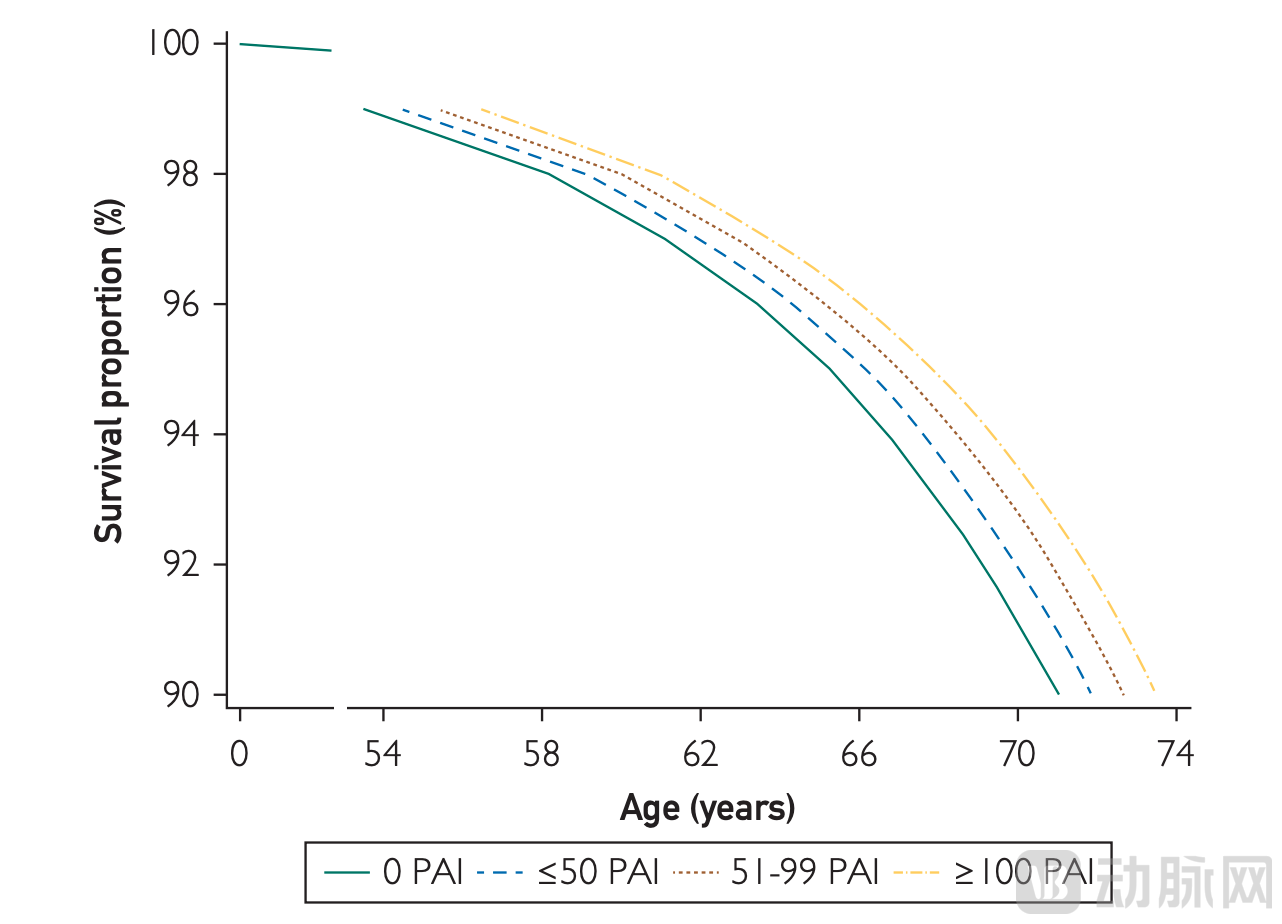
The study results showed that, compared with the inactive group, individuals who maintained a weekly Physical Activity Index (PAI) of ≥100 had lower cardiovascular disease mortality and all-cause mortality. Specifically, the risk of all-cause mortality was reduced by 7%, with life expectancy increased by 2.7 years in men and 2.6 years in women. The risk of cardiovascular disease mortality was also significantly reduced, by 13% in men and 16% in women.
Meanwhile, the study also found that maintaining a weekly PAI score of 100 or higher reduced the risk of cardiovascular disease mortality by 31% in patients with diabetes and lowered the all-cause mortality risk by 18% in patients with hypertension.
Compared with some other traditional metrics for quantifying physical activity (such as step count), a significant advantage of PAI lies in its scientific rigor. By integrating heart rate data with daily activity intensity and individual physiological parameters, the system performs a multi-dimensional, dynamic comprehensive assessment to derive the Personal Activity Intelligence (PAI) score. In contrast to traditional approaches that merely list and display monitoring data, the PAI health assessment system enables users to gain a more intuitive understanding of their current health and exercise status, while also tracking trends in their health and fitness through changes in the PAI score.
Based on HUNT, the largest dataset in Northern Europe, a 35-year follow-up of data from more than 230,000 individuals revealed that maintaining a Personal Activity Intelligence (PAI) score of 100 or higher can effectively reduce all-cause and cardiovascular disease mortality rates, thereby extending life expectancy. Subsequently, to further validate the scientific robustness of PAI across diverse settings, Professor Wisloff has conducted a series of studies in recent years. These primarily include investigations into the applicability of PAI among patient populations (specifically those with cardiovascular disease) and across different ethnic groups (Americans and Chinese), as well as studies examining the associations between PAI and sedentary behavior, cardiorespiratory fitness, and weight management. These studies have further elucidated the scientific validity of PAI.
Since the PAI algorithm is calculated based on heart rate values, it can be naturally integrated into wearable devices with continuous heart rate monitoring. Currently, Huami Technology’s brands Amazfit and Zepp smartwatches are all equipped with the PAI health assessment system. The Norwegian University of Science and Technology has also collaborated with PAI Health, a subsidiary of Huami Technology, on a joint research project called NorEx to explore the health benefits of exercise for patients with myocardial infarction. Future studies will further investigate whether PAI can serve as an exercise prescription and its effects on chronic diseases such as hypertension.