

Is the Industrialization of Exosomes Still Far Off? Insights from Industry Leaders on Key Challenges and Collaborative Progress
In 1983, a research group led by Rose M. Johnstone, a professor in the Department of Biochemistry at McGill University, discovered small membrane-bound vesicles in the supernatant of cultured sheep reticulocytes. These vesicles were found to transport proteins deemed unnecessary during cellular maturation from one cell to another, and the researchers initially regarded them as metabolic waste. In 1987, Johnstone named these vesicles “exosomes.”
In 2013, the Nobel Prize in Physiology or Medicine was awarded to three scientists in recognition of their outstanding contributions to elucidating the regulatory mechanisms of vesicular transport between cells. The prestige of the Nobel Prize ushered in a new era for exosome research and propelled its popularity to new heights. Furthermore, the substantial clinical application value demonstrated by exosomes has firmly established them as a “star” hotspot in scientific research in recent years.
Research on exosomes in areas such as drug loading, diagnostics, prognosis monitoring, and immunotherapy is expanding rapidly, with the number of published papers showing near-exponential growth. Meanwhile, in the field of industrial translation, the number and scale of exosome-related startups have been steadily increasing in recent years, achieving numerous breakthroughs.
According to incomplete statistics from VCBeat, nearly 50 companies worldwide are actively positioning themselves in the exosome sector. Among them, representative company Codiak Biosciences went public on the NASDAQ in October 2020, with two of its drug candidates having sequentially entered Phase I clinical trials. Multiple pharmaceutical giants, including Roche, Takeda, and Eli Lilly, have also established significant collaborations with various exosome-related companies, consecutively signing several multi-billion-dollar co-development agreements.
Precisely because exosomes have attracted significant market attention, VCBeat has recently published an in-depth review of this field.“Roche, Takeda, and Eli Lilly Enter the Fray: Nearly 50 Companies Race to Launch—A Comprehensive Review of the Exosome Industry”Shared with readers. However, due to space constraints, a more in-depth discussion on exosomes was not expanded upon in the previous review article. Regarding additional hot topics of interest to readers, VCBeat has invited two outstanding founders of companies dedicated to exosome research—Gao Bo, Founder & CEO of Yumeibo BiotechandXu Ke, Founder & CEO of Visconto answer readers' questions, forming this article.
Below is an excerpt from the dialogue between VCBeat and the two company founders:
(For the convenience of readers, VCBeat has made editorial adjustments to the text without altering its original meaning.)
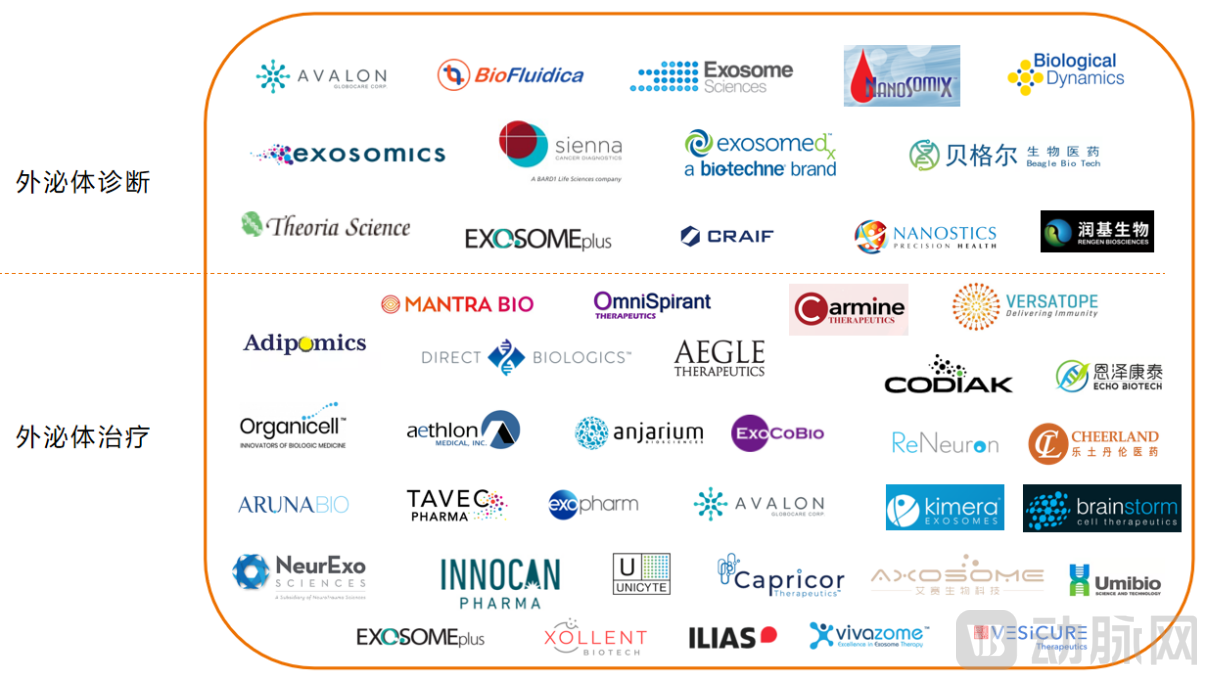
Nearly 50 Companies Worldwide Enter the Field: Nearly One-Third Focus on Exosome Diagnostics; Over Two-Thirds Focus on Exosome Therapeutics
VCBeat: In the exosome industry, we have observed that early-stage startups mostly focused on exosome-based diagnostics, expanding applications in disease diagnosis and testing. However, in recent years, companies involved in exosome therapeutics have shown significantly more rapid growth. To date, among nearly 50 companies worldwide engaged in exosome-related research, more than two-thirds are primarily focused on exosome therapeutics (including exosome-mediated drug delivery and exosome-based drug development), while fewer than one-third are dedicated to exosome diagnostics. What are the main reasons behind this trend?
Gao Bo:The path to exosome-based diagnostics is challenging, and the reasons are as follows:The most critical point is that exosome markers are not well defined.Traditional IVD products based on PCR or chemiluminescence generally target biomarkers that have already been substantiated by extensive clinical data both domestically and internationally, thereby facilitating their development. However, there is still no widely accepted consensus on what constitutes exosome-based biomarkers. Consequently, the development of exosome-related IVD products remains highly challenging.Furthermore, for most resource-constrained startups, it is often difficult to obtain sufficient clinical samples to explore and validate exosome-related biomarkers.
License:Both in academia and industry, the current understanding of exosomes remains relatively nascent, with considerable room for learning in the identification and characterization of exosome-related biomarkers. Furthermore,High Purity Requirements for Exosome Isolation in the Identification and Determination of Exosome-Related Biomarkers—It is essential to ensure that the relevant biomarkers are derived directly from exosomes rather than from other secretions or organelles. Finally, if an exosome-based diagnostic product is successfully developed,When detecting the same disease, whether exosome-based diagnostic products offer greater sensitivity and accuracy, or provide a cost advantage, is also a critical factor determining their adoption by patients.These various challenges have resulted in relatively slow progress in the field of exosome-based diagnostics. From a corporate strategic perspective, companies are more likely to succeed by focusing on faster-advancing areas such as exosome drug delivery or exosome therapeutics development.
However, our current decision not to prioritize the exosome diagnostics sector does not mean we have abandoned the development of exosome-based diagnostic applications. Rather, from a risk-benefit perspective, we prefer to place exosome diagnostics in the second tier of our corporate strategic layout. This is because, as we build our exosome drug-delivery platform and develop exosome-related therapeutics, we will gain a deeper understanding of exosomes, thereby creating opportunities to mine and discover relevant exosomal biomarkers. Should we identify any valuable biomarkers during this process, we will rapidly follow up by deploying their applications in the detection and diagnosis of related diseases.
VCBeat: What are the primary advantages of exosomes in drug therapy? From the perspective of drug delivery, what advantages do exosome-based carriers offer over viral vectors and lipid nanoparticles (LNPs)? In which aspects can they address the limitations associated with viral and LNP delivery technologies?
License:I will primarily address the advantages of exosomes over viruses and lipid nanoparticles (LNPs) for delivery from three perspectives:
One is the low toxicity and low immunogenicity of exosomes as carriers.Because they are composed of natural human proteins and lipids, natural exosomes exhibit negligible immunogenicity and toxicity. Even engineered exosomes that have been modified demonstrate minimal immunogenicity and toxicity.
Because lipid nanoparticles (LNPs) are entirely synthetically produced, they face issues with immunogenicity, making it difficult to use LNPs for large-scale drug delivery. This issue also explains why there has been limited progress in using LNPs for mRNA delivery over the years. Moderna was founded as early as 2010 and has been in existence for more than a decade, yet its overall progress remained modest until the outbreak of the COVID-19 pandemic brought it sudden prominence. A key reason is that, as vaccines require only low doses to elicit an immune response in the human body, toxicity concerns were temporarily avoided; however, the immunogenicity of LNPs remains an unavoidable challenge.
Although adeno-associated virus (AAV) vectors exhibit low immunogenicity, they face the challenge of neutralizing antibodies: patients previously infected with AAV cannot receive AAV-based gene therapy products. For patients who have never been infected with AAV, administration is limited to a single dose; subsequent dosing would be compromised by the development of AAV-neutralizing antibodies. Upon injection, AAV-delivered gene therapy products are recognized and cleared by the immune system, triggering a robust immune response.
Second, exosomes have a larger spatial capacity as carriers and can carry a wider variety of active ingredients.A significant drawback of AAV vector delivery is its small capacity, limited to only 5 kb, which imposes constraints on gene loading. As natural carriers for intercellular communication, exosomes can accommodate a diverse array of bioactive substances, including nucleic acids, proteins, and lipids. They offer a larger cargo capacity, enabling the encapsulation of various drug molecular structures. Furthermore, exosomes exhibit distinct molecular transport characteristics and favorable biocompatibility, allowing them to load many different types of molecules and contents.
Third, exosomes exhibit certain tissue tropism, enabling targeted delivery.Lipid nanoparticles (LNPs) are entirely synthetically produced and lack extraneous targeting proteins on their surface, making it difficult to achieve targeted delivery to specific tissues and organs. In contrast, the abundant protein composition on the surface of exosomes endows them with superior target cell recognition capabilities. By modifying and engineering surface molecules to confer cell- and tissue-specific targeting, exosomes can deliver their cargo—proteins, RNA, or small-molecule therapeutics—to specific pathological tissues and organs.
Nevertheless, AAVs and LNPs undoubtedly possess their respective advantages; otherwise, they would not have achieved such widespread application. For instance, the primary advantage of AAVs lies in their ability to efficiently deliver nucleic acids, with the corresponding technology being relatively mature. As LNPs are entirely synthetically produced, their composition is well-defined, offering advantages in manufacturing scalability. They also exhibit favorable loading capacity and allow for concurrent drug encapsulation during production.
VCBeat: Is there a possibility of developing related products in the future that integrate the characteristics of all three?
License:This is a sound approach, which indeed highlights some of the initiatives we intend to pursue in the future. In the long term, we believe that these three modalities will serve as beneficial complements to one another, rather than creating a competitive landscape. Our development of various delivery platforms is ultimately aimed at treating diseases, not at determining which delivery method is superior.
VCBeat: We have just discussed the advantages of exosomes in drug therapy. On the other hand, what are the key issues currently constraining the development of exosome-based drugs and exosome-mediated drug delivery?
Gao Bo:First, a critical challenge lies in how to effectively load small-molecule or macromolecular drugs into exosomes when using them as drug delivery vehicles. Additionally, ensuring the uniformity of drug-loaded exosomes is another key issue. The greater the homogeneity of exosomes, the more suitable they are as drug carriers, which imposes higher requirements on purification processes.
License:As a relatively new field, exosome-based therapeutics faces numerous challenges that need to be addressed. From a biological perspective, the primary task is to gain a deeper understanding of the functional and structural characteristics of exosomes derived from different sources. Building on this foundation, targeted analysis of the physicochemical properties of exosomes will help us develop novel methods and processes for their enrichment and purification. This will enable the pharmaceutical industry to achieve high yield, high quality, large-scale production, reproducibility, and standardization, thereby meeting clinical and diagnostic needs across various fields.
VCBeat: Many researchers believe that although exosome research is “hot,” it is still quite a way from industrialization. What is your view?
Gao Bo:From the perspective of industrial translation research on exosomes, it is mainly divided into two parts: one part is the research in the field of disease diagnosis based on exosome biomarkers; the other part is the application of exosomes in drug loading and delivery.
Research into exosome-related biomarkers is still in a relatively early stage of development.Currently, the exploration and understanding of exosome biomarkers remain insufficient. It is imperative for the medical community to engage in multi-center collaborative efforts, leveraging extensive clinical sample resources to conduct more in-depth analysis and gain a deeper understanding of these biomarkers.This will require a prolonged development process; conservatively estimated, it will take at least another 3–5 years to achieve some breakthrough progress in this field.
In research on exosome-based drug delivery, the key factor lies in identifying appropriate biomarkers to achieve targeted delivery.For instance, to achieve targeted drug delivery of exosomes to specific tumors, it is necessary to investigate the biomarkers on the surface of those tumors, screen for effective biomarkers, and then engineer target-specific exosomes capable of effectively recognizing these tumor surface biomarkers.
VCBeat: How is the exosome-related industry currently developing both domestically and internationally? Compared to foreign markets, what is the magnitude of the development gap, and in which aspects are these gaps primarily manifested?
Gao Bo:Currently, there is still a significant gap between the development of exosome research in China and abroad. In terms of industrial translation research in the field of exosomes,Overseas, the field has been developing for many years, yielding some breakthrough achievements and giving rise to relatively mature companies. In contrast, research in the exosome sector in China has only gained momentum in recent years, with the related market still in its nascent stage.Some startups have begun seeking financing in the capital markets. Rough estimates suggest that China lags behind other countries by at least five years in the industrialization research of exosomes.
The gap is mainly attributed to two factors: first, insufficient in-depth research on exosomes; second, inadequate supporting infrastructure for industrialization.Although research on exosomes is currently flourishing in the scientific community, in-depth studies remain insufficient, lacking innovation, and applications are still in their infancy. Furthermore, several key challenges constrain the development of the exosome industry, including targeted delivery, isolation and purification, drug-loading efficiency, and formulation. Breakthroughs in these fundamental areas are prerequisite to achieving industrial-scale advancement.
VCBeat: One final question concerns the shifting level of interest in exosome research both domestically and internationally. We have learned that among last year’s National Natural Science Foundation of China (NSFC) grant applications, there were 2,000 projects related to exosomes, whereas this year the number has dropped to just over 1,000—a decline of nearly half. Does this indicate a waning enthusiasm for exosome research?
Gao Bo:The decline in the number of exosome-related projects funded by the National Natural Science Foundation of China does not indicate a waning interest in exosome research; rather, it signifies that exosome-related studies are advancing to a more sophisticated stage.In the early stages, research on exosomes was not yet in-depth, making it relatively easy to identify novel angles for grant applications. However, as extensive research on exosomes has been conducted, securing funding for exosome-related projects has naturally become more challenging.
Future fundamental research on exosomes will be relatively focused on exploring key issues, such as exosome targeting, drug-loaded exosomes, and the discovery of disease biomarkers.Therefore, this represents a normal, step-by-step evolutionary process. Exosome-related research topics suspected of being “salami-sliced” or lacking substantive scientific merit will be rejected. Consequently, exosome research efforts will become concentrated among a select group of scientists, and the execution of these projects will require greater financial support.