

Lisen Imprinting and Zhongshan Hospital of Fudan University Achieve Breakthrough in Lung Cancer Preoperative Diagnosis with Epigenetic Imprinting Gene Testing
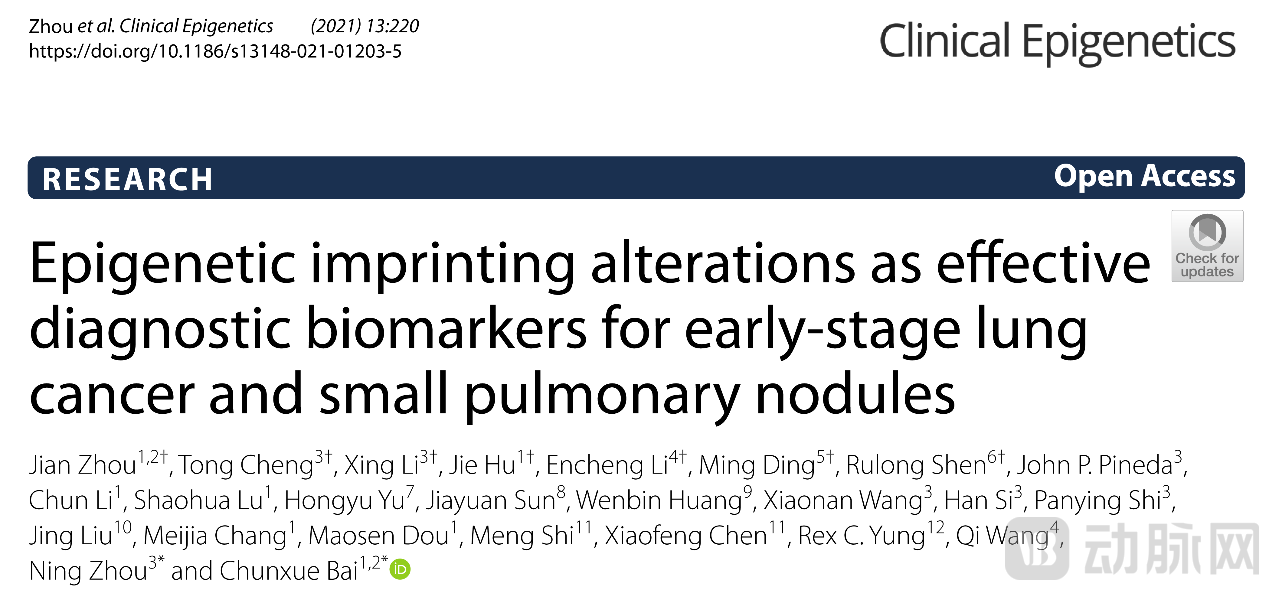
Wuxi, ChinaLisen Imprint Diagnostics Technology Co., Ltd. (hereinafter referred to as “Lisen Imprint” or the “Company”) is the first commercial entity globally to apply imprinting genes to cytopathological diagnosis of tumors. In May 2020, the Company collaborated with a research team led by Professor Bai Chunxue from Zhongshan Hospital, Fudan University, and published findings on Quantitative Chromogenic Imprinting Gene In Situ Hybridization (QCIGISH) technology in the renowned epigenetics journal Clinical Epigenetics. This technology converts the transcriptional status of cancer-related imprinting genes into visualizable signals within cells. Study results demonstrated that the technique can distinguish between benign and malignant biopsy cells and is applicable for preoperative cytological auxiliary diagnosis of ten types of cancers, including lung cancer, thyroid cancer, breast cancer, and bladder cancer. On December 14 this year, the Company, together with Zhongshan Hospital of Fudan University and other institutions, once again published a research paper in Clinical Epigenetics, announcing the latest advancements in the application of QCIGISH technology for the preoperative diagnosis of lung cancer. The clinical study included 431 suspected lung cancer samples. Results showed that QCIGISH technology achieved a sensitivity of 99% and a specificity of 92% in preoperative cytological diagnosis. Notably, the diagnostic sensitivity reached 99% for carcinoma in situ, stage Ia and Ib early-stage lung cancers, and pulmonary nodules smaller than 2 centimeters in diameter. This represents a significant improvement over conventional preoperative cytopathology that relies solely on morphology. The clinical application of this technology is expected to promote early diagnosis and treatment of lung cancer, thereby improving patient survival rates.
The outstanding performance of epigenetic imprinting gene testing in the early diagnosis of lung cancer and small pulmonary nodules has garnered widespread coverage and attention from dozens of international media outlets, including Yahoo News, Yahoo Finance, Bloomberg, AP News, LinkedIn, Digital Journal, BioSpace, and BioWorld.
The company has engaged in extensive collaboration with researchers from the Respiratory Disease Institute of Zhongshan Hospital, Fudan University; Shanghai Changzheng Hospital; Shanghai Chest Hospital; Shanghai Huashan Hospital; the Second Affiliated Hospital of Dalian Medical University; Nanjing Zhongda Hospital; Nanjing First Hospital; Yantai Yuhuangding Hospital; The Ohio State University (USA); and Johns Hopkins University (USA). Initially, a set of imprinted gene markers exhibiting the most significant differential expression between benign and malignant lung tissues was screened using QCIGISH technology, and a diagnostic model for distinguishing benign from malignant conditions was established. Furthermore, validation in preoperative cytology samples demonstrated that this diagnostic model can accurately differentiate benign pulmonary diseases from lung cancer, showing diagnostic sensitivity far superior to that of cytopathology in early-stage lung cancer and small pulmonary nodules.
Professor Bai Chunxue, the corresponding author of the paper (Chairman of the Chinese Alliance for Lung Cancer Prevention and Control, and Director of the Institute of Respiratory Diseases at Zhongshan Hospital, Fudan University), pointed out: “Epigenetic alterations are the earliest molecular changes occurring during carcinogenesis, making them crucial for early cancer diagnosis. Unlike indirect detection methods such as next-generation sequencing (NGS), methylation sequencing, or PCR, the QCIGISH assay directly reflects the transcriptional status of imprinted genes within the nucleus, intuitively revealing changes at the single-cell level. Furthermore, with clearer biomarkers and superior differentiation between benign and malignant lesions, this technique demonstrates significant clinical value.”
Dr. Li Encheng from the Department of Respiratory and Critical Care Medicine at the Second Affiliated Hospital of Dalian Medical University, Dr. Ding Ming from the Department of Respiratory Medicine at Zhongda Hospital Southeast University, and other co-authors have highly praised the QCIGISH technology: “Even in today’s era of vigorous promotion of multidisciplinary collaboration, the differential diagnosis between benign and malignant pulmonary nodules remains a major clinical challenge. QCIGISH technology demonstrates exceptionally high diagnostic accuracy for early-stage lung cancer and small pulmonary nodules, with its value primarily reflected in two aspects: First, it significantly improves the accuracy of preoperative molecular diagnosis of lung cancer, compensating for the limitations of traditional morphological pathology. Second, it greatly simplifies the difficulty of sampling small lung cancer specimens; samples obtained from the edges of cancerous lesions already exhibit epigenetic alterations sufficient for benign-malignant differentiation, eliminating the need for highly precise sampling. This novel technology will not only facilitate early diagnosis and timely treatment for patients but also have a profound impact on the management models and healthcare economics for patients with pulmonary nodules.”
Dr. Zhou Ning, Founder and Chairman of the Board“The clinical study results of QCIGISH technology in lung cancer, as well as the forthcoming data in thyroid cancer, have given us full confidence. The accuracy and sensitivity demonstrated by QCIGISH technology in preoperative cytological diagnosis provide substantial support for preoperative biopsy. We will officially launch our lung cancer diagnostic products and clinical testing services in the third and fourth quarters of 2022, enabling patients to benefit from this new technology at the earliest opportunity. Meanwhile, we are initiating larger-scale, multicenter, prospective clinical trials and welcome more medical institutions to participate jointly, further refining our lung cancer diagnostic model. Our detection products for various other cancers, including bladder cancer and breast cancer, are also under development, with the aim of bringing the benefits of QCIGISH technology to a broader population of oncology patients.”
About Lisen Yinji Diagnostic Technology Co., Ltd.
Lisen Imprint is primarily dedicated to the detection of tumor imprinting genes, with R&D centers established in Wuxi, China, and Philadelphia, USA. Since its establishment in 2016, the company has leveraged its proprietary technology for in situ detection of imprinting genes to develop tumor markers based on imprinting genes for more than ten types of cancer, including thyroid cancer, lung cancer, bladder cancer, prostate cancer, and breast cancer. It has filed over 20 patents in China and internationally for early cancer detection and has validated its technologies in nearly 8,000 clinical samples. As an important complement to cytological biopsy, imprinting gene-based tumor detection technology can significantly improve the accuracy of preoperative tumor diagnosis, thereby avoiding unnecessary surgeries or delays in treatment.
About Imprinted Genes
Imprinted genes are a class of special genes that play important roles in individual growth and behavioral development. Under normal circumstances, the two alleles from the father and mother have different epigenetic modifications, resulting in one gene being expressed while the other is silenced. However, when cancer occurs, changes in the epigenetic modifications of imprinted genes lead to the expression of previously silenced alleles, causing excessive cell growth and division, which results in tumor formation. Since the change in expression of imprinted genes from monoallelic to biallelic occurs at the earliest stages of cancer, the expression status of imprinted genes can serve as sensitive biomarkers to assist in early cancer detection.
For more information, please contact
Dr. Ning Zhou, CEO
E-mail:zhou.ning@lisenid.com
18912359977
Lisen Imprint Diagnostics Technology Co., Ltd.
Room 5601, No. 66 Jinghui East Road, Xinwu District, Wuxi City, Jiangsu Province
Postal Code: 214135