

Focus on International Air Hub Core, Building a New Highland for Biomedical Industry in the Greater Bay Area – Guangzhou Heygen Life Science Valley Files IPO Prospectus
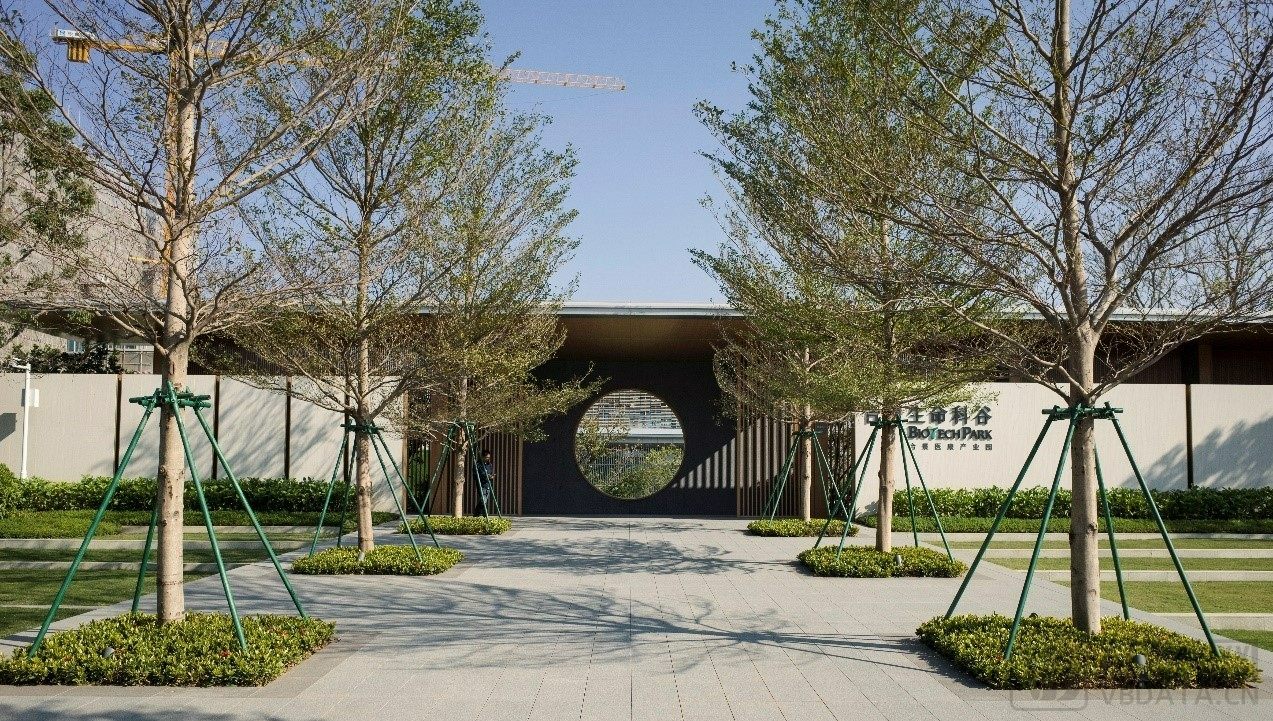
Walking through the main gate, sunlight filters into the garden, casting dappled shadows. Winding through the trees and turning a corner, you discover a serene expanse of emerald-green water nestled deep within the park. The sleek, clean lines of the buildings reflect a modern, tech-forward aesthetic. You might think this is a new residential community? No, it is actually a biomedical industrial park.
Biopharmaceutical companies based here receive imported raw materials daily from Baiyun Airport, located just 7 kilometers away in a straight line. After manufacturing batches of products, they store them in the adjacent logistics park and distribute them across China via cold-chain logistics.
Here isGuangzhou Keming Life Science ValleyLeveraging the advantages of the Bay Area’s biomedical industry cluster and its status as an international aviation hub, we focus on the development of innovative drug formulations and high-tech medical devices, research in stem cells and regenerative medicine, genetic testing, and high-end/precision medical services, striving to build a new highland for the biomedical industry in the Guangdong-Hong Kong-Macao Greater Bay Area.
In today’s fiercely competitive and highly homogenized biotech industrial parks, what sets Hejing Life Science Valley apart in empowering innovative enterprises with superior services? How does it differ from other parks? VCBeat interviewsLi Xiaojun, Deputy Director of Investment Promotion, Guangzhou Hopson Life Science ValleyConducted an exclusive interview.
Comprehensive Coverage of Medicine, Education, Research, and Industry: Creating a New Landmark for the Bay Area’s Bioindustry
Driven by multiple favorable factors, including the release of policy dividends, support from capital markets, and a reserve of professional talent, China’s biopharmaceutical industry has experienced explosive growth. Against this backdrop, the Outline Development Plan for the Guangdong-Hong Kong-Macao Greater Bay Area was released. Under the guidance of national regional strategies, the Greater Bay Area has unveiled a new economic blueprint, establishing four core sectors—aviation hubs, cross-border e-commerce, biology and health, and green finance—to create a cutting-edge economic model.
Biomedicine has become one of Guangzhou’s fastest-growing leading industries. To date, Guangzhou is home to more than 5,500 biopharmaceutical companies, ranking third nationwide in China. The city’s biomedicine sector is currently maintaining an average annual growth rate of 10%, with its industrial scale projected to exceed RMB 180 billion in 2022. Last September, Guangzhou was honored with the title of “China’s Most Investment-Worthy Innovative City for Biomedicine.” It is fair to say that Guangzhou’s biomedicine industry holds immense potential for future development.
“Compared with districts such as Huangpu and Baiyun, the development of the biopharmaceutical industry chain in northern Guangzhou is relatively weak. Life Science Valley is the first specialized biopharmaceutical park in Huadu District, Guangzhou. Through the construction of this park, we aim to gather high-quality biopharmaceutical enterprise resources from the Greater Bay Area to Huadu District, establish a biopharmaceutical industry hub in northern Guangzhou, and promote the development of the entire upstream and downstream biopharmaceutical industry chain in Huadu District,” said Li Xiaojun.
Guangzhou KWG Life Science Valley is the first biomedical industrial park developed by KWG Group in Guangzhou.
In recent years, KWG Group has seized the development opportunities presented by China’s booming health industry and the Guangdong-Hong Kong-Macao Greater Bay Area, actively exploring the integration of real estate with diversified healthcare sectors encompassing medical services, pharmaceuticals, and elderly care. In September 2019, construction officially commenced on the Guangzhou KWG Life Science Valley, which is dedicated to establishing a distinctive biomedical industrial park in northern Guangzhou and deepening its presence in the biomedical sector.
The interview also highlighted the current construction progress: “The industrial park is being developed in two phases. Phase I has a total floor area of 160,000 square meters, while Phase II covers 120,000 square meters. Currently, the first batch of Phase I, comprising 60,000 square meters of built space, has completed final inspection and acceptance and is already in operation, with formal investment promotion launched in April this year. The second batch of Phase I, covering approximately 60,000 square meters, is under construction and is expected to be completed by the end of December next year. Construction of Phase II is scheduled to commence in 2023. The entire project plans for the construction of 38 standalone corporate headquarters buildings, 19 high-rise production and office towers, and 5 buildings designated for talent apartments and supporting facilities.”
Currently, the industrial park has established four major industrial directions:Biopharmaceuticals, Stem Cells and Regenerative Medicine, Medical DevicesandSmart Healthcare, six key sub-sectors have been identified within these four major industrial directions: biopharmaceutical innovation, stem cells and immune cells, in vitro diagnostic reagents, innovative medical devices, natural plant-based innovative drugs, and Internet-plus smart healthcare. The initiative is committed to achieving full coverage of the integrated “medical care–education–research–production” value chain, providing one-stop services for biopharmaceutical enterprises at various stages of development, and establishing the Guangdong-Hong Kong-Macao Greater Bay Area as a new highland for the biopharmaceutical industry.
The Laboratory Is Built in the Garden
Industrial parks developed by real estate companies differ from those led by the government. First, industrial investment has become a key direction for the transformation of many real estate firms, a shift that is warmly welcomed by the government. Second, real estate developers are better positioned to meet users’ needs for physical infrastructure, leveraging their distinct advantages in operational services, property management, human-centric living environments, and commercial supporting facilities. This enables enterprises to enjoy an office environment and lifestyle atmosphere within the park that feels as comfortable and familiar as their homes and residential communities during work and R&D activities.
For modern industrial parks, an aesthetically pleasing environment not only enhances corporate influence and competitiveness but also generates potential social and economic benefits. Life Science Valley boasts an overall greenery coverage rate of 20%, reaching the highest standard for industrial projects, thereby truly realizing the vision of “building cities within forests and laboratories within gardens.”
For instance, the Nobel Life Science Park integrates arbors, shrubs, open woodlands, lawns, and natural forests with the topography and microenvironments of each plot, creating a spatial experience characterized by distinct layers and an orderly yet varied layout. Within the Traditional Chinese Medicine (TCM) Popular Science Base, a lakeside rear garden has been developed, encircled by a green belt along the moat water system, thereby integrating the work environment into the natural landscape and providing a comfortable office experience.
The most distinctive feature is the park’s customized solutions for tenant enterprises.Standalone Corporate Headquarters, featuring three levels of open-plan space with a total area of 504–723 m², suitable for corporate R&D, office operations, client reception, and product exhibitions, and also accommodating smaller incubator-style and R&D-focused institutions.
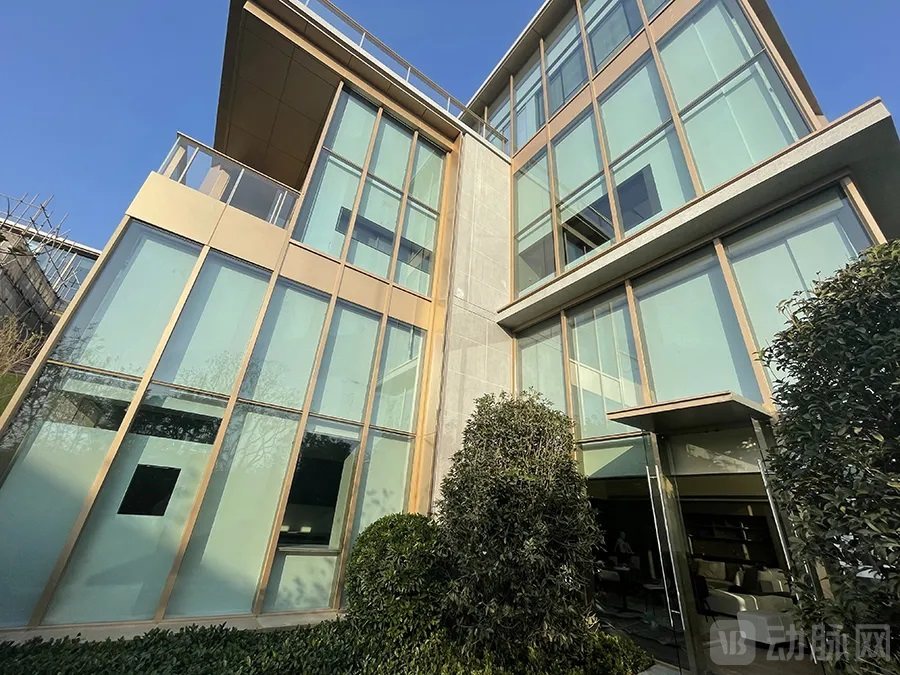
Standalone Corporate Headquarters
Li Xiaojun told VCBeat that the park’s first tenant was attracted by the “small yet exquisite” three-story design of a standalone corporate headquarters. As a company focused on the research and development of products based on the concept of “medicine and food homology,” it did not require a large floor area but needed mutually independent spaces. The small standalone building perfectly met the company’s spatial needs: the first floor houses a product exhibition area and a corporate reception center, while the second and third floors serve as the R&D center, helping to establish a premium corporate image for the company in the field of food research and development.
Superior Location Offers Businesses Unparalleled Convenience
John Kasarda, the father of aerotropolis, once said: “In the era of the speed economy, cities with airports are evolving into airport cities.” This illustrates that location and transportation have become key factors in the development of many industries and even cities.
In recent years, the development of the Guangdong-Hong Kong-Macao Greater Bay Area has made solid progress, advancing steadily toward the goal of becoming a world-class bay area and urban agglomeration. Diverse advantageous resources are converging in the region, the multi-modal transportation network spanning its 11 cities is becoming increasingly dense, and national-level international science and technology innovation centers have been successively established in the Greater Bay Area.
Guangzhou Hejing Life Science Valley boasts unparalleled locational advantages and superior transportation connectivity.Life Science Valley is situated at the northern gateway to the Greater Bay Area, within the Guangzhou Airport Economic Demonstration Zone. It lies in close proximity to the exits of the Daguang Expressway and the Second Airport Expressway, approximately 7 kilometers from Guangzhou Baiyun International Airport, 9 kilometers from the airport intercity railway station, and 18 kilometers from Guangzhou North Railway Station, offering convenient access to downtown Guangzhou and the broader Greater Bay Area through seamless air-rail intermodal connectivity.
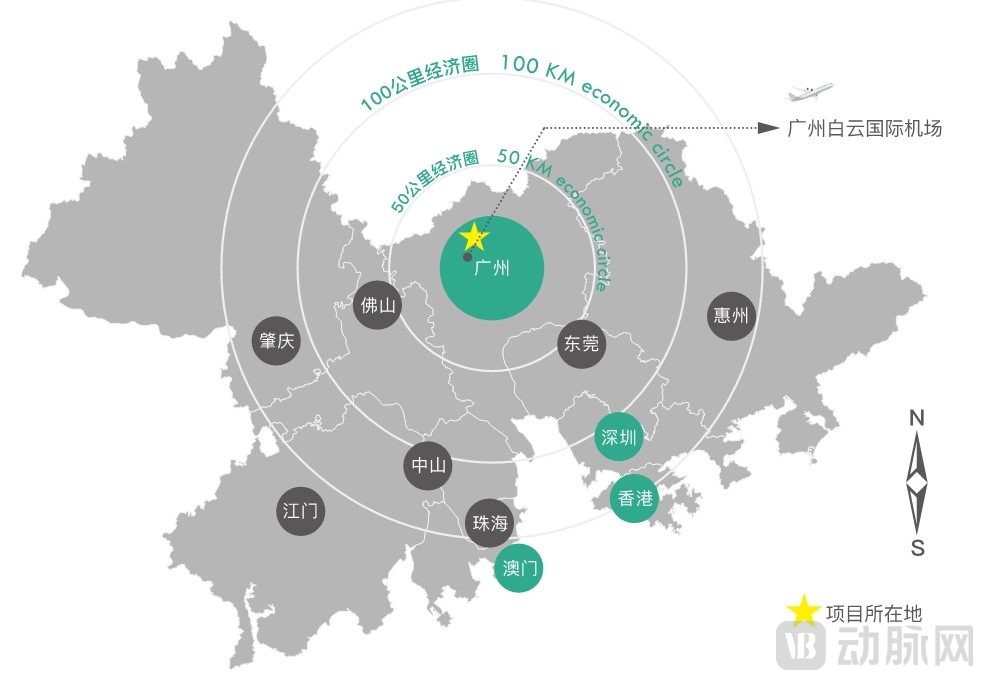
Located at this air transport hub, Life Science Valley inherently possesses advantages in pharmaceutical cold-chain logistics, a key consideration for the biopharmaceutical industry.
Currently, Guangzhou Baiyun International Airport is constructing Terminal 3 and developing supporting airport economic industry services. The airport logistics distribution center not only effectively addresses challenges in pharmaceutical cold-chain logistics but also offers abundant warehousing resources. The airport bonded zone provides certain advantages for the import and export of corporate goods. Li Xiaojun highlighted a collaborative model for airport-based pharmaceutical cold-chain logistics: “Companies can establish their headquarters within the industrial park and set up warehouses at the logistics center, thereby comprehensively resolving issues related to cold-chain transportation and storage of their products.”
Five Major Service Platforms Provide Full-Lifecycle Operational Support for Enterprises
The unparalleled location and superior lifestyle amenities are advantages of Life Science Valley, but they are not the whole story. Beyond these distinctive strengths, the park willProvide enterprises with full-lifecycle operational support for the biopharmaceutical and general health industry, offering comprehensive backing and assurance from product R&D through to market launch and all post-launch stages., while establishing five major service platforms to drive the company's development.
First, a public technical platform.The park is currently prioritizing the development of its oral health industry as a key industrial platform, jointly established in collaboration with the National Medical Products Administration, the Guangdong Medical Device Industry Association, South China University of Technology, and Sinopharm Dental.Oral Industry Incubation Platform, establish a big data platform for oral health, and incubate key enterprises in upstream and downstream sectors of the dental industry, including dental digitalization, implants, and orthodontics.
Second, the sci-tech finance platform。The park was established.Hejing Life Science Valley Biopharmaceutical Special Industry Fund, managed by Guangzhou Xinyuan Equity Investment Management Co., Ltd., a subsidiary of KWG Group, it provides various entrepreneurial support services—including technology, finance, and training—to promising industrial innovation projects.For enterprises settling in the park, the equity investment amount per project is capped at approximately RMB 5 million. In addition to its own investment funds, the park actively introduces more than ten specialized biomedical investment institutions, industry guidance funds, and PE/VC firms to participate jointly. By establishing proprietary funds, the park provides financing channels and financial support to outstanding enterprises and projects within the park, thereby promoting their development.
Third, specialized supporting platforms.Leveraging intelligent production and digitalized, information-based management, the industrial park achieves green manufacturing across its entire area, realizing clean production, waste resource recovery, and low-carbon energy use, thereby promotingHigh-End, Efficient, and Green Development of the Biopharmaceutical Industry. Planned and under construction areExperimental Reagents and Gases Service Center, Wastewater Treatment Center, Compliant Shared Warehousing, and Public Laboratories。
Fourth, industrial neighborhood centers.The park provides enterprises with a range of services, including daily necessities such as food, clothing, housing, and transportation, as well as business liaison support, thereby safeguarding the work and personal lives of both businesses and their employees.
5. Professional Associations and Bases.The industrial park collaborates with the Guangdong Logistics Industry Association, the Guangdong Medical Device Industry Association, the Guangdong Food Society, the Oral Care Manager Training Base, the Indoor Environmental Health Laboratory of the National Building Materials Big Data Research Center, and the Guangdong Biomedical Industry Alliance to establish training bases as well as research bases for industry-academia-research cooperation. In addition, the “National Human Genetic Resources Sharing Service Platform, Greater Bay Area Innovation Center"Settling in the industrial park can provide shared storage services for genetic resources to the cell and gene therapy industry."
Through five major platforms, we focus on the commercialization of scientific research achievements for enterprises, helping them obtain relevant licenses in a compliant, lawful, cost-effective, and efficient manner. By providing end-to-end services, we integrate resources and collaborate with enterprises to drive innovative development.
In recent years, KWG Group has joined forces with strategic partners such as Yongtai Hongkan, Zhongyuan Union Cell & Gene Engineering, Israel’s GLK, and Guangzhou Bio Island to efficiently integrate high-quality resources in the fields of life sciences, biopharmaceuticals, medical services, and elderly care. The company has established a cooperative platform for symbiosis, resource sharing, and mutual benefit among government, real estate, and enterprise sectors, while actively exploring the integration of industry and real estate across diverse business formats, including health complexes and medical-nursing towns.
As of now, KWG Group has also established a presence in two major biopharmaceutical industry projects: Guangzhou KWG Kesheng Plaza and Shanghai KWG Life Science Valley.
Guangzhou International Bio Island is the future highland of biotechnology in Guangzhou and a national-level bio-industry base. Located at the core of Bio Island, Hejing Kesheng Plaza is strategically positioned to strengthen, supplement, and extend the biomedical industry chain within the Guangdong-Hong Kong-Macao Greater Bay Area, providing life science and pharmaceutical R&D enterprises and their employees with a superior, fully functional office and business environment.
Shanghai HJ Life Science Valley is located in the core business district of Qingpu New City, benefiting from two major national strategies: the “Integrated Development of the Yangtze River Delta” and the “Hongqiao International Open Hub.” In partnership with Yongtai Hongkan, a leading enterprise in life science stem cells, the project has jointly established a Life Science Exhibition Center and a Cell Storage Bank, which will serve as a hub for cooperation and exchange within the broader health industry in the future.
Looking ahead, the broader health sector is a key focus of KWG Group’s industrial transformation. Establishing Life Science Valley and building a professional brand for biomedical industrial parks marks only the beginning of KWG Group’s strategic layout in the health sector. In the future, KWG Group will continue to expand its presence in the broader health industry, supporting the leapfrog development of China’s biomedical sector.