

Cracks in the Hype: What the Stock Plunges of Synthetic Biology Leaders Reveal

Cathay
R&D and Manufacturing of Bio-based Materials
In 2021, the synthetic biology capital market not only continued to excite industry professionals with its impressive capital-raising achievements, but also saw significant stock price volatility among several leading synthetic biology companies in the second half of the year, truly causing hearts to race and adrenaline to surge.
First, in August, Zymergen (NYSE: ZY) experienced a stock price decline due to a major setback with its core product.
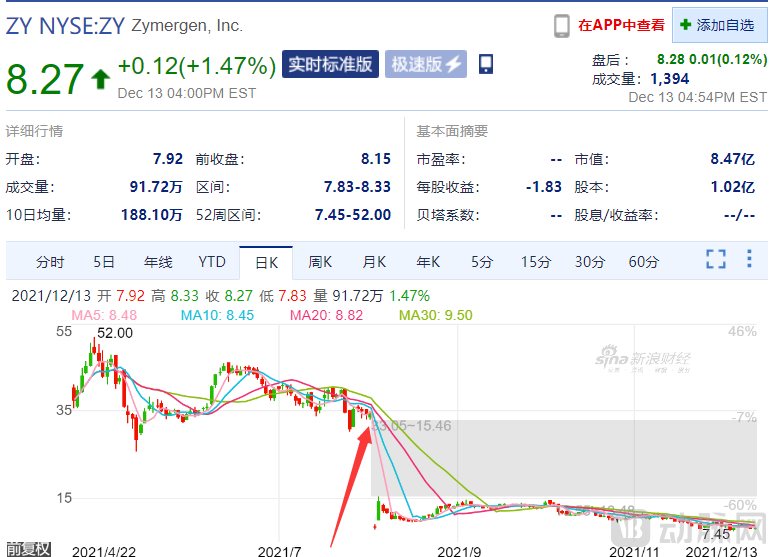
On August 3, U.S. Eastern Time, Zymergen announced that co-founder and CEO Josh Hoffman had resigned from his positions as CEO and board member, with Jay Flatley assuming the role on an interim basis. Additionally, following an assessment of the short-term market opportunities for its core product, Hyaline, which indicated a smaller-than-expected market size, the company will make corresponding adjustments to its Hyaline strategy in the near term. In response to this news, Zymergen’s stock price plummeted, closing down 68% on August 3 and bringing its market capitalization to approximately $1 billion.
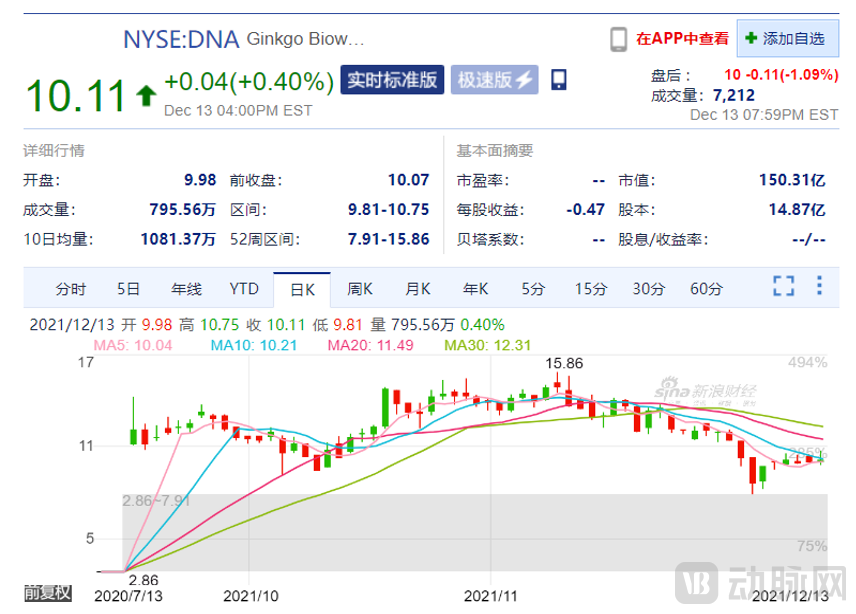
However, the market’s irrational turmoil did not cease. Two months later, on October 6 (U.S. Eastern Time), a short-selling firm named Scorpion Capital publicly exposed Ginkgo Bioworks (NYSE: DNA) for its alleged “self-dealing” misconduct. Scorpion Capital asserted that nearly all of Ginkgo’s contract manufacturing revenue originated from related parties, many of which were shell companies under Ginkgo’s custody. Following the short report, Ginkgo’s stock price plummeted by 29.8% from its historical high.
However, unlike Zymergen, Ginkgo quickly returned to its previous stable state—just two days later, Ginkgo’s stock price had rebounded to $10.33, with its market capitalization recovering to prior levels.
“This incident is clearly a case of malicious short-selling by Scorpion Capital, and the stock market volatility is purely ‘irrational.’ We have been aware of Ginkgo’s related-party revenue for several years. Such practices are understandable for a startup in an emerging sector. During its early development stage, Ginkgo needed to proactively leverage synthetic biology technologies to demonstrate its value to the public,” an anonymous industry insider told VCBeat.
But the market remained turbulent. In November, veteran synthetic biology company Amyris also suffered the pain of a sharp stock price decline after releasing its Q3 2021 quarterly report.
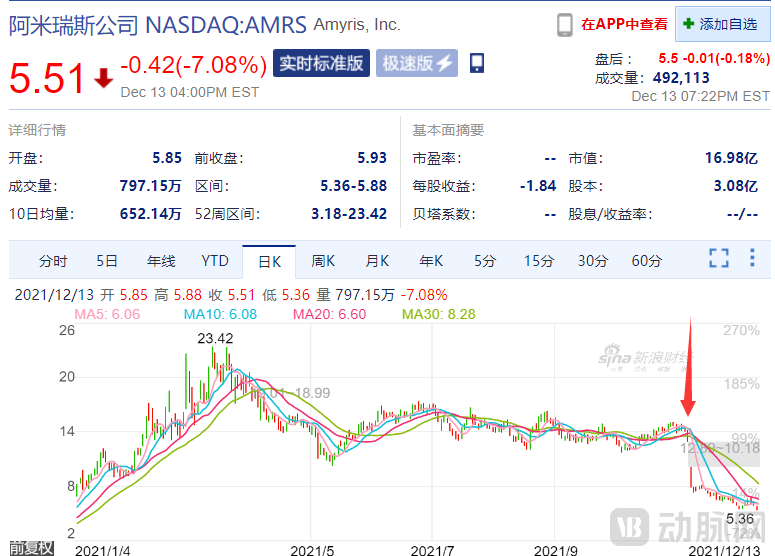
As of the close of trading on Thursday, November 11, Amyris’s stock price had plummeted 47% from its closing price of $14.09 on Friday, November 5.
The underlying reason is that Amyris’s revenue in the third quarter of 2021 fell far short of investors’ expectations. The company reported that its overall gross profit margin declined to 37%, amid ongoing global supply chain challenges. On the 11th, Amyris also announced the issuance of $600 million in senior unsecured notes. These notes will bear cash interest at an annual rate of 1.50%, payable semiannually. These factors have led investors to worry that Amyris’s sales in the fourth quarter (and beyond) will also miss expectations, resulting in a sharp decline in its stock price.
In the first half of 2021, two star unicorns in the field of synthetic biology, Zymergen and Ginkgo Bioworks, went public one after another, attracting keen attention from the capital market and indirectly adding significant momentum to the development of synthetic biology. However, the stock market volatility experienced by the synthetic biology sector in the second half of 2021 was partly due to the heightened scrutiny that comes with prominence, and also served as a reminder that while maintaining optimism and enthusiasm for emerging fields, we must also exercise rationality.
One must look beyond appearances to grasp the essence. The frequent fluctuations in the synthetic biology stock market are merely surface phenomena; what, then, are the underlying causes? Through extensive interviews with industry professionals in the field of synthetic biology, VCBeat seeks to analyze these drivers and uncover potential solutions, hoping to offer readers some food for thought.
The stock price fluctuations are primarily attributed to two fundamental challenges in the synthetic biology industry:First, the “selection difficulty” of biosynthetic targets; second, the “production difficulty” of biosynthetic targets.What this reflects are the challenges of product selection and process scale-up facing the industrial sector of synthetic biology. These two challenges are closely interconnected.
Let us first discuss the issue of “production difficulties,” which directly affects the performance of synthetic biology companies in the capital market.
“Production Challenges” are primarily manifested in the scale-up phase of synthetic biology products. Industry insiders reveal that while the engineering and design of microorganisms generally pose no issues in small-scale laboratory culture environments, significant challenges arise when attempting industrialization. Once production is scaled up to fermentation facilities with capacities of hundreds of tons, the environment faced by the microorganisms becomes exceptionally complex, making it difficult to ensure their stability.
Therefore, most companies in the industry are stuck at the process scale-up stage. Whether in the United States or China, enterprises capable of scaling synthetic biology processes from laboratory trials to large-scale production are rare.
In practice, synthetic biology companies are often not bottlenecked by highly scrutinized areas such as chassis organisms or modular components. Instead, they face critical constraints in overlooked aspects, particularly those related to cost. For instance, how to achieve separation and purification at the lowest possible cost, and how to ensure the quality of polymer synthesis from monomers after the monomers have been produced.
Exploring the reasons behind this, apart from the numerous challenges inherent in process development itself,The primary reason remains the insufficient industrial experience of biologists in process scale-up.
Most companies are acutely aware of this. They stated,Since most founders in the biotechnology sector come from academic backgrounds, they are well-versed in microbial cultivation but lack experience in industrial-scale production.Therefore, various difficult-to-resolve challenges are encountered during the process scale-up phase.
So, how can the bottlenecks in process scale-up be overcome? Is there a viable solution?
Just as we need time to wait for fruit to ripen before we can savor its delicious sweetness, the development and maturation of synthetic biology also require greater patience and time.
Drawing on the Development Model of the Pharmaceutical Industry?
Dr. Liu Xiucai, CEO of Cathay Biotech, proposed a viewpoint thatTo address the challenges of process scale-up in the synthetic biology industry, it is advisable to draw lessons from the development model for new drugs in the pharmaceutical sector.
Due to limited resources and experience, startup pharmaceutical companies often lack the comprehensive knowledge and expertise required for the various stages of the lengthy drug development process, including drug synthesis, screening, animal studies, human trials, and clinical evaluation. Persisting from initial compound screening all the way to new drug approval is akin to “thousands of soldiers crossing a single-plank bridge”—with only a handful successfully making it across. Consequently, many startups no longer aim to shepherd a new drug through its entire lifecycle; instead, they license out their research findings to Big Pharma, which takes over these high-risk, capital-intensive, long-term projects.
Dr. Liu Xiucai believes that,The field of synthetic biology may see a similar development pattern in the future:A startup or research institution has developed a highly efficient and valuable metabolic pathway using its proprietary methods. However, as the project still requires subsequent processes such as fermentation, purification, material synthesis, and modification, it would entail substantial expenditures and carry extremely high development risks. Consequently, the startup or research institution has chosen not to proceed further downstream but instead to package and sell its findings to established industry players for further development.
Mature companies not only possess a greater capacity to withstand financial risks, but also enjoy more flexibility in allocating various resources. Most importantly, their extensive experience in scaling up product manufacturing processes far surpasses that of startups, which often have virtually no industrialization experience.
Developing a "Simplified" Version of Synthetic Biology?
Dr. Luo Yu, founder of Abiochem Biotechnology, offered us another perspective.
When discussing with VCBeat the turbulent journey of Amyris, the “pioneer” of synthetic biology, in the industry, Dr. Luo Yu summarized some reasons for the company’s failure. One of them was Amyris’s “ambitious and high-profile strategy.”
“U.S. investors poured substantial capital into Amyris in its early stages. Overconfident, Amyris built out every aspect of its R&D for biofermentation-based renewable energy to the highest standards, often neglecting cost-effectiveness optimization across many processes. As the company later encountered bottlenecks in scaling up production, and was further impacted by external factors such as policy changes and declining oil prices, it proved unable to compete with the traditional chemical and energy industries, ultimately leading to poor performance in the secondary market.”
"Therefore, from the perspective of corporate operations, controlling development risks and costs during the process scale-up phase requires consideration from multiple angles."
Luo Yu stated that in addition to developing standard cell factory-based synthetic biology, Abiochem has also chosen to adopt an enzyme-centric approach,“Chemical Synthesis + Biosynthesis”the “simplified” synthetic biology approach for product development and design: “The entire process of scaling up biosynthesis encounters numerous challenges. We will integrate various factors to determine the most rational synthetic route at each stage. We believe thatIt is not necessary to optimize the conversion rate of every biosynthetic step to 100%, nor is it required to employ biological fermentation for each stage. The ultimate goal is to achieve commercialization of the product while ensuring energy conservation and carbon reduction, thereby responding to the national call for “carbon neutrality.””
Different paths, same goal: As enterprises develop green industry, they must flexibly address practical challenges. Production costs comprise multiple factors. If synthetic biology technical teams fail to understand this throughout the entire product manufacturing process, implementation will be difficult.
Compounding the industry-wide challenge of process scale-up is the difficulty in selecting targets for biosynthesis—namely, product selection. For synthetic biology companies, navigating process scale-up in later stages is already exceedingly difficult. If they further stumble in product selection, the vast majority are destined to vanish in the tide of time.
Unfortunately, many startups in the field of synthetic biology have failed to recognize this issue. They tend to focus excessively on extending and commercializing their own scientific achievements while overlooking actual market demands. As a result, they inevitably face the risks associated with fixed product selection.
Dr. Zhang Haoqian, Co-founder and CEO of Bluepha, stated that the lifecycle of consumer goods is three to four years, whereas the development of new synthetic biology products from start to finish takes approximately five years and requires an investment of around $50 million. If the wrong product is selected—for instance, one with strong cyclicality or one that falls out of market demand after a three- to four-year trend—the resulting losses would be substantial.
Therefore,From the outset, the entire founding team must take into account technology, market dynamics, and economic viability.
“Technology pertains to technical feasibility; the market concerns how to gain customer acceptance of the product; economics addresses whether and how profitability can be achieved, as well as the product’s gross margin. Only by giving full consideration to these three factors can one largely ensure the success of a developed product; otherwise, the likelihood of failure is extremely high,” said Zhang Haoqian.
So, how should enterprises select products?
As one of the core challenges in the current field of synthetic biology, this issue has no standard answer.
However,By learning from the experience accumulated in the industry and drawing lessons from past failures, we canMinimize the probability of product selection failure——How to determine the quality of a product selection? How to avoid obvious mistakes in product selection? VCBeat has summarized the following three judgment methods through interviews with multiple professionals in the synthetic biology industry, for readers' reference:
Is market demand sufficiently “rigid” and “inelastic”?
The primary consideration in product selection is to assess market demand.Whether the product category chosen by a company addresses society’s current inelastic demand, whether the market demand is sufficiently large and stable, whether there exists an invariant factor capable of driving market demand over at least a 10-year horizon, and whether there will be sustained incremental market growth in the future are all primary considerations for startups.
Among these, the four characters “rigid demand” are the most important. Zhang Haoqian believes that,Synthetic biology, as an emerging technology, continues to break through innovation barriers; its key to success largely depends on the social benefits of the final commercialized products.
“Products developed through synthetic biology are, in essence, a form of genetic engineering. As such, products derived from genetic engineering have long been subject to stringent regulatory oversight and ethical constraints,” stated Zhang Haoqian. “If synthetic biology products fail to address significant issues and merely cater to the non-essential needs of a niche market, companies will undoubtedly encounter substantial obstacles during commercialization.“But if synthetic biology products truly have the potential to address a significant issue of public concern, societal tolerance and acceptance will be much higher, and the resistance encountered during commercialization will be significantly reduced.”
Therefore, the most critical logic in market selection for product portfolio strategy is to closely align with the most urgent and key needs of society and the public, rather than focusing on relatively niche markets.
“Our government is highly pragmatic. If an issue addresses intense public concerns, policies will tilt in its favor, and the government will extend a helping hand to assist enterprises in overcoming difficulties.” Conversely, if a company is driven solely by commercial returns and aims to meet the demands of a niche market, it is likely to find itself isolated and unsupported once it encounters challenges in scaling up production.
Zhang Haoqian describes market-related challenges in product selection as the primary obstacle in the commercialization process, while technical difficulties encountered during scaled-up production are considered secondary obstacles. “Often, people believe that the technical bottlenecks arising during mass production are the main hurdle, but in reality, they are merely visible, secondary obstacles. The true barriers are more often the invisible challenges companies face as they navigate the market.”
Does it violate the natural laws of life?
The second point to consider in product selection isScientifically assess whether microorganisms are suitable for producing corresponding products from the perspective of biological systems.Dr. K2, co-founder of Biosysen, stated that for a class of small molecules with high activity, production and extraction using small amounts of microorganisms in the laboratory are relatively easy; however, once scaled up for industrial production, numerous practical difficulties arise, often making it hard to achieve.
Therefore, the startup team needs to determine what it wantsSubstances obtained through microbial fermentation,Whether it is located at or affects critical material and energy nodes within the entire metabolic pathway——If so, it would be very difficult to achieve large-scale production through microbial fermentation.
The reason is that small molecules with active groups exhibit excessively high reactivity, which can easily interfere with microbial growth and cause intolerable toxicity to microorganisms. Alternatively, they may excessively amplify metabolic flux in a specific direction, potentially leading to insufficient supply of essential substances required for sustaining life activities and resulting in the collapse of the entire metabolic network. In large-scale production, relying solely on directed evolution to increase product yield is extremely challenging, and the purification costs are prohibitively high.
Regarding biosynthesis, Dr. K2 believes that polymers such as PHA are more amenable to mass production. Furthermore, macromolecules with higher molecular weights, including polypeptides and proteins, are better suited for biosynthetic rather than chemical synthetic production methods. "In a living system, condensates often serve as terminal metabolic products of organisms; they continuously consume small molecules with high biological activity to form condensates with lower activity, thereby imposing minimal survival stress on the cells."All of our bioengineering designs must adhere to the inherent biological laws of life.”
Each extant microorganism has undergone countless generations of evolutionary change, developing its own inherent “preferences” and “aversions.” Ethically unconstrained, forceful genetic modification of microbes often yields unfavorable outcomes.
Therefore, one insight we have gained is that it is not necessary to employ biosynthetic methods for every step in the product manufacturing process; rather,Fully integrate the respective advantages of biosynthesis and chemical synthesis to ensure that each production step is carried out in the most appropriate manner.This approach not only aligns with the biological characteristics of microorganisms but also reduces the difficulty of producing biosynthetic products.
A Major Breakthrough Recently Achieved by China’s Scientific Community—Artificial Starch Synthesis—Fully Leveraged the Respective Advantages of Chemical and Biocatalysis Throughout the Entire Synthetic Process, Ultimately Yielding Significant and Disruptive Results. Although there remains room for optimization before this technological achievement can be translated into commercial products, it nonetheless serves as an excellent model for learning.
Since synthesizing target compounds by leveraging the metabolic preferences of microorganisms is the viable approach, how can we rapidly screen for the desired microbial strains?
Establishing high-throughput rational strain design is expected to significantly reduce the R&D time from initial strain engineering to mass production.However, not every team in biomanufacturing enterprises possesses the platform technologies required to support genomic design and screening of microbial strains. Companies like Biosysen aim to provide such solutions for the industry. “We have established a database comprising tens of thousands of microbial strains. By combining the metabolic advantages of natural strains with the engineering capabilities of model organisms, we seek to develop a cross-species strain design solution. This will help future biomanufacturers select appropriate starting strains to achieve scalable production of desired biosynthetic products,” said Dr. K2.
Is the Synthetic Biology Pathway the Optimal Solution?
Thirdly, before finalizing product selection, the team needs toRationally assess the difficulty of producing the target product via biosynthetic pathways and compare it with other production routes:Is it less difficult and more likely to succeed in utilizing biosynthesis for target products compared to other solutions? Can synthetic biology approaches significantly reduce final costs or multiply product quality several-fold? Given that our understanding of gene functions and their interactions within living organisms remains incomplete, we still face many unknown difficulties and risks. Therefore, the application of synthetic biology technologies in industry should best focus on challenges that other technical pathways cannot address effectively or at all.
Take the well-known artemisinin as an example. Since its introduction, artemisinin has saved millions of lives worldwide. Particularly in Africa, where malaria is rampant, artemisinin-based combination therapies (ACTs) have replaced quinine as essential medicines. Its discoverer, Tu Youyou, was awarded the Nobel Prize. The established synthetic biology company Amyris successfully went public with a ringing bell, leveraging its impressive track record in the industrial-scale production of artemisinin. It instantly reached the peak of the capital market, becoming the center of attention for a time.
However, the boom was short-lived. As large numbers of African farmers produced substantial quantities of artemisinin using traditional cultivation methods, market prices for artemisinin plummeted, bringing an end to the promising commercial narrative of biosynthetic artemisinin. Despite the concerted efforts and exhaustive brainstorming by the scientific think tank working on artemisinin biosynthesis—who explored virtually every synthetic biology approach available to boost production capacity—they were ultimately outcompeted by farmers armed with nothing more than shovels.
Therefore, Amyris’s decision to pursue the biosynthesis of artemisinin was a remarkable heroic feat; however, when analyzed solely from a commercial perspective, it represented a failed product selection. Typical examples of such failures include Zymergen’s thin-film project and certain consumer goods initiatives. As a leader in synthetic biology, Zymergen released its third-quarter earnings report on November 3, announcing that it would suspend numerous thin-film projects and some consumer goods programs due to underwhelming market performance or an inability to compete with existing industry production methods.
In summary, whether it is the challenges of scaled-up production or the difficulties in product selection, these are inevitable hurdles that the synthetic biology industry must overcome during its development. The discussion above merely summarizes lessons learned from past failures, with the hope of offering some insights to the industry.
Although synthetic biology holds promise for helping humanity realize the age-old dream of “creating life,” the field still faces numerous challenges. Achieving “predictable design” remains the “ultimate goal” of synthetic biology.
Even in today’s era of rapid scientific advancement, we must acknowledge that life phenomena are exceedingly complex, and our understanding of the functions of individual genes and their interactions remains limited. Elucidating how genes are transcribed into mRNA, mRNA is translated into proteins, proteins execute their functions, and these functions integrate into metabolic pathways—and how all these processes are interconnected with regulatory and signaling pathways—remains a formidable challenge.
Christina Smolke, Professor of Bioengineering and Chemical Engineering at Stanford University and CEO of Antheia, has publicly stated: “I think a common misconception is that many people believe scientists can easily design living systems, which is often not the case. The public does not always distinguish between what we can achieve now and what remains a future direction yet to be realized, nor how long it will take for these future developments to come to fruition.”
The road is long and arduous, but perseverance leads to success. We hope everyone will bring more enthusiasm, rationality, understanding, support, and patience to the field of synthetic biology.