

22 Provinces and Over 40 Cities Convene at Sanming Procurement Alliance Meeting, Signaling Key Medical Reform Trends
On December 12, the Fourth Joint Conference of the Sanming Procurement Alliance (National) was held in Xiamen, Fujian Province. Inside the venue, representatives from more than 40 cities across 22 provinces (including municipalities directly under the Central Government and autonomous regions) were seated in a square-around-square arrangement, evoking the tense atmosphere recently seen in the “soul-bargaining” of national medical insurance negotiations. However, the Sanming Procurement Alliance (National) platform has already achieved full-process digitalization, eliminating the need for on-site bidding or price negotiations. The main objectives of this conference were to discuss the expansion and upgrading of the Sanming Procurement Alliance (National), institutionalize cross-regional joint procurement of pharmaceuticals and medical devices, and further facilitate the implementation of healthcare reform achievements across various regions with the support of the Sanming Procurement Alliance (National).
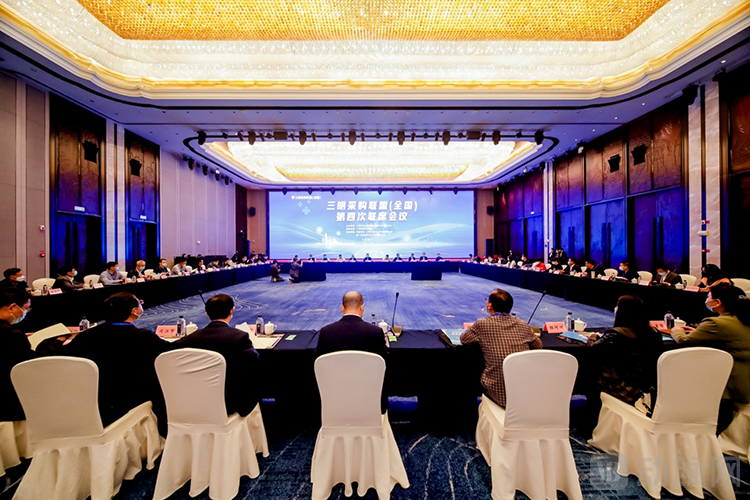
Sanming Procurement Alliance (China) - Site of the 4th Joint Conference
“The Sanming Procurement Alliance (National) is a product of the Sanming healthcare reform and serves as an important vehicle for promoting the Sanming experience nationwide.” At the conference, Ding Yilei, Director of the Department of Medical Service Prices and Tendering and Procurement under the National Healthcare Security Administration, stated that members of the Sanming Procurement Alliance (National) conduct joint procurement of pharmaceuticals and medical consumables on a broader scale. This helps further reduce artificially inflated prices of pharmaceuticals and medical consumables, standardize procurement and usage practices in public medical institutions, and promote the strategy of “making room for new initiatives by eliminating waste and optimizing structures,” thereby extending the benefits of the Sanming healthcare reform to alliance regions. At this new starting point, all regions are encouraged to actively join the Sanming Procurement Alliance (National).
So, how does the Sanming Procurement Alliance (National) promote the Sanming experience across China? What trends in healthcare reform can be observed through this conference? VCBeat provides an analysis and interpretation.
At the conference, Xu Zhiluan, Director of the Sanming Municipal Healthcare Security Administration, announced that the Sanming Procurement Alliance (China) will continue to establish an information-sharing mechanism, promote the expansion of the alliance’s scale and scope, actively invite more provinces and municipalities to join, and build a “hub for healthcare reform innovation alliances.”
The expansion of the Sanming Procurement Alliance (China) signifies an increase in both the number of purchasers and procurement volumes, thereby enhancing bargaining power. It also indicates the attraction of more enterprises, fostering more robust competition and establishing a more virtuous cycle between tendering and procurement.
An Overview of China’s Centralized Procurement Landscape: A Networked System Led by National Centralized Procurement, Supplemented by Provincial and Cross-Regional Alliance Procurement, Is Taking Shape. Specifically, medical insurance authorities at the provincial, municipal, and even county levels serve as purchasing entities; while implementing national centralized procurement, they may also participate in one or more provincial or cross-regional alliance procurements. Similarly, pharmaceutical companies can supply multiple procurement alliances based on their product portfolios, production capacity, and other factors.
The “14th Five-Year Plan” for National Healthcare Security stipulates the routine and institutionalized implementation of centralized volume-based procurement of drugs organized at the national level, while continuously expanding the scope of centralized volume-based procurement of high-value medical consumables organized at the national level. It emphasizes strengthening unified guidance for centralized procurement agencies, standardizing local centralized volume-based procurement activities, and fostering a collaborative work pattern in which national, provincial, and cross-regional alliance procurements complement and advance each other. The “Opinions of the Central Committee of the Communist Party of China and the State Council on Deepening the Reform of the Healthcare Security System” also call for advancing the establishment of regional and national alliance procurement mechanisms, thereby forming a supply guarantee system characterized by full competition, reasonable pricing, and standardized, orderly operations.
The networked system is the typical form that emerges after the implementation of the aforementioned policies. As this networked system expands, the scale effects of procurement become more pronounced, and the precise needs of both suppliers and purchasers can be met.
Procurement: Tailoring Strategies to Local Conditions to Reduce Costs and Precisely Alleviate Disease Burden
The primary objective of the medical insurance-led centralized volume-based procurement (VBP) is to address artificially inflated drug prices. As of June 2021, five rounds of national VBP had been conducted, covering 218 drug products, with the average price reduction for selected products reaching 54%, resulting in savings of RMB 150 billion in drug expenditures.
From a national perspective, chronic diseases constitute the primary disease burden, and China’s centralized drug procurement initiatives are strategically focused on these conditions. The scope of procured medications has progressively expanded from drugs for common clinical and chronic conditions—such as hypertension, diabetes, coronary heart disease, respiratory and gastrointestinal disorders, and infections—to treatments for major diseases including lung cancer, breast cancer, colorectal cancer, and hematologic disorders, and further to clinical adjuncts such as contrast agents and nutritional supplements.
At the regional level, disease prevalence patterns exhibit distinct characteristics, and the burden of disease varies across areas. In 2018, the National Center for Chronic and Non-communicable Disease Control and Prevention of the Chinese Center for Disease Control and Prevention released the Report on the Burden of Disease in China and Its Provincial Administrative Regions from 1990 to 2016. The report highlighted regional disparities in the burden of major chronic diseases. For instance, the disease burden of cerebrovascular disease and ischemic heart disease was concentrated in the Northeast and Northwest regions, while it was lower in the southeastern coastal areas. The burden of lung cancer was higher in the Northeast and Southwest regions, but lower in the Northwest. Liver cancer showed a higher burden in the Eastern and Southern regions, whereas gastric cancer was more prevalent in the Central and Western regions. Esophageal cancer had a higher burden in North, East, and Northwest China. The burden of chronic obstructive pulmonary disease (COPD) was concentrated in the Southwest and Northwest regions. Diabetes prevalence was relatively high in the three Northeast provinces, Xinjiang, Tianjin, and Hainan.
In a networked procurement system, local medical insurance programs participating in procurement alliances at various levels and types facilitates the development of tailored procurement strategies. These strategies can be designed based on local disease prevalence and clinical needs, prioritizing conditions with the highest disease burden.
Taking the Sanming Procurement Alliance (China) as an example, its members include provincial, prefectural-level, and county-level healthcare security administrations, and it is exploring services for private medical institutions and retail pharmacies. In 2020, the Sanming Procurement Alliance (China) conducted joint procurement of drugs that had not undergone consistency evaluation. Compared with the procurement prices of generic drugs in cities participating in this joint procurement, the overall average price reduction was 69.52%, while also taking into account the actual needs of members at all levels.
At the conference, Professor Zhao Kun, a Visiting Professor at the Vanke School of Public Health and Health, Tsinghua University, provided guidance on the access, monitoring, and evaluation management mechanisms of the Sanming Procurement Alliance (China). He stated that an innovative, “efficacy-based” management approach should be adopted for the administration of drug and consumable procurement catalogs. Procurement prices should be adjusted based on continuously expanding evidence and re-evaluations, thereby ensuring that the procurement of drugs and medical consumables truly returns to focusing on clinical value and the most reasonable pricing.
Suppliers: Diverse participating enterprises adaptable to varying procurement rules
The Price Reduction Trend Driven by Centralized Procurement Has Become Inevitable: How Should Pharmaceutical Companies Participate After the Formation of a Networked Procurement System?
During the “4+7” volume-based procurement (VBP) pilot, only one company was awarded the bid for each drug product, resulting in fierce competition and high entry barriers. Under the expanded “4+7” VBP program and subsequent rounds of national VBP, multiple companies are allowed to win bids for a single product. According to statistics from the National Healthcare Security Administration, the bid-winning rate for companies in the fifth round of national VBP reached 74%. The selection process was not simply based on “the lowest price wins”; rather, only a few companies with the highest prices failed to win bids.
In accordance with the “14th Five-Year Plan for National Medical Security,” by 2025, each province (autonomous region, and municipality directly under the Central Government) shall have included more than 500 drug varieties in national and provincial centralized volume-based procurement programs. As the only nationwide, cross-regional alliance for the procurement of pharmaceuticals and medical consumables recognized and encouraged by the state, the Sanming Procurement Alliance (China) focuses its procurement efforts on market-based purchasing of pharmaceuticals and medical consumables beyond the 500 varieties covered by national and provincial centralized procurement, thereby serving as an important complementary force to national and provincial centralized procurement initiatives.
In 2020, when the Sanming Procurement Alliance (National) conducted joint procurement for drugs that had not undergone consistency evaluation, the lowest-priced product was selected as the proposed winner, and the second-lowest-priced product was designated as an alternative, provided quality standards were met. Among the final winning bidders were both listed companies such as Fu’an Pharmaceutical and small and medium-sized enterprises such as Hubei Hope Pharmaceutical. Meanwhile, industry leaders including Sinopharm, Shanghai Pharmaceuticals, Harbin Pharmaceutical Group, Chia Tai Tianqing, and Yangtze River Pharmaceutical Group participated in the competition but ultimately failed to win bids.
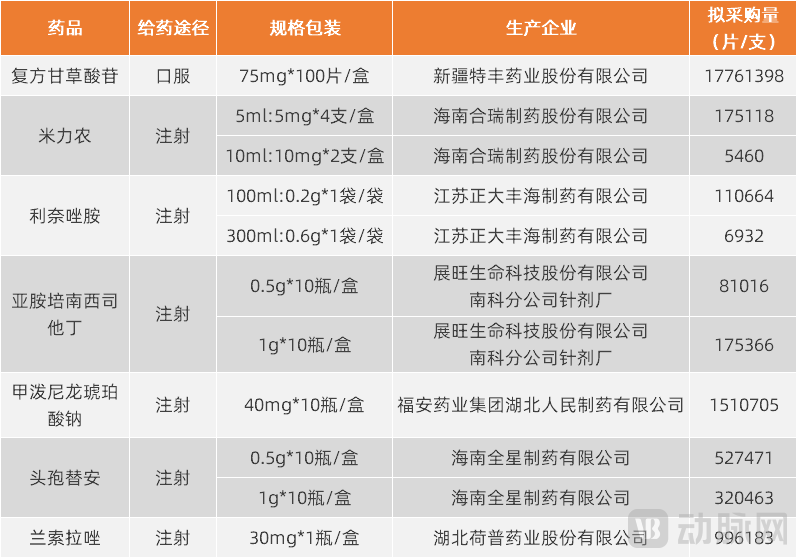
Results of the Centralized Procurement of Drugs Not Subject to Consistency Evaluation by the Sanming Procurement Alliance (China) in 2020; Source: Public Reports
Overall, the rules governing national centralized procurement are becoming increasingly refined, comprehensively balancing quality, price, and corporate incentives. Cross-regional joint procurement initiatives, such as the Sanming Procurement Alliance (National), serve as timely supplements, differentiating themselves from national centralized procurement frameworks. National centralized procurement mandates that drugs pass the consistency evaluation, involves large purchase volumes, and imposes high requirements on corporate production capacity. In contrast, the cross-regional joint procurement under the Sanming Procurement Alliance (National) does not strictly require consistency evaluation, offers flexible purchase volumes, and allows enterprises of all sizes to participate regardless of whether their products have passed the consistency evaluation. Consequently, within this interconnected network, the diversity of participating enterprises will increase. Companies can engage in corresponding procurement alliances based on their product portfolios and formulate sales strategies according to varying rules to maintain or expand their market share.
Furthermore, traditional Chinese medicine (TCM) enterprises are poised to seize new opportunities. At this joint conference, the nation’s first inter-provincial procurement alliance for TCM products and materials signed an agreement to join the Sanming Procurement Alliance (National). The two parties will jointly explore how centralized procurement can promote quality assurance, grade enhancement, and price stabilization for TCM products and materials.
During the conference, the Sanming Procurement Alliance (China) unveiled its newly upgraded digital platform, enabling intelligent end-to-end operations for the joint procurement, trading, settlement, payment, supply, and regulation of pharmaceuticals and medical consumables. The platform is developed and operated by Sanming Sanyi Lian Digital Technology Co., Ltd., a holding company under WeDoctor Group, and Xiamen Haixi Pharmaceutical Trading Center Co., Ltd.
Liao Jieyuan, Chairman of WeDoctor Group, stated that next,The Sanming Procurement Alliance (China) will leverage a digital platform to achieve precise volume aggregation, accurate calculation of retained savings, exact implementation of joint procurement, and targeted pharmaceutical care services., facilitating the direct delivery of pharmaceuticals from manufacturers to households in a transparent, open, and secure manner, while driving the economic development of local pharmaceutical industries.
Previously, the “14th Five-Year Plan for National Healthcare Security” had already pointed out the need to establish a provincial-level centralized procurement platform that integrates bidding, procurement, trading, settlement, and supervision, with healthcare insurance payment as its foundation. Overall, digitalization can play a role in three key areas.
First is the volume-based price negotiation phase.
In the traditional tendering and procurement process, most tasks must be completed offline, particularly bid submission and competition, resulting in complex workflows. The digitalization of volume-price matching can significantly enhance work efficiency.
Taking Handan City, a member of the Sanming Procurement Alliance (China), as an example: In 2019, the Handan Municipal Healthcare Security Administration commissioned Xiamen Haixi Pharmaceutical Trading Center to build and operate a sub-platform of the Sanming Procurement Alliance (China) Platform—the Handan Centralized Drug Procurement and Control Platform—pioneering centralized procurement of drugs and medical consumables across the province. Built upon a unified database compliant with national coding standards, the platform enables intelligent volume aggregation, smart price negotiation, automated tendering and procurement, online trading, electronic settlement, and end-to-end supervision for joint drug procurement in Handan City, thereby achieving fully digitalized, intelligent, and systematic operations across all stages.
In July 2019, the first centralized procurement of drugs and medical consumables in Handan City was implemented, with an average price reduction of 35.6% and a maximum price reduction of 97.9% for a single product.
In the subsequent cross-regional volume-based price negotiations and centralized procurement of pharmaceuticals carried out in Handan City, the Handan Pharmaceutical Centralized Procurement Control Platform has played a significant role. It has continuously expanded the range of products included in joint volume-based price negotiations, facilitating the entry of Handan City’s centralized procurement, usage, and control of pharmaceuticals and medical consumables into a new phase.
It is understood that the Sanming Procurement Alliance (National) Platform supports localized deployment of its functional modules, thereby meeting the needs of alliance members to conduct volume-based price negotiations and centralized procurement across various categories and regions.
Next is the efficient settlement process.
Efficient settlement and payment are among the fundamental prerequisites for the sustainability of volume-based procurement (VBP). If the settlement cycle is not shortened despite reductions in drug prices, enterprises’ willingness to participate will be significantly undermined, and their normal operations may even be adversely affected.
Since the nationwide implementation of centralized procurement, national policies have imposed increasingly stringent requirements on payment settlement. During the “4+7” centralized procurement pilot program, policies designated medical institutions as the primary parties responsible for settlement. In 2019, the State Council’s Leading Group for Healthcare Reform encouraged healthcare reform agencies to settle payments directly with enterprises. Starting in 2020, policies have required the advancement of direct settlement between medical insurance funds and pharmaceutical companies.
Previously, the adoption rate of platform-based settlement functions across various provinces and municipalities was low, making it difficult to monitor the actual transaction volumes between pharmaceutical companies and healthcare institutions. This hindered effective procurement oversight by the platforms and also impaired capital turnover efficiency. It is essential to promote the establishment of online settlement systems in all provinces across China, ensuring timely settlement of funds to enterprises and facilitating efficient capital flow within the distribution chain.
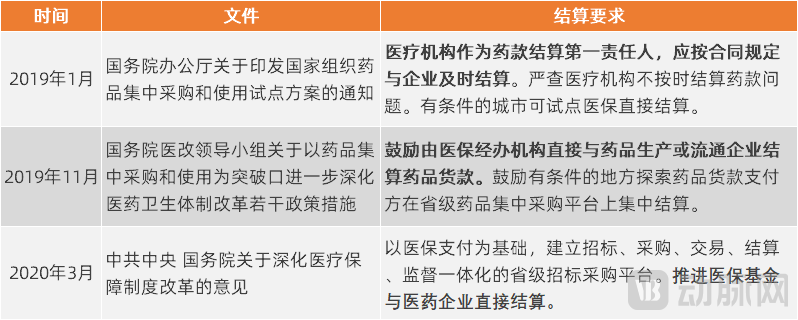
Requirements for Settlement in Documents Related to Centralized Drug Procurement, Source: National Healthcare Security Administration
According to reports, on the Sanming Procurement Alliance (National) platform, medical insurance funds can be used to settle and pay for pharmaceuticals and medical devices, thereby reducing settlement cycles and distribution costs. Furthermore, information released by the National Healthcare Security Administration indicates that Shanghai, Fujian, Zhejiang, Guangxi, and other regions have explored implementing platform-based settlements. In Shanghai and Fujian, medical insurance funds directly settle payments with pharmaceutical and medical device suppliers through the platform; in Zhejiang, a dedicated platform account is used to monitor the settlement of payments between medical institutions and enterprises.
Leveraging digital platforms to promote direct settlement of medical insurance funds with enterprises helps resolve the long-standing “triangular debt” issue among medical institutions, pharmaceutical suppliers, and medical insurance authorities, thereby ensuring timely payment for goods and alleviating the cash flow pressure on pharmaceutical and medical device companies.
Finally, the stage of retaining and utilizing the surplus.
“Replacing low-value items with high-value ones” is one of the core values of centralized procurement. According to policy regulations, a portion of the funds saved through centralized procurement may be allocated for retention by medical institutions.
The centralized procurement platform can be configured with a subsystem for retaining surplus funds. It calculates the amount eligible for retention based on data across multiple dimensions, including medical insurance fund budgets, implementation and settlement by healthcare institutions, and the surplus retention ratio. Upon application by healthcare institutions and internal approval by the Medical Insurance Bureau, the retained surplus funds can also be disbursed via online payment through the platform.
Digitalized calculation and payment processes reduce manual workload and minimize calculation errors. This facilitates standardized management of retained surpluses, ensuring efficiency and transparency throughout the entire process of surplus calculation and payment. Furthermore, streamlined surplus calculation and payment procedures can enhance the motivation of healthcare institutions.
Meanwhile, digital platforms have broken down regional data barriers, enabling the integration, consolidation, and sharing of information across departments. Consequently, these platforms can conduct in-depth, multi-dimensional, and multi-level analyses of drug utilization data from various regions, thereby providing differentiated and personalized supply ratios for pharmaceuticals and medical consumables. This enhances the accuracy and practicality of procurement and supply for drugs and medical consumables.
Currently, industries across the board are accelerating the adoption of digitalization to enhance efficiency. As a systematic and large-scale endeavor, healthcare reform is no exception. The gradual improvement of digital infrastructure, coupled with increased efficiency and enthusiasm among all stakeholders, signifies a growing collective force driving the progress of healthcare reform.
In the "Key Tasks for Deepening the Reform of the Medical and Health Care System in 2021," issued by the General Office of the State Council, further promoting the medical reform experience of Sanming City is listed as the first priority. The document devotes more than 1,000 words to arranging the promotion of Sanming’s medical reform experience, underscoring its significant demonstrative value.
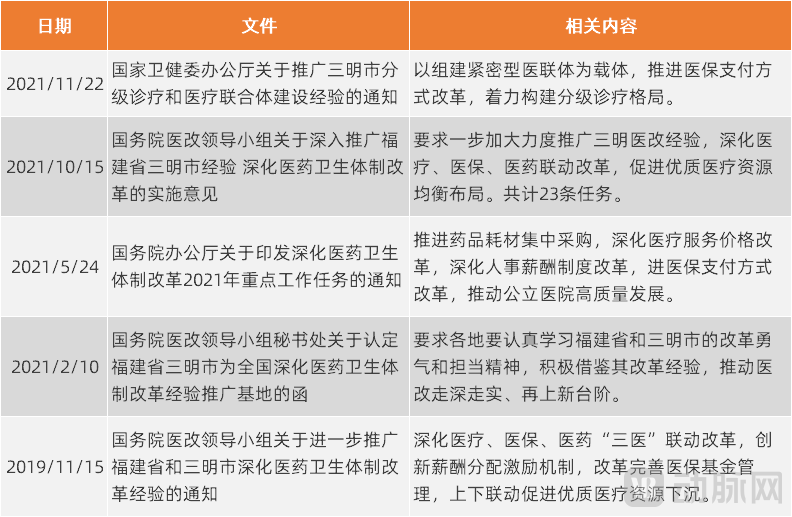
Key Policy Documents on Promoting the Sanming Healthcare Reform Model; Source: The Central People's Government of China Website, National Health Commission Website
In fact, to date, the national government has issued multiple documents to promote the experience of the Sanming healthcare reform. The Sanming healthcare reform experience encompasses several aspects, including joint procurement of pharmaceuticals and medical consumables, reform of medical service pricing, establishment and implementation of a tiered diagnosis and treatment system, reform of the personnel and compensation system, and reform of health insurance payment methods.
Learning from Sanming’s experience in areas such as policy breakthroughs and systemic innovation requires more time and multi-dimensional, systematic efforts. In contrast, pharmaceutical system reforms represented by the joint centralized procurement of drugs and medical consumables serve as a key breakthrough point that can be rapidly launched and yield quick results. Accordingly, in October 2021, the State Council Leading Group for Healthcare Reform made more detailed arrangements in its “Implementation Opinions on Deepening the Promotion of Sanming City’s Experience in Fujian Province and Furthering Healthcare System Reform” (Guo Yi Gai Fa [2021] No. 2). While institutionalizing and regularizing the national centralized volume-based procurement of drugs and medical consumables, the document encourages provinces, either individually or through inter-provincial alliances, to implement centralized volume-based procurement for high-volume, high-expenditure drugs and medical consumables not covered by national organized procurement, with at least one round of such procurement for drugs and one for medical consumables conducted or participated in each year. Localities are also encouraged to join the “Sanming Procurement Alliance.”
After years of exploration, the Sanming Procurement Alliance (China) has accumulated four core experiences in pharmaceutical reform: “procurement based on usage, two specifications per product, price confidentiality, and platform-based settlement.”The aforementioned digital infrastructure provides technical support for the alliance’s operations, while the four core best practices establish a mechanism to ensure its sustainable development.
“Procurement for Use” means formulating catalogs scientifically and reasonably based on clinical needs, thereby severing the chain of interests involving targeted customization, targeted procurement, and targeted distribution.Drug procurement is reported by hospitals to prevent “procurement without use” or treating centralized and joint procurement merely as a task to be completed, thereby avoiding new waste.
“One Product, Two Specifications” refers to the policy of selecting one manufacturer from each of the two quality tiers—originator and generic—to sever the kickback chain associated with physicians’ drug selection.Specifically, while meeting clinical needs, it prevents physicians from selecting products that offer kickbacks among equivalent medications. Furthermore, when the supply of a drug in one dosage form and strength is insufficient, another dosage form and strength can serve as a timely substitute.
“Price Confidentiality” refers to the sharing of procurement information among alliance members, with the guarantee that information on pharmaceutical and consumable manufacturers, as well as pricing data, shall be kept confidential and used exclusively within the alliance.Since pricing information involves corporate sales and competitive strategies, maintaining price confidentiality serves to protect corporate incentives. In national medical insurance drug price negotiations, the National Healthcare Security Administration has also adopted price confidentiality measures to encourage significant price reductions from manufacturers, committing not to publicly disclose the transaction prices of certain drugs.
“Platform Settlement” refers to the settlement and payment of drug and medical device payments by the medical insurance fund through the platform in the following month, thereby avoiding triangular debt.To compress settlement cycles and reduce circulation costs, alliance members shall adhere to the platform’s settlement principles and promptly settle payments for pharmaceuticals and medical devices through the following four methods: (1) settlement and payment by the medical insurance fund via the platform in the following month; (2) autonomous settlement and payment by hospitals within 30 days; (3) settlement and payment using reserve funds; and (4) settlement and payment using medical insurance revolving funds. Timely settlement and payment for pharmaceuticals and medical devices is a fundamental prerequisite for ensuring the normal operational functioning of enterprises, as well as a critical factor in reducing corporate costs, thereby contributing to lower drug prices.
Zhan Jifu, Director of the Standing Committee of the Sanming Municipal People’s Congress and Chief Advisor to the Leadership Group of the Sanming Procurement Alliance (China), stated that the issuance of Document No. 2 [2021] by the National Healthcare Security Administration affirms the status and value of the Sanming Procurement Alliance (China) as a beneficial supplement to national and provincial centralized procurement. Leveraging its alliance platform mechanism, the Sanming Procurement Alliance (China) will further promote the Sanming healthcare reform experience to member provinces and cities across China.
Typically, major reforms require a combined approach involving top-level design, localized pilots, and the replication and promotion of pilot experiences. Currently, healthcare reform has entered a critical phase. Based on the aforementioned context, the nationwide promotion of the Sanming healthcare reform model will become a key pathway for deepening healthcare reform, with the joint procurement of pharmaceuticals and medical devices through the Sanming Procurement Alliance (National) serving as the primary node along this pathway.
VCBeat learned at the conference that the Sanming Procurement Alliance (China) is set to launch a new round of centralized procurement. Zhang Yuanming, Deputy Mayor of the Sanming Municipal People’s Government, stated that the Sanming Procurement Alliance (China) will further strengthen cooperation and ties among its provincial and municipal members, promote information sharing among member cities, build a more closely integrated alliance, and achieve new progress in volume-based procurement within the alliance.
In recent years, the Sanming Healthcare Reform and the Sanming Procurement Alliance (China) have accumulated experience centered on institutional innovation. As a national base for promoting the experience of deepening healthcare reform, and in accordance with the requirements of the State Council’s Leading Group for Healthcare Reform, Sanming must stand at a new starting point, continue to deepen systemic and mechanistic reforms, and create more institutional innovations that are replicable and scalable.
Empowered by digitalization, Sanming’s next wave of innovative initiatives has greater room for expansion, with intelligence, efficiency, transparency, and openness becoming key themes. In due course, the fruits of its continuous innovation will be extended to more regions across China through platforms such as the Sanming Procurement Alliance (National).