

Huaquejing Medical Files for IPO: Leading Smart Neuro-Rehabilitation with Full-Cycle Solutions and Scene-Driven Innovation

Wisemen Medical
Developer of Intelligent Neurorehabilitation Robots
As an integral component of modern medicine, rehabilitation medical services and devices can help patients accelerate the recovery of physical functions, reduce recurrence rates and complications, and lower treatment costs.
“The Lancet” published the first Global Burden of Disease (GBD) study on rehabilitation, pointing out that up to one-third of the global population (approximately 2.41 billion people) may benefit from rehabilitation services during illness or injury, and that rehabilitation medicine is playing an increasingly important medical, economic, and social role in healthcare systems.
In China, the number of patients who are paralyzed and immobile due to stroke, cerebral palsy, or accidents is countless each year. With the accelerating pace of population aging and the year-on-year increase in the number of patients with chronic diseases, there is a large population in need of rehabilitation services, including those with neurological disorders, musculoskeletal and joint diseases, and the elderly. This has generated substantial demand for rehabilitation medical services and rehabilitation medical devices.
According to statistics from the Ministry of Civil Affairs, the scale of China’s rehabilitation assistive device industry was approximately RMB 700 billion in 2020. It is projected that by 2025, the market size is expected to surpass RMB 1 trillion.
In contrast, a large number of patients do not receive rehabilitation treatment. The reasons for this are twofold: on the one hand, there is a lack of awareness; on the other hand, rehabilitation resources are extremely scarce, and the regional imbalance in medical resource distribution is becoming increasingly pronounced.
Compared with countries with advanced rehabilitation medicine, such as the United States, China faces a substantial shortfall in both rehabilitation institutions and qualified personnel. According to publicly available data, there are currently approximately 36,000 certified rehabilitation therapists in China. Based on international standards, this translates to 2.65 physical therapists per 100,000 population. In contrast, the average in North America and Europe is 60 per 100,000 population, with the United States at 62.8 per 100,000 and Germany at 68.7 per 100,000.
The significant shortage of human resources, coupled with the state’s increased policy support for the rehabilitation medical sector, has made the whirlwind of the “Rehabilitation Robot Revolution” unstoppable. Amidst this trend, numerous innovative companies have emerged at the forefront, daring to pioneer new paths; among them is Shenzhen Huaquejing Medical Technology Co., Ltd. (hereinafter referred to as “Huaquejing”).
Hua Quejing, established in July 2019, is a national high-tech enterprise specializing in intelligent neurorehabilitation robots and comprehensive smart rehabilitation healthcare solutions. To date, Hua Quejing has completed its angel round of financing led by the Zhongguancun Zhiyou Scientist Fund. Its core product, the Wisebot® X5 three-dimensional upper limb rehabilitation robot, has obtained regulatory approval, while two additional products are currently under regulatory review.
Having achieved such remarkable results in just two years since its establishment, what exploratory path did Hua Quejing take to reach this point? What makes its products unique? To address these questions, VCBeat conducted an exclusive interview with the founding team of Hua Quejing.
Hua Quejing boasts a top-tier team of rehabilitation medicine and engineering experts, including academicians, recipients of the National Science Fund for Distinguished Young Scholars, and professors from prestigious institutions such as the Chinese Academy of Sciences and Harbin Institute of Technology. The company currently has a staff of over 30 employees.
With over 15 years of R&D experience in the fields of rehabilitation medicine, medical robotics, and artificial intelligence, we hold numerous domestic and international invention patents. Our proprietary core technologies are at an internationally leading level. We have successfully developed a range of intelligent rehabilitation robots for the upper limbs, fingers, cognitive functions, and orthopedics. Our products have received prestigious awards, including the First Prize for Teaching Achievements from the Chinese Association of Rehabilitation Medicine, the Second Prize for Science and Technology from the China Association of Acupuncture-Moxibustion, and the First Prize for Science and Technology from the Guangdong Provincial Association of Acupuncture-Moxibustion.
For a startup that has been established for only two years to have gained recognition from two national-level academic societies within one year, as well as approval from the national industry regulatory authorities, fully demonstrates Hua Quejing's exceptional R&D capabilities, professional expertise, and innovation.
“Traditional manufacturing often involves engineers working in isolation, whereas our R&D approach is fundamentally different,” said Xu Baoguo, Vice President of the Greater Bay Area Rehabilitation Medicine Association, Co-Chairman of the China County-Level Rehabilitation Alliance, and Co-founder of Hua Quejing. In product development, Hua Quejing adopts an “integrated R&D and application” model. By collaborating closely with rehabilitation hospitals and medical universities, frontline clinical needs and requirements for scientific translation are directly fed back to the company. The company then analyzes these needs in light of its own capabilities, implements them in phased conversions, and immediately deploys the resulting products in settings such as hospitals and rehabilitation centers for validation. Continuous feedback is collected and used to refine and optimize the products until they fully meet clinical requirements.
When discussing the development of the approved upper-limb robot Wisebot® X5, the founding team of Hua Quejing stated, “Rehabilitation therapists were involved from the very beginning of the product’s development, outlining clinical needs, which we then translated into engineering solutions.”“At that time, rehabilitation therapists put forward some rigid requirements for this product. For example, it should have a fast startup speed to improve their work efficiency; the operation should be simple and easy to get started with; they hoped for intelligent features to address clinical pain points, such as intelligent assessment, intelligent prescription, mirror therapy, etc.”
The integrated R&D and application model, which sources insights from “medicine” and applies them back to “medicine,” enables Hua Quejing to rapidly and accurately address the pain points of frontline rehabilitation therapists and patients, thereby creating products that are both critically acclaimed and commercially successful.
Wisebot® X5 is the core product of Hua Quejing., designed to address issues such as the shortage of rehabilitation therapists, low rehabilitation efficiency, and non-standardized rehabilitation assessments. Based on rehabilitation theories including neuroplasticity and mirror neurons, this product is a rehabilitation robot meticulously designed for patients with upper limb functional impairments.
Hua Quejing has innovatively proposed an intelligent assessment technology based on Brunnstrom staging and range of motion, which automatically generates rehabilitation training protocols. Wisebot® X5 simulates the kinematics of human upper limb movement in real time across multiple dimensions. It not only provides active, passive, and active-assistive training modes but also pioneers a mirror therapy mode to enable synchronized bilateral coordination training. Wisebot® X5 features carefully designed, diversified 3D task-oriented training programs that provide multi-channel sensory stimulation involving motor, visual, and auditory inputs. While improving motor functions such as upper limb control, muscle strength, range of motion, and coordination, it simultaneously facilitates training in cognitive abilities, activities of daily living (ADL), and occupational performance.
Figure: Wisebot® X5 Product
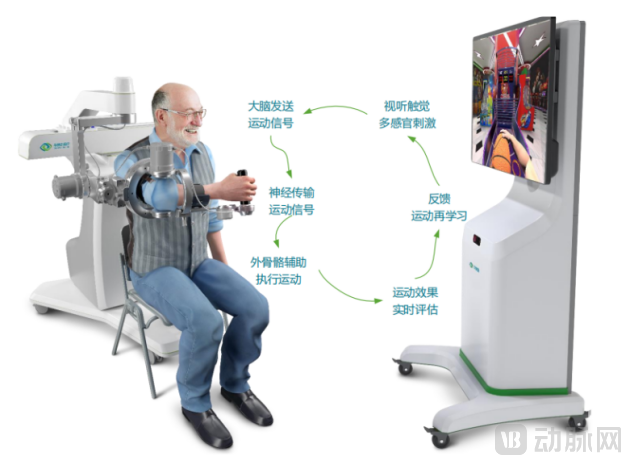
Wisebot® X5 is an integrated rehabilitation solution designed for patients with upper limb dysfunction resulting from neurological injuries such as stroke, traumatic brain injury, and spinal cord injury, as well as for those with upper limb motor incoordination caused by neuropathies or cardiopulmonary diseases. The product received regulatory certification in October 2021, and despite only two months having passed since approval, it has already been procured by both private and public hospitals.
What are the key features of the Hua Quejing Wisebot® X5 3D Upper Limb Rehabilitation Robot? Let’s take a look.
Feature 1: Intelligent Assessment Function for Objective and Scientific Quantification of Patient Rehabilitation Status
A common saying in the rehabilitation industry goes, “Rehabilitation begins with assessment and ends with assessment,” underscoring the critical role of rehabilitation assessment throughout the rehabilitation treatment process.
“Traditional rehabilitation assessment still largely relies on rating scales, with therapists conducting one-on-one evaluations of patients, leading to issues such as low efficiency and subjective judgment,” Cai Sufang, Director of the Occupational Therapy Department and Deputy Director of the Cognitive Rehabilitation Department at Fujian Provincial Rehabilitation Hospital, told VCBeat. Hua Quejing has introduced smart assessment technology based on artificial intelligence and deep vision techniques, innovatively achieving objective, quantifiable, and intelligent assessment of motor function, thereby addressing key clinical pain points.
Leveraging artificial intelligence algorithms to scientifically and objectively quantify patients' rehabilitation progress. This approach not only significantly enhances the work efficiency of rehabilitation therapists and avoids judgment errors caused by subjectivity, but also alleviates, to a certain extent, the strain on medical resources resulting from a shortage of rehabilitation professionals.
Meanwhile, Wisebot® X5 transforms traditional rehabilitation training from a tedious routine into an engaging experience through motivational, challenging, and fun interactive scenarios based on daily life activities, allowing patients to recover in a relaxed and enjoyable atmosphere. Additionally, Wisebot® X5 comprehensively records patient training data. These data not only assist therapists in analyzing rehabilitation outcomes and providing a scientific basis for developing personalized training plans, but also enable patients to intuitively understand their progress through visualized data, thereby boosting their confidence in recovery.
Feature 2: Intelligent Generation of Rehabilitation Training Plans
Compared with rehabilitation robots currently available on the market, Wisebot® X5 intelligently generates rehabilitation training protocols or customized plans based on intelligent assessment results, achieving seamless integration between assessment and training planning. For primary healthcare institutions with limited medical resources or constrained therapist expertise, this helps alleviate the scarcity and imbalance of medical resources to some extent, truly benefiting patients. For tertiary hospitals under significant pressure, it substantially reduces the workload of rehabilitation therapists and improves clinical efficiency.
“Currently, the technological development trends of upper-limb rehabilitation robots are evolving from single-degree-of-freedom to multi-degree-of-freedom systems, from single-joint to multi-joint movements, from two-dimensional planar motion to three-dimensional spatial motion, from end-effector traction-based designs to exoskeleton-based structures, from standalone training to integrated assessment and training, and from intelligent automation to smart connectivity. In terms of practical implementation, applications are expanding from collaborations with renowned rehabilitation hospitals to broader community-based rehabilitation settings,” Dr. Wang Tianmiao, Professor and Doctoral Supervisor at Beihang University and Honorary Director of the Robotics Institute at Beihang University, told VCBeat. He noted that Hua Quejing’s 3D exoskeleton robot represents the latest direction in the commercialization of upper-limb rehabilitation robots.
Figure:Hua Quejing Collaborates with Fujian Provincial Rehabilitation Hospital to Conduct Research on Group Therapy Using Rehabilitation Robots (Left: Mirror Training Mode; Right: Active-Passive Mode)
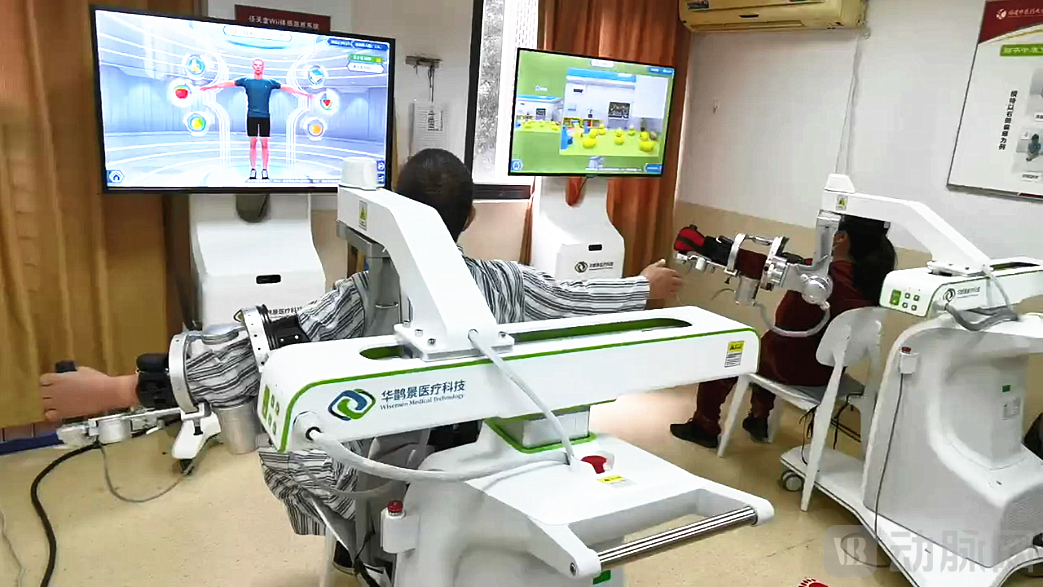
Feature 3: Pioneering a Novel Approach to Mirror Therapy with Standardized Training Protocols
“Traditional mirror therapy always relies on a mirror placed between the patient’s affected and unaffected limbs, with the affected limb positioned behind the mirror and the unaffected limb in front. Under the guidance of a therapist, the patient then attempts to perform identical movements with both limbs.” Dr. Yang Zhenhui from the Guangdong Provincial Work-Related Injury Rehabilitation Hospital, who graduated from the Department of Rehabilitation Therapy at The Hong Kong Polytechnic University, told VCBeat, “The limitation of this approach is that the movement training space is constrained by the mirror apparatus. Furthermore, training must be conducted under the supervision of a therapist, with exercises subjectively determined by the rehabilitation therapist. This results in a lack of standardization and uniformity in training, directly compromising the stability of clinical outcomes.”
Clinical studies have demonstrated that bilateral limb functional training yields superior improvements in motor functions, such as range of motion, movement speed, and accuracy, thereby significantly enhancing patients' activities of daily living (ADL). Mirror therapy enables the unaffected side to voluntarily guide the movements of the affected side, facilitating interaction between the intact and damaged cerebral hemispheres. This process is more conducive to activating the cerebral cortex, promoting neuroplastic changes and functional reorganization.
Mirror therapy is widely used in the rehabilitation of motor, sensory, speech, and cognitive functions of the limbs after stroke. Some rehabilitation companies also use this therapy. So, what makes Hua Quejing's mirror therapy technology different?
Hua Quejing has proposed a solution based on deep vision technology and precise force control technology. After collecting motion data from the healthy side, it transmits real-time calculation results to the exoskeleton robotic arm, which then guides the movement of the affected limb. This approach not only reduces costs but also maximizes the patient’s somatosensory experience and alleviates the therapist’s workload.
Providing “full-cycle solutions” is another major highlight of Hua Quejing. This is mainly reflected in two aspects.
First, it covers the entire rehabilitation cycle centered on patients.Hua Quejing Rehabilitation Robots offer various training modes, including passive, active-assistive, and active, to meet the rehabilitation needs of patients at different stages. In the early stage of rehabilitation, when patients are unable to move voluntarily, the robot provides full assistance to help them complete movements and guide them in establishing correct movement patterns. During the mid-stage of rehabilitation, when patients have some motor ability but lack sufficient strength to complete tasks, the robot provides on-demand assistance to help them accomplish these tasks. In the late stage of rehabilitation, when patients have regained good motor function, the robot offers resistance based on their assessed capabilities to facilitate limb resistance training, thereby enhancing muscle strength and motor coordination, and helping patients quickly reintegrate into family life and society.
Second, it provides intelligent comprehensive solutions for rehabilitation institutions.Hua Quejing utilizes the Wisenet Rehabilitation Cloud Management Platform to integrate the entire rehabilitation medical service process. All data generated throughout the rehabilitation journey, from patient admission to discharge, is stored within the Wisenet system. This not only facilitates physicians and therapists in formulating rehabilitation prescriptions and plans, as well as evaluating rehabilitation outcomes, but also enables patients to monitor their rehabilitation progress in real time.
Furthermore, Hua Quejing leverages IoT and artificial intelligence technologies to build a full-cycle rehabilitation and prevention system that spans from hospitals to community households, covers early intervention in rehabilitation to sub-health prevention and management, and addresses conditions ranging from cognitive impairments in children to physical disabilities in the elderly, thereby forming a systematic, comprehensive smart rehabilitation medical solution.

Rehabilitation Virtual Simulation Teaching Platform is a modern rehabilitation teaching platform with realism and interactivity.
Under the guidance of the “National and Local Joint Engineering Research Center for Rehabilitation Medical Technology” and the “TCM Rehabilitation Research Center of the National Administration of Traditional Chinese Medicine,” Hua Quejing has designed its curriculum in accordance with the nationwide teaching requirements for rehabilitation specialties, referencing the latest textbooks, national standards, and expert validations. It offers core courses in rehabilitation, including Kinesiology.
The platform leverages cutting-edge virtual reality and intelligent interactive technologies to inject new vitality into rehabilitation medicine education, enabling real-time interaction between theoretical knowledge and students. This approach stimulates students’ learning interest and capacity for autonomous exploration, thereby innovating the education, preservation, and dissemination of rehabilitation medicine.
Figure: Rehabilitation Virtual Simulation Teaching Center—Actual View of the Completed Project at the School of Rehabilitation Medicine, Fujian University of Traditional Chinese Medicine
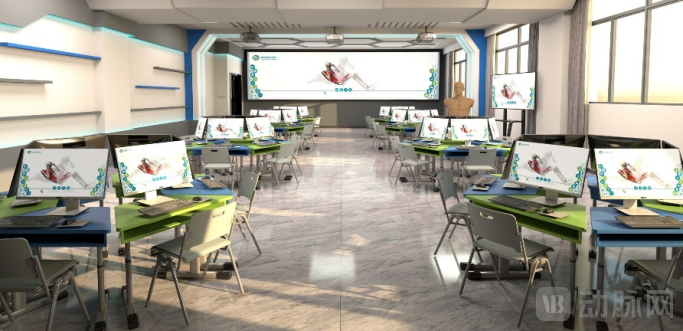
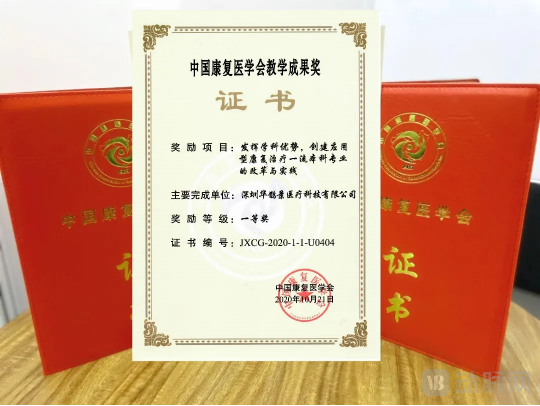
Rehabilitation Virtual Simulation Teaching Platform inWon the First Prize for Teaching Achievements at the 4th International Rehabilitation Equipment Expo in 2020,and this systemIt has been implemented at multiple vocational and undergraduate institutions, including the School of Rehabilitation Medicine at Fujian University of Traditional Chinese Medicine, the School of Rehabilitation Medicine at Southern Medical University, and Shandong First Medical University.
Figure: Award Certificate for the Hua Quejing Rehabilitation Virtual Simulation Teaching Platform
Hua Quejing is currently launching a new round of financing, with the proceeds primarily allocated to the market promotion and brand building of existing products, accelerating the R&D and regulatory registration of innovative products, and expanding sales channels.
As the era of population aging arrives, rehabilitation medicine will receive greater attention, and the rehabilitation market will see further growth. The market needs more enterprises like Hua Quejing...