

Genochip Biomedicine: Overcoming CTC Isolation Bottlenecks and Building a Multi-Omics Platform to Address Comprehensive Cancer Management
2015 marked the inaugural year of precision medicine, with the United States and China successively launching their “Precision Medicine Initiatives,” thereby igniting rapid global growth in the field. As a core technology within precision medicine, tumor liquid biopsy has swiftly swept through the healthcare industry.
2015–2017 was the most fervent period for the oncology liquid biopsy sector in China, during which countless new companies were founded, attracting a large number of scientists to launch their own ventures and enter the industry.
As early as 2000, the research group led by Professor Mengsu Yang at City University of Hong Kong began focusing on and conducting research in the field of liquid biopsy for cancer, accumulating a substantial body of scientific achievements and patented technologies.Professor Yang’s team has accumulated extensive expertise over many years in microfluidic chip design, cell manipulation, targeted protein and target gene labeling of tumor cells, and single-cell detection. They have published numerous academic papers and hold multiple patents.
Liquid biopsy for tumors has become a major trend. Professor Yang has accumulated extensive expertise in this field over many years and has participated in founding multiple biotechnology companies, including the Hong Kong-based biotech unicorn Prenetics. However, Professor Yang and his team did not follow the mainstream rush into liquid biopsy or hasten to launch startups. Due toThe healthcare sector is relatively conservative, and emerging technologies require thorough clinical validation., therefore, they have invested a significant amount of time in technical validation work, continuously refining and perfecting the technology.
By 2018, the tumor liquid biopsy market had entered a phase of rapid development. Meanwhile, the continued implementation of the Healthy China Strategy further spurred demand for precision diagnostic technologies, and the medical entrepreneurship ecosystem in the Guangdong-Hong Kong-Macao Greater Bay Area was becoming increasingly robust. At this juncture, Professor Yang’s team had already matured their foundational technology. Consequently, Professor Yang co-founded Cellomics (Shenzhen) Limited together with Xu Tao, Zou Heng, and Fu Huayang.
Among them, Xu Tao holds dual doctoral degrees from Tsinghua University and City University of Hong Kong. After graduating in 2012, he engaged in translational medicine at top-tier research institutions and medical schools. Zou Heng obtained his Ph.D. from City University of Hong Kong in 2017. Fu Huayang has worked for many years at a renowned IVD company, possessing extensive experience in the development and industrialization of molecular diagnostic products.
Cellomics is committed to providingComprehensive Liquid Biopsy Solutions for Oncology, applied to the full-process management of tumor diagnosis, including early screening and diagnosis, assisted diagnosis, medication guidance, and real-time monitoring. The company’s patented technologies for tumor cell and genetic testing can effectively detect cancer and obtain precise protein and genetic information, helping physicians formulate optimal treatment plans.
Leveraging the founding team’s over 20 years of R&D expertise in tumor liquid biopsy, Cellomics rapidly achieved the transition from technology to product and from product to commercialization after its establishment. ItsA Platform for Purification and Separation of Specific Circulating Tumor Biomarkers Based on Microfluidic Technology, Featuring High Throughput, High Sensitivity, Low Consumption, High Automation, and Strong Controllabilityfeatures, making it a novel and effective tool for tumor diagnosis and prognosis, and has been recognized by multiple hospitals.
Since being named one of the Top 10 Breakthrough Technologies of 2015 by MIT Technology Review, liquid biopsy technology has repeatedly drawn attention from the corporate capital market for its broad application prospects in tumor diagnosis and treatment. With its popularity continuously rising and rapid development in recent years, it has become a breakthrough in precision oncology diagnosis and treatment.
Liquid biopsy is a crucial component of precision oncology and serves as an important complementary technique to tissue biopsy. By quantifying circulating tumor cells (CTCs), circulating tumor DNA (ctDNA), and exosomes in body fluids, it can cover the entire spectrum of cancer diagnosis and treatment. It holds significant potential in early screening, early diagnosis, therapeutic monitoring, and prognosis, offering promising solutions to diagnostic and therapeutic challenges across the full continuum of cancer care.
As the patient population continues to grow and public health awareness rises, the global market size for oncology liquid biopsy has reached the hundred-billion-dollar level. “ButThe Chinese liquid biopsy market for oncology is still in its early stages of development. The low abundance of tumor-associated markers in blood, coupled with numerous interfering factors and high background noise, results in a very high technical barrier for liquid biopsy technologies.“Technologies such as PCR and NGS have limited detection sensitivity, making it difficult to meet the clinical demands of liquid biopsy; there is an urgent need for methods with higher sensitivity and specificity,” said Dr. Zou Heng, Co-founder and Deputy General Manager of Cellomics (Shenzhen) Limited, in an interview with VCBeat.
Dr. Zou Heng believes that multi-omics is a powerful remedy for addressing the many challenges in liquid biopsy. “The future of liquid biopsy in oncology lies in multi-omics, not limited to a single detection dimension.“Numerous studies have demonstrated that relying on a single omics approach has significant limitations, whereas multi-omics holds great potential in elucidating pathogenic mechanisms, screening for tumor biomarkers and therapeutic targets, as well as in early diagnosis and treatment.”
Among them, CTCs are one of the most important biomarkers in tumor liquid biopsy, containing rich clinical information that can be used for early cancer screening, formulating personalized treatment plans, monitoring recurrence, etc. HoweverDue to the scarcity of circulating tumor cells (CTCs) in the blood and limitations in technological maturity, the isolation and identification of CTCs remain challenging, with relatively low sensitivity and specificity, resulting in lagging development.
Cellomics is dedicated to building a multi-omics testing platform and has taken the lead in using circulating tumor cells (CTCs) as the core target analyte, opening a new window for CTC detection through microfluidic chip technology.
Leveraging the high throughput, high sensitivity, short analysis time, and low sample volume requirements of microfluidic chip technology, Cellomics Medical has launchedCTC Sorting Device: Requires only 4 mL of blood and takes just 5 minutes to rapidly, stably, and efficiently isolate CTCs, achieving high-purity enrichment with a 98% capture rate, 90% specificity, and superior cell viability and integrity.
Furthermore, Cellomics is also developing various technologies, including methylation and exosome analysis, while simultaneously deploying a diverse panel of detection biomarkers. By leveraging the power of multi-omics, the company is advancing tumor liquid biopsy and empowering progress in precision medicine.
Centered on the clinical needs for precise tumor diagnosis, Cellomics positions itself as a provider of comprehensive liquid biopsy solutions for cancer. Its applications span the entire continuum of tumor management, covering early screening and diagnosis, auxiliary diagnosis, treatment guidance, and real-time monitoring. This approach meets the clinical demands for precision oncology diagnosis and therapy while simultaneously enhancing hospitals’ research and academic capabilities.
The company has independently establishedThree Major Technology Platforms: CTC, NGS, and Digital PCR,R&D pipeline covers CTC detectors, digital PCR instruments, and CTC-IVD and miRNA-IVD kitssuch as early cancer screening and precision diagnostic products,By mining transcriptomic, proteomic, and metabolomic data, we provide precise and diverse clinical information for tumor diagnosis.
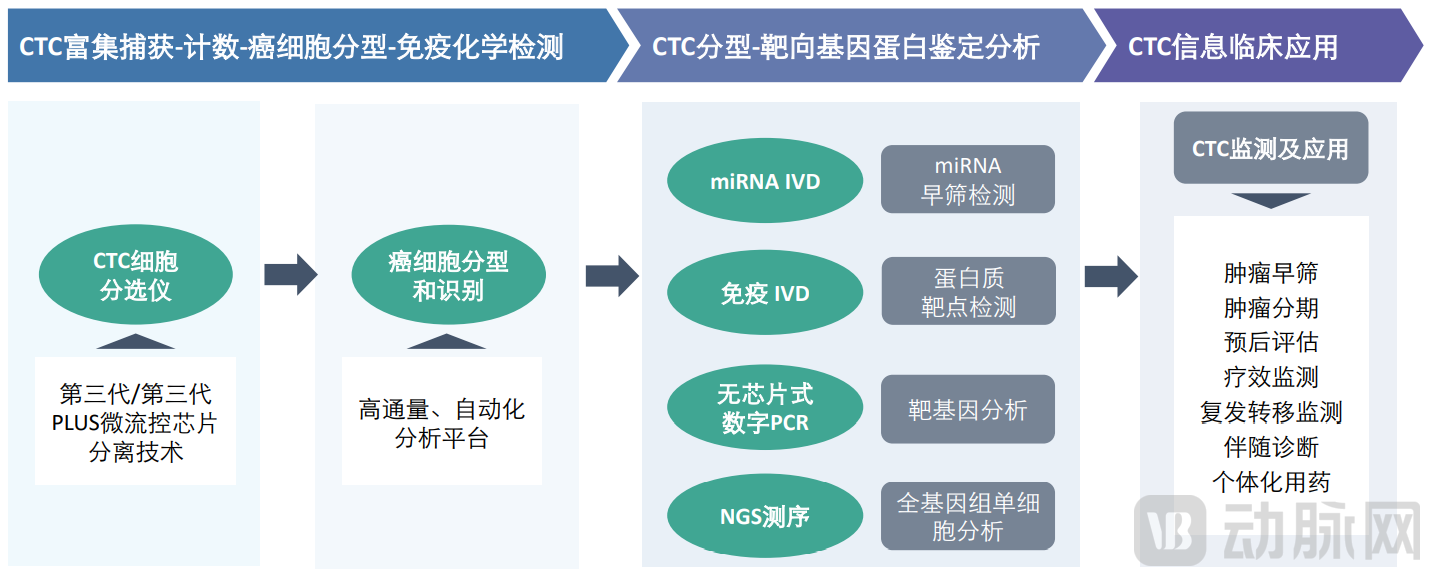
Provide a One-Stop Solution for Tumor Liquid Biopsy
Recently, the R&D by Cellomics Medical“Chip-free” digital PCR platform received expedited approval from the National Medical Products Administration,Effectively addresses the high cost of digital PCR.
Conventional digital PCR systems require chips to generate droplets. The clinical charge for genetic testing ranges from only 200 to 300 yuan, while the cost of chip consumables alone amounts to 100–200 yuan.High Costs Hinder the Clinical Adoption of Digital PCR Technology Platforms. Cellomics adopts“Microneedle-Printed Microdroplets”technology, no chip required for droplet generation,Reducing costs from hundreds of yuan to single digits,Successfully overcame the biggest obstacle to the widespread clinical application of the digital PCR platform. Currently, several assay kits based on this digital PCR platform are under regulatory review.
Furthermore, Cellomics is also deploying single-cell detection technology, in vitro cell culture technology, miRNA-based early cancer screening technology, and methylation detection technology, to create a comprehensive solution for tumor liquid biopsy.
According to Dr. Zou Heng, currently, CellomicsThe first CTC detector has completed NMPA registration and obtained EU CE certification,Mass production has been achieved, and sales have commenced. Leveraging the policy advantages of the Guangdong-Hong Kong-Macao Greater Bay Area, Cellomics MedicalHas signed business and research cooperation agreements with more than 40 Grade A tertiary hospitals in China, has gained widespread clinical recognition, with its user base experiencing rapid growth.
Meanwhile, to fully leverage the policy advantages of both Shenzhen and Hong Kong, Cellomics invited Huang Yuan, who had been named to the Forbes China “30 Under 30” list, and Dr. Yu Weijian from Professor Yang’s laboratory to join its team in early 2019. The company established a research and development center and an overseas sales team in Hong Kong, thereby building a business model rooted in China with a global outlook.
Furthermore, Jingzhun Medicine was successfully selected at the “Greater Bay Area Biotech Innovation and Development Summit & The 4th Top 50 Biotech Innovative Enterprises in the Guangdong-Hong Kong-Macao Greater Bay Area” awards ceremony, hosted by Zhongchuang Industry Research Institute and KPMG China, and organized by Guangdong Medical Valley.
Dr. Zou Heng stated: “The oncology liquid biopsy industry is in the early stages of technological transformation and an explosion in clinical applications,"The opportunities are immense." Next, Cellomics (Shenzhen) Limited will further refine its comprehensive solution for tumor liquid biopsy, enabling tumors to be detected as early as possible, making treatment plans more comprehensive and precise, and ensuring more timely monitoring, thereby establishing the company asA technology leader in the field of liquid biopsy for tumors,Contributing to the Precision Diagnosis and Treatment of Tumors.
Selection of the Top 50 Biotech Innovation Enterprises in the Guangdong-Hong Kong-Macao Greater Bay Area
The “Top 50 Biotech Innovation Enterprises in the Guangdong-Hong Kong-Macao Greater Bay Area” selection campaign is hosted by the Zhongchuang Industry Research Institute and organized by Guangdong Medical Valley. The selection aims to cultivate an integrated innovation ecosystem combining industry, academia, and research in the Greater Bay Area, promote the deep integration and development of biotechnology—a strategic emerging industry—across Guangdong, Hong Kong, and Macao, clearly document the developmental trajectory of biotech innovation in the region, and drive the growth of the local biotechnology sector.
The selection covers three sectors: medical devices, biopharmaceuticals and technology, and healthcare services. It will comprehensively assess participating companies’ technological innovation and future development prospects from three dimensions: innovative technology, market application, and capital. A panel of expert judges from government agencies, third-party research institutions, professional investment firms, and healthcare organizations will compile an authoritative list of innovative enterprises after conducting in-depth on-site visits and due diligence. This initiative aims to identify future unicorns in the biotechnology sector within the Greater Bay Area and showcase the region’s urban cluster achievements in the development of the biotechnology industry.
“Top 50 Biotech Innovation Enterprises in the Guangdong-Hong Kong-Macao Greater Bay Area” has garnered extensive attention and coverage from government agencies, scholars and experts, media outlets, and biotechnology companies since its inaugural edition in 2018.