

Billion-Dollar Mental Health Sector: Industry Leader Completes Full-Chain Layout from Light-Touch Services to Clinical Care, Files IPO Prospectus
Over the past year, the mental health industry has unleashed unprecedented energy.
At the policy level, the issuance of relevant documents—such as those incorporating psychotherapy services into medical insurance coverage and integrating mental health screening into student physical examinations—has reignited enthusiasm among capital investors and industry players for the mental health market.
In the capital market, numerous companies have secured substantial financing, with prominent institutions actively entering the field. At the user level, public awareness of mental health services has steadily increased, and demand for such services remains high. According to authoritative statistical data, 16%–17% of the population in China suffers from various mental and psychological problems. The disease burden attributable to mental and psychological disorders accounts for 13% of the total burden of non-communicable diseases, making it a major public health, social, and livelihood issue.
With the growth in user base, user needs have become more diverse, enabling the establishment of a multi-tiered mental health service system. In this system, lightweight psychological content and mental health education form the foundational layer; above this are psychological counseling services for mild to moderate psychological issues, and medical diagnosis and treatment services for psychiatric and psychological disorders.
Within the entire mental health service system, lightweight services not only reach a larger audience but also offer broader content. Consequently, entering the market through lightweight psychological content has become the preferred strategy for many companies in the industry. However, amid the continuous growth and evolution of user demands, how can these companies achieve breakthroughs? What are the potential directions for future development?
It is reported that Yi Dian Ling, a digital healthcare and psychological services platform that completed a tens-of-millions RMB Series B financing round in April this year, is poised to close its latest funding round soon. In light of this development, VCBeat engaged in conversations with Xu Yingqi, founder of Yi Dian Ling, and Wang Ding, co-founder, to explore how the company is navigating the evolving industry landscape.
Policy Support Intensifies, Industry Momentum Gains Traction
For a long time, the entire mental health market has been regarded as a “hidden corner,” not widely known to the general public.
Yet it is precisely in this “quiet” field that policy exploration has been underway for many years.
As early as 2004, the Ministry of Health issued the Guiding Opinions on Further Strengthening Mental Health Work, which established the principles of “prevention first, combining prevention and treatment, targeted intervention, broad coverage, and law-based management.” In 2012, China’s first Mental Health Law was formally enacted. Subsequently, following the release of the National Mental Health Work Plan (2015–2020) in 2015, China has consistently and steadily introduced industry-related policies each year to promote sector development.
In the past two years, there has been a steady stream of policy documents on mental health. The Mental Health Promotion Action under the Healthy China Initiative clearly sets forth the goals of raising residents’ mental health literacy to 20% by 2022 and 30% by 2030, and slowing the upward trends in the prevalence of insomnia, anxiety disorders, and depression.
Driven by policy, the mental health industry is receiving increasing attention from entrepreneurs, investors, and the general public. Furthermore, as economic development and social transformation progress, the scope of mental health work is expanding while its sensitivity is rising. The intricate interplay between mental health issues and broader concerns—such as social stability, security, and public well-being—is becoming increasingly prominent, leading to a sustained rise in public demand for mental health services.
However, although the industry continues to encounter new opportunities, it remains difficult for the general public to access high-quality mental health services.
First, from the perspective of supply, since the official launch of China’s National Vocational Qualification for Psychological Counselors in 2002, over one million individuals have obtained Level 2 and Level 3 national vocational qualification certificates. However, fewer than 80,000 are engaged in full-time or part-time work in the psychological counseling industry. With the cancellation of the certification examination and accreditation for psychological counselors, the shortage of qualified professionals is expected to continue widening. Moreover, existing professional psychological counseling resources exhibit significant geographic disparities, with most services concentrated in first-tier and coastal cities, thereby limiting the population covered by these services.
From the user’s perspective, although demand has long existed, most users are unable to access professional service resources through effective and specialized channels. Moreover, uneven service quality and the lack of industry standards have undermined user confidence in professional services. Meanwhile, due to limited public awareness of mental health, professional mental health services are often not users’ first choice.
Furthermore, a significant shortcoming persists in China’s mental health industry: effective connectivity across various levels of the mental health service system remains underdeveloped, and collaboration between medical resources (psychiatrists) and non-medical resources (psychological counselors) has not yet become routine.
Three Key Words to Overcome Barriers in Psychological Services
Yidianling, established in 2015, was founded to address industry challenges such as the imbalance between supply and demand, low efficiency in service matching, and difficulties in ensuring service quality. It is understood that Yidianling has developed a specialized, standardized, and digital mental health solution for both supply and demand sides through internet technology. This approach not only enables precise service matching and recommendations by refining user needs but also significantly enhances service accessibility through its online service model.
To date, Yidianling has reached a nationwide user base of 25 million, with over 30,000 licensed psychological counselors on its platform. The company has received widespread acclaim from users and has emerged as one of the representative enterprises in China’s mental health industry.
So, specifically, how has the mental health solution created by Yidianling gained widespread recognition?
1. Specialization to ensure service supply and quality. To this end, Yi Dian Ling has established three specialized service assurance systems. The first is a professional management system based on strict admission screening, an N-to-1 annual review process for counselors, professional credit score management for counselors, and mandatory supervision. The second is a professional empowerment system based on targeted enablement via the expert app, systematic coursework, and a team of professional supervisors. The third is a bilateral protection system based on unconditional customer refunds and professional liability insurance for counselors.
Furthermore, to continuously enhance users’ awareness of mental health, Yi Dian Ling has established a professional content team composed of psychology experts, which consistently disseminates science-based educational materials through various media and communication channels to ensure effective mental health education for its user base.
Second, standardization to enhance the precision of matching user needs with services.. By conducting multi-dimensional segmentation and classification of users' psychological issues, Yidianling has generated tens of thousands of specialized psychological SKUs, thereby enabling precise mapping of user needs and providing an algorithmic basis for subsequent service matching.
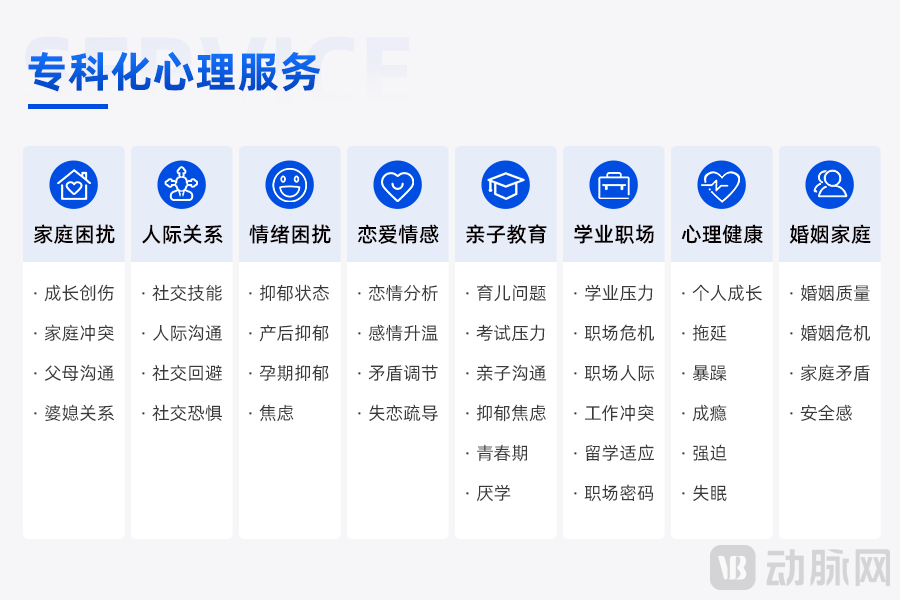
Meanwhile, by presenting the content and processes of its psychological services in a visualized product format and standardizing them, Yidianling provides users with more understandable and predictable service standards, thereby ensuring service quality while strengthening the trust of both potential and existing users.
Third, Digitalization and Technology Empowerment. From the perspective of the Yidianling team, internet technology serves as a significant catalyst for the mental health industry. Therefore, in constructing its service delivery model, Yidianling has adopted an internet-based platform approach to break down spatial and geographical barriers between users and counselors.
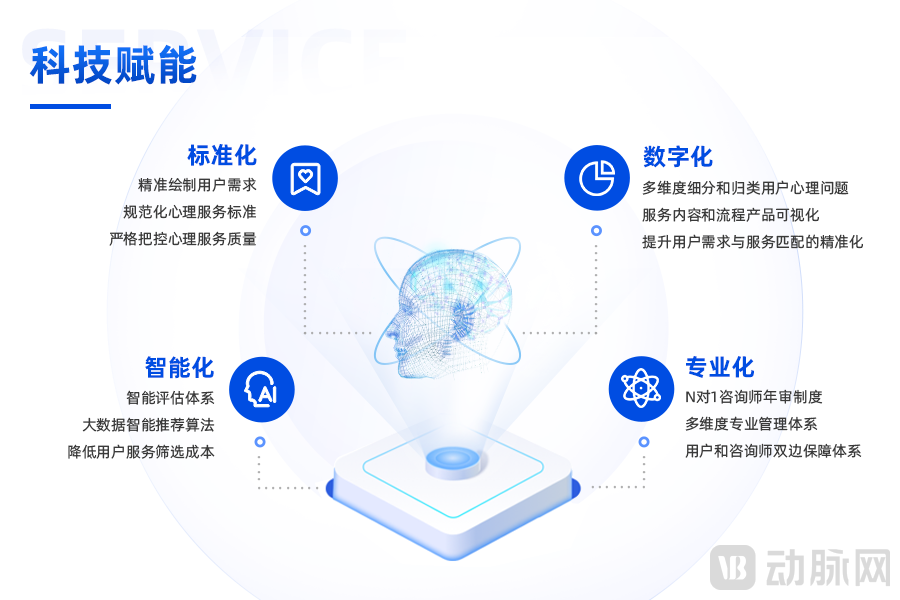
To address the issue of service matching, Yi Dian Ling leverages an intelligent assessment system and big data-driven recommendation algorithms. By analyzing psychological SKUs derived from user needs, it provides users with more tailored and professional services, significantly reducing their costs in screening for suitable options.
Leveraging the industry’s mature assessment framework for psychological counselors, Yi Dian Ling integrates this with its internet-based platform management model to achieve multi-dimensional digital evaluation, performance appraisal, and one-on-one management of counselor competencies. It is evident that digital technology support serves as a critical foundational pillar for Yi Dian Ling’s delivery of specialized and standardized services.
Multi-Dimensional Layout, Continuously Building Business Growth Points
As its user base grows and its service system becomes increasingly comprehensive, Yi Dian Ling continues to expand its applications.
From early lightweight psychological content focusing on the public’s struggles with mental health issues, to today’s mature offerings such as psychological counseling, mental health courses, and counselor training, Yi Dian Ling has gradually built a comprehensive mental health service ecosystem by continuously exploring the boundaries of its services.
As public awareness increases and relevant policy requirements take effect, the payers for mental health services have become more diversified. For instance, the “Notice on Issuing the Key Work Tasks for 2021 of the Pilot Program for Building a National Social Psychological Service System,” jointly issued in March by nine ministries and commissions including the National Health Commission and the Central Political and Legal Affairs Commission, explicitly reiterated the need to establish grassroots social psychological service platforms and improve mental health service networks for both students and employees.
Policy support has also drawn greater attention to the emerging market of social and psychological services. (In this article, we collectively refer to mental health-related services provided to governments, social organizations, schools, enterprises, and other stakeholders as “social and psychological services.”)
In the psychosocial services market, Yi Dian Ling has also made strategic deployments, andProduct design also places greater emphasis on the participation of B-side stakeholders, rather than merely offering standalone psychological counseling and mental health education services to B-side audiences.。
Taking Yidianling’s current enterprise psychological services as an example, unlike traditional employee mental health services, Yidianling’s B2B psychological services focus on helping enterprises ensure safe production and implement employee mental health management. The “Xinqing” Enterprise Psychological Services SaaS platform, which serves as the service infrastructure, not only enables comprehensive prevention of employees’ psychological issues but also enhances enterprises’ active involvement in managing employee mental health.
Not only has the scope of its service recipients continued to expand, but in terms of service delivery channels, Yidianling is not limited to online platforms either.A comprehensive service ecosystem is its key strategic objective.。
It is reported that since 2018, Yidianling has established more than ten mental health service centers under the brand “Yidian Sunshine Mental Health Center,” starting from Hangzhou. Each center’s team comprises distinguished professionals, including domestic and international psychologists, psychological counselors, psychiatric consultants, professional supervisors, and case managers. This is further bolstered by the team’s years of operational practice and accumulated case experience.Capable of providing integrated and comprehensive mental health service plans to clients, under the premise of ensuring scientific assessment and evidence-based efficacy.。
Furthermore, grounded in the biopsychosocial model, the team does not focus solely on the single dimension of psychological symptoms when addressing clients’ psychological distress. Instead, it conducts multi-level analyses and adopts a systemic framework perspective to tailor psychological treatment plans for each client.
It can be seen that,Regardless of service content, target audience, or delivery channels, continuous expansion and service diversification have always been key strategies for YiDianLing in responding to evolving market dynamics.
So, as the industry gains momentum, what surprises does Yidianling have in store for us?
Yidianling’s Full-Industry-Chain Layout: From Lightweight Services to Healthcare
As a service platform that has always upheld “customer value and professionalism,” Yidianling has embarked on a journey toward psychiatric care after completing its mission of “standardizing, professionalizing, and scaling psychological counseling.” This strategic shift is also closely linked to the rising prevalence of mental and psychological disorders in recent years.
Taking depression as an example, data from the “Epidemiological Study on the Prevalence of Depressive Disorders and Health Service Utilization in China,” published this September in *The Lancet Psychiatry*, show that nearly 100 million people in China suffer from depressive disorders, with a lifetime prevalence rate of 6.8%.
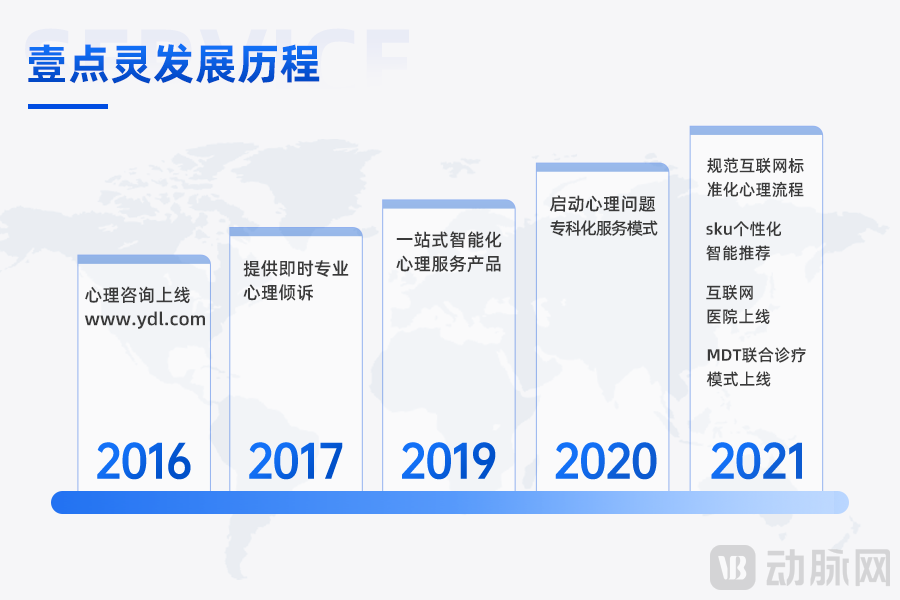
In light of this, it is not difficult to understand why Yidianling has ventured into the field of serious medical care. Earlier this year, a key strategic objective in Yidianling’s layout was “Apply service capabilities to the medical field and establish a comprehensive mental health diagnosis and treatment service system.” have also begun to be implemented step by step. In a flash, Yidianling has officially embarked on its journey to explore medical services.
This strategic plan is underpinned by Yidianling’s years of operational experience, its accumulation of professional talent resources, and the evolving user needs it has identified. Furthermore, Xu Yingqi, the founder of Yidianling, brings valuable experience from operating pharmaceutical platforms. “As public awareness increases, users with mental health diagnosis and treatment needs are increasingly turning to platform-based services for solutions,” said Wang Ding. As early as 2019, Yidianling made the establishment of a comprehensive mental health diagnosis and treatment service system a key component of its development strategy, aggregating a large number of high-quality psychiatric specialists to support the subsequent rollout of these services.
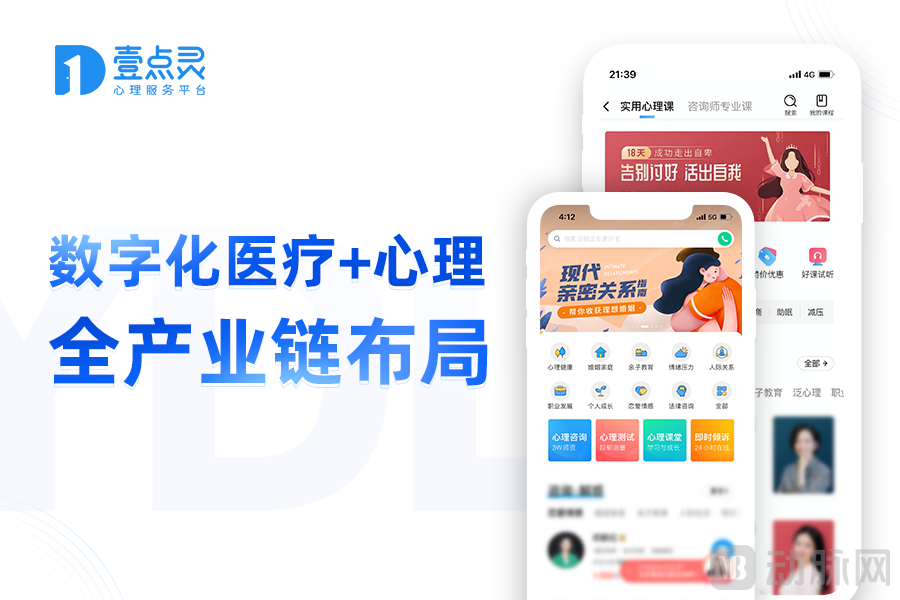
This end-to-end layout enables the provision of one-stop, comprehensive mental health services across all domains for clients. Ranging from public science education and helplines for mild psychological distress, to counseling for psychological concerns, and psychiatric diagnosis and treatment for mental disorders, it truly ensures that users can access high-quality, professional services on Yi Dian Ling for any mental or psychological issues they may encounter.
Of course, strategic direction must ultimately be implemented in specific business operations. To this end, Yi Dian LingSimultaneously advancing offline and online initiatives: establishing specialized psychiatric outpatient clinics offline, building an internet hospital online, and focusing on the development of digital diagnostic and treatment solutions to enhance the accessibility of medical services.。
Offline: Aggregating Multi-Party Supply Resources to Establish an MDT Collaborative Diagnosis and Treatment Model
For Yidianling today, given its current layout of professional diagnostic and treatment services and the subsequent development of an online internet hospital, offline expansion is clearly an indispensable component.
To this end, Yidianling successfully launched its offline psychiatric specialty clinic, “Yidianling Clinic,” in Guangdong Province this year. Meanwhile, the company is also exploring collaborations with local mental health service centers to establish a joint service model, thereby strengthening the integration of offline resources.
For a long time, there have been issues such as low connectivity efficiency and the need for stronger effective coordination among various levels of China’s mental health service system. For instance, there is a lack of joint diagnosis and treatment and referral mechanisms between medical and non-medical institutions. However, for users requiring diagnostic and therapeutic services, appropriate psychological counseling and mental health services are also essential interventions.
In response, Yi Dian Ling hasConnecting psychiatrists and psychological counselors to establish an MDT multidisciplinary collaborative diagnosis and treatment model, it can provide full-cycle mental health service solutions tailored to user needs.
This is not only the case offline; the planning of online diagnosis and treatment services is also a key focus for Yi Dian Ling.
Online: The internet hospital has been established, continuously developing digital diagnosis and treatment solutions
Since 2020, driven by the dual forces of favorable national policies and growing public health demands, a surge in the development of internet hospitals has emerged. Amidst this wave,Yidianling, backed by its self-built offline psychiatric specialty clinics, has put the development of its internet hospital on the right track.。
It is reported that this year, Yidianling Clinic’s Internet Hospital has officially been established in Guangdong. This marks Yidianling’s formal entry into the internet healthcare sector, representing another significant leap forward in its exploration of mental health and psychological well-being.
Meanwhile, to continuously strengthen the digitalization of its services, Yidianling is also actively investing in the research and development of digital diagnosis and treatment solutions, which can be specifically divided into the following three steps.
First, by leveraging technologies such as AI and big data, we achieve digital and intelligent assessment of users' mental health status.. To deepen the application of AI technology in mental health services, Yidianling has internally established a psychological counseling laboratory composed of master’s and doctoral-level professionals with specialized backgrounds in psychology, as well as a technical team comprising engineers and algorithm specialists. These teams are respectively responsible for researching and translating market demands and developing tech-enabled service products. Meanwhile, Yidianling is collaborating with multiple leading artificial intelligence teams in China to jointly launch intelligent hardware products and enhance the support system for AI-assisted psychological services.
Second, design digital intervention measures to achieve effective disease management.It is understood that Yidianling has already launched professional online meditation products and self-help psychological courses. Moving forward, Yidianling will continue to introduce more interventions covering the prevention, treatment, and management of mental health issues, all grounded in scientific theories and evidence-based medicine.
3. Provide auxiliary intervention plans for doctors and counselorsCompared with traditional services, digital intervention programs offer distinct advantages such as scalability, accumulative expertise, and low cost. They can effectively assist psychiatrists and psychological counselors in delivering diagnostic, therapeutic, and counseling services, thereby significantly improving service efficiency.
It is evident that, leveraging its existing digital mental health platform and internet hospital infrastructure, Yidianling enables users to meet their diagnostic, treatment, and healthcare service needs online. Overall, Yidianling not only achieves comprehensive coverage across the full spectrum of user needs—from mild to severe—but also provides more diverse and convenient channels for accessing services.
Final Thoughts
In this rapidly evolving era of intelligence, empowered by technological advancements, the mental health market continues to thrive. The emergence of products such as digital therapeutics, VR-based mental health solutions, and psychological service robots has brought greater potential to industry development.
In the future, driven by factors such as social development, shifts in the spectrum of mental and psychological disorders, and the expanding population experiencing suboptimal psychological well-being, public demand for mental health services will continue to intensify. Innovative enterprises with mature service systems and comprehensive offerings, such as Yidianling, are poised to further expand their platform coverage.
Amid favorable policies and demand, coupled with the concerted efforts of all stakeholders in the industry, we await with anticipation the future development of the sector.