

Cerebral: The Mental Health Startup That Reached a $4.8B Valuation in Just Two Years

Cerebral
Mental Health Telemedicine Service Provider
Online mental health startup Cerebral announced earlier this month that it had raised a total of $300 million in its Series C funding round, led by SoftBank Vision Fund 2, bringing its valuation to $4.8 billion. In June this year, Cerebral became the fastest company in the history of the mental health sector to reach unicorn status, following a $127 million Series B financing round that valued the company at $1.2 billion. How did Cerebral manage to gain recognition from investors as its valuation rapidly climbed from $1.2 billion to $4.8 billion?
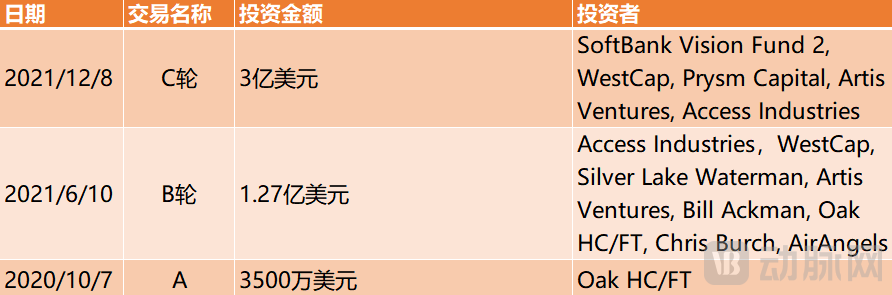
Cerebral’s Historical Financing Rounds (Data Source: Crunchbase)
The COVID-19 pandemic has triggered a surge in demand for mental health care and accelerated the sector’s transition to online platforms. According to reports released in 2020 and 2021 by Rock Health, a venture fund dedicated to digital health, mental health startups raised $1.8 billion in investment within the digital health sector in 2020. In 2021, during just the first three quarters, the mental health sector had already raised $3.1 billion, making it the most heavily funded segment of the digital health industry.
The demand in the mental health market urgently needs to be met. Data listed on the website of the National Alliance on Mental Illness shows that one in five adults in the United States suffers from Any Mental Illness (AMI) each year, and 5.6% of U.S. adults suffer from Serious Mental Illness (SMI).
Furthermore, according to the “2020 National Survey on Drug Use and Health” (hereinafter referred to as the “Survey”) released in October by the U.S. Substance Abuse and Mental Health Services Administration (SAMHSA), in 2020, among the 52.9 million adults aged 18 and older with any mental illness (AMI), 46.2% received treatment in the past year through inpatient hospitalization, outpatient mental health services, or prescription medication. In contrast, this proportion was 64.5% among adults with serious mental illness (SMI) (14.2 million). Regarding the use of telehealth for mental health services, the proportions were 33.7% for patients with AMI and 49.8% for those with SMI.
“The Survey” also reveals that among adults, 30.5% (16.1 million) of patients with Any Mental Illness (AMI) and 49.7% (7.7 million) of patients with Serious Mental Illness (SMI) reported unmet needs for mental health services in the past year. Among those who recognized their unmet needs but did not receive any mental health services in the past year, 48% (7.7 million) had AMI and 37.6% (2.6 million) had SMI. The inability to afford care was the most common reason for not receiving services in both groups. Other common reasons included not knowing where to seek services and believing that they could resolve their issues without treatment. Additionally, 25.9% of patients with SMI expressed concern about being involuntarily hospitalized or being required to take medication.
Cerebral aims to challenge the current state of mental health services in the United States, including excessive wait times and high initial consultation fees. The company, which was founded less than two years ago, currently serves over 100,000 users and has a team of more than 2,000 clinicians across all 50 U.S. states. Co-founder Kyle Robertson was also named to the Forbes Healthcare 30 Under 30 list in 2021.
For Kyle Robertson, founding Cerebral was a deeply personal endeavor. As the child of two mental health clinicians, he was not naturally immune to anxiety and depression. During his own struggle with these conditions, it took Robertson nearly a decade to realize that the internalized stigma surrounding mental illness had repeatedly prevented him from acknowledging his need for psychotherapy. Yet this was not the only barrier; excessively long wait times for physician appointments and prohibitive treatment costs also rendered mental healthcare inaccessible. Robertson reasoned that if it had taken him so long to access mental health services despite his relative privilege, what hope did those less fortunate have?
In January 2020, 27-year-old Robertson co-founded Cerebral with Dr. Ho Anh in San Francisco. They aimed to provide patients with a one-stop platform combining therapy and medication services through telemedicine technology, making mental health care more accessible and affordable while alleviating patients’ concerns about stigma.
Currently, 80% of Cerebral users can have their first consultation within 10 minutes of registration. Compared to the conventional scenario where patients must wait two to three months to secure an appointment with a psychiatrist, this rapid access can, in certain cases, mean the difference between life and death.
This October, Cerebral appointed renowned American athlete Simone Biles as its Chief Impact Officer. The celebrated gymnast previously withdrew from competition at the Tokyo Olympics due to mental health concerns, sparking widespread public outcry and subjecting her to considerable scrutiny. Biles’ appointment will bolster Cerebral’s efforts to destigmatize mental health needs and encourage more individuals to seek psychological support. The strategic partnership also includes funding to provide mental health services to underserved populations in the United States.
Cerebral currently provides one-stop mental health services to individuals aged 18 and older across all 50 U.S. states (including Washington, D.C.), treating conditions such as:
● Anxiety
● Depression
● Insomnia
● Postpartum Depression
● Menopausal Depression
In certain U.S. states or under specific conditions, Cerebral also provides treatment for attention-deficit/hyperactivity disorder (ADHD), bipolar disorder, post-traumatic stress disorder (PTSD), and alcohol dependence.
Cerebral helps patients improve or resolve mental health issues by providing continuous, comprehensive online care and psychiatric medication management services. When using Cerebral’s services for the first time, patients are required to complete an online intake form to help Cerebral assess their symptoms, after which they can choose from three service models that best meet their needs. All three services charge a monthly membership fee and can be canceled at any time.
(1) Medication + Care Plan ($85/month)
● Patients first consult with the prescriber via video or telephone, who then determines the treatment plan. Follow-up appointments can also be scheduled to help the prescriber ensure that the patient is receiving appropriate care.
● Patients will receive monthly medication deliveries by mail, with free shipping
● Communication with Care Advisors: Care Advisors contact patients monthly via video, phone, or unlimited text messaging to guide them using behavioral health techniques and coping mechanisms, while maintaining communication with prescribers to ensure effective patient treatment.
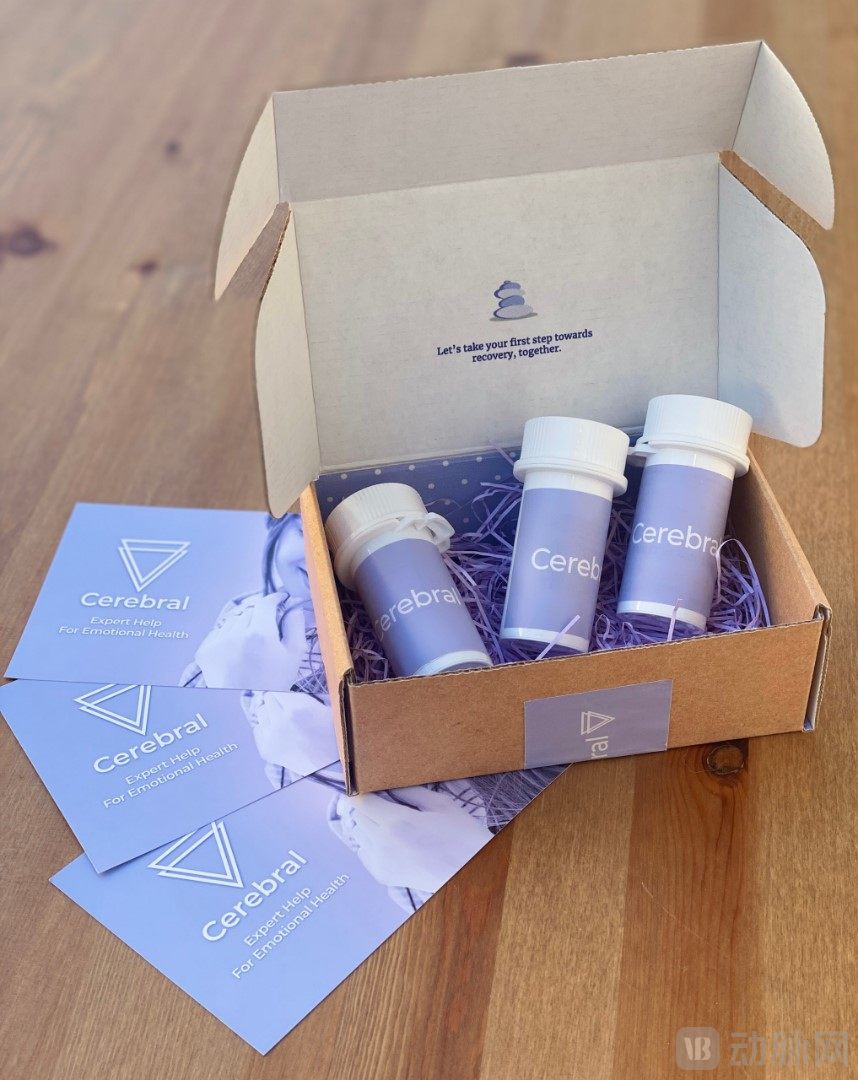
Image source: Cerebral
(II) Medications + Treatment Plan ($325/month)
● Includes all items in the "Medication + Care" plan
● Meet with a licensed therapist weekly
● Cerebral matches patients with a curated list of top therapists, allowing them to choose the one best suited to their needs.
● Therapists have replaced care consultants; they verify patients' medication therapy plans and collaborate with prescribers.
(3) Treatment Plan ($259/month)
● Meet with a licensed therapist weekly, but do not meet with prescribers, and no medication mailing services are provided
Cerebral currently partners with insurance plans in most U.S. states. For patients with in-network insurance, the monthly cost for each of the three aforementioned plans is significantly reduced to $29. Additionally, all prescribed medications are billed separately but may be covered by insurance. For self-pay patients, the price of most medications is approximately $10. If the prescribing provider determines that more frequent visits are necessary to monitor treatment, additional fees may apply. Other potential out-of-pocket costs for patients include medication expenses and any non-covered portions of each visit.
According to GoodTherapy, a U.S.-based nonprofit mental health resource website, the cost of psychotherapy in the United States varies significantly, ranging from approximately $65 to $250 per session, with some cases exceeding $250. In most regions, the cost per session is around $100–$200. For individuals, factors such as insurance eligibility and the number of covered sessions are influenced by state laws, insurance providers, and the specific therapists or prescribers delivering the services. Evidently, Cerebral’s monthly subscription model not only reduces the cost of mental health services but also alleviates the financial burden associated with long-term payment commitments (such as annual or semi-annual prepayments).
From a functional perspective, Cerebral acts more like a bridge, connecting specialized mental health services with professional teams. According to rough statistics from VCBeat, Cerebral lists nearly 800 prescribers and therapists on its official website, along with approximately 400 care advisors. Profiles for each practitioner are available on the website.
Prescribing Providers: Cerebral’s prescribing team comprises highly qualified psychiatrists, internal medicine physicians, physician assistants, and certified nurse practitioners, all of whom must hold valid licenses to practice in the states where their patients are located. Currently, Cerebral’s prescribing providers are available in every U.S. state (including Washington, D.C.), meaning that patients across the United States can access Cerebral’s “Medication + Care” program.
Therapist: Cerebral has licensed therapists in nearly 30 U.S. states. They all hold master’s or doctoral degrees and have received practical training in evidence-based therapies, such as cognitive behavioral therapy.
Care Advisors: Cerebral’s care advisors are not all licensed therapists, but they are well-trained in therapeutic techniques such as behavioral activation and motivational interviewing, enabling them to guide patients using behavioral health strategies and coping mechanisms.
To measure treatment efficacy, Cerebral has patients undergo assessments using standardized clinical symptom rating scales each month, enabling prescribers, therapists, and care counselors to track, advance, and adjust treatment. Cerebral reports that 75% of its clients experienced symptom improvement within nearly two months of care.
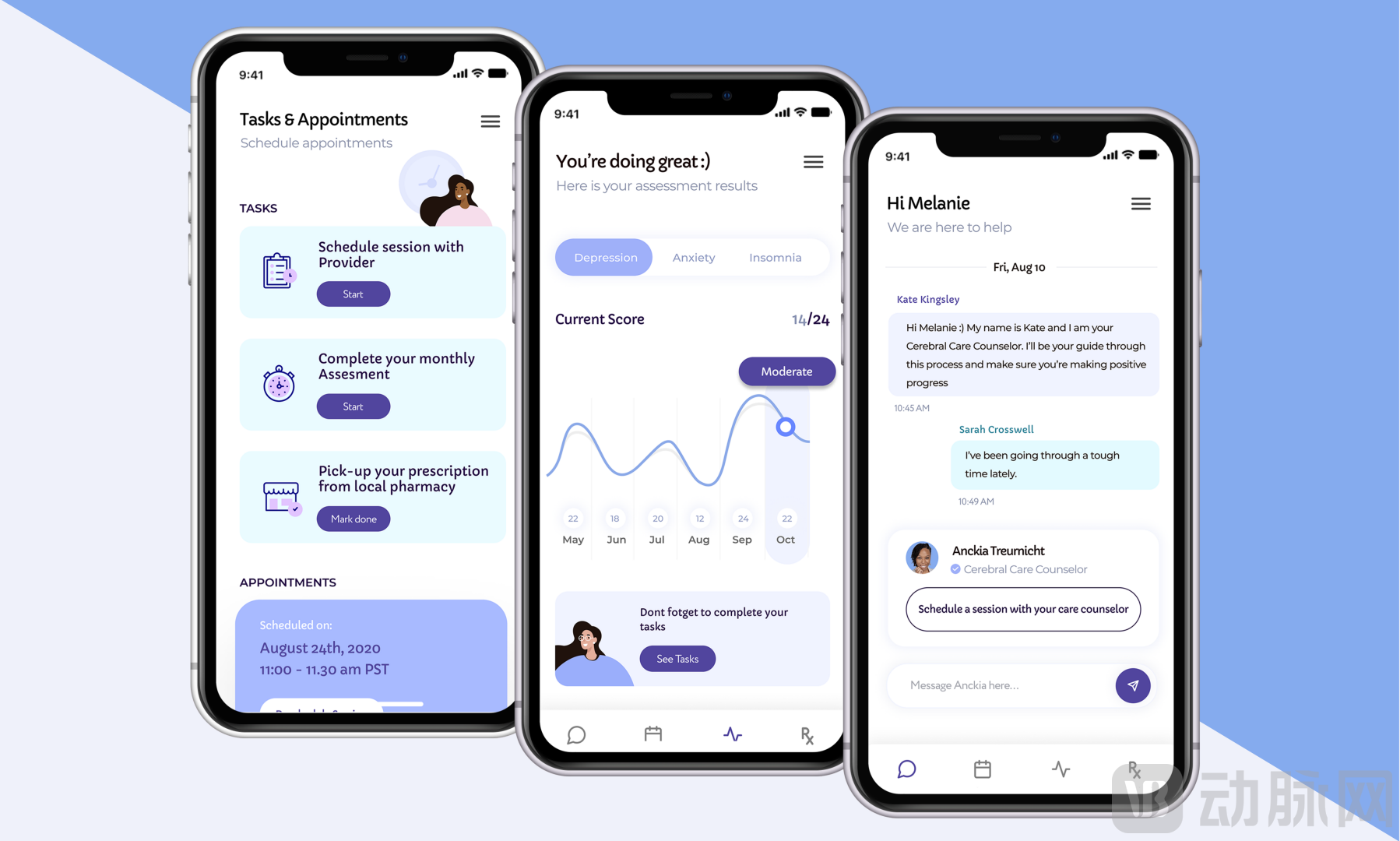
Image source: Cerebral
Following its Series C funding round, Cerebral has raised a total of $462 million. In a press release, Priya Saiprasad, Partner at SoftBank Investment Advisers, stated, “We believe that by integrating therapy, counseling, and medication management to deliver effective long-term support, Cerebral is lowering the barriers to mental health services.”
Cerebral also plans to invest in new service areas and strategic partnerships, while exploring opportunities for future international expansion and growth through mergers and acquisitions. Perhaps we can gain insight into its ambitions by examining the development moves recently announced by Cerebral.
On December 16, Cerebral announced a strategic partnership with Alto Neuroscience to conduct the first decentralized clinical study focused on precision psychiatry. Alto Neuroscience is a biopharmaceutical company that leverages AI-driven brain biomarkers to discover novel clinical psychotropic drugs. This collaborative study will target Cerebral users with depression who have not responded to existing therapies, conducting decentralized clinical trials of Alto Neuroscience’s candidate drug for depression to identify more personalized care resources for patients. The partnership also aims to bridge the gap between drug development and commercialization in the field of psychiatry. Founded in 2019, Alto Neuroscience has raised $4 billion in funding and currently has 11 drug candidates in its development pipeline.
Furthermore, Cerebral is exploring the potential impact of physical health on mental well-being and announced in early October the launch of a one-stop platform for nutritional health and weight management. Based on an assessment of users’ BMI, other comorbidities, and medication history, the system offers either a “Nutrition + Medication Management” plan ($85/month) or a “Nutrition Management” plan ($69/month). Unlike other weight-loss services, Cerebral helps users with medication needs achieve metabolic remodeling through GLP-1 (glucagon-like peptide-1) therapy.
Apart from Cerebral, the overseas digital mental health sector has already produced several unicorn companies, such as Lyra Health, Modern Health, and Spring Health in the B2B segment, and Talkspace in the B2C segment, some of which have entered a mature stage. As a company founded less than two years ago, whether Cerebral’s business model can secure its place in the increasingly competitive digital health landscape remains to be tested by time and the market.