

Professor Ma Xin of Huashan Hospital Highlights Digital Therapeutics for Precision and Accessibility in Musculoskeletal Rehabilitation
According to the "Digital China Development Report (2020)," China's digital economy has risen to the second largest in the world, becoming an important source of innovation leading global digital economic development. The digital economy has become a new engine for China's economic growth, with rapidly developing mobile networks and artificial intelligence increasingly dominating our lives.
The COVID-19 pandemic that erupted in early 2020 accelerated the development of digitalization in the healthcare sector, and to some extent, reshaped the landscape of digital transformation within the industry. The advantages of digital therapeutics—namely, remote accessibility, portability, and personalized interventions—have been fully demonstrated.
The U.S. FDA’s emergency authorization guidance for digital therapeutics has accelerated the industry’s development in the United States. In 2020, Fudong Musculoskeletal, China’s first digital therapeutics company specializing in sports medicine, opened its inaugural offline clinic in Shanghai, becoming the only digital therapeutics brand in China with a physical medical entity and thereby advancing the digitization of musculoskeletal rehabilitation in the country. However, the industry remains in its early stages, with neither patients nor healthcare professionals having a clear and unified understanding of it.
Professor Ma Xin, Vice President of Huashan Hospital Affiliated to Fudan UniversityIt is believed that the post-pandemic digital healthcare industry will further deepen its development in the diagnosis, treatment, and rehabilitation processes within specialized disease areas.
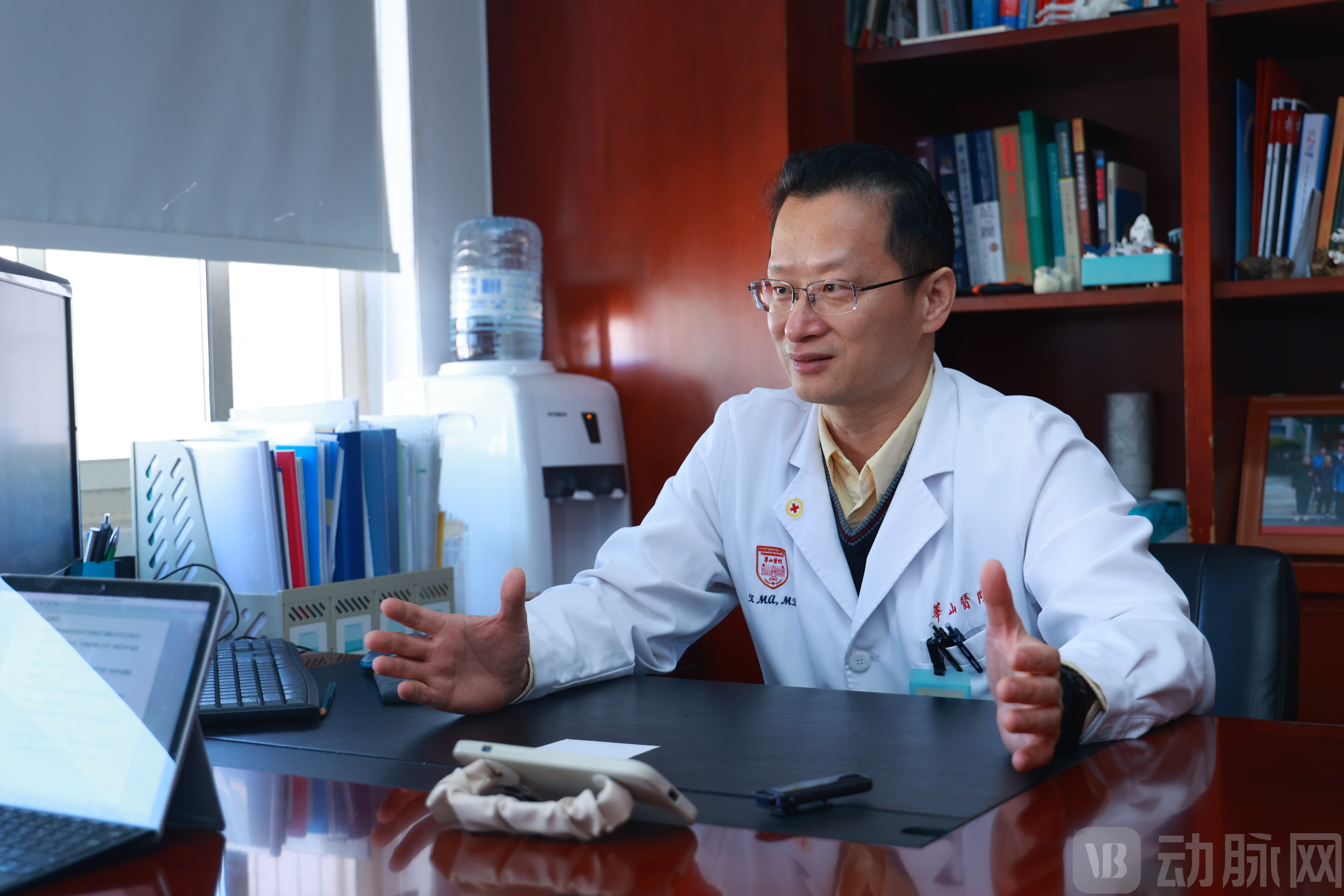
Professor Ma Xin, Vice President of Huashan Hospital Affiliated to Fudan University
Ma Xin, Deputy Director of Huashan Hospital, Chief Physician, Professor, Doctoral Supervisor, Deputy Director of the Department of Orthopedics; Visiting Scholar at Massachusetts General Hospital (MGH), Harvard University, USA; International Member of the American Orthopaedic Foot & Ankle Society. Recipient of the Second Prize for Medical Science and Technology Progress in Shanghai, the Visiting Physician Award from the American Orthopaedic Foot & Ankle Society, and the "Outstanding Talent of Jing'an District, Shanghai" Award.
Since 2004, Professor Ma Xin has served as the chief or deputy medical director and head of medical support for major events, including the F1 World Championship, MotoGP, A8 Touring Car races, the IAAF Golden League, the FINA Diving Grand Prix, and the Shanghai venues of the 2008 Beijing Olympic Games. He has accumulated extensive experience in sports injury management and disaster relief.
To date, Professor Ma Xin has published more than 130 academic papers and clinical monographs in domestic and international journals, including over 30 SCI-indexed papers. He has presided over two projects funded by the National Natural Science Foundation of China and three research projects supported by the Shanghai Municipal Science and Technology Commission, participated in five National Natural Science Foundation of China projects, achieved three significant research outcomes, received two provincial/ministerial-level awards for scientific and technological progress, and holds six invention patents.
VCBeat conducted an exclusive interview with Professor Ma Xin, discussing the current state of the rehabilitation field, how digital therapeutics can enter this domain, and their clinical value, aiming to understand the significant value of digital therapeutics in rehabilitation. HereThe highlights from the conversation are excerpted below:
Q: What is the role of rehabilitation therapy in the patient's overall treatment process?
Ma Xin:The rehabilitation process is of paramount importance to the improvement of patients’ overall quality of life. Orthopedic surgeons contribute only part of the solution; it can be said that their role accounts for 51%, while rehabilitation accounts for 49%. Rehabilitation should be integrated throughout the entire treatment course, not merely in the postoperative phase. A standardized rehabilitation protocol can enhance surgical outcomes. In the past, China placed insufficient emphasis on rehabilitation, and it was considered a significant achievement if patients could even access surgical care. Currently, however, the country is placing increasing importance on patient rehabilitation.
The current challenge lies in the fact that existing public healthcare resources are insufficient to accommodate the vast population requiring rehabilitation. Although the Department of Rehabilitation at Huashan Hospital ranks among the top in China, it still struggles to provide adequate care for all patients. The hospital serves a large number of non-local patients with rapid turnover, typically completing surgeries within 48 hours. We have devoted considerable time and effort to counseling and guiding patients on postoperative rehabilitation, disseminating educational materials and photos through community centers and our official WeChat account. However, not every patient fully understands or effectively adheres to these instructions. Consequently, many non-local patients encounter varying degrees of difficulties during their rehabilitation process, which local hospitals are often ill-equipped to manage. Frequently, despite technically successful surgeries, inadequate follow-up rehabilitation leads to suboptimal postoperative outcomes.
Pre- and post-operative rehabilitation is essential, yet there is a significant shortage of professional rehabilitation institutions in China. From a macro perspective, I believe that medical institutions at different levels and with varying fee structures should be permitted to coexist, thereby addressing the diverse rehabilitation needs of patients. To foster the development of this industry, it is crucial not only to meet the basic healthcare needs of the general public but also to allow private institutions to serve clientele with higher expectations, catering to their personalized rehabilitation requirements.
Q: Digitalization in healthcare is a trend. What role will digital therapeutics play in the field of rehabilitation?
Ma Xin:Digitalization in healthcare holds promising prospects, providing patients with more opportunities to communicate with doctors and offering greater possibilities for medical services.
First, digital therapeutics can capture a vast amount of baseline data. With such data accumulation, treatment processes can be made more precise, which is critically important. Previously, we relied on physicians’ clinical experience; now, therapeutic approaches can be validated through data. Second, the internet enables patients to enter the rehabilitation phase in a timely manner, thereby providing rehabilitation physicians and technologies with broader opportunities for application. Third, the internet offers young physicians ample space for practical practice. In internet-based healthcare, there are no department chiefs or hospital directors, and younger physicians may be better adapted to this model of care.
In the realm of traditional medicine, Western countries have an early start in rehabilitation, with comprehensive development and a massive industry, which constitutes their advantage. However, by leveraging the internet and big data, we have the potential to overtake them on the curve. If more patients can receive guidance from top-tier rehabilitation institutions at the earliest opportunity, I believe we can rank among the world’s leaders.
For instance, Fudong Musculoskeletal aims to address the accessibility challenges in orthopedic rehabilitation through digital therapeutics. From a clinical technology perspective, the company has established standardized clinical pathways for postoperative rehabilitation based on the American Physical Therapy Association’s “Clinical Practice Guidelines for Orthopedic Rehabilitation” and the University of Southern California’s standardized clinical training system, thereby ensuring compliance and professionalism in diagnosis and treatment. While actively conducting clinical research on digital therapeutics, the company is also expanding its physical clinic network, creating an integrated, systematic online-to-offline comprehensive healthcare service model.
Q: What is the social and public value of digital therapeutics in the field of rehabilitation for the entire healthcare system?
Ma Xin:It represents a revolutionary change for the entire industry. With the overwhelming number of patients, digital healthcare enables fully precise, digitized patient management. Through video consultations and during patients’ self-guided rehabilitation, we can capture extensive data from the backend to monitor exercise metrics in real time—such as whether step counts are sufficient, whether movements are performed correctly, and whether any alerts have been triggered. Physicians can access these data at any time, which is highly beneficial for patient care.
It is crucial to recognize that digital therapeutics involve patients’ personal interests, and their core data must be securely protected. Safeguarding patient privacy is fundamental and will remain a key focus in the future digitalization of healthcare.
In China, internet-based engineering initiatives, strong government support, and a highly favorable macro environment create significant opportunities. We eagerly look forward to collaborating with relevant institutions to extend our services beyond the walls of Huashan Hospital, leveraging the internet to benefit a broader patient population across the country. This remains the focal point of our efforts.
Q: The clinical application of digital therapeutics can establish a comprehensive diagnostic and treatment data system. What is the value of this data system?
Ma Xin:In clinical practice, we need to integrate big data. In traditional healthcare settings, physicians tend to prioritize experience, which can be imprecise and largely subjective. Accurate therapeutic experience or foundational data will provide valuable resources for future clinical research, as well as for the development of guidelines and expert consensus.
Our country has many highly skilled physicians; unfortunately, they are unable to publish high-quality articles or develop robust clinical guidelines, primarily due to insufficient data accumulation. Digital health supports us by enabling the collection of extensive foundational data. With such data accumulation, we can achieve greater precision in treatment processes, which is critically important.
All hospitals are establishing key clinical research institutes, with a greater emphasis on clinical practice. This differs from basic research; while data acquisition is relatively easier in focused research studies, obtaining data in clinical research is not straightforward. Recognizing this challenge, the digitization and quantification of treatment have become crucial for advancing our analysis, scientific research, and diagnostic and therapeutic techniques. Therefore, digital-driven clinical healthcare is essential. I believe this is our current focus and a key direction for future development.
Although digital therapeutics in China are still in their nascent stages, the sector boasts broad development prospects, driven by the rapid advancement of next-generation information technologies and internet-based healthcare, as well as the country’s vast population base. The continued progress of digital therapeutics requires active exploration and collaboration among various stakeholders, including medical institutions, research organizations, technology-driven enterprises, and service providers. VCBeat will continue to report on innovative pathways for digital therapeutics in China. We are encouraged by the applications and achievements of digital therapeutics in the medical field, which aim to deliver benefits to China’s hospital systems, as well as to more physicians and patients.