

Pulsed Field Ablation: The Billion-Dollar Disruptive Technology Drawing Heavy Investment from Boston Scientific, Johnson & Johnson, and Medtronic
Since Electronic Pulse Therapy Technology Joined the Ranks of World-Changing InnovationsIn the 11 Major Areas of the “Rules of the Game,” the Popularity of Pulsed Field Ablation Devices Is Gradually Rising.
According to the 36 tech startups selected by U.S. venture capital data firm CB Insights in February 2020 as those that will change the world’s “game rules” in 2020, it ranks among the 11 major technologies changing the world’s “game rules.”Covers the following areas: Photonic chips, quantum encryption, AI-transparent technology, CRISPR 2.0, AI-based protein prediction, electrical pulse therapy, microbiome medicine, DNA data marketplaces, carbon dioxide capture, next-generation nuclear technology, sustainable logistics.
Judging from the moves of major multinational medical device companies, Boston Scientific acquired Farapulse, a pulsed field ablation company, in June 2021; Johnson & Johnson and Medtronic’s pulsed field ablation systems also entered the NMPA’s Special Review Procedure for Innovative Medical Devices in 2020 and are poised to enter the Chinese market.
Meanwhile, domestic innovative enterprises have been highly active. From September to December 2021, companies such as Ruidao Medical, Xuanyu Medical, Ruidi Biotech, Aikemai, and Zhouling Medical successively completed new rounds of financing; Deno Electrophysiology announced the completion of Asia’s first pulsed field ablation procedures for both paroxysmal and persistent atrial fibrillation; in July 2021, Yingtaili Ankang’s innovative product, the Irreversible Electroporation Therapy System, received market approval for the ablation treatment of malignant solid liver tumors; and Jinjiang Electronics’ independently developed pulsed field ablation system completed enrollment of all patients in its registrational clinical trial in November 2021.
Behind the continuous moves by multinational medical device companies and domestic innovative enterprises lies the high growth potential and broad market prospects in the field of pulsed field ablation.
In this emerging market, which domestic companies possess comprehensive technology platforms and robust pipelines? Who has the strength to compete with importers for a share of the rapidly growing pulsed field ablation market? VCBeat has conducted an analysis of this sector.
Pulsed field ablation technology is applied in clinical practice based on the electroporation effect of pulsed electric fields. Data indicate that electroporation is categorized into reversible and irreversible electroporation. Reversible electroporation refers to the formation of transient hydrophobic or hydrophilic nanopores in the cell membrane under a specific electric field intensity, with the cells returning to their natural state after the electric field is removed.Irreversible electroporation refers to the permanent permeabilization of the cell membrane caused by a stronger electric field, leading to cell death.。
Based on the theory of reversible electroporation, clinicians utilize high-field-strength electrical pulses to create small pores in the cell membrane, thereby facilitating the intracellular delivery of drugs that otherwise struggle to penetrate the lipid bilayer. This approach enhances therapeutic efficacy while reducing both the required drug dosage and associated toxic side effects. Known as electrochemotherapy, this treatment is currently primarily applied in the management of cancer and other diseases. Another medical application of reversible electroporation involves the introduction of genes into cells or tissues via electroporation for gene therapy and DNA vaccination.
Based on the theory of irreversible electroporation, pulsed electric field technology is used to treat diseases such as tumors and arrhythmias.Among these, pulsed field technology offers tissue selectivity, meaning that irreversible electroporation occurs in different tissues only at specific pulsed electric field intensities, while other tissues remain unaffected at those same intensities. For example, at a window dose determined by specific electric field strength and pulse width targeting tumor cells, the tumor cells undergo irreversible electroporation and gradually apoptose, whereas blood vessels and nerves remain completely unaffected. Similarly, under specific electric field parameters targeting cardiomyocytes, the cardiomyocytes undergo irreversible electroporation, while endothelial cells, nerve cells, smooth muscle, and other tissues are spared. Based on these characteristics, pulsed field technology demonstrates significant advantages in treating conditions such as tumors and arrhythmias, particularly for ablating lesions in specific locations, such as tumors surrounded by blood vessels and nerves.
In the 1960s, pulsed electric field (PEF) technology was applied in the food processing industry, leveraging its irreversible electroporation effect to disrupt and destroy cells for the sterilization of liquids and foods. With advancing medical research on PEF technology, clinical applications began in the 21st century to treat tumors by exploiting its cytotoxic effects on target cells.
Specifically, pulsed electric field (PEF) technology for tumor treatment utilizes appropriately designed electrical components and circuits to generate steep pulses characterized by ultra-short pulse widths, high voltages, and rapid rise times. These high-voltage pulses are delivered to the target lesion via specialized conductive applicators, ultimately achieving ablation of cells and tissues within the targeted area.
In the field of tumor ablation, pulsed electric field technology has been utilized to develop medical devices for irreversible electroporation (IRE) tumor ablation, representing an emerging technology in recent years.. Previously, tumor ablation mainly included various methods such as radiofrequency ablation, microwave ablation, laser ablation, high-intensity focused ultrasound (HIFU) ablation, and cryoablation. All these ablation techniques destroy tumors by applying extreme cold or heat through physical means, such as argon-helium cryoablation, and thermal ablation using radiofrequency, microwave, or laser energy.
Taking radiofrequency ablation, the most widely used technique today, as an example, its principle involves inserting an ablation electrode into the tumor site and delivering radiofrequency pulse energy to generate localized high temperatures, thereby inducing coagulative necrosis of the tumor tissue.
However, a major drawback of using high temperature or cryoablation to destroy tumor cells is the non-selective destruction of tissue. Within the ablation zone, normal tissues and organs—such as blood vessels, nerves, bile ducts, and pancreatic ducts—are damaged alongside the tumor. This issue is also the primary cause of post-ablation complications. Furthermore, due to the indiscriminate damage inflicted on surrounding tissues, this type of ablation therapy is unsuitable for tumors in certain specific locations, such as those encased by blood vessels and nerves or situated near vital organs.
Unlike the aforementioned ablation methods,Irreversible Electroporation (IRE) TechnologyIt leverages not thermal effects, but the biological effects of electrical energy. Based on the irreversible electroporation effect of pulsed field ablation technology, it avoids accidental damage to surrounding tissues and organs caused by heat conduction, thereby effectively reducing certain specific complications and adverse events. Furthermore, due to its tissue selectivity, it can treat "ablation no-go zones" that are untreatable by other ablation modalities, without affecting adjacent normal tissues, such as tumors located near the hepatic hilum, gallbladder and bile ducts, pancreas, and ureters. In addition, it offers other advantages, including thorough treatment, restoration of normal function in the treated area, and real-time monitoring.
In terms of therapeutic efficacy, tumors with diverse characteristics—such as those located adjacent to blood vessels, those with irregular shapes, and large-sized tumors—can all be completely ablated by electric fields. The ablation zone exhibits well-defined boundaries, with a transition thickness of only 1–2 cell layers, resulting in a clear demarcation between the treated and untreated areas. It is precisely based on this advantage thatMedical Devices for Tumor Ablation Using High-Voltage Pulsed Electric FieldsTreatment efficacy and outcomes can be monitored in real time using imaging techniques such as ultrasound, CT, and MRI.
The restoration of normal function in the treatment area is attributed to the fact that irreversible electroporation induces apoptosis rather than necrosis. A key advantage of apoptosis is its ability to leverage immune mechanisms to facilitate cell clearance. Furthermore, as the human body recognizes apoptosis as a physiological cell death process, apoptotic cells are removed via phagocytosis, thereby promoting the regeneration and repair of normal tissue and ultimately restoring functional integrity to the ablated region.
In 2018, U.S. cardiac electrophysiologists successfully applied pulsed field ablation technology to human atrial fibrillation ablation. This marked the first use of pulsed field ablation for the treatment of human cardiac arrhythmias, providing a novel ablation therapy for atrial fibrillation and other arrhythmic disorders, while also expanding the scope of applications for pulsed field technology.
In the field of electrophysiology, pulsed electric field technology is referred to as Pulsed Field Ablation (PFA).。
Regarding the treatment of arrhythmias, taking atrial fibrillation (AF) as an example, therapeutic options include pharmacological therapy, ablation therapy, and surgical maze procedure. Pharmacological therapy cannot cure AF, while the surgical maze procedure is associated with significant trauma and is currently primarily indicated for AF patients with concomitant cardiac diseases. Therefore, ablation therapy has become the mainstream treatment modality for atrial fibrillation.
Previously, the primary ablation modality for treating atrial fibrillation was radiofrequency ablation, which works by generating high temperatures through regulated electrical current to destroy myocardial tissue. Another emerging technique is cryoablation, which damages myocardial tissue through freezing. However, similar to radiofrequency and cryoablation used in tumor treatment, these methods can cause collateral damage to surrounding healthy tissues. In contrast, Pulsed Field Ablation (PFA) leverages the effect of irreversible electroporation induced by pulsed electric fields to selectively ablate myocardial tissue while sparing adjacent normal structures, thereby enhancing therapeutic efficacy and reducing postoperative complications.
In fact, tumor ablation and atrial fibrillation (AF) ablation represent two distinct clinical applications of pulsed electric field (PEF) technology. Both share the same fundamental mechanism: inducing apoptosis in cells within the target area through the irreversible electroporation effect of PEF. The differences between them lie in the electrical resistance of the target tissues and the types of electrodes used for energy delivery. Regarding electrodes, tumor ablation employs needle-like electrodes that are percutaneously inserted into the tumor region, arranged in a parallel configuration. In contrast, PEF for AF ablation utilizes catheter-based electrodes delivered via vascular intervention to reach the target areas within the heart.
Currently, the field of pulsed electric field ablation primarily encompasses the tumor ablation market and the cardiac electrophysiology market.
According to Frost & Sullivan, the number of new cancer cases in China increased from 4.1 million in 2016 to 4.6 million in 2020, and is projected to reach 5.8 million by 2030. Data released by the National Cancer Center shows that lung cancer ranks first among malignant tumors in China, followed by gastric cancer, colorectal cancer, liver cancer, breast cancer, esophageal cancer, thyroid cancer, cervical cancer, brain cancer, and pancreatic cancer. These ten types of malignant tumors account for approximately 76.7% of all malignant tumor incidences.
As the population of cancer patients grows, the tumor ablation industry market is expanding in tandem. Public data shows that the market size of China's tumor ablation industry increased from RMB 2.46 billion in 2014 to RMB 3.63 billion in 2018, with a compound annual growth rate (CAGR) of 10.3%, and is projected to reach RMB 6.15 billion by 2023.
On the other hand, current tumor ablation methods, such as radiofrequency ablation and microwave ablation, cause damage to the ablation site and struggle to treat tumors located near vital organs, blood vessels, or nerves, including liver cancer, thyroid cancer, and pancreatic cancer. Therefore, pulsed electric field technology is poised to become the mainstream approach for future tumor ablation, leveraging its advantages of minimal tissue injury and the ability to ablate tumors in areas traditionally considered contraindicated for conventional ablation techniques.
In the cardiac electrophysiology market, data from the National Health Commission’s Quality Control Center for Interventional Management of Arrhythmias shows that the number of ablation procedures performed for arrhythmia patients in China increased from 101,000 in 2014 to 152,000 in 2018, representing a compound annual growth rate (CAGR) of 10.7%. The procedure volume is projected to reach 336,000 by 2023, with a CAGR of 17.3%.
With the increase in surgical volume, the market size of China's cardiac electrophysiology industry has grown from RMB 1.13 billion in 2014 to RMB 3.33 billion in 2018, representing a compound annual growth rate (CAGR) of 30.9%, and is projected to reach RMB 12.32 billion by 2023.
Meanwhile, PFA (Pulsed Field Ablation) leveraging pulsed electric field technology is also poised to become the mainstream product in cardiac ablation, thanks to its advantages such as short ablation time, superior therapeutic efficacy, and minimal sequelae.
Overall, pulsed field ablation (PFA) technologies are highly likely to become the mainstream products in their respective sub-sectors, with the combined market size in China reaching RMB 20 billion.
Consequently, multinational medical device companies such as Boston Scientific, Johnson & Johnson, and Medtronic have already begun to lay out their respective product pipelines. Meanwhile, domestic innovative enterprises like Xuanyu Medical and Zhouling Medical have also rapidly entered the market in the past two years.
For example, Xuanyu Medical, established in May 2020, focuses on the two major markets of cardiac electrophysiology and peripheral intervention. It has completed preclinical validation of its pulsed field ablation (PFA) products and is about to initiate multi-center registrational clinical trials. Aikemai, founded in November 2020, is dedicated to the field of cardiac electrophysiology. It has developed generator systems and ablation catheters, and plans to expand into three-dimensional mapping and navigation systems as well as novel ancillary tools. Zhouling Medical, established in 2021, is committed to the research and development of innovative electrophysiology devices. It has finalized the design of its cardiac pulsed field ablation (PFA) system and is poised to enter clinical trials.
In addition to companies established in the past two years, enterprises such as Ruidi Biotech, Jinjiang Electronics, Deno Electrophysiology, Huitai Medical, and Hanyu Medical have also made strategic moves in the field of pulsed field ablation (PFA) technology. For instance, Ruidi Biotech, founded in 2014, currently focuses primarily on oncology and cardiovascular diseases. Its nanosecond pulsed tumor ablation system has initiated clinical trials, while its PFA system for atrial fibrillation is poised to begin clinical trials. Jinjiang Electronics, established in 1991, completed the enrollment of all patients for the registrational clinical trial of its PFA system in November 2021. Deno Electrophysiology (formerly Nuomao Medical), founded in 2016, announced in December 2020 the successful completion of Asia’s first PFA procedure for paroxysmal atrial fibrillation, followed by the successful completion of Asia’s first PFA procedure for persistent atrial fibrillation in July 2021.
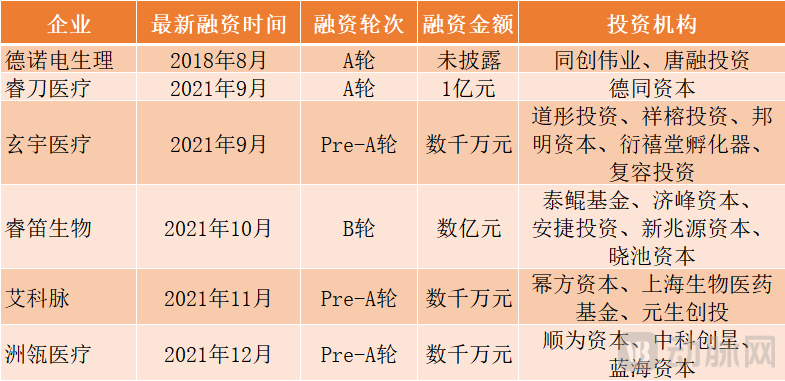
Recently, companies involved in pulsed field ablation technology have garnered significant investor interest. For instance, Xuanyu Medical, Aikemai, and Zhouling Medical each secured tens of millions of yuan in Pre-A round financing, while Ruidao Medical completed a RMB 100 million Series A financing round in September 2021, and Ruidi Biology closed a multi-hundred-million-yuan Series B round in October 2021. Previously, Denuo Electrophysiology received investment from institutions such as Cowin Capital and Tangrong Investment in 2018.
From a corporate perspective, China’s pulsed field ablation (PFA) industry is in its early market stages, yet numerous companies are vying to establish their presence. For instance, Denovo Electrophysiology, Xuanyu Medical, Huitai Medical, Accupulse, Zhouling, Jinjiang Electronics, and Hanyu Medical have all placed bets on PFA technology, which has emerged only in recent years. Meanwhile, Ruidao Medical, Yingtai Li’an Kang, and SinoMicro Medtech have applied pulsed field technology to tumor ablation, with relevant products already launched in the market. Notably, Ruidi Biotech has simultaneously established a portfolio spanning tumor ablation, electrophysiology, and endoluminal ablation. Accupulse and Zhouling Medical have also disclosed plans to develop PFA devices for both oncology and electrophysiology applications in the future.
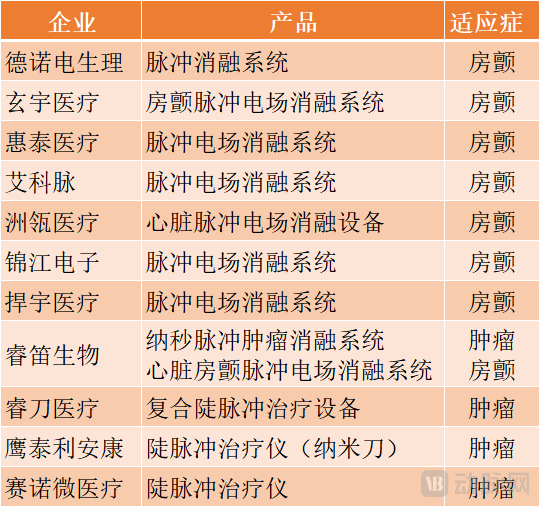
Thus, it is evident that pulsed field ablation technology will be widely applied in the ablative treatment of tumors, cardiac arrhythmias, and other diseases in the future. Companies in this field are also highly likely to simultaneously develop multiple product pipelines and expand the indications for their products.
In fact, pulsed electric field technology can also be applied in multiple fields, such as electroporation-mediated gene delivery, acceleration of plant growth, controlled drug release, electrochemical intervention of biomolecules, and stimulation of bone and skin tissue growth. As products from various companies continue to enter the market, it is highly likely that these companies will apply pulsed electric field technology to many other areas to reduce competitive pressure and explore new markets.
Public information indicates that pulsed electric field technology has evolved through three generations to date, namely the first generationMillisecond Pulse, leveraging reversible electroporation effects for gene transfection, electroporation-based drug delivery, electrochemotherapy, etc.; second-generationMicrosecond Pulse, utilizing irreversible electroporation for ablation therapy of tumors and arrhythmias such as atrial fibrillation; third-generationNanosecond Pulse, leveraging the supra-electroporation effect for endoluminal therapies in oncology, cardiovascular interventions, respiratory interventions, and endoscopic procedures.
From an application perspective, pulsed field ablation (PFA) technology is evolving from two-dimensional to three-dimensional approaches, leveraging 3D electrophysiological mapping systems to facilitate ablation procedures. For instance, Deno Electrophysiology has partnered with the U.S.-based company APN Health to introduce APN Health’s 3D electrophysiological mapping system into China, combining it with PFA products to provide improved treatment for patients with atrial fibrillation and other complex arrhythmias. Similarly, Jinjiang Electronics has developed a cardiac PFA system that integrates magnetic positioning navigation with 3D modeling, mapping, and ablation capabilities. Additionally, Ruidi Biologics’ PFA system combines preoperative planning navigation with robotic arm technology to enable real-time, in-situ monitoring of electrical feedback from lesions, thereby achieving precise quantitative control.
Overall, pulsed field ablation technology is expected to evolve toward broader indications and integration with three-dimensional mapping-guided ablation. Its advantages—including tissue selectivity, non-thermal mechanism, rapid energy delivery, effective lesion formation, and the lack of requirement for complete catheter-tissue contact—make it a strong candidate for next-generation ablation energy. However, as a novel energy source, pulsed field ablation still presents many unknowns. It is believed that further clinical trials will help elucidate its mechanisms, optimize parameter settings, define its scope of application, and assess long-term safety, thereby providing robust evidence-based medical support for the optimal use of this new energy modality.