

DaXiang Technology Partners with Wuhan National Human Genetic Resources Bank to Build a Compliant Organoid Commercialization Model
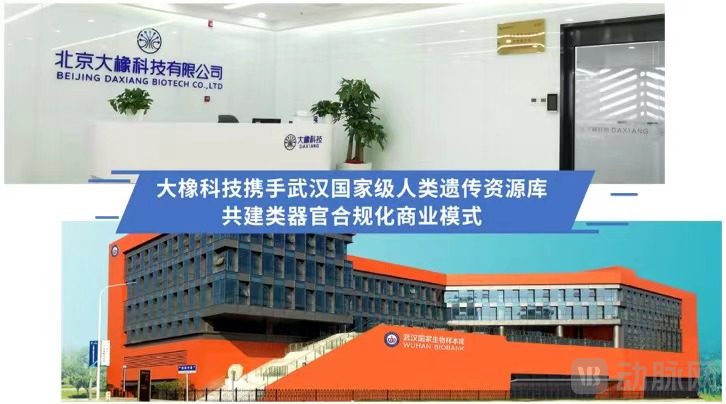
Recently, Beijing Daxiang Technology Co., Ltd. (“Daxiang Technology”) signed a strategic cooperation agreement with Wuhan Biobank Co., Ltd., the operating entity of the Wuhan National Human Genetic Resources Bank. The two parties will engage in in-depth collaboration in areas such as jointly establishing an organoid biobank, developing organoid models, and pursuing commercial applications for global pharmaceutical companies and research institutions. Reportedly, this marks the first partnership in China between a national-level human genetic resources bank and a commercial company specializing in the field of organoids.
Human genetic resources serve as both the foundation for basic and clinical research, and the key to achieving precision diagnosis and treatment and clinical translation.
Organoids are three-dimensional (3D) micro-organs formed by culturing adult stem cells derived from primary tissues in vitro, exhibiting histological features and physiological functions highly similar to those of real human organs. Organoids-on-Chips refer to organoid models constructed on microfluidic chips, which leverage engineering approaches to achieve more biomimetic, controllable, and standardized organoid systems.
As one of the most mature applications of organ-on-a-chip technology, tumor organoid chips preserve the biological characteristics and genomic information of tumor tissues intact, offering significant application value and broad utility. They demonstrate numerous advantages, including high efficiency, strong clinical concordance, and low cost, particularly in the identification of tumor biomarkers, discovery of specific therapeutic targets, investigation of mechanisms underlying tumor drug resistance, and evaluation of drug efficacy. Furthermore, tumor organoid chips exhibit stable phenotypic and genetic features and can be cultured long-term in vitro. This sustainable, passagable “living” biobank will further conserve precious human genetic resources.
This collaboration will fully leverage the comprehensive platform advantages of the Wuhan National Human Genetic Resources Bank, including its shared scientific and technological resource service platform, integrated innovation across “government, industry, academia, research, healthcare, and public sectors,” and seamless integration of science and technology with the economy. It will also capitalize on Daxiang Technology’s technical expertise in organoid bank construction and its commercial resource strengths, thereby further enhancing the compliance and commercialization capabilities of the organoid industry. The two parties will engage in deep cooperation in several areas:
Investing in New Biological Infrastructure to Build the World’s Largest Organoid Bank. Leveraging their respective strengths, both parties will jointly establish a high-quality, application-oriented tumor organoid bank and primary cell bank covering multiple cancer types; meanwhile, they will integrate clinical data, omics data, and application-related information to construct a comprehensive information resource database.
Deeply develop new models to achieve globally compliant application of resources. Both parties will focus on in-depth collaborative development of models such as the tumor immune microenvironment, constructing stable, biomimetic, human-derived pathophysiological models through technologies like gene editing and immortalization. Meanwhile, both parties will collaborate to streamline the compliance and legal processes for the use of human genetic resources, enabling the compliant commercial application of sample resources and models.
Advancing personalized precision medicine to enhance clinical benefits for patients. Both parties will actively promote the application of tumor organoid-on-a-chip technology in clinical drug sensitivity testing, thereby realizing true personalized precision medicine and helping patients identify optimal treatment regimens.
Promote the development of a standard system and establish Chinese standards for organoids. Both parties will collaborate with standardization organizations and other relevant entities to actively advance the construction of a standard system for organoids and organ-on-a-chip technologies, formulating Chinese standards across various aspects, including biobanking, model establishment, and applications.
Long development timelines, high costs, and low success rates have long been unresolved pain points in new drug development. The key reason is the lack of highly biomimetic, cost-effective, and efficient drug evaluation models, whereas organ-on-a-chip technology serves as a powerful tool to address these challenges. The organoid biobank will provide innovative, low-cost, and highly efficient models with high clinical consistency, along with advanced drug evaluation technologies. This will enhance the efficiency of drug discovery, improve the accuracy of drug evaluation, accelerate the drug development process, and support the rapid growth of China’s pharmaceutical enterprises. Furthermore, by leveraging the Wuhan National Human Genetic Resources Biobank, organoids and related models will be made available for global collaboration in a legal and compliant manner, significantly enhancing the social and economic value of the biobank and ensuring its sustainable development. As one of the first enterprises stationed at the Hubei Provincial Comprehensive Technological Innovation Platform for New Drug Creation, Dayou Technology has jointly established a major innovative technology platform centered on organ-on-a-chip technology with the Wuhan Biobank. This initiative will inject new momentum into the development of the pharmaceutical industry in Hubei Province and across China.
The Wuhan National Human Genetic Resources Bank was officially launched on November 23, 2021. Jointly established by the Wuhan Institute of Biotechnology and Hubei Provincial Science and Technology Investment Group, it focuses on the preservation and utilization of human genetic resources, technology development, achievement transformation, and data sharing. The bank aims to promote the scientific conservation and efficient use of human genetic resources, safeguard biosafety, and advance independent innovation in life sciences and the bioindustry. Phase I of the Wuhan Biobank has a storage capacity of 15 million samples and possesses 30 petabytes (PB) of capacity for sample information storage and comprehensive data processing. It is the first third-party biobank in China to receive administrative licensing for the preservation of human genetic resources following the promulgation and implementation of the Regulations on the Administration of Human Genetic Resources of the People's Republic of China.
Beijing Daxiang Technology Co., Ltd. was established on November 13, 2018. As a leading high-tech enterprise in China specializing in the research, development, and manufacturing of human organ-on-a-chip systems, the company is committed to promoting and spearheading the widespread application of organ-on-a-chip technology in new drug development, disease modeling, and personalized precision medicine. The company aims to provide more precise, efficient, and cost-effective solutions for drug development, as well as an innovative, biomimetic standardized platform for clinical precision medication, thereby advancing the cause of human health.