

Five-Step Framework for Direct Translation of Scientific Research into Industrial Value Chain
Currently, we have observed positive signals at every stage of the innovation chain.
First, on the policy front. According to statistics from VBInsight, in 2021,A total of 48 policies related to innovation and translation have been issued in China, including 14 national policies and 34 local policies., with its support efforts further strengthened.
Secondly, at the source end, hospitals and universitiesandEnterpriseAll are making significant strides on the path of medical innovation. On April 8, 2021,“Nine Incentive Policies for the Transfer and Commercialization of Scientific and Technological Achievements at West China Hospital, Sichuan University (Trial)”Issued; April 29, 2021,China's FirstIntellectual property securitization products for the special session on the transformation of scientific and technological achievements in universities were listed on the Shenzhen Stock Exchange; October 2021,AstraZenecaUpgrade the Shanghai R&D Center to become the China Center for Global R&D.
Finally, on the conversion sideAccording to statistics from VBInsight, a total of in China's healthcare sector in 2021 occurred59 Early-Stage Investment and Financing Events, with total financing reaching a record highRMB 2.5 billion, with biotechnology projects being the most favored by investment institutions, totaling 30 deals and accounting for the lion's share.
The unprecedented momentum of innovation signifies that the pace of progress in China's medical innovation sector is accelerating, yet on this path of innovation,The further one progresses, the more pain points one encounters.. Therefore, from an initial scientific concept to laboratory achievements, and then to the transformation of technology into mature commercial products and their industrial implementation, in this process,How can these pitfalls be avoided??
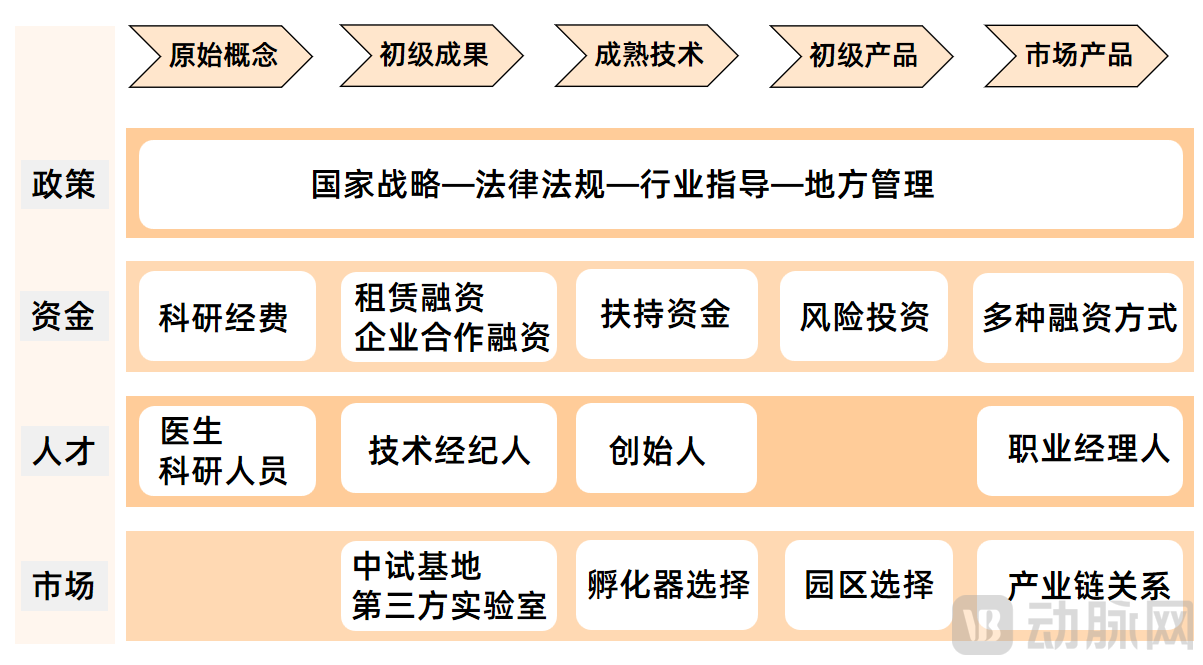
Figure 1. Five Stages of Translation of Scientific Research Achievements
To this end, VCBeat has developed a flowchart for medical industry-academia-research-application collaboration, which broadly divides the process of translating medical research achievements intoPropose original concepts, generate preliminary results, possess mature technologies, develop initial products, and achieve market-ready productsfive stages, and fromPolicies, Funding, Talent, MarketFour dimensions identify the issues involved in each stage, from which are selected“Policy Interpretation” “Proof of Concept and Pilot Production” “Selection of Financing Models” “Scientific Research Value vs. Market Value” “Patent Protection and Incentives”Five Hot Topics for Discussion and Analysis.
Step 1: The Four-Tier, Four-Stage Policy Takes the Lead
The translation of medical innovation achievements is a long-term and heavily invested project. In this process, the supporting policies for the transformation of scientific research achievements by the government play a very important role in promoting projects. Therefore, understanding the evolution trend of China's medical achievement transformation policies is of great significance to the development of projects.
It is reported that, from1985Since the national level began to support the transformation of scientific and technological achievements through legislation and tax policies, China’s relevant functional departments have been making various attempts to better promote innovation. According to statistics from VCBeat Orange Fruit Bureau, as of nowOver a span of 37 years, China has issued a total of 434 policies on the translation of scientific and technological achievements, among which 137 specifically focus on the medical and health sector.。
These policies can be broadly divided into four phases. The first phase involves the Ministry of Science and Technology, the Ministry of Industry and Information Technology, and the National Natural Science Foundation (or local science and technology bureaus and commissions of economy and information technology).Relevant Projects and Funding Support, this part of the policy mainly supports fundamental and frontier research.
The second phase is formulated by the relevant functional agencies of the National Health Commission and the National Medical Products Administration.Industry Management and Licensing Approval Policies, which directly affects how innovative achievements are translated into clinical practice; therefore, policy guidance primarily focuses on standardizing the approval process and providing solutions tailored to the distinct needs of each stage.
The third phase involves medical insurance and healthcare institutionsRelevant Management Policies, primarily manifested in the use of efficient and feasible payment methods to precisely link with payers, thereby facilitating market access and revenue generation for innovative outcomes.
The fourth phase is that of local governmentsInvestment Promotion Policies. Currently, developing the healthcare industry has become a consensus among local governments, with core efforts primarily focused on incubating and introducing innovative projects, among which introduction is currently the more effective approach. Therefore, to attract a batch of valuable innovative projects to settle locally, local governments have shown considerable sincerity in their policies, mainly manifested asFinancial Support, Tax Reductions, Resource Matching, Platform Servicesand other core segments.
Step 2: How to Conduct Proof of Concept and Pilot Production?
From the perspective of the entire innovation chain,Proof of ConceptandPilot-scale TrialThis stage plays a crucial bridging role in the process of industrialization. However, as China’s pilot-scale platforms, technologies, talent pools, and investments remain in their early stages, a significant amount of R&D becomes disconnected from market needs from the outset, ultimately falling into the “Valley of Death” of innovation.
This is clearly an outcome we wish to avoid; therefore, we need to build a communication bridge between R&D and marketing.Proof of ConceptandPilot-Scale Production Phaseemerged as the times required.
In simple terms, the purpose of establishing a proof-of-concept center is to help universities and research institutesEnhance the alignment between scientific research outcomes and market needs, reduce the risks associated with subsequent market entry, and unlock greater commercial value from these research achievements.Moreover, proof-of-concept centers can provide support such as business advisory services, entrepreneurship education, and even seed funding, thereby effectively bridging basic research and development with the translation of scientific achievements.
However, the challenges faced at this stage areChina currently lacks pilot-scale support platforms and professional technology brokers.. WithTechnology BrokerFor this category of talent, the objective is to promote the conversion of achievements by engaging in intermediary, brokerage, or agency services to facilitate technical transactions for others.Their strength lies in their dual expertise in both technology and business, enabling them to provide multifaceted support for the successful commercialization of scientific research achievements.。
As another key link,The primary mission of the pilot-scale support platform is to leverage resources such as production facilities and testing equipment to continuously improve, optimize, validate, and refine laboratory-stage scientific research achievements through a series of technical trials., supplement and verify relevant data, establish and finalize technical specifications, and resolve various issues arising during industrial scale-up production,To gradually mature scientific research achievements and their corresponding technologies。
But beyond the proof-of-concept and pilot-scale stages, precisely aligning innovative products with market demand,A professional platform for the commercialization of scientific and technological achievements is also a good option.。
Taking 2014 as the pivotal year and building on the foundation of the inaugural year of internet healthcare, medical research translation institutions in China have emerged rapidly, primarily falling into the following four categories:The first is national-level R&D institutions established by the state., such as the National Clinical Research Center;Second, academic R&D institutions “endorsed” by universities., such as GHIC;3. Hospital-led collaborative R&D institutions, such as the Huaxi Research Base established依托 the West China Medical Center of Sichuan University;Fourth, it is a socially-oriented R&D institution that integrates multiple resources., such as Westlake University, which was established with funding from the Hangzhou Westlake Education Foundation.
As specialized platforms for the translation of achievements in medicine-engineering interdisciplinary research, these R&D institutions will be deeply involved in every key stage of the technology transfer process, providing end-to-end commercialization services from needs identification to fulfillment.
Step 3: What Type of Funding Should Be Chosen at Different Stages?
The translation of medical research achievements involves a long cycle, leading to an inevitable strong demand for funding. In essence, however, high-quality innovative projects are not lacking in investment institutions; what they lack is truly suitable investment partners. Therefore,It is essential to determine how to select financing methods at each stage of the commercialization of research outcomes.。
Based on the distinct characteristics of each stage, we have divided the translation of medical research achievements into four stages, namelyR&D Phase、Trial Period, Productization PhaseandIndustrialization Stage, with varying needs at different stages and corresponding differences in financing methods.
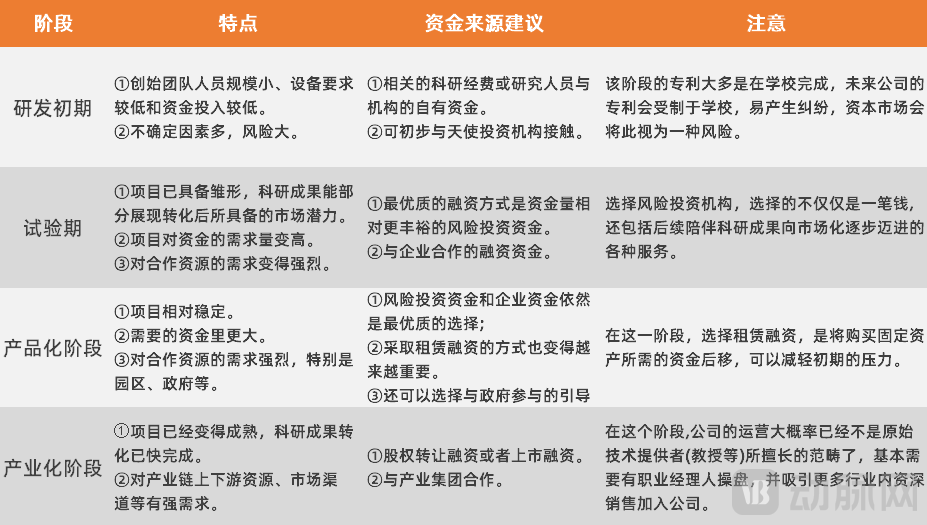
Figure 2. Four Stages and Financing Needs in the Commercialization of Scientific Research Achievements
First is the R&D Phase. This stage is characterized bySmall founding team size, low equipment requirements, and low capital investmentetc. Although in the early stage of the entire translation process,Low Capital Investment, but during the R&D phase, the financial situation is characterized by net cash outflows, with a very high risk coefficient. Moreover, as no products have been launched yet, there is no revenue generation. Once funding becomes insufficient to sustain further R&D progress, the project will stall.
Therefore, what is needed during this period is capital that has less urgent return cycle requirements, involves smaller amounts, can be replenished in a timely manner, and is capable of bearing relatively higher risks. Hence,More suitable financing methods during the R&D phase include relevant research grants or the self-owned funds of researchers and institutions.。
Then comes the trial period.. By this stage, the research outcomes have already partially demonstrated their market potential after translation, and coupled with the background and experience of the founding team members, it will attract a group of investment institutions that focus on this field. Therefore, at this stage, the available financing options includeResearch Funding, Self-Owned Funds, you can also chooseVenture Capital, Leasing Financing,and withCorporate Collaborative Financing。
However, it is particularly important to note that, as the capital requirements during the trial phase are generally higher than those in Phase I, limited research grants and self-owned funds, although viable options, mayThe most premium financing sources remain venture capital funds with relatively abundant capital and corporate partnership financing.。
Additionally, at this stage, apart from the difference in funding amounts, there is another important factor to consider, namelyMarket Resources Behind Venture Capital Firms and Enterprises. As professional financial intermediaries, venture capital firms maintain a high level of attention to and grasp of the market, and possess in-depth knowledge of corporate development; therefore, selectingVenture Capital Firmsfunding, what is chosen is not merely a sum of money,It also includes a range of services to support the gradual marketization of subsequent research achievements., this is what truly matters.
Next is the productization stage.. This phase is characterized by relative project stability, a longer duration, and greater capital requirements; consequently, a wider range of financing options becomes available. Therefore, at this stage,Venture capital and corporate funding remain the most premium options.。
The advantage of this stage is that the product has achieved a certain level of maturity, and it has also begun to generate some revenue for the project team, soDebt financing instruments characterized by regular income distributions can be applied., especially as more funding can be obtained through bank loans. Therefore, at this stage, it is possible toAdopt Multiple Financing Methods and Leverage Portfolio Effects, to meet the capital requirements of the growth stage with substantial low-cost funding.
Finally, the industrialization phase. By this stage, the project has reached maturity, and the commercialization of scientific research achievements has been largely completed; thus, financing has also entered a mature phase, at which point the available financing options includePrimarily for equity transfer financing or IPO financing。
Because, for the project itself, this is the time when it can officially receive corresponding returns. Therefore, at this stage, the main focus isConsider which approach can yield the greatest returns for the enterprise and support its long-term growth.。
Step 4: How to Balance the Relationship Between Scientific Research Value and Market Value?
For many researchers, in the process of translating medical research achievements into practical applications, due toLack of market-oriented experience, it is often difficult to correctly understand the relationship between scientific research value and market value, which leads to information bias and causes researchers to make erroneous judgments about their own innovative projects.
Because scientific value and market value cannot be simply equated.. Specifically, in medical research institutions, many studies are fundamental or cutting-edge; they can deepen human understanding of certain issues but may not directly generate market value. However, when personnel from medical research institutions transition into becoming enterprise founders,Corporate research value in the medical field must be guided by market value., because if a technology lacks the capacity for market commercialization, it becomes more of a burden than an asset to the enterprise.
So, how exactly should one assess the market value of a project? It is mainly divided into two steps.The first step is to determine whether the technology should be transferred or used as equity contribution through valuation., this step determines whether the scientific and technological achievements translate into immediate returns for the inventors or reflect their long-term market value;Step 2: Select an Appropriate Assessment Method, currently commonly used assessment methods includeCurrent Market Value Method, Replacement Cost Method, Present Value of Income MethodThree approaches, each with distinct characteristics, applicable conditions, and specific evaluation procedures, thus requiring assessment based on the specific circumstances.
Specifically, considering the future market value of a project,On one hand, considerations include mass production and quality control of the product, or the ease of use and stability of the technology; on the other hand, it is necessary to consider the size of the target population and their purchasing power for the product or technology., if there is an excessive pursuit of high-end technologies or products, the potential user base may be too small, or the pricing may exceed the affordability of potential users. The resulting revenue may be insufficient to sustain the company’s survival and development, and relying on continuous financing to maintain operations would entail significant risks.
Therefore, inWhen starting a business, it is important to strike a balance between “high-end and mass-market” segments, targeting populations with a larger base in the early stages.technologies or products to sustain corporate growth and facilitate team cohesion, using the generated profits to support R&D for high-end products and technologies. Additionally, it is essential to consider incorporating experienced marketing teams during the formation of the startup team, as one must recognize that even the finest wine fears a deep alley (i.e., superior products still require effective marketing to reach customers).Even the Best Products Require Promotion。
Certainly, there are cases where personnel from research institutes are engaged in the preliminary R&D of more than one project. In such instances, certain scientific and technological achievements can be valued as non-monetary assets for capital contribution, thereby acquiring a certain equity stake in other companies and participating in their management and operations, andReceive Corresponding Returns Based on Equity Holdings. In this way, scientific research founders can primarily focus on their technological R&D responsibilities while participating in certain management activities, thereby achieving a sound balance between scientific value and market value.
There are two primary methods for contributing intangible assets as equity investment.1. Full equity contribution via intangible assets. In this manner, R&D personnel at research institutes canSell the ownership of scientific research achievements to partner enterprises, and jointly establish a new enterprise with this company. It should be noted that the company pays royalties through corresponding equity interests after conversion, rather than using a direct cash payment model.
2. Incomplete capital contribution with intangible assets, research institutes shall, within a specified period and in accordance with prescribed conditions, transfer the scientific and technological achievementsTemporary Authorization of Usage Rights and Benefit Rightsto partner enterprises, thereby acquiring corresponding equity shares. Upon expiration of the specified term, the rights to use and benefit from the scientific and technological achievements shall immediately and unconditionally revert to the research institute.
Step 5: Patent Protection and Incentives
Patents are a core factor in the translation of scientific research outcomes into practical applications; therefore, safeguarding and incentivizing patents is particularly important.
With the joint issuance by the Ministry of Education, the China National Intellectual Property Administration, and the Ministry of Science and Technology《Several Opinions on Improving the Quality of Patents in Higher Education Institutions and Promoting Their Transformation and Application》Explicitly proposed “"Inventors shall not use fiscal funds to pay patent fees"Subsequently, China has imposed increasingly stringent requirements on the quality of invention patents and the translation of scientific research into practical applications. In tandem with this trend, hospitals and research universities have responded positively and provided feedback regarding patent protection awareness and incentive mechanisms.
For universities, regardingPatent Application Approvedjob-related scientific research achievements,Policies Encourage Inventors and Universities to Share Patent Costs, the portion borne by universities may be paid using fiscal funds. Once revenue is generated from patent commercialization, patent-related fees shall be deducted from such revenue as costs. As for universities’ decisionsNo Patent Applicationof job-related scientific and technological achievements, universities shall enter into agreements with the inventorsWritten ContractClarify relevant rights and interests.
As an indispensable link in the process of achievement transformation,Contract signing is the most effective means of protecting inventors' rights and interests.. When signing the contract, both the commercial and academic value of the research outcomes must be reflected in the contractual terms, with detailed provisions made across dimensions such as technical specifications, intellectual property rights, and commercial terms.
As a “leader” in global biotech innovation today, the experience of U.S. universities in allocating patent rights can serve as a reference. In the United States, the allocation of rights for the commercialization of job-related scientific and technological achievements is primarily divided into two aspects:1. The allocation of rights for the commercialization of research outcomes between the government and universities, this is more aboutMacroeconomic Policy Impacts;Second, the allocation of commercialization rights within universities, mainly fromMicroscopic Aspectto implement the specific detailed rules.
As scientific research achievements are increasingly commercialized, internal corporate policies for patent protection have become particularly important in this regardGermanyThere is a wealth of experience to draw upon, such as"Companies have generally established clear policies for intellectual property management and protection."This requires researchers to take a proactive approach to patent issues; they must actively engage, as passivity will lead to a perpetual state of disadvantage, which is highly detrimental to corporate development.
Overall, the generation of patents stems from continuous accumulation of scientific research. Each stage and every link plays a crucial role, with none being dispensable. Therefore, substantial investment in experimental resources is required during the basic R&D phase. Large-scale research platforms often have greater opportunities to generate patents; however, it is essential to clearly recognize thatThe process of generating patents requires sustained investment in productization, as well as market-oriented mechanisms to provide safeguards.。