

How Israel Became a Global Hub for Medical Innovation Amid Ongoing Conflict
Since the founding of the People's Republic of China in 1948,IsraelIt has been in a state of constant warfare, either actively engaged in combat or preparing for war.
This is, in fact, closely tied to Israel’s long-standing status as an outlier.. Israel is a state established by the Jewish people, who returned to the Palestine region after nearly a millennium of diaspora to found their nation in the aftermath of World War II; however, the land had long been inhabited by Arabs, who had lived there for nearly a thousand years.
Consequently, they naturally did not welcome the “abrupt” arrival of the Jews. During Israel’s nearly 70-year history since its founding, several wars broke out between Israel’s Jewish population and Arab nations led by Palestine; yet, strangely enough,The Arab nations grow poorer with each conflict, while Israel grows richer.
There are many reasons for this, but the most critical one is that Israel has seized upon “innovation” as its “lifeline.”. Israel is hailed as"The Backyard of Silicon Valley", and to date, Israel hasOver 5,000High-tech enterprises, with the contribution of technological innovation to GDP reachingOver 90%Former Google ChairmanEric SchmidtOnce praised Israel as "The World’s Second-Most Important High-Tech Hub, After the United States”。
This is not an exaggeration, especially in the field of life sciences,Israel stands out particularly. Over the past decade, Israel has seen an average of 139 new life sciences companies established annually., mainly based onMedical DevicesEnterprises dominate, accounting for nearly the “vast majority.”
This is partly related to the “specialized” nature of Israel’s industries. Medical devices represent one of Israel’s most developed and highly commercialized sectors, with data showing that IsraelThere are 725 medical device companies, accounting for 53% of the total number of companies in the industry., the massive market size has made IsraelThe World's Second-Largest Supplier of Medical Devices。
In addition, Israel places great emphasis on innovation in medical devices.. Between 2010 and 2018,Israel has listed nearly 600 innovative medical device products., giving rise to groundbreaking innovations such as the ReWalk exoskeleton robot and the PillCam capsule endoscope. These epoch-making products have not only addressed practical clinical challenges but also, to a certain extent, propelled the advancement of global medical device technology.
A series of achievements have stunned the public, but also raised doubts: thisWhy Has This Small Nation, Long Surrounded by War, Proven So Capable? What Secret Have Israelis Mastered That Keeps Them Striding Forward in Medical Innovation?To unravel the answers to these questions, Artery Orange Fruit Bureau has conducted an in-depth analysis.
Adversity Triggers the “Switch” for Technological Innovation in Israel
Israel’s current situation is entirely the result of being forced into it.
In the Arab region, Israel is like an "outlier," soBesieged on the Very Day of Its Founding, and therefore, to ensure its survival, Israel implementedConscription System. Most Israelis, both men and women, serve for two to three years upon turning 18. After completing their mandatory service, men transition to the reserves and undergo several weeks of training annually until the age of 40.
The inception of this system was originally intended to bolster Israel's military strength, but it “"By Chance""makes medical innovation possible."
On the one hand,Soldiers can leverage the advanced military skills they acquired during their service to develop civilian products after discharge.. As the leader in VR medical servicesSurgical TheaterFor example, both founders of the company are from Israel. These two former air force officers applied virtual reality flight simulator technology from the military to brain surgery modeling.
On the other hand, more than two decades of regular reserve training have enabledSoldiers form an interconnected communication network, in which the diverse backgrounds of service members create opportunities for cross-industry and cross-departmental entrepreneurship.. Therefore, many Israeli startups are highly interdisciplinary, such asSyqeThe company’s core business is medical cannabis technology, yet it has leveraged 3D printing capabilities to develop 3D-printed cannabis inhalers and entered into a distribution agreement with the Israeli pharmaceutical giant Teva.
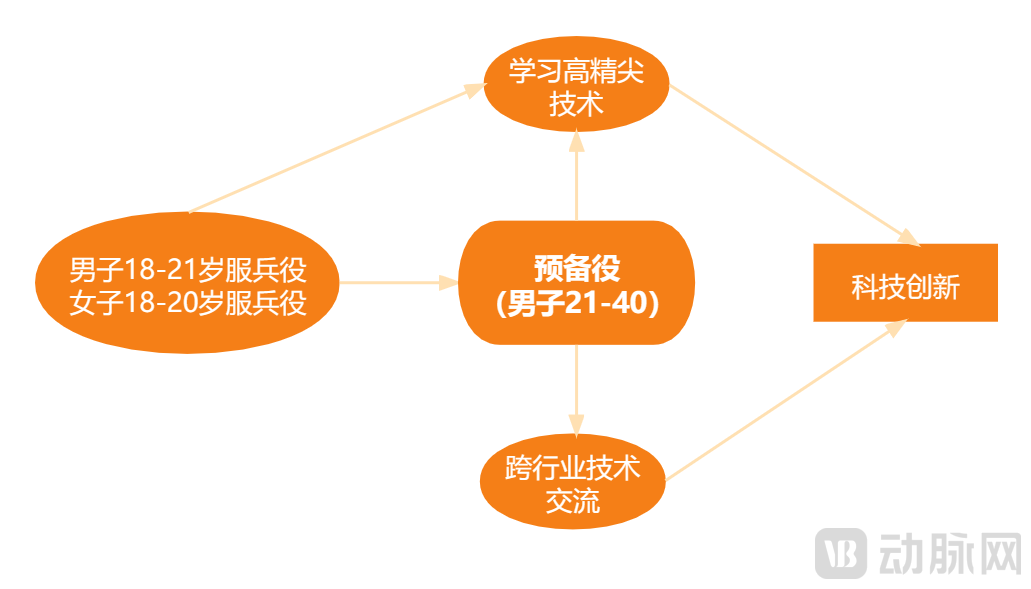
Figure 1 Model of Israel’s Mandatory Military Service Promoting Technological Innovation
If we sayConscription Systemprovided a fertile ground for innovation in Israel, while the large-scale introduction of foreign talent served as a “catalyst” for technological innovation. In the 1990s,The Dissolution of the Former Soviet Union and the “Exodus” of Scientists and Engineers to Israel, these top-tier technical talents have become a key force in Israel's technological innovation.
It is reported that, in order to fully tap into the innovative potential of these high-end technical talents, the Israeli government has provided2 to 3 years of funding support. This undoubtedly gave displaced former Soviet citizens a sense of belonging, thereby motivating them to devote their full capabilities to the development of Israel’s innovation industry.
An In-Depth Look at Israel’s Medical Innovation Ecosystem: The Government Is the Most Critical Link
ConscriptionandScientist ImmigrationWhile undeniably important, this is merely a prerequisite for Israel’s medical innovation; what has truly driven the rapid development of Israel’s medical innovation sector isThe Israeli Government’s Understanding of and Emphasis on Innovation
As is well known, one of the prominent characteristics of the medical device industry isHigh Investment, Long Cycle, many startups often exhaust their funding before achieving profitability, or even before developing their products. Consequently, these startups are heavily dependent on investment institutions during their growth stage.
However, for investment institutions, the lack of visible prospects for return on investment has caused many investors to “shy away” from startups in medical technology, ultimately leading to a large number of “new lives” perishing in the “valley of death.”
It is precisely on this basis thatThe Israeli government is deeply aware of its importance and sense of responsibility within the innovation ecosystem.。
In 1974, the Israeli government established “Office of the Chief Scientist” (hereinafter referred to as “OCS”), its main purposes include investment in R&D, policy formulation, etc.; in 1985, the Israeli Knesset passed the “Act on the Promotion of Industrial Research and Development》,the plan stipulates that the “OCS” should encourage technological innovation and entrepreneurship, leverage Israel’s existing scientific potential, strengthen knowledge-intensive industries, and stimulate R&D in high value-added sectors.
In 2016, to enhance the government’s capacity to drive innovation, promote the optimization and upgrading of Israeli industries, and maintain Israel’s global leadership in technological innovation, the “OCS” was transformed intoNational Administration of Technology and Innovation (NATI)。
National Administration of Technology Innovation (NATI)Providing research funding to Israeli scientific research companies, up to 3.5 million new shekels (approximately RMB 7 million). In addition,National Agency for Technological Innovation (NATI)It also spares no effort in fostering close collaboration between research and development departments and industrial sectors, with the aim of translating scientific achievements into tangible industrial products.
But the government has done far more than that. To further promote the translation of scientific research achievements, the Israeli government promulgated the “Angel Law”, encouraging investment in early-stage high-tech companies. Qualified investors who invest in domestic high-tech enterprises canDeduct an amount of tax equal to the investment.. Meanwhile, the government will subsidize 50% of the R&D expenses for qualifying technology companies, and 67% for startups.
In addition to tax incentives and funding support,Research projects can also obtain low-interest or even interest-free loans from the Israeli government, covering up to 95% of the declared amount., what’s more “human-centric” is that,Researchers can wait until the project has matured before repaying the government.. If the project fails, the funds may not even need to be repaid. Repaid loans will also be used by the government to fund more scientific research projects, thereby creating a virtuous cycle within the industry.
In other words, these substantial government investments have not only alleviated the concerns of researchers, enabling them to pursue innovation and R&D with confidence, but also bolstered the standing of startup projects. With government leadership serving as a strong endorsement, venture capital firms have gained greater confidence in these startups, thereby promoting medical research innovation and the commercialization of outcomes to a certain extent.
Adequate funding is undoubtedly critical, but another key factor in the success of health-tech startups is industry experience. The journey from technological research to commercialization and ultimately to industrial-scale application relies heavily on expertise and experiential knowledge. In this context,Incubatoremerged as the times required, primarilyProvide startups with support in technology, funding, management, and infrastructure services to reduce entrepreneurial costs and increase success rates.。
In 1991, the Israeli government implemented the “National Technological Incubator Program.”, the government will issue approximately 20 incubator licenses and simultaneously invest substantial funds in licensed incubators and scientific research and innovation projects entering these incubators. The incubators are initially positioned as public-welfare entities, with the government deriving no profit from them. Emphasis is placed on nurturing technology-based startups in their early stages, supported by robust fiscal measures, including an annual budget of around $30 million allocated to incubators.
Notably, these incubators have transformed countless cutting-edge technologies into enterprises and industrial sectors, collectively incubatingMore than 1,500World-class technology companies; ranks third globally in the number of NASDAQ-listed enterprises.
To build the world's best incubator,The government attracted global venture capital investment in domestic incubators by implementing the “YOZMA Program” (a venture capital fund).According to data from the Israel High-Tech Industries Research Center, in 2014, 167 companies in Israel’s life sciences sector raised a total of $801 million, with local venture capital firms accounting for only 13% of the investment; the primary source of funding was foreign investors.
Meanwhile,The government has also attracted top global resources to build incubators., encourage top global multinational corporations to establish incubators,Google, Microsoft, Johnson & Johnson, Samsung, PhilipsMajor corporations, among others, have flocked to join Israel’s medical incubator centers. The participation of these world-class international companies has brought cutting-edge global technologies and mature management expertise, significantly bolstering Israel’s healthcare sector. This support has enabled the country to make increasingly solid strides on its innovation journey, firmly establishing it as a well-deserved “global innovation powerhouse.”
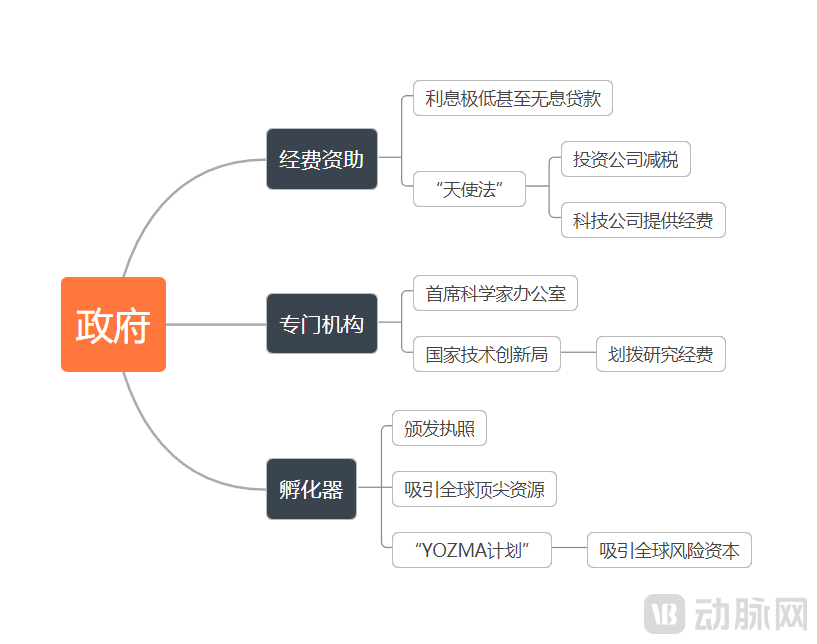
If medical technology innovation and entrepreneurship are likened to a seed, then the government is the gardener, andNATI、Financial SupportandIncubatorIt is the “fertilizer” applied by gardeners. With strong government support, Israel has now become a fertile ground for the survival and development of medical technology innovation enterprises.
What Can We Learn from Israel?
Currently, China is experiencing a surge in medical innovation.
First, from a policy perspective, China has successively introduced multiple key policies across three dimensions: national strategy, laws and regulations, and industry guidance.Completed the "Trilogy" of Policy-Side Transformation of Scientific and Technological Achievements; secondly, fromCapital InvestmentFrom the above perspective, data shows that in 2020, China's total R&D expenditure> 2.4 trillionYuan, ranking second in the world.
Finally, fromActual OutputLooking at the latest data released by the World Intellectual Property Organization (WIPO) of the United Nations,In 2020, China filed a total of 68,720 international patent applications through the Patent Cooperation Treaty (PCT), ranking first globally for the second consecutive year, representing a 16.1% increase from 2019.。
However, it is imperative to acknowledge that, in comparison to the approximately 40% commercialization rate of scientific and technological achievements in developed countries in Europe and America,In China, this figure stands at only about 15%., the overall conversion rate is quite low.Especially in the medical field, the overall conversion rate is less than 10%., the translation of medical research achievements in China still shows a weak trend.
To address this fundamental issue, we are seeking change. In this regard, we have identified numerous “bright spots” in Israel that offer significant insights for innovation in our country’s healthcare sector.
First, prioritize education and attract talent. In technological innovation, talent is the primary resource; in Israel’s transformation of its tech innovation industry, talent has played an indispensable role. Therefore, the Chinese government should accelerate the establishment of a training system for professionals involved in translating scientific research achievements into practical applications, cultivate more interdisciplinary talents, and appropriately introduce outstanding overseas talents.
Secondly, improve the financial support system and broaden financing channels.. Capital exerts a tremendous driving force on innovation, and its allocation is closely tied to government policies. Therefore, the government should promptly improve the system for analyzing and assessing patent value, broaden channels for capital participation in the commercialization of scientific and technological achievements, optimize the operation of government-guided funds, and enhance the efficiency of capital utilization.
Finally, incubators should establish operational mechanisms to enhance their market competitiveness.. Currently, China has established a wide variety of incubators and accumulated substantial resources for innovation incubation; however, due to certain factors, the utilization rate of these resources remains considerably low. Therefore, measures such as separating ownership from management rights can be adopted to incentivize incubator operating teams and, to a certain extent, enhance the efficiency of startup incubation.
Innovation is difficult, and innovation in the healthcare sector is even more challenging. However, Israel’s ability to break through amidst adversity suggests that it has certainly done some things right. Currently, China’s healthcare innovation remains in an exploratory phase, with a significant gap still existing compared to Israel. Nevertheless, we have a higher starting point and a more favorable industrial environment than Israel.
Therefore, it is conceivable that, through the tireless efforts of the state, government, researchers, and enterprises, we can address the pain points and bottlenecks in the translation of scientific and technological achievements, turning the chasm in this process into a smooth pathway.