

Base Therapeutics Secures China's First Core Base Editing Patent, Paving the Way for Global FTO Gene Editing Platform
Recently, it was learned from the China National Intellectual Property Administration that Base Therapeutics (hereinafter referred to as “Base Bio”)’s “A Base Editing Tool and Its UsesThe innovative gene-editing tool has been granted an invention patent. It took only one and a half years from application to authorization by the China National Intellectual Property Administration, making it potentially China’s first authorized core foundational base editing patent.
As is well known, the underlying patent ownership of CRISPR/Cas9, the star technology in the field of gene editing that won the Nobel Prize in 2020, has been the subject of a years-long patent dispute between Feng Zhang’s team at the Broad Institute of MIT in the United States and Jennifer Doudna’s team at the University of California, Berkeley. Although the Broad Institute’s patents have been granted in the United States and China, while the University of California, Berkeley’s patents have been granted in Europe and China, the patent dispute over gene-editing technologies between the two parties has not yet been conclusively resolved.
Although CRISPR/Cas9 is already widely used by many companies, the inability to circumvent the underlying patents of CRISPR/Cas9 gene editing poses significant patent risks for product commercialization. Therefore, developing novel gene-editing technologies with independent intellectual property rights is essential to provide a strong guarantee for the future commercialization and market adoption of technological products.
David Liu and colleagues at Harvard University developed Base Editing based on CRISPR/Cas9. Base editing achieves nucleotide conversion through its deaminase activity without generating double-strand breaks during the editing process, thereby offering greater genomic safety and significantly lower off-target effects compared to conventional gene editing. If gene editing is likened to a pair of scissors, base editing is akin to a pencil, enabling precise conversion of target bases without causing DNA double-strand breaks. This technology facilitates various genetic modifications, including mutation correction, gene knockout, and gene silencing or activation.
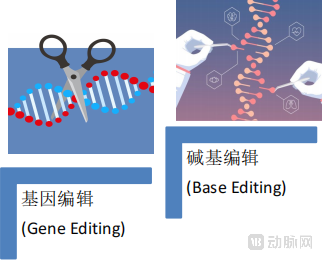
Gene Editing vs. Base Editing
Base Therapeutics’ core underlying base-editing patent technology has been granted by the China National Intellectual Property Administration, bringing new opportunities to China’s upstream gene-editing sector. VCBeat conducted an exclusive interview withDr. Xu Tianhong, Founder of Base Therapeutics, interpreting this novel gene-editing technology emerging in China and presenting the company’s current technological landscape to readers.
During the gene editing process using CRISPR/Cas9 technology, nuclease activity induces DNA double-strand breaks, leading to substantial off-target effects. These include small insertions or deletions (indels), point mutations, and even chromosomal structural abnormalities. Random off-target events pose significant potential risks, particularly in clinical applications. Although regulatory bodies such as the FDA require companies like CRISPR Therapeutics and EDITAS Medicine to demonstrate only that no off-target editing has occurred at known oncogenes when developing clinical products with gene-editing tools, the presence of thousands of random off-target edits across the genome still presents considerable safety concerns.
Gene editing tools such as ZFNs and TALENs, which also possess nuclease activity, cause DNA double-strand breaks during the editing process. Consequently, like CRISPR-Cas9 gene editing, they are prone to significant off-target effects. For instance, in October 2021, during a clinical trial of Allogene’s UCART product, a biopsy from a blood cancer patient who had received its CAR-T cell therapy revealed unexplained chromosomal alterations in the CAR-T cells. The company noted that the anomaly was found on a chromosome that was also the target of the TALEN-based gene editing technology it employed. It remains unclear whether this alteration originated from the gene editing process or what its clinical implications might be. As Allogene had licensed TALEN gene editing technology from Cellectis, both companies’ stock prices dropped sharply in response to this news. TALEN is a gene editing tool with nuclease activity similar to CRISPR-Cas9, capable of inducing DNA double-strand breaks.
Base editing employs nCas9, which has had its nuclease activity removed. Base conversion is achieved through its deaminase activity, avoiding double-strand breaks during the editing process and thus offering greater genomic safety. Although base editors lack nuclease activity, they exhibit high deaminase activity, leading to off-target edits upon any contact with DNA before reaching the intended target. While hundreds of off-target edits may occur across the genome, this number is significantly lower than that associated with gene-editing tools possessing nuclease activity, such as CRISPR-Cas9. Consequently, Beam Therapeutics has leveraged David Liu’s base editing technology to develop clinical products. Its first product, designed for the treatment of sickle cell disease, successfully received Investigational New Drug (IND) clearance in the United States in November 2021, entering registrational clinical trials.
However, the higher off-target effects may cause various unintended side effects, including tumors, which still limit its clinical translation and application.
An ideal gene editing system should possess three key characteristics: high editing efficiency, low off-target rate, and minimal size (to facilitate delivery).
Although off-target DNA base editing can be corrected through rationally designed point mutations or by incorporating additional modules, such remedial strategies are time-consuming and labor-intensive. Moreover, the latter approach significantly increases delivery challenges, casting doubt on its efficacy. Furthermore, because these measures constitute only minor tweaks to existing base editing systems, they cannot circumvent the existing base editing patents held by David Liu et al. at Harvard University, nor the gene editing patents held by Feng Zhang, Jennifer Doudna, and others.
This will greatly constrain China’s applications in the field of gene editing, making it a core “chokepoint” technology in the life sciences sector.
Base Therapeutics Recently Granted Base Editing Patent by China National Intellectual Property Administration: A Novel Artificial Protein Engineered to Combine Cas9-like DNA Recognition and Binding with sgRNA, Along with Deaminase Activity, for Highly Efficient Editing
Compared with the existing base editors from David Liu at Harvard University,Advantages of This Patented TechnologyIncluding:
1. The off-target rate has been reduced to nearly zero;
2. Maintained high editing efficiency;
3. Enables efficient editing of GC-rich and methylation-enriched regions in the genome;
4. The editor’s size has not increased and is even slightly smaller.
Moreover, as this is a novel artificial protein distinct from naturally occurring Cas proteins and deaminases, it offers freedom to operate (FTO), independent of the existing base editing patents held by David Liu et al. at Harvard University, as well as the gene editing patents held by Feng Zhang, Jennifer Doudna, and others. In contrast, David Liu’s base editing patents cannot circumvent the patents on Cas9 and Cas12a held by Feng Zhang, Jennifer Doudna, and others.
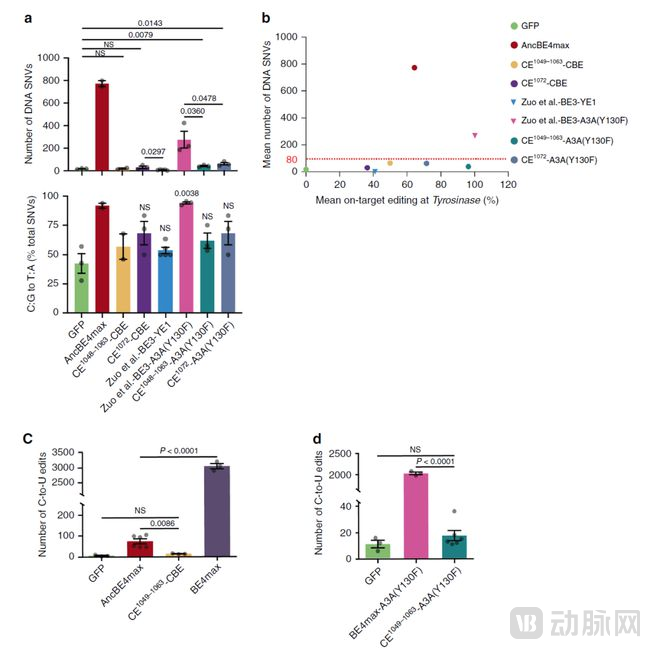
Base editing achieves the precision of editing a single base, enabling precise, predictable, and efficient base chemical reactions on target DNA sequences. By modifying individual bases within the genome, base editors provide a versatile toolkit that can correct pathogenic point mutations, knock out genes, activate or silence gene expression, or achieve “multiplex” simultaneous editing within a single cell. Consequently, base editing serves as a superior alternative to CRISPR-Cas9 gene editing technology in most application scenarios.
Base Therapeutics’ licensed base editing patent technology features ultra-high editing efficiency, minimal off-target effects, and a compact size, enabling broad applications in tumor immunotherapy, genetic disease treatment, pharmaceutical R&D, synthetic biology, industry, and agriculture and animal husbandry.
As one of the few biotechnology companies worldwide possessing independent intellectual property rights for base editing technology, Base Therapeutics has chosen to focus on the unique application scenarios of tumor immunotherapy and genetic disease treatment, while remaining open to collaboration or technology licensing in other pharmaceutical fields, as well as in synthetic biology, agriculture, and animal husbandry.