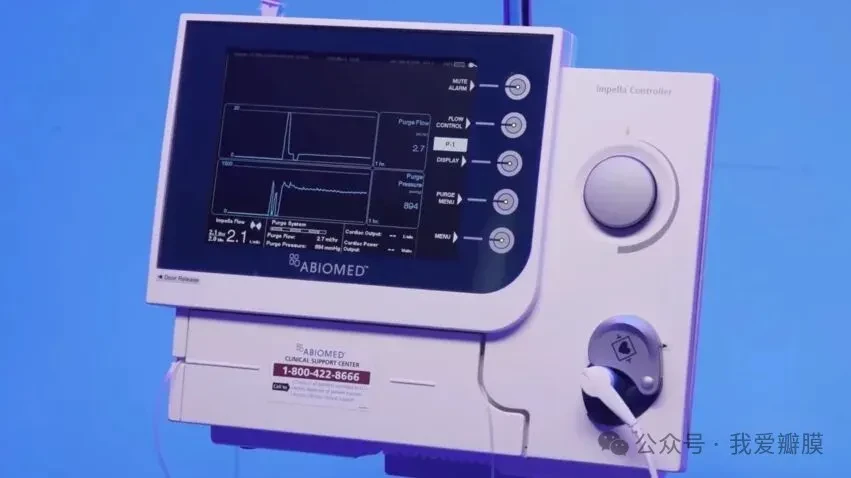
Families, another urgent recall in the medical circle! On April 1, the U.S. FDA (Food and Drug Administration) officially confirmed that Johnson & Johnson's MedTech Impella heart pump-related products have once again initiated a recall — this is already the Nth safety alert for this device recently, involving more than 33,000 devices, and is related to the life safety of critically ill patients. Medical staff, patients, and their families must pay close attention!First, let's highlight the key point: What's being recalled this time is not the complete heart pump, but the accompanying "flush box" (technically called Purge Cassettes, first-generation product). However, don't underestimate this small component; if it malfunctions, it could directly lead to a patient's death! PART.01 Product Scope of Recall First, let me clarify which products are covered in this recall. There are mainly two categories: the first is individually packaged Generation 1 Purge Cassettes; the second is purge cassettes sold together with specific models of Impella heart pumps. The heart pump models involved include Impella RP, Impella 2.5, Impella CP, Impella CP with Smart Assist, Impella 5.0, and Impella 5.5 with Smart Assist. Any product that includes a Generation 1 Purge Cassette is within the scope of this recall. PART.02 Reason for Recall Risk Some may ask, how risky can a small flushing box be? It is important to clarify its role — the flushing box is the "core protector" of the Impella heart pump, mainly responsible for delivering flushing fluid into the catheter to prevent blood from flowing back into the motor of the pump body. It essentially safeguards the "heart" of the heart pump. If it fails, the entire heart pump may stop working.The core reason for this recall is the "leakage risk" associated with the flush cassette. Johnson & Johnson MedTech has explicitly warned: If a flush cassette leak goes undetected, it could lead to insufficient flushing pressure, allowing biological material to enter the pump, potentially causing the heart pump to stop suddenly. It’s important to note that the Impella heart pump provides cardiac support for patients with acute right heart failure or those undergoing high-risk PCI for coronary artery disease. If the pump stops, the patient will lose hemodynamic support, and the worst-case scenario could be fatal.As of now, there have been four severe injury cases related to this leakage issue. Fortunately, no deaths have been reported so far, but this is already alarming enough — it should be noted that the FDA has classified this recall as a "Class I Recall," the highest risk level for recalls according to the FDA. This means that using this defective device could lead to serious health damage or even death, indicating just how high the risks are. PART.03 Key Reminders for Healthcare and Related Institutions This recall involves more than 33,000 devices worldwide. Hospitals and medical institutions using the related products must carry out the following operations immediately and not take any chances:
Immediately remove all Generation 1 Purge Cassettes, return them to the manufacturer uniformly, and then order Generation 2 Purge Cassettes as needed. Under no circumstances should the problematic products continue to be used.
Important Note: There is no need to return the complete Impella heart pump, only the accompanying flush box needs to be returned to avoid affecting normal diagnosis and treatment operations.
Another important reminder: If a leak occurs in the flush bag during use, a "Purge Pressure Low" alarm will pop up on the Automated Impella Controller (AIC). The alarm will clearly indicate the critical steps that clinicians need to take. It is essential to strictly follow the alarm prompts to avoid accidents.If you are unsure how to replace the flushing box, you can also refer to the instructional video released by Johnson & Johnson MedTech in 2020 (the original text is clickable for redirection) to ensure proper operation. PART.04 Recall and Upgrade Process In fact, regarding the potential leakage issue of the flushing box, the FDA had already issued a warning to the public as early as February this year. However, at that time, the agency was still conducting further investigations and had not yet determined the severity level of the recall. After more than two months of review, it has now been officially classified as a Class I recall, which indirectly highlights the urgency and seriousness of the issue—after all, a Class I recall is the FDA's highest risk warning for medical devices, and only issues that could potentially cause fatal harm are categorized under this level.You can click the original link to view the full warning information released by the FDA in February and take precautions in advance. PART.05 Background of Multiple Recalls Notably, this is not the first time that the Impella heart pump has encountered issues. On the contrary, it has been recalled multiple times in recent years due to frequent safety hazards.Just in the past few months, recalls have been initiated once each in July, September, October (twice), and December 2025 due to issues with the Automated Impella Controller (AIC). Including the recall in March this year and the current recall of the flush box, the total number of recalls has reached seven times within a short year, raising serious questions about the safety of this device.Many people may not know that the Impella heart pump was originally a product of Abiomed. It is mainly used to provide right heart support for high-risk patients undergoing percutaneous coronary intervention and those with acute right heart failure. In 2022, Johnson & Johnson acquired Abiomed for approximately $16.6 billion. By 2024, Abiomed was officially integrated into Johnson & Johnson’s MedTech division, becoming an important part of Johnson & Johnson's medical sector.As a globally renowned medical giant, Johnson & Johnson's products have frequently encountered safety issues, leading to multiple recalls. Particularly concerning are the life-dependent heart pump devices, where every potential risk could endanger patients' lives, causing great concern. PART.06 Final Key Reminder
The medical institutions involved should immediately stop using and return the first-generation flushing box, replacing it with the second generation;
If the "low flushing pressure" alarm occurs during use, follow the prompt for standard operation;
This recall only involves the flush box, and there is no need to return the complete heart pump.
Healthcare is no small matter, especially for critically ill patients who rely on life-support equipment. Any malfunction of a small component could lead to an irreversible tragedy. Please be sure to forward this reminder to healthcare professionals and relevant practitioners around you—uphold the bottom line of medical safety and prevent accidents!