

Weimai VP Ying Li: Physicians Are the Gatekeepers of Digital Therapeutics, Committed to Doing What's Difficult but Right
Recently, Ying Li, Vice President of Weimai, was invited to attend the “WIM 2021 World Innovators Meeting,” where she engaged in discussions with industry experts—including Ren Songqing, Co-founder and COO of Shukang; Yang Ruirong, Partner at Yuanyi Capital; and Zhang Jing, CEO of Senmei Medical—on the topic of “How Digital Therapeutics Can Leverage the Future of Healthcare.”
2021 was hailed by the industry as the inaugural year of digital therapeutics (DTx) in China. In that year, the pace of clinical validation for DTx accelerated domestically, driving the healthcare sector toward greater precision and intelligence. Internet healthcare companies, represented by Weimai, also made significant strides in the field of digital therapeutics.
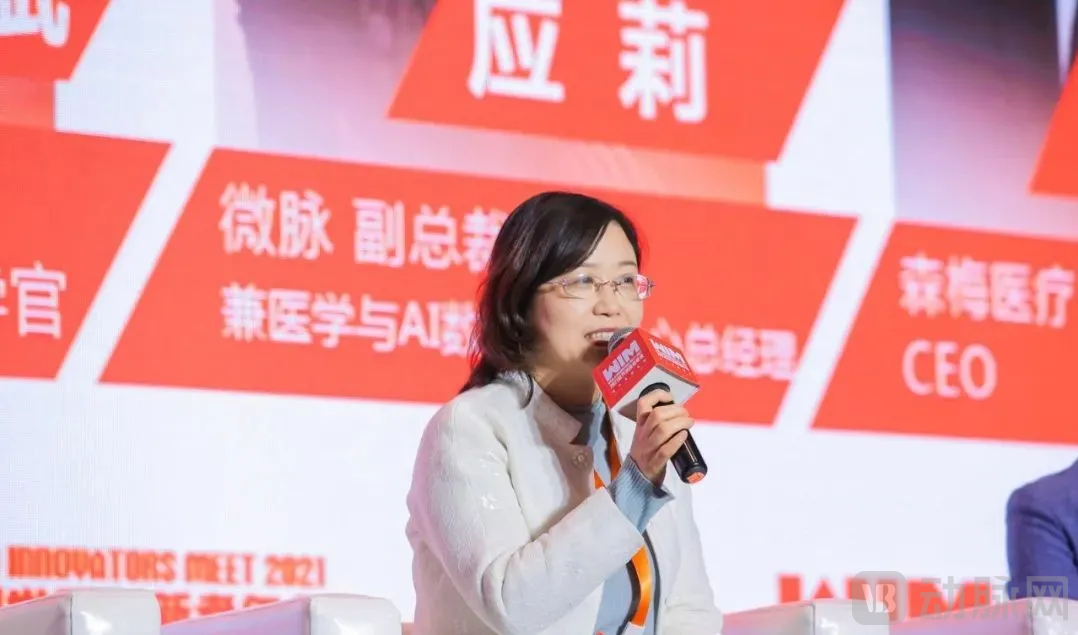
Ying Li stated, “The medical community constitutes the supply side of healthcare services. As one of the first companies in China to receive certification from the Digital Therapeutics Alliance (DTA), Weimai is committed to collaborating with public hospitals and physicians to advance the clinical validation of digital therapeutics. We validate the clinical pathways of digital therapeutics by integrating electronic medical records (EMR) from public hospitals with real-world data (RWD) generated outside hospital settings through Weimai’s comprehensive disease management service system. Weimai aims to connect with ecosystem enterprises in China that are exploring and developing digital therapeutics, leveraging the advantages of its platform to jointly promote the development of digital therapeutics in the country.”
Regarding future trends in digital therapeutics, Ying Li takes high-quality hospital development and health insurance payment reform as entry points, raising three key issues for the industry to focus on across different stages:
● In the initial phase, digital therapeutics must be centered on physicians' needs, focusing on their requirements and value within healthcare services to gain physician endorsement. With widespread recognition and participation from physicians, digital therapeutics can accumulate substantial clinical data;
● Validating the clinical pathways of digital therapeutics by leveraging real-world data from hospital electronic medical records and whole-course disease management service systems is a long yet steadfast journey;
● As digital therapeutics mature, their value extends from treatment to prevention, positively impacting health management and ultimately establishing an orderly progression from “out-of-pocket payment” to “commercial insurance” and then to “public medical insurance.”
At the event, Ren Songqing, Co-founder and COO of Shukang, also stated that digital therapeutics must return to their core as therapies, truly addressing unmet clinical needs. Although the validation process has been arduous, it is the only right path to take.
It is reported that since the National Health Commission’s Hospital Management Institute jointly launched with Weimai the research project “Survey on the Current Status of Internet Hospital Operations and Management and Talent Development” in 2020, Weimai has entered the leading tier in the field of internet healthcare. By leveraging initiatives such as research projects, public welfare programs, specialty alliances, and national-level special activities, Weimai collaborates with public hospitals to advance the construction and operation of “Internet+” healthcare services. This year, Weimai has once again joined forces with the Chinese Hospital Association, Tsinghua University’s Institute of Hospital Management, and Peking Union Medical College’s Training Center to conduct a national-level research project titled “‘Internet+’ Whole-Course Disease Management and AI Digital Therapeutics.” Collaborating with one hundred participating hospitals across China, the initiative explores the integration of digital therapeutics with whole-course disease management, providing novel technological solutions to support the high-quality development of public hospitals in the new era.
Ying Li stated to VCBeat that with the rise of modern health management concepts and the transformation of medical models, the traditional fragmented and decentralized medical service model in hospitals can no longer meet patients’ needs for precision, continuity, and personalization. How to leverage frontier technologies, the latest medical achievements, and optimal whole-disease-course service pathways through “Internet+” digital empowerment to enable hospitals to shift from scale expansion to quality improvement and efficiency enhancement, and from extensive management to refined management, is a critical issue that hospital administrators must explore and practice. An important module within the research project “‘Internet+’ Whole-Disease-Course Management and AI Digital Therapeutics” focuses on “Disease-Oriented Digital Therapeutics Research.” This involves implementing evidence-based intervention programs driven by software applications to treat, manage, or prevent diseases; addressing behavioral-mediated conditions where existing pharmacological treatments show suboptimal efficacy; and fully extending the boundaries of healthcare services into communities and homes through digital technologies. This approach aims to improve treatment outcomes, enhance the quality of hospital medical services and patients’ quality of life, and effectively reduce healthcare costs.
The upcoming year 2022 will be a pivotal year for the development of medical technology in the post-pandemic era, and the rapidly evolving technological iterations require collaborative efforts across the entire innovation ecosystem. Ying Li stated that Weimai will continue to fulfill its role as an “innovation platform,” adopting an open and innovative approach, centering on patients, focusing on the physician community, and partnering with more relevant enterprises to advance the progress of digital therapeutics in China.