

Breakthrough Success in China's First Yttrium-90 Resin Microsphere Radioembolization for Liver Cancer Marks a Milestone in Domestic Oncology Therapy
On December 24, an expert team led by Academician Dong Jiahong, Academician of the Chinese Academy of Engineering and President of Beijing Tsinghua Changgung Hospital, announced China’s first case of special-access yttrium-90 [90Y] Latest Clinical Outcomes of Resin Microsphere Therapy for Hepatocellular Carcinoma. Follow-up examinations conducted more than two months post-procedure revealed a significant reduction in the hepatic tumor size, decreasing from 10.81 cm pre-operatively to 1.8 cm, representing approximately one-tenth of its original volume. Alpha-fetoprotein (AFP), a specific biomarker for primary liver cancer, dropped dramatically from 180,446 ng/ml before treatment to 1,469 ng/ml currently. This improvement has also created opportunities for further surgical intervention and potential curative resection. These results signify a groundbreaking milestone in China’s management of malignant liver tumors, introducing a novel, internationally aligned, precision interventional internal radiotherapy regimen.
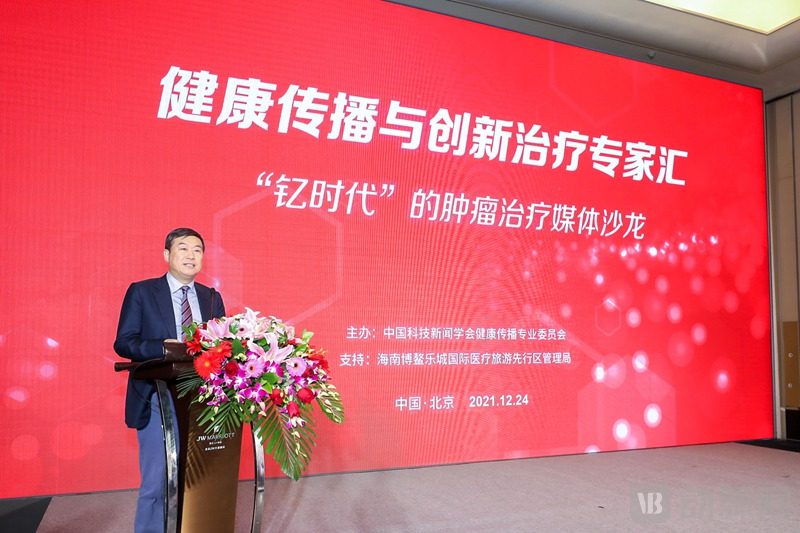
At the “Expert Forum on Health Communication and Innovative Medical Care—Media Salon on Tumor Treatment in the ‘Yttrium Era’,” hosted by the Health Communication Professional Committee of the China Association for Science and Technology Journalists, clinical experts including Academician Liu Yunyi, Professor of Surgical Research at the Li Ka Shing Faculty of Medicine, The University of Hong Kong; Academician Dong Jiahong, President of Beijing Tsinghua Changgung Hospital; and Academician Fan Jia, President of Zhongshan Hospital, Fudan University, along with relevant experts from the Nuclear and Radiation Safety Center of the Ministry of Ecology and Environment and the National Institute for Radiological Protection and Nuclear Safety of the Chinese Center for Disease Control and Prevention, leaders from the Hubei Provincial Medical Products Administration, and experts from the International Research Center for Environmental and Health Communication at Tsinghua University, discussed multidisciplinary diagnosis and treatment of liver cancer, yttrium [90Yttrium-90 resin microspheres for internal radiotherapy: Discussed the epoch-making significance in liver cancer treatment and its future development prospects in China with media reporters in the field of science and technology news. It is reported that Yttrium-[90Y] The marketing authorization application for the resin microspheres has been accepted by the National Medical Products Administration (NMPA), with approval for launch in China expected by the end of this year or early next year. Once approved, the product is poised to benefit a broader patient population in China.
At the salon, Academician Dong Jiahong introduced China’s first case of yttrium-[90Y] resin microspheres for precise interventional surgery, stated that the tumor shrinkage effect of this procedure was highly significant. The latest CT scan results showed that the patient’s liver tumor, which was unresectable before the operation, had shrunk to one-tenth of its original size, thereby creating an opportunity for further surgical intervention and the possibility of a complete cure. Academician Dong Jiahong stated, “China’s first case of yttrium-[90The successful implementation of precise interventional surgery using Yttrium-90 resin microspheres for liver cancer, along with the initially favorable treatment outcomes observed in patients, has instilled great confidence, strength, and hope in both physicians and individuals affected by hepatocellular carcinoma. This achievement also marks the advent of a new, internationally aligned precision interventional internal radiation therapy regimen for malignant liver tumors in China, representing a pioneering milestone of significant importance. I am highly confident that, with yttrium-90 [90Y] Resin microspheres have officially entered the Chinese market, and an increasing number of liver cancer patients in China will benefit from this innovative, globally leading medication.”
As the first radioactive microsphere product officially approved by the U.S. Food and Drug Administration (FDA) for the treatment of malignant liver tumors, Yttrium-[90Y] Resin microspheres have been used to treat over 120,000 patients in more than 50 countries and regions worldwide, with no significant adverse reactions reported. Their safety and efficacy have been fully validated, and they are recommended by mainstream clinical practice guidelines in the United States, Europe, the United Kingdom, and China.
Liver cancer is known as the “king of cancers.” In China, there are 400,000 new cases of liver cancer each year, accounting for nearly half of the global incidence. Most patients are diagnosed at an intermediate or advanced stage; only 20%–30% of liver cancer patients are eligible for surgical resection, and the five-year recurrence rate remains as high as 60%–70%. This represents the grim reality facing liver cancer treatment in China. Interventional therapy has become the most commonly adopted non-curative treatment for these patients, while yttrium [90Y] Resin microsphere-based precision interventional radioembolization is a paradigm that perfectly integrates interventional therapy with precise internal radiation treatment.
SIRT (Selective Internal Radiation Therapy) is a procedure in which physicians administer yttrium-[90Y] resin microspheres are injected into the hepatic vasculature, releasing high-energy beta radiation to instantaneously eradicate tumor cells via brachytherapy, with negligible impact on normal liver tissue and the surrounding environment. Meanwhile, yttrium [90Y] Resin microspheres, used either as monotherapy or in combination with other comprehensive treatment modalities such as biological, immunological, and targeted therapies, can deliver more significant clinical benefits to the broadest population of liver cancer patients and hold promising application prospects.
Academician of the Chinese Academy of Sciences and President of Zhongshan Hospital, Fudan University, Fan Jia; Vice Chairman of the Chinese Society of Clinical Oncology (CSCO) and Professor at the Clinical College of Nanjing University of Chinese Medicine, Qin Shukui; and Director of the Department of Interventional Vascular Surgery at Peking University First Hospital, Zou Yinghua, shared insights on patient-centered innovative applications of multidisciplinary diagnosis and treatment for liver cancer during the roundtable discussion. Academician Fan Jia, President of Zhongshan Hospital, Fudan University, provided a detailed introduction to the “Standardized Diagnosis and Treatment Guidelines for Primary Liver Cancer (2019 Edition)” issued by the state. He also stated that yttrium-90 has been incorporated into the therapeutic approaches outlined in the “Guidelines.”90Y] Resin microspheres, as a novel approach for the treatment of liver cancer, will have significant and positive clinical implications for physicians and patients in China.
Professor Qin Shukui from the Clinical College of Nanjing University of Chinese Medicine introduced current treatment methods for liver cancer globally and in China. He believes that when patients with advanced-stage liver cancer lose the opportunity for surgical treatment, systemic therapy options can still be adopted, such as yttrium [90Y] Combination of resin microspheres with other medications.
Zou Yinghua, Director of the Department of Interventional Vascular Surgery at Peking University First Hospital, stated that the collaborative effort by expert professors from multiple disciplines across several institutions—including Beijing Tsinghua Changgung Hospital, Southwest Hospital of Army Medical University, Hainan Cancer Hospital, and Boao Super Hospital—has established a standardized, individualized, and continuous optimal treatment plan for patients. This approach provides robust support throughout the entire diagnosis and treatment process for liver cancer patients and lays the foundation for potential future cures. The preliminary success of this case fully demonstrates the advantages and importance of Multi-disciplinary Treatment (MDT) in liver cancer therapy, serving as an exemplary model that will significantly promote advancements in liver cancer treatment overall. Recently, the Hepatobiliary Oncology MDT Team at Beijing Tsinghua Changgung Hospital was honored as one of the “Top Ten Excellent Disciplinary Teams” at the China Health Science and Technology Innovation and Disciplinary Construction Conference.
Wang Jing, President-Elect of the Nuclear Medicine Branch of the Chinese Medical Association, and Li Xueqin from the Radiation Safety Center of the Ministry of Ecology and Environment of China delivered insightful keynote addresses on “Future Prospects of Isotope Therapy” and “Utilization of Nuclear Technology and Radiation Safety Regulation,” emphasizing the requirements and regulations for radiation safety.
Zhang Guoqiang, Deputy Director of the Hubei Provincial Medical Products Administration, on Yttrium [90Y] Congratulates on the role of resin microspheres in patient treatment and looks forward to this product benefiting liver cancer patients in China.
Yan Zhi, Deputy Director of the Hainan Boao Lecheng Pilot Zone Administration, introduced Lecheng’s “pilot and trial” policies and the accelerated promotion of the first-in-China application of internationally innovative drugs and medical devices. He stated that Lecheng has introduced yttrium-90 [...]90Y] Resin microsphere therapy for malignant liver tumors holds positive significance for accumulating clinical data and enhancing the level of clinical oncology diagnosis and treatment in China. The Lecheng Administrative Bureau will continue to provide comprehensive services, striving to establish Lecheng as a new highland for domestic medical innovation and R&D, thereby advancing the reform of China’s healthcare system.
Li Chunzhu, Chairman of Hainan Boao Super Hospital, extended his congratulations and gratitude to Academician Dong’s team. He expressed great pleasure that the surgery was successfully performed at Hainan Boao Super Hospital, with the patient recovering well and leaving the hospital confidently. They hope to see more liver cancer patients receive yttrium-[90Y] Regarding the treatment with this innovative drug, resin microspheres, Boao Super Hospital will fully support and cooperate with the academician team to provide more comprehensive and higher-quality medical services to patients in Hainan and mainland China.
The patient is a 34-year-old male. In June 2021, the patient experienced physical discomfort and sought medical attention at the First Affiliated Hospital of Army Medical University. After thorough examination, it was found that the patient had a history of hepatitis B, and he was clearly diagnosed with primary liver cancer (CNLC stage IIIa), which exceeded various domestic and international liver transplantation criteria for liver cancer, including the Milan criteria, UCSF criteria, Shanghai Fudan criteria, and Hangzhou criteria. Additionally, due to insufficient reserved liver volume (less than 40%), conventional surgical resection was not feasible. After multiple rounds of discussions among overseas supervising experts and domestic multidisciplinary team (MDT) specialists, it was unanimously agreed that the patient should undergo yttrium [90Y] Resin microsphere therapy is the optimal choice.
On September 28, [the patient] went to Hainan Boao Super Hospital, where the joint team led by Academician Dong Jiahong performed yttrium-[90Y] Precise Interventional Treatment with Resin Microspheres: Following approximately one hour of interventional therapy and over two months of recovery, the latest follow-up on Mr. Cheng shows that his alpha-fetoprotein (AFP) level, a specific biomarker for primary liver cancer, has decreased from 180,446 ng/ml preoperatively to 1,469 ng/ml currently (normal reference range: 0–7 ng/ml). His liver function is normal, and the tumor has shrunk from its original size of 10.81 cm to 1.8 cm. Furthermore, regarding protein induced by vitamin K absence or antagonist-II (PIVKA-II), a marker used to predict the risk of tumor recurrence, the patient’s level dropped to 27 mAU/ml two months post-surgery (from 11,082 mAU/ml preoperatively), indicating effective local control of the tumor.
The core philosophy of Multidisciplinary Team (MDT) care is to be patient-centered, leveraging a multidisciplinary team to develop standardized, individualized, and continuous comprehensive treatment plans for specific diseases. By adhering to this core philosophy, MDT ultimately enables the design of optimal diagnostic and therapeutic regimens for patients, ensuring the best possible clinical outcomes. It further enhances the diagnostic and therapeutic capabilities as well as the academic standards of medical specialties, demonstrating comprehensive proficiency in disease diagnosis and management. The implementation of MDT also facilitates the genuine integration of medical practice, education, research, and health management, thereby driving scientific progress in medicine.