

Hillhouse Zhang Lei's Speech Transcript: 'Put Scientists in the Driver's Seat and Be Their Best Co-Creation Partners'
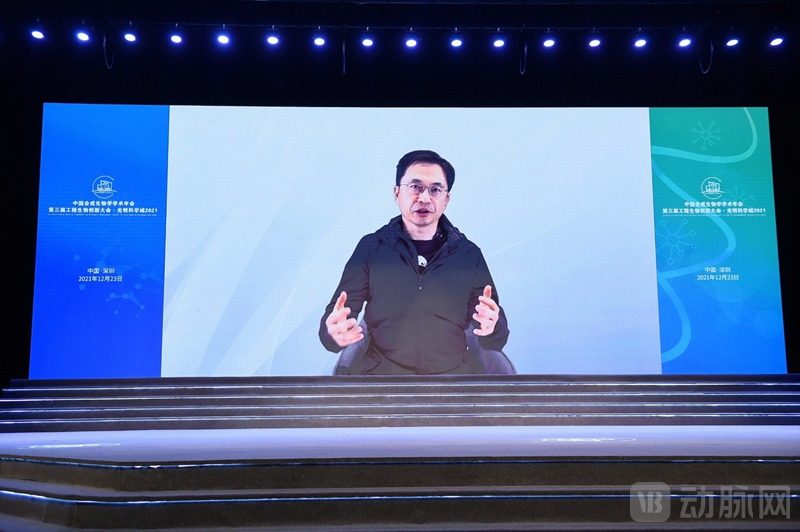
On December 23, the “3rd Engineering Biology Innovation Conference” kicked off in Shenzhen’s Guangming Science City. The conference explored topics including the current status and future trends of China’s biopharmaceutical industry, as well as the integration of industry, academia, and research in synthetic biology.
At the conference, Zhang Lei, founder of Hillhouse Capital, delivered a speech via video, sharing his insights on the industrialization of engineering biology and how to support scientists in launching startups.
Zhang Lei proposed,In the current wave of technological revolution, the translation of scientific research achievements from laboratories into practical applications is the core unit of value creation. Therefore, the essence of tech entrepreneurship lies in fully respecting scientists and placing them at the center stage, while simultaneously attracting more engineering and information technology professionals to join the innovation force as optimal co-creation partners for scientists, thereby fostering a convergence of the scientific spirit and the entrepreneurial spirit.
Below is the transcript of the speech:
Hello, everyone. I am delighted to have the opportunity to discuss cutting-edge scientific issues with you. Standing at the juncture between the end of one year and the beginning of another, reflecting on this year’s scientific breakthroughs always fills me with excitement. For instance, mRNA vaccines emerged as the vanguard in the fight against COVID-19; Chinese scientists achieved the world’s first artificial synthesis of starch; and biodegradable plastics have significantly reduced the environmental burden. For a long time, we have believed that continuous scientific innovation is the ultimate solution to environmental development and economic challenges. Today, the boundless innovative potential arising from the convergence of biotechnology and engineering once again validates this belief, while opening up entirely new horizons for imagination.
As a typical frontier interdisciplinary field, engineering biology integrates the mindset of design, construction, testing, and engineering into life sciences, bringing a new perspective to the study of fundamental biological questions and becoming a novel tool for writing the code of life.
As an investment firm that has long supported technological innovation, Hillhouse has been deeply engaged in this field for many years. From life sciences and healthcare, green chemistry, and agricultural technology to new materials, we have backed a large number of companies that employ engineering approaches to decipher the code of life and seek sustainable solutions. These companies are true practitioners of advancing knowledge through creation and applying innovation for practical use.
From a sectoral perspective, Hillhouse Capital invests in emerging industries, hard technologies, and the tech sector, seeking innovators who are pursuing technological breakthroughs in key areas. For instance, in the fields of innovative disease treatment and research, engineering approaches have become one of the important tools for biotechnology companies to achieve breakthroughs.
During the COVID-19 pandemic, mRNA vaccines have proven to be a critical cornerstone of the global response. In the field of cell therapy, engineered cells programmed to precisely destroy cancer cells have emerged as specialized forces. Over the past several years, Hillhouse has supported numerous Chinese companies in conducting breakthrough research across various technological pathways in cell therapy, with many products now entering pivotal stages.
Another key area involves technological innovation solutions under the overarching goal of carbon neutrality. We have supported a cohort of companies that leverage synthetic biology to reduce environmental burdens and achieve green, sustainable development. For instance, Bluepha, whose founder Zhang Haoqian is present here today, is an emerging team hailing from Tsinghua University and Peking University. They are dedicated to producing polyhydroxyalkanoates (PHA), a class of biomaterials capable of complete natural biodegradation.
From a stage perspective, investing early, investing in small-scale ventures, and investing in top-tier talent are the distinct investment themes we focus on. We have conducted a review and found that among all the synthetic biology-related companies in our portfolio, more than ten are startups. Of these, over half were founded by scientists and represent the fruition of scientific achievement commercialization. Hillhouse was their earliest investor, serving as the “first love” for these scientist-led entrepreneurial ventures.
At the same time, we recognize that the biotechnology revolution driven by engineering and technological advancements is still in its very early stages. There are no more than ten publicly listed companies domestically and internationally, offering limited mature experience for reference. Numerous bottlenecks need to be overcome in transitioning from basic scientific research to industrial application, and from the laboratory to the vast market. Bridging the “valley of death” in innovation is by no means an easy task. How can we innovate and implement solutions along this value chain? How can we fully leverage both the scientific spirit and entrepreneurial spirit? These are questions we have been continuously contemplating:
First, respect scientists and let them take center stage.Amid the wave of the biotechnology revolution, scientists are the main force, and the translation of scientific research achievements from laboratories constitutes the core unit of value creation. Therefore, it is essential to enable scientists to focus their primary efforts on technological innovation and R&D activities, allowing them to leverage their expertise in addressing core challenges, while leaving business-related matters—such as financing, business models, sales, and intellectual property—to professionals. This approach can significantly enhance the efficiency of translating scientific and technological achievements into practical applications. We have some experience in this regard and are willing to share our insights.
According to incomplete statistics, we have supported nearly 100 scientists in launching startups, particularly many returnee scientists. We have developed a comprehensive methodology, with the core objective of helping scientists address key challenges in transitioning from technology to industrial application. For instance, we have established a platform for the commercialization of scientific and technological achievements, linking industrial and investment resources with R&D efforts, thereby initially forming market-oriented mechanisms for talent attraction and development.
Additionally, we have established the DVC (Deep Value Creation) system, which packages a variety of post-investment services for entrepreneurs and scientists into a toolkit comprising seven key offerings: global executive search, digital transformation, lifelong learning platforms, innovation ecosystem resources, M&A/strategic enablement, lean manufacturing, and supply chain management.
Second, it is crucial to establish the infrastructure for translating scientific research achievements into practical applications.The biggest challenge currently facing synthetic biology is the insufficient number of successful cases transitioning from the laboratory to industrial application, which has hindered the formation of common practices and relatively mature models. Any thriving innovation ecosystem relies on robust public infrastructure, policy support, and a healthy investment mechanism. In this regard, we have noted that the many practices implemented by the Shenzhen Institute of Advanced Technology as a new-type R&D institution have greatly boosted confidence among industry players.
As a PE and VC investment firm, Hillhouse’s exploration has involved building regional innovation centers and gradually developing a “turnkey” startup service solution tailored to the distinct needs of scientists at different stages of technology transfer.
In fact, in recent years, through continuous investment in the field of new infrastructure, Hillhouse has not only provided spatial service solutions for technology companies but also aimed to explore diversified cooperation models among governments, enterprises, and funds, thereby creating an industrial ecosystem that supports the continuous development and growth of technology companies.
Third, the Convergence of the Scientific Spirit and Entrepreneurial Spirit.The boundless appeal of synthetic biology lies in the intersection of multiple cutting-edge disciplines and hands-on practices from the industry. Therefore, while fully respecting the spirit of scientific inquiry, it is also essential to attract more engineers and information technology professionals to join the ranks of innovators, giving full recognition to the flourishing of entrepreneurial spirit. We have found that market-oriented talents are the most needed career partners for tech entrepreneurs, as well as the critical gap they most urgently need to fill. Thus, through the screening, recruitment, training, and matchmaking of high-end market talent, we build a bridge between the innovation chain and the industrial chain, helping to drive the continuous development of technological innovation.
Finally, looking ahead over the next decade, we believe that synthetic biology paints a picture of a more sustainable future with boundless potential. As scientists continue to explore innovative source codes and venture into uncharted territories, we are committed to being their premier co-creation partner. Thank you!