In the field of new drug development, there is the famous "Double Ten Rule" — 10 years and an investment of 1 billion US dollars. However, Deloitte's long-term tracking of the world’s TOP20 pharmaceutical companies shows that the average cost for a single new drug from discovery to market has risen to 2.23 billion US dollars, with a research and development cycle exceeding 100 months. Meanwhile, the return on investment for global new drug development has remained at only around 5.9% in the long term.
AI is completely颠覆ing this model. With the application of AI throughout the entire drug research and development process, such as the identification of disease targets, drug discovery, preclinical and clinical research, the overall time and cost associated with drug development are being reduced.
However, AI-driven drug development still faces certain challenges. As of now, there is no drug completely designed by AI that has been approved for marketing globally, with only a few projects advancing to Phase III clinical trials.
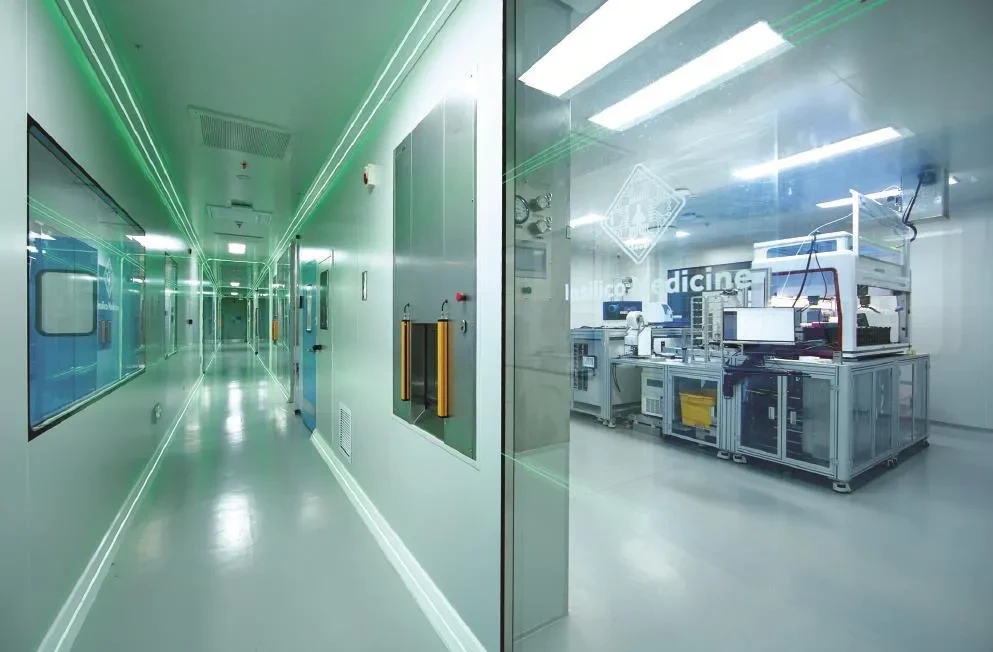
(Image Source: Wen Wei Po)
Insilico Medicine's core pipeline ISM001-055 — the world's first AI-driven drug candidate to enter clinical trials — is scheduled to commence Phase IIb/III studies in the first half of 2026. If progress goes smoothly, it is expected to rank among the first group in the global AI pharmaceutical field to enter the pivotal clinical stage or achieve market launch.
During the critical period when AI pharmaceuticals are moving from concept to implementation, the support of the industrial ecosystem is crucial.After long-term development, Zhangjiang Pharm Valley has become an industrial highland with the most complete industry chain, the best ecosystem, the most concentrated talent pool, the most active innovation, and the most efficient R&D., and is exploring a systematic path of support.
✔ At the policy level:Pudong New Area emphasized "promoting the openness of application scenarios" in the "15th Five-Year Plan," proposing to explore public service and market-oriented application scenarios such as intelligent transportation, smart healthcare, and intelligent manufacturing. It aims to drive the implementation of strategically high-value AI scenarios through methods like "open competition for the best solutions," while creating benchmark application scenarios to promote the practical application and popularization of AI technology.
✔ At the ecological construction level, By building a full-chain collaborative ecosystem, to help all parties achieve low-cost, high-quality cooperation. For example, establishZhangjiang AI Drug Discovery Alliance`, Gather`Insilico Medicine, XtalPi, Fosun Pharma, Shanghai Institute of Materia Medica, Chinese Academy of SciencesThe 40-plus member units, includingShanghai Institute of Materia Medica, Chinese Academy of Sciences, Shanghai Advanced Research Institute, Zhejiang University, Zhangjiang Group, MedChemExpress (MCE), XtalPi, Insilico Medicine, Hengrui Pharma, Hansoh Pharma, covering an ecosystem from source innovation to industrial application, further promoting technology sharing, project cooperation, and talent exchange.