

Wansheng Gene Secures Over RMB 100 Million Series A Funding to Advance Commercialization of Single-Cell Technologies
2021Year12March 30On [date], Wancheng Genomics, a company focused on single-cell sequencing services and product development, announced today that it has completed a funding round led by Chende Capital.Qian Dao Fund,Co-investment by Renowned Investors and Additional Investment by Existing Shareholder Northern Light Venture CapitalAround of financing. Momentum Capital served as the exclusive financial advisor for this transaction.Previously, Wancheng Gene secured angel-round financing from Heli Investment at its inception.With this, Wancheng Genomics has completed its second round of financing within the year, bringing the total cumulative funding for the year to nearly2hundred million yuan. According to the plan, the funds raised in this round will be used for the iteration of single-cell sequencing technologies and related omics products, promote the development and widespread application of single-cell sequencing instruments, and continuously conduct R&D and build a pipeline of new omics products.
Wancheng Genomics, established in February 2018, is dedicated to leveraging droplet microfluidics technology—characterized by enhanced operational convenience, equipment functionality, and reagent extensibility—to build an internationally advanced high-throughput single-cell multi-omics technology platform. Currently, Wancheng Genomics’ Perseus droplet microfluidic single-cell sequencer, along with its accompanying high-throughput transcriptome reagents, has entered internal and external testing phases. Equipped with self-developed chips, the sequencer features fully domestically produced core components. Users can select the number of chips based on sample volume, thereby balancing high throughput, high capture efficiency, and application flexibility. Compared with imported equipment, it better meets the needs of clinical and industrial applications.
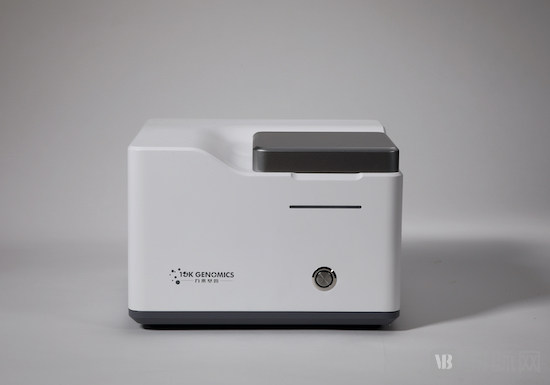
Wancheng Genomics Perseus Droplet Microfluidics Single-Cell Sequencer
Professor Shi Weiyang, founder of Wancheng Genomics, stated that single-cell analysis represents a revolutionary leap in biomedical research methodology, with an impact on biology comparable to the invention of the optical microscope. Wancheng Genomics is dedicated to developing comprehensive single-cell analysis solutions, driven by foundational technological innovations to meet diverse customer needs for multi-omics single-cell research and analysis. We aim to collaborate with researchers across various fields to jointly build a single-cell sequencing ecosystem, establishing single-cell technology as a standard tool in biomedical research within the next five years.
The investment team at Chende Capital stated, “Single-cell technology will propel life sciences research into a new era of higher resolution. We remain bullish on its potential to become a standardized, routine tool in basic scientific research, drug development, and clinical diagnosis and treatment. Through years of technological accumulation, Wancheng Genomics has developed a portfolio of single-cell sequencing products with global competitiveness, further addressing pain points in the practical application of current single-cell sequencing, broadening its application scenarios, and promoting the standardization and routinization of the technology. We look forward to Wancheng Genomics’ continued innovation, accelerating the commercialization of single-cell technologies and driving the growth of the global single-cell industry.”
Deng Feng, Founding Managing Partner of Northern Light Venture Capital, stated, “In recent years, bioinformatics analysis at the single-cell level has become a significant direction in the development of biological research. We believe that the molecular-level information provided by single-cell sequencing will play a substantial role in scientific research, clinical practice, and industrial applications. This is a technology-driven industry. Wancheng Bio is an experienced team deeply committed to technological innovation, having developed a portfolio of multi-omics products with international competitiveness over the past few years. We are confident that Wancheng can grow into a globally competitive company and will certainly advance the application and clinical translation of single-cell sequencing technologies.”
Gong Yun, Vice President of Qiandao Group, stated, “Single-cell sequencing is a technology that obtains genetic information from individual cells. This technology is poised to become an essential foundational tool for addressing key questions regarding the structure, dynamics, and variability of human cells during development, growth, renewal, aging, and disease. As a provider of droplet microfluidic sequencing technologies for single-cell multi-omics, Wancheng Gene has developed a comprehensive hardware solution encompassing reagents, chips, and instruments, facilitating the transition in the single-cell field from single-omics to dual-omics and multi-omics systems. We look forward to Wancheng Gene driving the large-scale application and clinical translation of single-cell technologies through continuous innovation, thereby establishing itself as a company with international influence.”
Zhu Sijie, Partner at Momentum Capital, stated, “The transition from bulk sequencing to single-cell sequencing marks another step forward in the precision of our understanding of life, making single-cell sequencing a groundbreaking new technology. As one of the few innovative companies in China with the capability to develop foundational technologies in the life sciences sector, Wancheng Bio is a distinguished player. We at Momentum Capital are honored to support Professor Shi and his team, and we look forward to the company’s future growth.”
In recent years, strategic positioning and investment enthusiasm in the field of single-cell sequencing have continued to rise, driving the widespread application of single-cell technologies in scientific research and enabling the characterization of differences between entities at the single-cell level.
At present, although the development of upstream single-cell sequencing instruments and supporting reagents is still in its early stages, research services based on single-cell technologies have achieved highly accessible commercialization, fully addressing diverse scientific demands for single-cell data. In downstream application development, a series of innovative assays based on single-cell sequencing have entered clinical trials. For instance, many researchers are combining single-cell technologies with complex blood analyses, disease diagnosis, and companion diagnostics to explore new strategies for disease management, yielding breakthrough advances in the field of tumor immunotherapy.
In the field of life sciences, single-cell technologies have become essential tools for investigating health-related issues such as human immunobiology. Research has demonstrated that the human immune system is intricately linked to the biological mechanisms underlying complex diseases, including autoimmune disorders and tumorigenesis and progression. Given the high heterogeneity and complexity of the immune system, studies that deliver substantial value often require analysis at the single-cell level. In this context, relying solely on single-cell transcriptomic data is frequently insufficient to extract adequate critical information. Instead, it is necessary to integrate multi-omics single-cell data—such as DNA sequencing, ATAC-seq, methylation profiling, and ChIP-seq—to identify subtle differences within abnormal immune cells, which often carry significant biological and clinical implications.
It is anticipated that over the next three to four years, single-cell sequencing will become a standard research and diagnostic tool in scientific research, clinical practice, and industrial applications, as the current NGS market rapidly transitions toward the single-cell NGS segment. At present, the large-scale adoption of single-cell sequencing is still hindered by market pain points such as technological immaturity, operational complexity, and high costs. For instance, in clinical applications, there are yet no mature systems for single-cell multi-omics testing equipment and reagents, and the preparation, storage, and transportation of single-cell sequencing samples pose significant challenges. Furthermore, secondary development based on existing commercial single-cell platforms for research purposes entails a high technical barrier. Finally, whether at the instrument or reagent level, the cost of single-cell sequencing remains substantially higher than that of conventional NGS, factors that greatly restrict the rapid integration of this cutting-edge technology into applicable scenarios.
Following this round of financing, Wancheng Genomics will be dedicated to accelerating the domestic substitution of single-cell sequencers and supporting reagents with Chinese-made alternatives. The company will continue to launch single-cell epigenomic reagents that fill market gaps, such as those for methylation sequencing and DNA-protein interaction sequencing, and will provide customized single-cell sequencing solutions for industrial users.
Addressing the pain points in single-cell sequencing applications, Wancheng Genomics has proposed a systematic solution. On one hand, Wancheng Genomics starts from the reagent level to significantly reduce the difficulty of sample preparation. Traditional single-cell sequencing sample preparation employs enzymatic digestion to dissociate tissues into single-cell suspensions; however, this approach lacks standardization, suffers from low success rates, and requires large sample volumes. Since clinical biopsy samples obtained via needle aspiration are typically minute, it is difficult to obtain sufficient cells through digestion. Wancheng Genomics has optimized nucleus-based sequencing technology, which not only substantially lowers the required sample input but also yields several times more nuclei than enzymatic digestion, with the number of detected genes far surpassing current solutions on the 10x Genomics platform.
On the other hand, WanCheng Genomics provides an integrated solution encompassing sample preparation, preservation, and transportation. Upon completion of single-cell sequencing sample preparation, fixation and cryopreservation methods are employed. Compared with traditional fresh samples or preservation buffers, this approach offers extended storage stability, thereby facilitating retrospective single-cell analysis of clinical specimens.
From the perspective of Wancheng Genomics, the core technical barrier to single-cell sequencing lies in innovations in molecular biology. While single-cell technologies can address a wide range of issues, existing products on the market only meet the most basic analytical needs. Only through a profound understanding of molecular biology can new detection technologies be continuously developed, thereby revealing multidimensional cellular information and providing a stronger foundation for clinical testing.
In the future, Wancheng Genomics will further refine its sales system, accelerate penetration of the domestic market, and strengthen brand equity. It will launch iterative versions of its single-cell sequencing instruments and reagents in both China and the United States, while gradually building an overseas sales team. Over the next five years, the company will exert efforts across all channels to lay the foundation for its global business layout. Meanwhile, Wancheng Genomics will continue to optimize its reagents, chips, and instruments, and gradually venture into product development for downstream terminal applications.
Chende Capital is an investment firm focused on the niche sectors of innovative medical technologies and cutting-edge biotechnologies. Managed and operated by a professional team with extensive backgrounds in the healthcare industry, Chende Capital oversees multiple RMB and USD-denominated funds. Adhering to the investment philosophy of “focus, excellence, and reputation,” the firm leverages its deep industrial resources in the healthcare sector and years of in-depth research and engagement to promptly identify emerging global technological trends and seize investment opportunities driven by technological innovation. Committed to discovering top-tier companies with the potential to become industry leaders, Chende Capital employs an interconnected, win-win investment methodology and a precise, pragmatic post-investment value-creation system. By co-building an industrial ecosystem and growing alongside entrepreneurs, the firm aims to deliver optimal returns to its investors.
Northern Light Venture Capital was founded by Mr. Deng Feng in 2005, with the mission of “empowering world-class Chinese entrepreneurs and cultivating world-class Chinese enterprises.” It has long focused on investing in early-stage, technology-driven innovative companies. To date, it has invested in more than 400 outstanding enterprises in the B2B, healthcare, and B2C consumer sectors. Northern Light Venture Capital entered the healthcare sector in 2009. Over the past decade-plus, its investments have spanned multiple sub-sectors, including medical devices, in vitro diagnostics (IVD), biopharmaceuticals, healthcare services, and E-Health, covering nearly the entire industry chain. It has invested in more than 70 companies, including CITIC Pharmaceutical, BGI Genomics, Burning Rock Biotech, Zelt Therapeutics, iRay Technology, Taimei Medical Technology, Cytek Biosciences, Guoke Hengtai, Conatus Pharmaceuticals, Convoy Therapeutics, Yidao Biology, Eastern Speech, and Kayou Diagnostics.
QianDao Fund was established in 2011. Adhering to the philosophy of “empowering finance with technology, serving industries through financial services, and contributing to the nation through industrial development,” the fund specializes in asset management and investment activities, including equity investment and industrial investment. In the pharmaceutical and healthcare sectors, it has strategically focused on high-quality segments such as innovative drugs, in vitro diagnostics (IVD), innovative medical devices, healthcare services, and health tech. Its portfolio includes premium projects such as Northland Biologics, Lipin Pharmaceutical, MabPlex, Kewang Bio, Lianxin Medical, and Kailian Medical. Notably, Northland Biologics was among the first batch of companies listed on the Beijing Stock Exchange.