

BeiGene Bio Island Innovation Center Embodies Our Commitment and Capability to Empower Innovation: An Exclusive Interview with Mr. John V. Oyler and Dr. Jian Liu
Recently, the BeiGene Bio-Island Innovation Center was officially unveiled. As a Chinese biotech enterprise that has advanced into the Biopharma stage, it is beginning to unleash its energy to empower the new generation of innovators.
Over the past decade, China’s biotechnology industry has completed its journey from 0 to 1. Some companies that accurately seized the pulse of the times have emerged as standouts during this process, with BeiGene being a prime example. When asked about the future direction of China’s biotechnology industry in the next decade, many people would answer that it isFirst-in-Class represents source innovation. This is also the strategic focus of Bio-Island Innovation Center.The Bio-Island Innovation Center will embody BeiGene’s aspirations for source innovation, enabling more innovative projects to proceed more smoothly, accelerate their progress, and achieve greater reach.
At the unveiling ceremony of the Bio-Island Innovation Center,WeAn exclusive interview was conducted with Mr. John Oyler, Co-founder, Chairman, and Chief Executive Officer of BeiGene, and Dr. Liu Jian, Chief Executive Officer of BeiGene’s Bio-Island Innovation Center and Chairman of the Board of Directors of Guangzhou Biopharmaceutical Co., Ltd., and hear their grand vision for the Bio-Island Innovation Center and China's source innovation in biotechnology.
VCBeat: BeiGene has long been committed to innovation. With the establishment of the physical facility known as the BeiGene Bio-Island Innovation Center, what was your initial rationale?
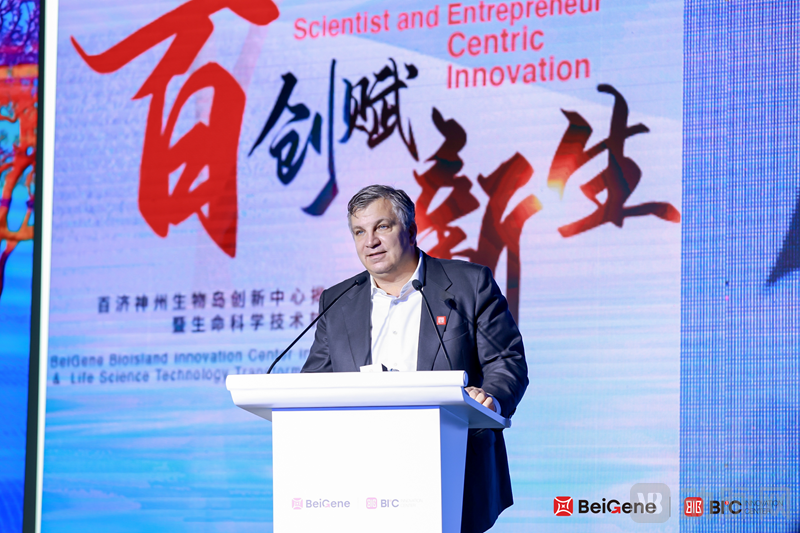
Mr. John V. Oyler, Co-founder, Chairman and Chief Executive Officer of BeiGene
Oule Qiang:Both Xiaodong and I feel that we have the responsibility and obligation to help scientists and entrepreneurs better realize their dreams.For a biotech company to succeed, it is crucial that scientists and entrepreneurs make the right decisions as often as possible.
However, achieving this is no easy feat, as human error is inevitable; even BeiGene has taken detours along its growth journey. ThereforeA crucial point is to find the right person who can help you avoid these pitfalls as much as possible.Especially for scientists and entrepreneurs who have not yet embarked on genuine entrepreneurial ventures, they may possess ideas, passion, and technical expertise, but how should they get started? At this stage, having experienced mentors share their insights can help them avoid common pitfalls. I believe this is easier said than done. Many institutions claim to be scientist- and entrepreneur-centric, but few truly deliver on this promise. AndXiaodong and I are both committed to turning our initial promise into reality.
Therefore, we established the Bio-Island Innovation Center, led by Dr. Liu Jian, an outstanding scientist and accomplished entrepreneur, to help our scientists and entrepreneurs grow rapidly. I believe this is very important.
VCBeat: Could Dr. Liu Jian please provide a brief overview of his professional background and describe his current primary responsibilities at the Bio-Island Innovation Center?
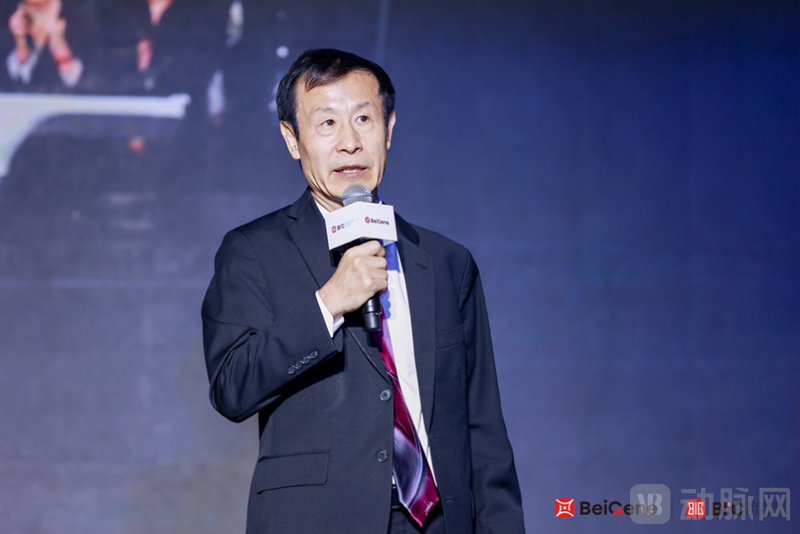
Dr. Liu Jian, CEO of BeiGene’s Bio-Island Innovation Center and Chairman of the Board of Guangzhou Biopharmaceutical Co., Ltd.
Liu Jian:For the past two decades, my career has been primarily with top-ten global pharmaceutical companies. I returned to China approximately seven or eight years ago and officially joined BeiGene in 2018. My work in recent years has focused on industrialization, giving me extensive expertise in quality management, supply chain, manufacturing, and distribution across the entire pharmaceutical R&D and production lifecycle.
My first assignment at BeiGene was to oversee the construction of what could become the world’s largest biopharmaceutical manufacturing facility—the Guangzhou Large-Molecule Biologics Manufacturing Base that you see today. Phase I of the production base has now received approval for commercial manufacturing, and the team established there is highly competent, effectively managing day-to-day operations. This allows me to devote 99% of my efforts to the development of the Bio-Island Innovation Center.
At the Innovation Center, my primary responsibilities focus on two key areas: one is the construction and operation of the entire incubator, and the other is venture capital investment from a capital perspective.
These two elements are, in fact, like the left and right hands working in tandem. We can draw an analogy to cultivating saplings. The left hand represents physical infrastructure, akin to a greenhouse equipped with the world’s most optimal conditions, including ideal temperature and humidity. The right hand represents capital, which can be likened to fertilizer. With both a greenhouse and fertilizer in place, what is still missing? Seeds. These seeds are the concepts originating from scientists’ minds. When such seeds are nurtured in a state-of-the-art greenhouse and supplemented with the most nutritionally balanced fertilizer available globally, they can grow into towering trees. This process mirrors the gradual translation of scientific concepts into pharmaceutical products—specifically, high-quality medicines that are affordable for the general public.
VCBeat: What factors were considered in the final decision to locate the Bio-Island Innovation Center in the Greater Bay Area?
Liu Jian:We have always been very confident in the Greater Bay Area.First, the Greater Bay Area enjoys a highly advantageous geographical location. It encompasses Hong Kong and Macao and serves as a gateway to Southeast Asia, facilitating robust international exchanges. Second, the region boasts abundant social resources and strong institutional support for innovation. Third, it is rich in talent, which constitutes a distinct regional advantage compared to most other parts of China. Fourth, regarding policy, Guangdong has long served as a pioneer in reform and pilot initiatives. According to the Outline Development Plan for the Guangdong-Hong Kong-Macao Greater Bay Area, biotechnology will be prioritized as a strategic emerging industry. It is foreseeable that favorable policies and the business environment will further propel the development of biotechnological innovation.
Therefore, we believe that at this stage, the Greater Bay Area is undoubtedly one of the top choices for entrepreneurship. In three to five years, the biotechnology industry in the Guangdong-Hong Kong-Macao region will undergo transformative changes.
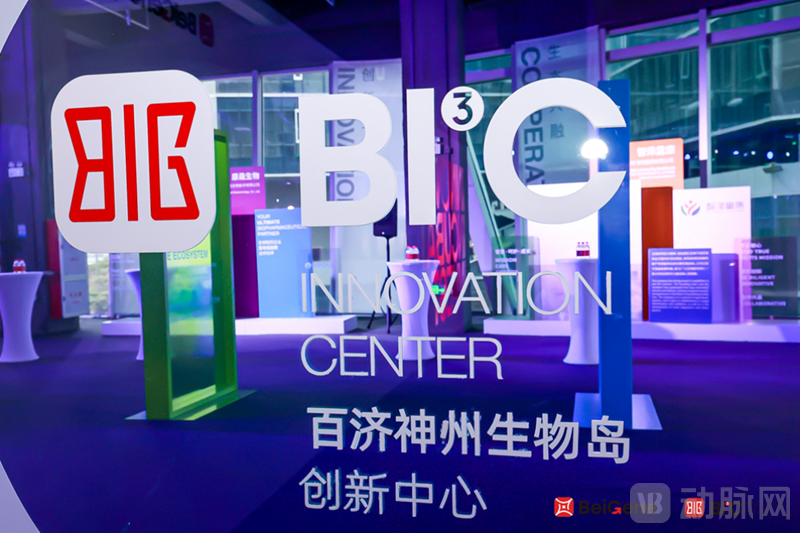
BeiGene Bio-Island Innovation Center Logo
VCBeat: We noticed that the Bio-Island Innovation Center has designed an independent logo this time, and chose BI3C, a name brimming with hope. Could you please explain what each element in the name represents?
Liu Jian:B stands for Bioisland; C stands for Center.The letter “I” in the middle also features a superscript “3,” which actually represents a triple meaning: Innovate, Incubate, and Invest.Therefore, the cube in the center also represents what we plan to do in the future.
VCBeat: In China, the innovation centers we have previously seen in the biotechnology sector have mostly been led by pharmaceutical giants. How does Bio-Island Innovation Center differ from the innovation centers established by these pharmaceutical giants?
Liu Jian:To empower innovation, two key elements must be in place: willingness and ability.In China, very few companies can integrate these two elements.
Some global companies lack the willingness to engage in this matter.I previously led the establishment of a domestic innovation center for a multinational pharmaceutical company, where I proposed integrating fragmented industry chains into a one-stop solution. However, this initiative was not successfully implemented due to concerns that creating an overly comprehensive chain could pose risks of technology leakage in certain segments.
In contrast, most domestic enterprises have the willingness but lack the capability.Domestic enterprises are still burdened with developing their own product portfolios, leaving them with insufficient time and resources to assist smaller companies in these areas. Moreover, their industrial supply chains may not yet be fully integrated, with certain links remaining incomplete.
BeiGene has experienced such fragmentation and has now integrated the entire value chain encompassing R&D, manufacturing, and commercialization. Therefore, we are committed to helping emerging innovative enterprises address this issue at its source. We aim to accelerate the development of China’s biopharmaceutical industry through the model of the Bio-Island Innovation Center.
VCBeat: The Innovation Center will focus on source innovation, but will the translation cycle of early-stage projects be too long for you?
Liu Jian:This issue needs to be examined from both subjective and objective perspectives.
The pharmaceutical industry is not one that yields quick, short-term results; therefore, we have mentally prepared ourselves accordingly. We have never expected companies entering this space to complete the entire drug development process within a short period.
Objectively, the Innovation Center serves an accelerative role, with the degree of acceleration varying depending on the project’s technical platform.However, we are confident that our ventures will achieve faster growth than those developing independently. This confidence stems from two key factors. First, projects undergo our systematic and professional screening process, which naturally increases the likelihood of success for high-quality initiatives. Second, we have assembled a robust team with dual expertise in science and business, providing comprehensive technical and commercial mentorship.
VCBeat: In what areas will the Innovation Center support resident enterprises or scientists? What core issues will it address?
Oule Qiang:Our approach to accelerating innovation involves helping scientists and entrepreneurs identify the most critical priorities, enabling them to allocate their resources more effectively.
In fact, this is extremely challenging. When entrepreneurs truly embark on their ventures, many individuals may seek collaboration with them; however, these partners are not necessarily committed to working hand-in-hand with the founders to achieve shared goals. Some may even be solely interested in extracting greater financial gains from the entrepreneurs. Navigating these complexities often requires entrepreneurs to invest considerable time before they can fully grasp the underlying dynamics.
Take the procurement of equipment as an example: the entire process—from placing orders and handling handovers to final installation in the laboratory—is complex and time-consuming. It must meet both internal operational needs and regulatory requirements. Entrepreneurs may initially lack a clear understanding of how to comply with these requirements, leading to mistakes that waste valuable time and limited capital. Therefore, our goal is to enable entrepreneurs to focus on their core competencies.
Xiaodong and I both feel that if we could go back to the day when we founded BeiGene, we would have been able to avoid many detours, and perhaps we could have launched the important Bio-Island Innovation Center project two or three years earlier.
Liu Jian:BeiGene excels in R&D, internationalization, and commercialization. We have established capabilities across every stage of the end-to-end process, encompassing R&D, manufacturing, and commercialization.What we need to do is to combine our strengths with societal needs.
Regarding the current social demands in the pharmaceutical industry, I believe there are two key issues: one is the fragmentation of the industry, and the other is insufficient source innovation.In this question,"Industry fragmentation can be rapidly addressed, but source innovation is difficult to achieve and requires long-term accumulation."Thus, when we align resources with societal needs, the model of the Innovation Center naturally takes shape. The Innovation Center aims to assist startups in need by attracting them to its platform and accelerating their development. Ultimately, this creates a win-win scenario where enterprises, society, and the general public all benefit.
Specifically, the Innovation Center will provide end-to-end, comprehensive support to a medical innovation enterprise.During the early theoretical phase, our team of expert scientists shares their experience to help navigate challenges and avoid pitfalls. Throughout the industrialization process, we provide support through our Guangzhou production base. In later stages, including commercialization and market access, our dedicated teams ensure seamless follow-through. We also offer comprehensive support for regulatory communications and registration-related matters.Ultimately, we hope to leverage innovation to deliver higher-quality and more accessible medicines, medical devices, and diagnostic methods.
VCBeat: At what stage of development do you expect applicant companies to be? Do they already have relatively mature commercialization objectives, or are they closer to the early proof-of-concept stage?
Liu Jian:We hope for it to happen as soon as possible—the earlier the project stage, the greater the need to avoid pitfalls.
We have invested substantial resources to build a comprehensive Innovation Center, complete with physical facilities and full-spectrum teams covering R&D, regulatory affairs, legal, and investment, aiming to provide a “plug-and-play” service model. Moreover, the Innovation Center is backed by more than just its own team; when necessary, startup enterprises can also leverage BeiGene’s internal systems for support.
Scientists are characterized by their deep and specialized academic research, but they are not necessarily adept at matters outside the realm of science.Within our Innovation Center, we expect scientists not only to grasp the scientific concepts underlying their incubated companies but also to understand the direction of business development. At the Innovation Center, they have the opportunity to learn from our in-house experts as well as from externally invited specialists.Therefore, I am confident that scientists will be fully qualified to assume the role of CEO after spending two to three years at our innovation center.
VCBeat: From how many projects were the three companies officially announced as joining selected? Are these projects all from China, or do they include overseas projects as well?
Liu Jian:We have engaged in discussions with numerous parties, though we have not yet conducted a precise statistical analysis; the current selection rate is approximately 10%. Following the official unveiling, I anticipate that more enterprises and innovative scientists will reach out to us, which will inevitably lead to a gradual decline in our selection rate. Given our limited capacity, we will prioritize the most outstanding projects submitted during each period.
Our vision is not limited to China; we are in discussions with several countries across Asia and Europe. Given our team’s inherent international capabilities, we may also introduce global projects in the future.
VCBeat: What requirements does the Innovation Center have for projects? How are projects screened based on these requirements?
Liu Jian:I believe there are two critical requirements: scientific innovation and commercial viability.
Because the ultimate goal of our Innovation Center is to build an ecosystem in which we collectively strive to develop high-quality, affordable medicines for the general public. To achieve this, we need projects that hold genuine clinical significance and align with patient needs.
The overall onboarding process is mainly divided into three steps:Step 1: Companies seeking to join the Innovation Center must submit an application outlining their preliminary concepts, with a focus on scientific principles and commercialization pathways. Step 2: Our scientific team will conduct discussions and perform a review and analysis of the scientific merit of the proposed projects. Step 3: To confirm commercial feasibility, our professional team will carry out relevant due diligence.
VCBeat: Does the Innovation Center have any specific areas of focus? For therapeutic areas where BeiGene has already established technology platforms, will it continue to expand its presence?
Liu Jian:The core concept behind the establishment of the Innovation Center is to foster innovation. We will not prioritize initiatives that have already been undertaken by BeiGene or are currently being developed internally, primarily to avoid duplication of resource allocation.
We focus not only on pharmaceuticals but also on medical devices and diagnostics. Of course, other fields must also align with our resources. For instance, in the process of gene sequencing research, our primary objective may be to identify therapeutic targets; however, we may also discover novel biomarkers for patient stratification during the research. In such cases, we can translate these findings into device-based products for companion diagnostics.
We may not deliberately do this. ButIf anything of clinical value is discovered during the research process, we will not hesitate to drive the commercialization of the new technology.
VCBeat: For companies that may not be able to join the Innovation Center but still seek its assistance, can the Innovation Center provide equivalent services?
Liu Jian:We will provide empowerment services to both resident and non-resident companies, albeit to varying degrees. The support available to resident enterprises includes:I can summarize it into three “mores”: more direct, more comprehensive, and more timely.
More direct,All of our services are housed within this building, ensuring that tenant companies receive more direct support.
More comprehensive,Our scientific capability extends beyond the 100 scientists in this building to encompass the strength of thousands of scientists at BeiGene. In principle, we can provide support across the entire spectrum, from research and development through Phase II and Phase III clinical trials to large-scale manufacturing.
More timely,Tenant enterprises will receive faster responses and feedback when encountering issues during their development.
VCBeat: How do you view the innovation environment in China? What role will the Bio-Island Innovation Center play within it?
Oule Qiang:China’s biotechnology industry once went through a period when there were talented entrepreneurs and promising ideas, but it lacked the favorable timing and conditions available today; the surrounding ecosystem failed to provide the necessary assistance and support.
I am absolutely certain that China has an abundance of visionary scientists and entrepreneurs, but we need to provide them with financial support and establish a robust ecosystem to offer them opportunities for entrepreneurship.
At the same time, we also hope to ensure their autonomy.They can collaborate with BeiGene to accomplish this, or they can pursue these initiatives independently. The key is to empower scientists in their entrepreneurial endeavors—not merely through this incubator, but through society as a whole. Our goal is to instill confidence in them, ensuring that their choices are truly science-driven and genuinely beneficial to patients. This is the essence of the empowerment we aim to provide.
VCBeat: How will the Innovation Center build such an ecosystem from scratch? How many companies need to be incubated within this ecosystem to sustain it?
Liu Jian:What matters to us is not the final number of companies we incubate, but rather our aspiration to build an ecosystem.This ecosystem will encompass 30 companies within the Innovation Center, enterprises previously incubated by the Center, and external partner resources. These companies maintain upstream and downstream supply chain relationships with one another. They are not necessarily all located on Bio-Island, or even within Guangdong Province; however, they can establish connections through the Innovation Center. Ultimately, this ecosystem will accelerate the development of all companies within the system.
If we can execute these initiatives effectively, our objective will be achieved, regardless of whether the ecosystem comprises 100, 120, or 150 enterprises.
VCBeat: The trend toward globalization in the biotechnology sector is becoming increasingly pronounced. At what stage do you believe startups should begin laying the groundwork for global expansion?
Liu Jian:There is no fixed number, butBeiGene’s experience shows that one must prepare for global expansion from day one.
This is reflected in many specific aspects. For instance, at our Guangzhou biologics manufacturing base, we can construct facilities in accordance with the requirements of China’s Center for Drug Evaluation (CDE), or opt to simultaneously meet the standards of multiple regions worldwide. Of course, the latter approach entails greater capital investment.
We chose the latter with little hesitation. The founder and the management team were highly aligned in their vision. As it turned out, had we initially built our facilities solely according to Chinese standards and then modified them later to meet those of other regions, the actual costs would have been significantly higher.
This is why I emphasize the need to consider internationalization from day one. However, the specific timing for resource allocation should be determined based on different stages. There may not be a significant difference in whether internationalization is planned during the early stages of basic research, but in the later stages of basic research, involving regulatory submissions, the extent of international layout will have a substantial impact. At this point, it is necessary to make advance investments for internationalization. For the production phase, preparations should begin 2–3 years earlier.
VCBeat: What message would you like to share with companies currently in the innovation stage?
Liu Jian:You should do what you love and believe in. That is how BeiGene has come this far.
When BeiGene was initially founded in Beijing, it did not have the support of many investment firms. Had the company been established in a region or country with a more developed biotechnology industry, its operations would have been easier, at least in terms of securing investment. However, John Oyler insisted on basing the company in China, as he was convinced that tremendous opportunities lay within China’s biotechnology sector. This underscores the importance of believing in what you deem to be right.
On the other hand, do what you love. A prime example is our other co-founder, Academician Wang Xiaodong. He has a passion for scientific inquiry. Apoptosis was such a theoretically driven research area that, back then, who would have linked it to drug development? Yet, driven by his interest, Academician Wang persisted in this direction, ultimately laying the foundation for our PD-1 monoclonal antibody. Therefore, stay committed to what you love and what you believe in.