

Targeting the Tier-2/3 Markets and Partnering with Pharma: How Gene Testing Companies Are Navigating Commercialization Pathways
It is hardly surprising that, as products transition from the laboratory to clinical settings, genetic testing companies are increasingly partnering with pharmaceutical enterprises to integrate diagnostics and therapeutics. By adopting a closed-loop strategy, they aim to rapidly achieve clinical penetration of innovative diagnostic and therapeutic solutions.
According to incomplete statistics from VCBeat, since the beginning of 2020, there have been more than 10 collaborations between genetic testing companies and pharmaceutical companies in areas such as clinical trials and commercialization. In late November, Yewei Genomics licensed its newly approved microsatellite instability (MSI) genetic testing kit, Yueaikang™ (hereinafter referred to as the “MSI Kit”), along with its accompanying instruments and analysis software, to Chia Tai Tianqing, making the latter the exclusive promoter of this product within hospital systems across China. It is understood that Yueaikang™ is used for the qualitative in vitro detection of instability at six microsatellite loci (BAT-25, BAT-26, NR-21, NR-24, NR-27, and MONO-27) in formalin-fixed paraffin-embedded tissue sections from patients with colorectal cancer, thereby determining MSI status and aiding in the diagnosis of mismatch repair gene-mutated colorectal cancer.
This collaboration marks the first large-scale commercial partnership for a pan-cancer companion diagnostic assay targeting tumor immunotherapies such as PD-1/PD-L1 inhibitors. It signifies that comprehensive solutions for precision immuno-oncology are maturing, while Yuewei Genomics’ rapid response—a rarity in the industry—demonstrates that genetic testing companies are also reaching maturity in their holistic approach to industrialization.
“As disease classification increasingly moves to the molecular level, tumor drugs are increasingly required to be used in conjunction with biomarkers in clinical practice,” Chen Junjun, Board Secretary of WeGene, told VCBeat. “This is also a key reason why our collaboration with pharmaceutical companies has been such a natural fit.”
Demand for genetic testing in lower-tier markets is being stimulated.
First, there has been a sharp surge in demand for companion diagnostics. In recent years, the correlation between biomarkers and drugs has become increasingly close, and using genetic testing to screen patients has become a critical step prior to administering innovative therapies for many major diseases. As drug development targeting diseases associated with single biomarkers gradually reaches saturation, pan-cancer drugs and their corresponding companion diagnostics have emerged as new growth drivers.
As of November 2021, the U.S. Food and Drug Administration (FDA) had approved three pan-cancer indications based on biomarkers: microsatellite instability-high/mismatch repair deficient (MSI-H/dMMR) solid tumors, tumor mutational burden-high (TMB-H) solid tumors, and solid tumors harboring NTRK gene fusions. Among these, MSI, a clinically common biomarker, has been progressively incorporated into clinical practice guidelines for more than ten types of cancer.
Next is the transformation of the supply and demand model for innovative drugs and companion diagnostics. Chen Qigang, head of the screening and diagnostics business at Chia Tai Tianqing, pointed out, “In China, since the implementation of volume-based procurement for pharmaceuticals in 2018, drug price reductions have become an unstoppable trend. For instance, the annual cost of tumor immunotherapy has been compressed from over RMB 600,000 to just above RMB 30,000.” Precision medicine, a novel medical concept and healthcare model, leverages diagnostic technologies to achieve refined disease classification and accurate diagnosis, thereby enabling personalized and precise treatment for diseases and specific patients. It is currently the prevailing trend in clinical oncology practice.
Behind the decline in drug prices lies the market penetration of innovative drugs into lower-tier segments. Previously, the high cost of innovative drugs confined demand largely to major hospitals in big cities, leading to a centralized supply model for companion diagnostics. As drug prices continue to fall, the accessibility of innovative drugs is increasingly extending to primary healthcare institutions, and the demand for companion diagnostics is correspondingly shifting toward the fragmented primary care market, thereby accelerating its widespread adoption.
Against this backdrop, the integration of diagnostics and therapeutics has become a deeper consensus among pharmaceutical companies and genetic testing firms. “Companion diagnostics must ultimately serve treatment regimens,” said Chen Junjun. “In most scenarios, the integration of diagnostics and therapeutics is virtually an inevitable path.” Chen Qigang also pointed out that for pharmaceutical companies, combining tumor immunotherapy products with other drugs is a trend; the former will drive patient flow to the latter. By strategically positioning themselves earlier in the upstream companion diagnostics market, companies can create additional patient acquisition channels for oncology drugs. In other words, behind the frequent collaborations between genetic testing companies and pharmaceutical firms lies an exploration of complementary value and enhanced efficiency, moving beyond the notion of each party independently managing the entire diagnostic and therapeutic journey.
In reality, the lower-tier markets present both opportunities and challenges for genetic testing companies. “This means we can no longer design products solely based on the needs of major hospitals in first-tier cities,” pointed out Chen Junjun. “In lower-tier markets, it is essential first to equip facilities with the necessary instruments, and second, to adopt automated methods that enable physicians with varying levels of expertise to obtain consistent and standardized interpretation results.”
Due to the inherent complexity of the underlying technology, genetic testing has a very low tolerance for error across all stages—from sample collection and data analysis to report interpretation—thereby increasing the difficulty of clinical product development and validation. Consequently, unlike most in vitro diagnostic (IVD) products on the market, which are typically offered as standalone test kits, Yuewei Genomics has chosen to implement rigorous control over every detail of the entire workflow from the outset of product design. Based on the complete process involved in clinical pathological testing, including nucleic acid extraction, amplification-based detection, and report analysis, Yuewei Genomics has launched a comprehensive MSI solution—a rarity in the industry. This approach eliminates the need for customers to independently match compatible instruments and software, thus ensuring consistent and reliable test results.
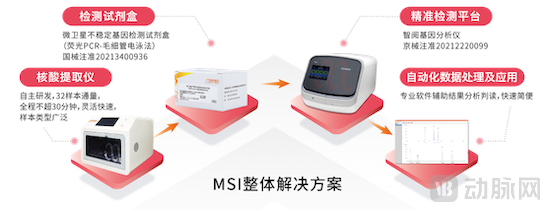
(Image source: provided by the interviewee)
In China, Yuewei Genomics is among the first teams to develop genetic testing products based on the PCR-CE platform, with over a decade of technical expertise. The company has provided early MSI testing services to numerous medical institutions and enterprises, accumulating the largest volume of MSI tests in the country, and possesses deep insights into the clinical landscape and challenges associated with the PCR-CE platform and MSI testing.
“Although the installed base of CE platforms in China continues to grow, the total volume remains relatively small. End-users have less familiarity with these devices compared to PCR. Clinical samples are highly diverse and involve numerous critical control points. Moreover, unlike NGS, CE generates limited high-information-content data, resulting in low fault tolerance for upstream experimental deficiencies during downstream bioinformatics analysis,” said Chen Junjun. Therefore, for MSI testing at the current stage, only a comprehensive end-to-end clinical solution can adequately ensure test quality.
Meanwhile, Yuewei Genomics has established a stable technical service team, with six major technical service centers in Xi’an, Wuhan, Guangzhou, Shanghai, Chengdu, and Beijing, providing 24/7 support. “In most cases, we can arrive on-site the same day to help customers resolve issues, ensuring high customer satisfaction,” pointed out Chen Junjun.
It is understood that Yueaikang™, promoted in collaboration with Chia Tai Tianqing, has pioneered the use of mononucleotide sites in China, facilitating easier interpretation. MSI test results are primarily determined by identifying peak patterns at specific loci, a process that demands significant clinical expertise. Microsatellite loci selected for MSI testing include both mononucleotide and dinucleotide types. The initial locus combinations recommended in official guidelines comprised two mononucleotide and three dinucleotide loci. However, after extensive testing, WeGene discovered that this combination suffered from low sensitivity and posed considerable challenges in interpretation. In contrast, mononucleotide loci are relatively easier to interpret, thereby reducing dependence on operator experience, promoting wider adoption of the test, and correspondingly improving detection rates.
Chen Junjun explained to VCBeat that selecting new site combinations is no easy task, “as it requires a process of deconstruction followed by recombination.”
"In the first phase, researchers need to deconstruct the clinical significance of each locus, a step typically supported by literature and clinical data. Subsequently, the clinical significance of each locus must be validated through experiments. 'This is highly challenging,' stated Chen Junjun, 'because replicating the clinical value of loci amidst various confounding factors, sample types, and degradation states demands substantial technical prowess.' The second phase involves combinatorial validation of loci, which entails iterative testing and adjustments. 'Therefore, during the development of the diagnostic kit, we must conduct repeated studies and continuously optimize both hardware and software before finalizing the product configuration.'"
“Clinical understanding of MSI testing is gradually becoming clearer, and many hospitals have already started implementing it,” pointed out Chen Qigang. In his view, the clinical cognition process of MSI testing can be divided into two dimensions. The first dimension pertains to the understanding of the MSI testing technology and the test itself, including clinical benefits and operational requirements. After years of application and promotion, clinical awareness in this dimension has become relatively mature, with nearly all pathologists in China now familiar with MSI testing. However, clinical understanding regarding the validation of the correlation between MSI testing and tumor immunotherapy still needs to be strengthened. “This is precisely why MSI testing needs to be coordinated with the medical resources of pharmaceutical companies.”
Specifically, in collaborative promotion, pharmaceutical companies and genetic testing firms can integrate their respective academic promotion capabilities. Pharmaceutical companies possess strong academic promotion skills and the ability to monitor clinical trends, which are precisely what genetic testing companies lack. This gap creates information asymmetry, leading to missed opportunities in identifying key demands for subsequent R&D. “When faced with clinical academic demands for a ‘diagnosis and treatment system,’ pharmaceutical companies typically lack the technical expertise and knowledge base for ‘diagnosis,’” pointed out Chen Qigang. “However, this is exactly where genetic testing companies excel. Therefore, the essence of such collaboration lies in the deep integration of the know-how processes of pharmaceutical companies and those of genetic testing enterprises.”
"As a gene technology company with years of deep expertise, WeGene has developed industry-leading capabilities in data mining and product translation. 'As our research deepens, we increasingly recognize that optimal translation can only be achieved by integrating our own genetic technologies with richer clinical samples and clinical data,' pointed out Chen Junjun. 'Therefore, partnering with large pharmaceutical companies with abundant medical resources, such as Chia Tai Tianqing, represents a critical step in WeGene's development.'"

Yuwei Gene GMP Laboratory (Image source: Provided by the interviewee)
Indeed, significant progress in the industry often stems from the breaking down of information asymmetry. However, for collaborations between genetic testing companies and pharmaceutical firms to reach an ideal state, numerous control factors must be managed both beforehand and during the process. “Yuewei Genomics and we are continuously exploring and summarizing best practices,” said Chen Qigang.
First and foremost, genetic testing companies must ensure their products are of superior quality. In addition to relatively “visible” elements such as technological innovation, product design, and process translation, critical tasks like production audits and quality control must also be rigorously implemented. Taking WeGene as an example, beyond maintaining GMP-grade clean production environments, the company has established a comprehensive quality control system spanning from raw materials to finished goods ready for shipment, thereby strictly ensuring product quality.
Next is the pharmaceutical companies’ product pipelines, which can synergize effectively with genetic testing products. This synergy is evident across all stages of commercializing genetic testing technologies, including product development, regulatory registration, and academic promotion. For instance, pharmaceutical companies’ comprehensive clinical trial samples and data, robust registration systems, and standardized management practices can help genetic testing companies secure relatively smooth approval for their companion diagnostic products. Furthermore, by leveraging pharmaceutical companies’ academic promotion capabilities in relevant indications, the specialized scientific knowledge associated with genetic testing products can be accurately and comprehensively conveyed to clinical users, thereby fostering strong user relationships while strengthening brand identity.
Finally, precise control over the details of collaboration is essential, including team stability, clear stipulations of the rights and obligations of both parties, and the conditions and milestones for product and service delivery. Chen Qigang pointed out that pharmaceutical companies are currently establishing dedicated companion diagnostics business teams, which requires efficient and stable coordination between both sides to jointly advance the partnership.
Chen Junjun emphasized that the collaboration between WeGene and Chia Tai Tianqing on MSI reagents is merely the starting point of their strategic partnership. In the future, both parties will engage in deep cooperation in areas such as data mining in genomics, product translation, and production quality control. For instance, during the patient recruitment phase of new drug clinical trials, genetic testing companies can leverage patients’ genomic data to screen and enroll target populations, thereby accelerating the progress of pharmaceutical companies’ clinical trials. Statistics show that when patient genomic data is taken into account, the overall success rate of clinical trials—from Phase I to drug approval—is significantly higher than in cases where such data is not utilized.
As the clinical application of genetic technologies continues to deepen, many diseases once deemed incurable now have effective solutions, and drugs previously considered ineffective may save certain patients under specific circumstances. The broader adoption of these new technologies undoubtedly relies on the amplified efficiency achieved through resource integration. We look forward to seeing more dynamic collaborations between genetic testing companies and pharmaceutical enterprises across multiple dimensions.