

Jiaruikang: Building Smart Nebulization Centers and Advancing Integrated Respiratory Care | "Huijiu Ivy" Accelerator Program

HOMED
Developer of Healthy Breathing Products
In medicine, respiration, body temperature, pulse, and blood pressure are referred to as the four vital signs; they are essential for maintaining normal physiological functions and are indispensable.
The first act of a newborn is to establish its own respiratory movements, inhaling oxygen into the lungs and exhaling carbon dioxide. This also serves as the hallmark signifying the beginning of an organism’s independent existence. At rest, the normal respiratory rate for adults is approximately 16–20 breaths per minute, while for children it is 30–40 breaths per minute.
Breathing: An Everyday Act. However, with changes in the human living environment and worsening air pollution, the prevalence of respiratory diseases has been rising year by year. According to data from the World Health Organization, among the top 10 causes of death globally in 2019, chronic obstructive pulmonary disease (COPD), lower respiratory infections, and tracheal, bronchial, and lung cancers ranked third, fourth, and sixth, respectively.
Among respiratory diseases, bronchial asthma and chronic obstructive pulmonary disease (COPD) are the most common chronic conditions in clinical practice, requiring long-term medication. According to a report by Guosheng Securities, approximately 30 million people in China suffer from asthma, with children accounting for 3.02% of this population; around 100 million people have COPD, with patients aged 40 and above comprising 13.7% of this group.
Nebulized Inhalation Therapy: An Important Method for Treating Respiratory DiseasesNebulized inhalation therapy is one of the important methods for treating respiratory system diseases. This treatment works by using a nebulizer to convert liquid medication into tiny particles, which can then be inhaled into the airways and deposited in the lungs, thereby achieving effective drug delivery and therapeutic effects.
However, traditional nebulization therapy still faces numerous pain points, such as limited product variety, crowded and noisy treatment environments, and psychological fear among pediatric patients. There is significant room for improvement in the management standards of nebulization centers.
HOMED Medical Group (hereinafter referred to as “HOMED”), a company focused on integrated diagnosis and treatment in the respiratory field, launched China’s first intelligent nebulization center in 2016.
In terms of environment, the center adopts a unified IP-themed design to create an amusement park-like setting. In terms of equipment, it is equipped with intelligent nebulization devices that integrate treatment, monitoring, patient education, and entertainment. Children can watch animated cartoons while undergoing nebulization therapy, which alleviates their fear and improves the efficacy of aerosol inhalation.
In 2018, HOMED launched the “Integrated Intelligent Diagnosis and Treatment Center for Chronic Respiratory Diseases,” integrating four comprehensive systems—intelligent nebulization, pulmonary function monitoring, oxygen therapy, and respiratory management—to establish a new benchmark for chronic respiratory disease management.
VCBeat contacted Chen Xingping, founder of HOMED Medical Group and a participant in the “Huijiu Ivy” Big Health Accelerator Program, to gain insights into HOMED and the development of its intelligent nebulization centers.
In 2003, Shenzhen Xinhongmei Medical Device Co., Ltd. was established in Shenzhen, Guangdong, as the predecessor of the HOMED brand. Xinhongmei Medical primarily collaborated with U.S. home medical device brands to manufacture respiratory medical devices such as nebulizers and oxygen concentrators, thereby entering the medical equipment sector.
The company has experienced rapid growth, with Xin Hongmei Medical quickly becoming the leading exporter to the U.S. market in the nebulization industry. In 2011, the company partnered with MedeL, achieving nebulizer sales of over one million units, and participated in MEDICA Germany, the world’s largest medical equipment exhibition, in the same year.
After more than eight years of development, the company began to consider how to pave a more sustainable path forward. As the domestic nebulization market in China is still in its nascent stage, it presents an opportune moment for enterprises to enter the field. Consequently, Xin Hongmei Medical has determined its strategy to expand into the Chinese market.
Technology became the primary question that New Hongmei Medical needed to address. In its early stages, in addition to contract manufacturing, the company established a joint R&D team with the U.S.-based APM Company in 2005 to develop nebulizers and oxygen concentrators. Through this process, the company gradually accumulated and integrated relevant technologies, and commenced the development and production of medical devices in China.
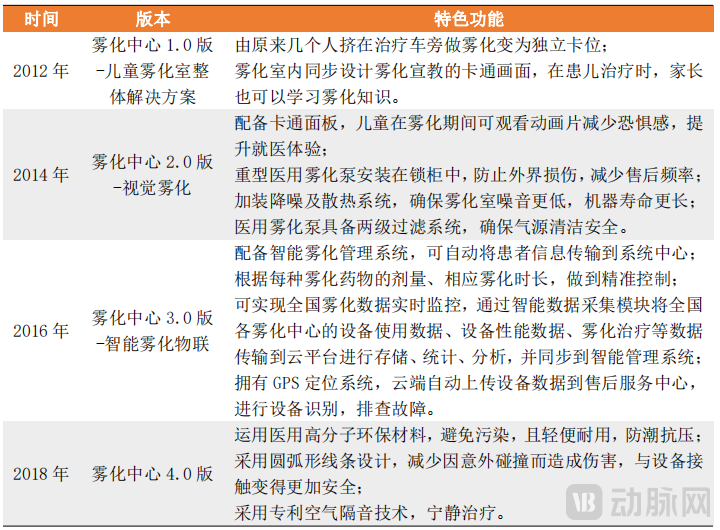
Subsequently, under the company's preparation,The HOMED brand officially entered the Chinese market in 2012. From 2012 to the present, HOMED’s nebulization centers have undergone four iterations.
Source: HOMED Medical
Overall, the system has optimized and adjusted its product design to address pain points such as high clinical noise levels and the specific characteristics of pediatric nebulization. First, given that children’s respiratory tracts are not yet fully developed, HOMED has introduced the concept of “effective drug delivery distance” into its products. This involves actively propelling medication toward the child’s nasal passages and respiratory tract through machine-assisted intervention.
Meanwhile, to address the common resistance and reluctance among children toward traditional nebulization therapy, HOMED has incorporated attention-grabbing features into its nebulization devices. For instance, HOMED has developed games linked to breathing frequency, allowing children to engage in play-like activities during nebulization treatment. This approach enhances treatment compliance and increases the rate of spontaneous breathing.
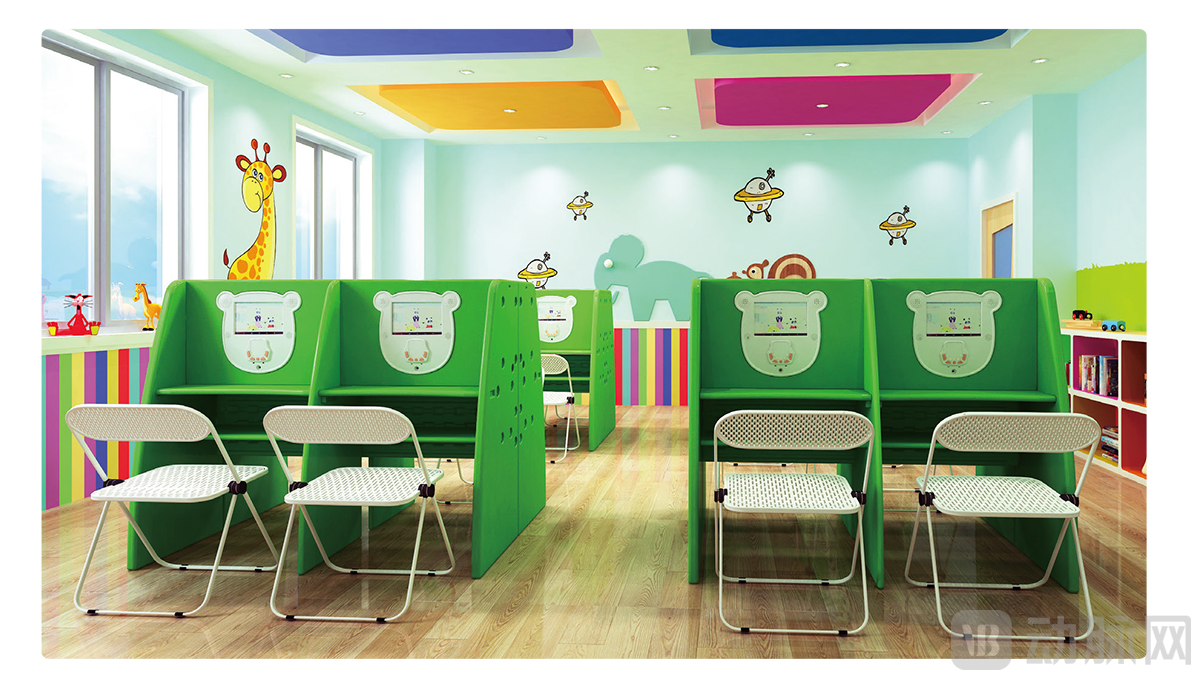
Following the market launch of the intelligent nebulization system, the company pursued a dual strategy. On one hand, it initiated academic exchanges to advance its brand strategy by hosting multiple annual conferences on pediatric respiratory medicine and specialized academic symposia on aerosol inhalation therapy. On the other hand, the product was rapidly adopted in clinical practice. A large number of Grade 3A hospitals across China, including Shenzhen Children’s Hospital, Beijing Children’s Hospital, Shanghai Changhai Hospital, Shanghai Xinhua Hospital, and West China Second University Hospital, introduced intelligent nebulization centers. Within less than two years, up to 500 hospitals had established and implemented these systems.
Source: HOMED Medical
HOMED has expanded from provincial-level children’s hospitals and maternal and child health hospitals as benchmarks to municipal- and county-level hospitals. Currently, its smart nebulization system has been adopted by more than 3,000 hospitals across China.
Amid the sweeping wave of digitalization,In 2016, HOMED began to build the mobile healthcare segment “Yi Hu Xi”.This product facilitates interaction among patients, healthcare professionals, medical institutions, and medical devices, helping customers achieve personal health management through integrated, information-based, and networked services.
In addition to vertically deepening its product application R&D, HOMED is actively expanding into grassroots markets and overseas.In 2018, HOMED implemented the “Hundred Children, Thousand Hospitals Action Plan,” centering on tertiary-grade A children’s hospitals nationwide and collaborating with pediatric departments in over 1,000 hospitals across China. It deployed 1,100 nebulization stations, covering more than 500,000 outpatient visits per day.
Additionally, under the Belt and Road Initiative, HOMED will implement the “Smart Link to Myriad Mists – Global Intelligent Nebulization System Construction” project in six ASEAN countries and deploy more intelligent nebulization centers in other participating nations. However, the pandemic has currently hindered the progress of these overseas plans.
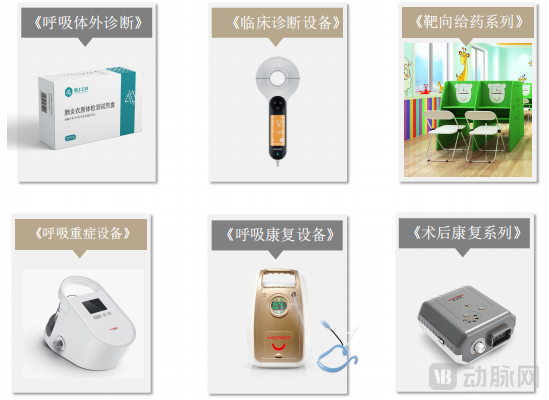
Chronic respiratory diseases require long-term, standardized treatment and rehabilitation. HOMED focuses on the complete continuum of disease diagnosis and treatment, with strategic layouts encompassing the diagnosis, treatment, rehabilitation, and nutritional support for chronic respiratory diseases, thereby establishing its current five major business segments., including: respiratory in vitro diagnostics, clinical diagnostic equipment, targeted drug delivery devices, respiratory critical care equipment, and rehabilitation services, comprising a total of six major product series.
Source: HOMED Medical Product Series
Compared with the production of a single nebulization device, HOMED’s extensive business layout has broadened its development space. However, within its diversification strategy, the company remains focused on the respiratory field, committed to achieving integrated diagnosis and treatment.
Currently, the company operates the HOMED Software R&D Center, dedicated to building an intelligent platform for interactions among devices, between devices and humans, between humans and devices, and among humans. It also maintains a Shenzhen manufacturing center featuring a 4,000-square-meter, Class 100,000 sterile cleanroom production workshop, as well as a 28,000-square-meter manufacturing center in Dongguan, ensuring sufficient production capacity. Meanwhile, the company has established an IVD industry platform in Qinghai.
Based on the company’s overall business layout, HOMED will leverage its existing R&D and technological capabilities to build an integrated ecosystem of diagnostic and therapeutic devices plus a management platform for chronic respiratory diseases, interconnecting its current product portfolio through IoT and internet technologies.
In the short term, HOMED will closely follow the trend of nebulization therapy shifting from hospitals to homes, leveraging its current market share to further expand its presence in the home nebulization sector.
About the "Huijiu Ivy" Accelerator Camp
“Huijiu Ivy” Accelerator is jointly launched by Huijiu Lecture Hall, Ivy Society, and AstraZeneca. The operations team is a promoter and practitioner of domestic health entrepreneurship services, with six years of focused experience in operating startup accelerators.
This initiative targets CEOs of growth-stage startups in the healthcare and wellness sector, fostering an open and supportive entrepreneurial “community.” By integrating core startup elements such as industry resources, financing, and talent, it ensures that entrepreneurs no longer feel isolated and can avoid common pitfalls.
The first cohort completed the screening of 60 high-quality participants within one and a half months, with both the quality and quantity of enrollees earning industry recognition. Enrollment for the second cohort is about to begin; outstanding entrepreneurs are welcome to join.