

Hanwei Intelligent Medical Establishes China's First Breast Specialist Internet Hospital, Unveiling a Comprehensive Breast Health Ecosystem
On December 23, the “12th China Maternal and Child Health Development Conference,” hosted by the China Association of Maternal and Child Health, was successfully held in Fuzhou, Fujian Province.
In light of the severe situation characterized by a continuous rise in new breast cancer cases, the holding of the "Breast Cancer Screening, Diagnosis, and Treatment Sub-forum" is of particular significance.
At the forum, professionals included Yu Xiaoqian, Executive Vice President and Secretary-General of the China Maternal and Child Health Association; Jin Lei, Director of the Internet Industry Office of the China Maternal and Child Health Association; Ma Xiangjun, Executive Vice Chairman of the Breast Care Professional Committee of the China Maternal and Child Health Association and Vice President of Beijing Haidian Maternal and Child Health Hospital; Professor Ma Jing from the Institute of Hospital Management at Tsinghua University; Huang Xiaoxi, Chief Physician of the Breast Surgery Department at Fujian Provincial Maternity and Child Health Hospital; Fu Ping, Vice President of Chengdu Shuangliu District Maternal and Child Health Hospital; Tang Li, Vice President of Sichuan Langzhong City Maternal and Child Health Hospital; and Dr. Yang Daowen from Hanwei Intelligence, a leading domestic enterprise in breast health management.Offering insights and recommendations on the prevention and control of breast diseases from multiple dimensions, including early screening, treatment, and management, to jointly seek solutions.
The entire sub-forum served as a “timely rain,” contributing numerous constructive solutions to the iterative upgrading of screening, diagnosis, treatment, and rehabilitation for breast diseases, promoting overall industry development, and addressing societal challenges related to breast disease. Its significance is self-evident.
China’s First Breast Specialty Internet Hospital—Aiwei Internet Hospital Was Also Unveiled at the Conference.
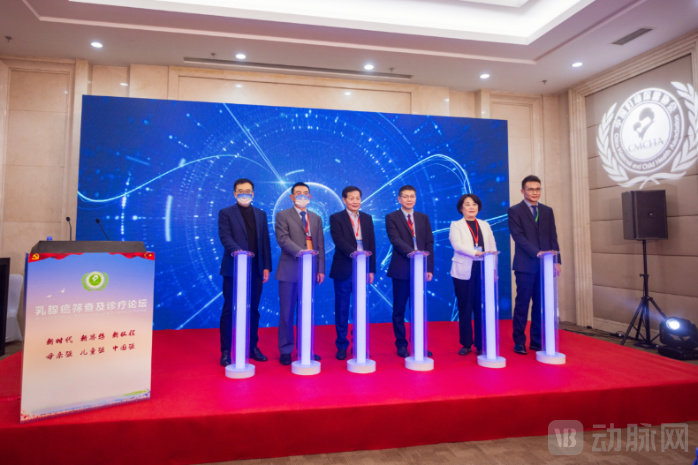
Yu Xiaoqian, Ma Jing, Jin Lei, Ma Xiangjun, Huang Xiaoxi, and Yang Daowen all participated in the unveiling ceremony.
The launch of Aiwei Breast Internet Hospital serves as the final piece of the puzzle, completing the full-cycle process of screening, diagnosis, treatment, and rehabilitation for breast and related diseases.
It is reported that Aiwei Breast Internet Hospital currently covers more than 130 top breast specialists across China, representing a coverage rate of over 10%. It has established in-depth collaborations with numerous Chinese and international breast specialty societies, breast oncology centers at leading Grade A tertiary hospitals, renowned breast specialists, as well as global breast medical device and pharmaceutical companies. Meanwhile, the platform provides information and clinical professional services to a large number of breast patients. With over 2.4 million registered precise breast health users, it has achieved extensive and deep coverage of its user base through community management and multi-platform operations.
Internet hospitals play a significant role in facilitating the flow of medical resources and promoting the implementation of tiered diagnosis and treatment.
China has provided strong support in this regard. Between 2015 and 2021, a total of 96 policies related to internet hospitals were issued at the national and local levels, promoting the development of internet hospitals from multiple perspectives.
Under these various policies, key components of internet hospitals—including content, management, payment, and operations—have been implemented one by one, forming a nearly complete puzzle. The already substantial demand for online medical consultations has filled in the final piece, injecting momentum into the entire system and enabling the internet hospital framework to become fully operational.
As of June 2021, the number of internet hospitals in China exceeded 1,600, the number of mobile health users surpassed 600 million, and the market size exceeded RMB 100 billion. Internet hospitals have gradually evolved from an emerging healthcare service model into a standard feature for major hospitals.
However, the traditional internet hospital model has limitations in addressing specialty-specific issues.
First, integrated internet hospitals struggle to provide end-to-end management for specific types of diseases.Although the functions of integrated internet hospitals have been significantly expanded with policy support, offering services such as online consultations and prescription renewals for follow-up visits, these isolated and passive inquiries are insufficient to fully meet patients’ needs for disease management in specialized conditions like breast diseases. Patients require internet hospitals to proactively manage their entire care journey, providing detailed answers and guidance at every critical stage.
Second, general practice services are broad but not specialized, lacking clinical depth.At this stage, comprehensive internet hospitals tend to provide "general practice-style" responses, making it difficult for physicians to offer sufficiently detailed answers to individual patients.
In the face of numerous challenges, the establishment of specialized internet hospitals has become the optimal solution.
On the one hand, specialized internet hospitals can achieve vertical coverage and in-depth development within specific medical specialties, meeting patients’ needs for comprehensive disease management throughout the entire care continuum, thereby enhancing patient adherence to specialized diagnostic and therapeutic services.
On the other hand, specialized internet hospitals enable more centralized and precise collection of big data on relevant diseases, allowing healthcare institutions to effectively leverage these data resources, mitigate management issues arising from information asymmetry, and establish standardized, normalized pathways for both online and offline management.
By predicting and quantifying public demand through data, the establishment of specialized internet hospitals not only deepens clinical expertise and enhances specialized diagnosis and treatment capabilities, but also accumulates disease-specific data. This data supports pharmaceutical companies in digital marketing and drug development, facilitates collaboration with insurance companies to develop single-disease insurance products for targeted sales, and drives innovation in medical devices or scenario-based services, thereby integrating the upstream and downstream industrial chains and building a comprehensive healthcare ecosystem.
Moreover, by integrating specialized experts, resources, technologies, and services, specialty-focused internet hospitals have deepened academic and clinical exchanges among physicians within the same specialty. This facilitates further expansion of the physician workforce, effectively promotes the deployment of high-quality medical resources, and further empowers medical consortia, thereby achieving a multi-dimensional and accessible healthcare service model that extends from comprehensive institutional care to home-based services. Ultimately, this realizes the goal of managing 50% of diseases at the community level, 40% at county-level hospitals, and 10% of critical cases at provincial or municipal hospitals.
It is evident that the establishment of specialized internet hospitals holds significant importance for fully integrating the entire process of prevention, diagnosis and treatment, and rehabilitation for specific diseases.
Major hospitals and enterprises are racing to build internet hospitals, while more innovators in niche fields are also entering the specialized internet hospital sector. Some companies are breaking into niche segments such as ophthalmology, cardiology, diabetes, hepatobiliary medicine, pediatrics, and andrology.The breast health sector, however, remains a blue ocean.
Paradoxically, the number of breast cancer patients in China continues to rise.According to relevant statistics, the number of breast cancer cases in China has continued to rise, with new cases increasing from 279,000 in 2014 to 410,000 in 2020. This represents a substantial increase of 40.32% in just six years.
To address this issue, as early as 2009, China’s Ministry of Health, Ministry of Finance, and All-China Women’s Federation decided to implement the “Two Cancers” screening program for rural women. However, the large-scale implementation of population-based screening has faced numerous challenges, with many difficulties yet to be resolved.
First, due to insufficient public awareness and low willingness to undergo screening, organizing breast disease screening programs is challenging, making it difficult to achieve large-scale coverage.
Second, the screening workload is heavy, and data collection is difficult.
Third, there is an insufficient allocation of resources and equipment among primary care physicians, resulting in relative scarcity. Currently, China has only 160,000 registered ultrasound physicians. This shortage of medical personnel has led to limited coverage of breast cancer screening. Furthermore, cost constraints associated with ultrasound equipment have further exacerbated the challenges facing population-based breast cancer screening in China.
Fourth, significant investment in human and material resources is required. Healthcare workers face heavy workloads, making it difficult to ensure work efficiency.
At the “Breast Cancer Screening, Diagnosis, and Treatment Subforum” of this conference, Huang Xiaoxi, Chief Physician of the Department of Breast Surgery at Fujian Provincial Maternity and Child Health Hospital, put forward three recommendations for breast cancer screening efforts:“First, establishing a long-term service mechanism based on the ‘coverage management model’ requires ‘top-level design.’ Second, through technological innovation and informatization, it is possible to achieve a high-quality, widely covered, low-cost, fully informatized, and transparent ‘coverage management model.’ Finally, a long-term, continuous service mechanism based on the ‘coverage management model’ requires adequate financial support.”
The continuous rise in the number of breast cancer patients, the flaws in traditional screening pathways, and observations and recommendations from clinical practice... Improvements to breast cancer screening pathways and governance models are imminent, making the establishment of specialized internet hospitals for breast care highly anticipated.
For breast cancer, a preventable and treatable disease, the key to eliminating breast diseases lies in identifying appropriate screening, diagnosis, and treatment strategies.Establishing a specialized internet hospital for breast care not only meets the five core needs of whole-course breast disease management but also comprehensively integrates specialized resources, enabling physicians to reach patient populations more broadly and continuously, thereby driving innovation in the screening, diagnosis, treatment, and rehabilitation of breast diseases through innovative management models.
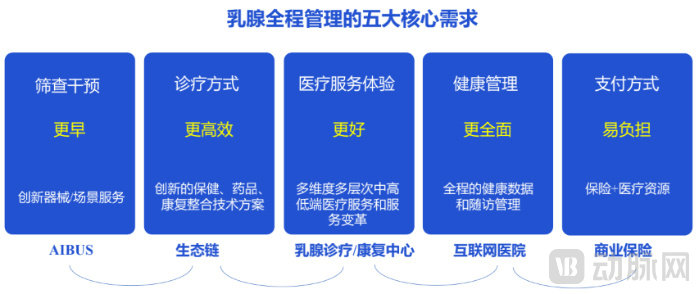
The establishment concept of “Aiwei Internet Hospital,” the first breast-specialized internet hospital in China, offers valuable insights for reference.
Aiwei Breast Internet Hospital specializes in full-lifecycle health management within the breast care vertical. Its ecosystem includes Aiwei Doctor, Aiwei Health, Breast Headlines, BMDT Global Breast Consultation Center, Breast Specialty Cloud HIS, and a chain of breast clinics/outpatient departments. These platforms cover a wide range of application scenarios, including physician practice platforms, physician learning platforms, breast consultation services, an online breast care pharmacy, breast health consulting, access to authoritative experts, remote consultations, prescription and payment services, physical examination and diagnosis/treatment, and rehabilitation management.
Specifically, in addition to business model innovation, Hanwei Intelligence also places significant emphasis on innovations in both software and hardware.Independently developed AIBUS, the world’s first fully automated AI-powered breast ultrasound robot, and built the Aiwei Nebula intelligent end-to-end management platform for two-cancer screening, continuously overcoming challenges in breast disease screening.To provide support for the comprehensive integration of breast specialty resources and the upgrading of diagnostic and treatment services in the next phase.
On one hand, by employing the “Fully Automated AI Breast Ultrasound Robot (AIBUS)” to perform ultrasound scans, standardized and automated breast ultrasound examinations are achieved, generating standardized breast ultrasound imaging data., addressing issues such as the reliance of ultrasound technology on clinicians' experience and the insufficient image interpretation experience among primary care and junior physicians.
On the other hand, with the widespread adoption of AIBUS screening and Aiwei Nebula, the number of breast health users on the “Aiwei Internet Hospital” platform has continued to grow, accumulating a substantial user base for breast cancer screening.Currently, the platform has onboarded over 130 top-tier breast specialists across China, representing a coverage rate of more than 10%. It has registered over 2.4 million targeted breast health users, achieving extensive and in-depth reach through community management and multi-platform operations.
At the “Subforum on Breast Cancer Screening, Diagnosis, and Treatment,” Fu Ping, Deputy Director and Associate Chief Physician of the Shuangliu District Maternal and Child Health Hospital in Chengdu, and Tang Li, Deputy Director of the Langzhong City Maternal and Child Health Hospital, both highlighted the pivotal role of Hanwei Intelligence’s applications in overcoming challenges in breast cancer care within their discussions on digital innovation practices for “two-cancer” screening.
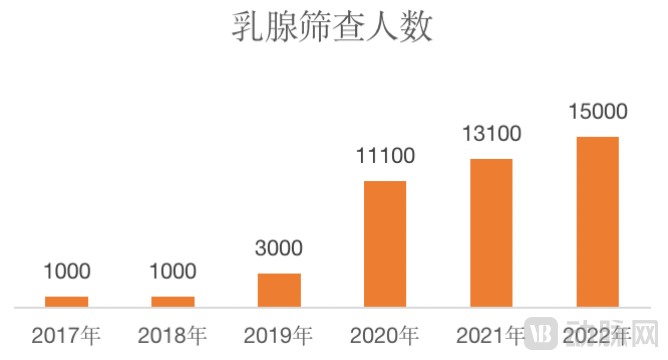
This year, Langzhong in eastern Sichuan pioneered the application of an intelligent, fully automated breast cancer screening solution. The implementation and management of Langzhong’s “two-cancer” screening program were enhanced through a dual-engine approach powered by iWei Cloud+ and the AIBUS, a fully automated AI-driven breast ultrasound robot.
With technological support, the number of individuals screened for breast cancer in Langzhong City increased from nearly 1,000 to 13,000, achieving large-scale screening. The detection of breast cancer patients broke through from zero to five cases. The number of positive results reached 787, significantly improving the detection rate.
How Did Hanwei Intelligence’s Technology Overcome the Challenges of Breast Cancer Screening and Pioneer the Establishment of a Specialized Internet Hospital for Breast Care?
The key lies in addressing the clinical needs and practical pain points of breast care by building a comprehensive breast cancer screening platform that uses AI data as a bridge and robotics technology as its foundation. By achieving seamless human-machine integration through technological means, this platform can deliver services that fundamentally resolve issues such as the shortage of primary healthcare resources, significantly improving the accessibility, efficiency, and accuracy of screening.
Hanwei Intelligence has achieved another milestone by leveraging its technological capabilities to establish a specialized internet hospital that integrates the entire breast health continuum—“prevention, diagnosis and treatment, and rehabilitation.” This initiative facilitates the diversion and conversion of high-volume users from large-scale screening programs, while fostering downstream ecosystem linkages across clinical care, rehabilitation, and insurance services, thereby accelerating the upgrade of diagnostic and therapeutic services for breast diseases.
Hanwei Intelligence’s specialized breast health internet hospital not only integrates payment into its system but also leverages technologies such as AI and big data to consolidate resources from partner insurance companies, breast tumor centers, renowned breast specialists, and global manufacturers of breast-related medical devices and pharmaceuticals. While helping patients manage risks,Meeting the needs of more patients and building a robust internet hospital ecosystem, it has established partnerships with companies such as Roche, AstraZeneca, BGI Genomics, Mammotome, KingMed Diagnostics, iKang Guobin, Ping An Insurance, and PICC.
VCBeat has found that,Integrating multi-party resources and building a closed-loop specialized medical service system encompassing “medical care, patients, pharmaceuticals, insurance, and delivery” is a crucial prerequisite for the robust development of specialized internet hospitals.
Hanwei Intelligence’s practice is by no means meaningless.
In summary, the deep integration of big data from specialized internet hospitals with the insurance industry helps transform traditional health insurance actuarial models and the entire business value chain. This makes many previously uninsurable patients insurable, enabling the formation of a true closed-loop system encompassing healthcare, pharmaceuticals, disease management, and insurance.
On the other hand, specialized internet hospitals not only digitize high-quality medical resources but also expand their reach to patients through online platforms. By providing services such as disease management and online prescription renewals with medication delivery, they establish a closed-loop service system integrating online and offline care. This approach facilitates specialized treatment for specific diseases and enables comprehensive, end-to-end disease management, thereby improving both patient adherence and user experience.
If the specialized breast care internet hospital model proves successful, Hanwei Intelligence will be well-positioned to replicate this approach within its vertical sector, driving innovation in the screening, diagnosis, treatment, and rehabilitation of breast cancer.What lies before Hanwei Intelligence may be a broader “breast health ecosystem.”