

Breaking Through the Three Barriers: A Scientist-Founder’s Guide to Building a Successful Tech Venture

MPCi
Venture Capital Institutions in High-Tech Startup Fields
2021: The Era of Scientist-Led Startups Has Arrived. In recent news, on December 24, the Standing Committee of the National People’s Congress voted to pass the revised Law of the People’s Republic of China on Progress in Science and Technology. To stimulate the innovative vitality of scientific and technological personnel, the law encourages research institutions to adopt equity, stock options, dividend distributions, and other mechanisms to incentivize such personnel.
Technological innovation is undoubtedly the core driving force of this era. In recent years, there has been a growing emergence of innovations characterized by breakthroughs in specific areas, as well as original innovations that have not yet appeared on the international stage.
However, for entrepreneurs with a background in scientific research and technology, technology serves as their entry ticket, with exceptionally strong core competencies. Conversely, they may face weaknesses in areas such as marketing and sales.
After interviewing numerous founders with scientific and technical backgrounds, we found that the first thorny issue they often encounter after launching their startups is how to navigate many relationships they had not previously faced. For instance, how should they conceptualize the transition from scientist to founder, enabling scientifically trained founders to make better business decisions? Another example is how to reconcile the relationship between scientific research and commercialization, which involves trade-offs between scientific achievements and commercial realities...
These issues are in fact critical, requiring founders of research-driven technology ventures to engage in upfront strategic thinking and continuously iterate throughout the entrepreneurial journey, as they often determine whether a company can reach the next level.
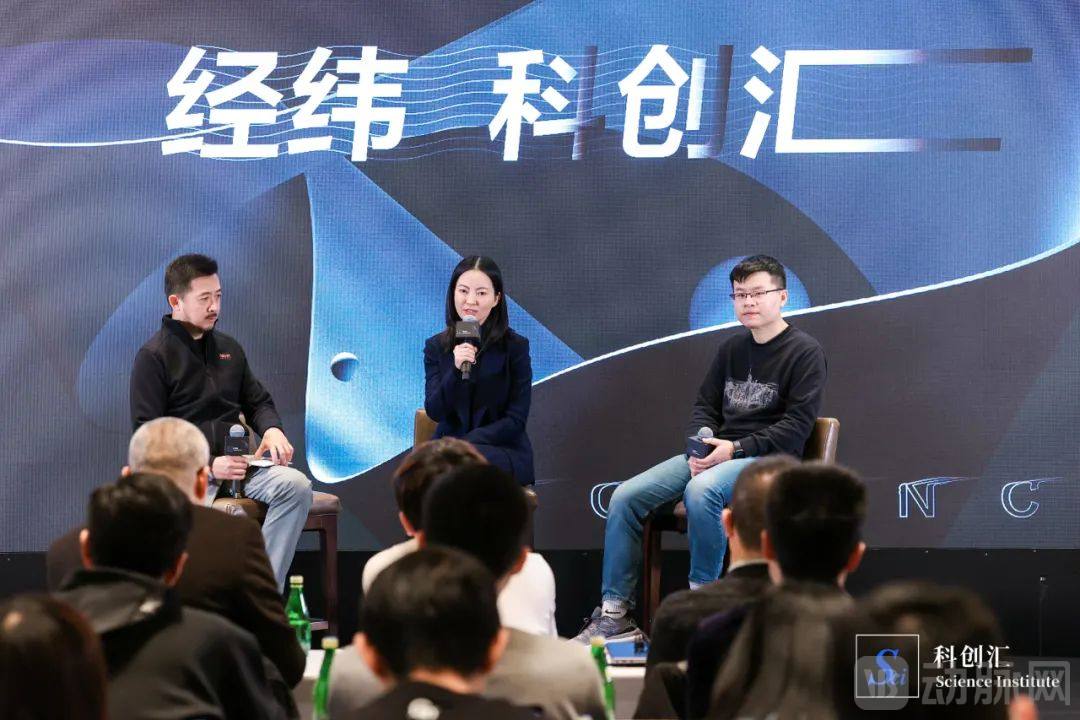
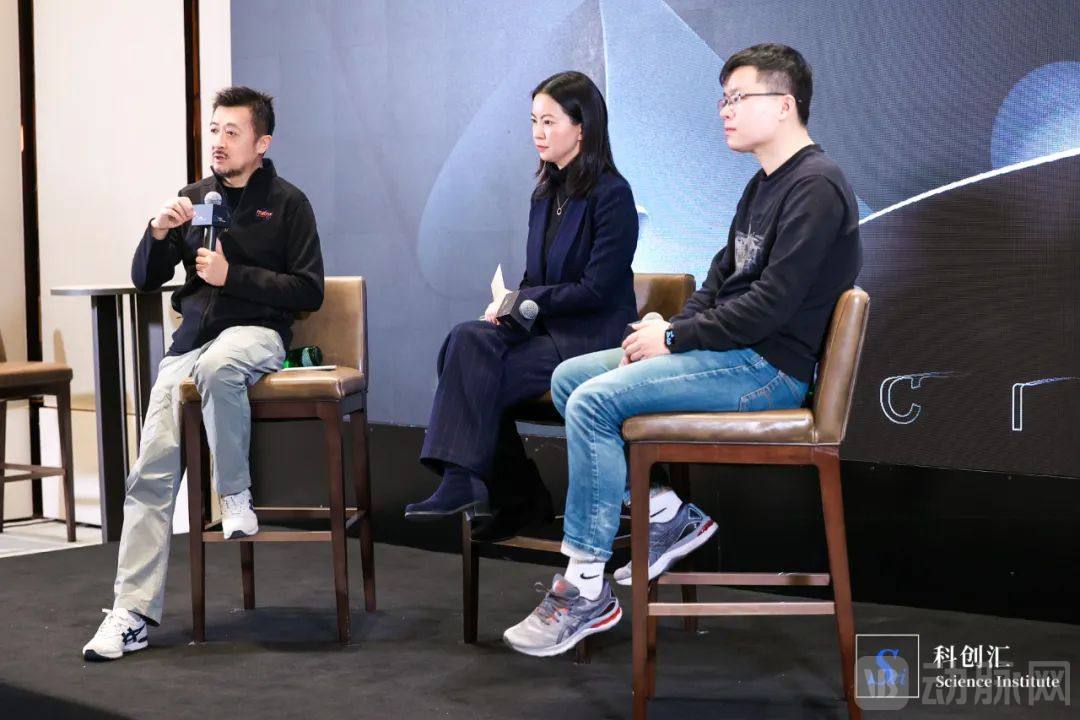
At the inaugural session of Matrix Sci-Tech Innovation Hub, we invited two seasoned founders—Yao Song, Co-CEO of Orienspace, and Dr. Cheng Senping, Founder and CEO of 3Dietix—to engage in an insightful dialogue with Zhang Ying from Matrix Partners China. We have compiled and summarized the extensive experiences and reflections shared by these science-and-technology-driven founders, integrating them with Zhang Ying’s previously proposed“9 Tips for Founders with a Research or Technical Background”, attempting to answer the following questions:
● How to switch roles between scientist and entrepreneur?
● How to strike a balance between scientific research outcomes and commercial realities?
● Strategically design the company’s core inflection points in advance
This is the inaugural study note from MPCi Innovation Hub. We strive to distill and refine the key takeaways from the conference, presenting them to founders in scientific and technological fields. These suggestions and perspectives are numerous; more importantly, they aim to foster awareness and provide proactive cautionary insights. Even if you absorb just one or two points that help clarify the aspect most relevant to your situation, it will be highly meaningful. We also look forward to engaging with more outstanding tech founders and supporting their growth. Below, enjoy:
How to Switch Roles Between Scientist and Entrepreneur?
The first hurdle for scientist entrepreneurs is often how to effectively transition their roles.Founders with a scientific research background who choose to embark on entrepreneurship are, in essence, entering a different realm. They must break free from conventional constraints, stay grounded, and even exhibit a fierce, competitive drive. Let science be science, and business be business.
Scientists often employ forward thinking, preferring to define product forms based on technological pathways, much like drilling a well where depth is the primary objective. However, the market typically demands reverse thinking, requiring technology to be aligned by working backward from commercial needs. It must resemble an eight-lane expressway, with comprehensive awareness of all surrounding dynamics, to potentially lead a company to success.
Secondly, scientific research and entrepreneurship impose different demands on individuals' capabilities.Scientific research demands imagination, which is a critical factor in achieving breakthroughs. In contrast, execution is paramount in entrepreneurship—often the most decisive factor—because even the best ideas are futile if they cannot be implemented for end users. Thus, these two domains require distinct skill sets.
Third, how far ahead should one look?Scientists tend to focus on overcoming immediate technical challenges, rather than contemplating distant future scenarios. They typically consider the next steps only after completing the current phase, concentrating on relatively static factual aspects such as data and theories.
However, running a business often requires “beginning with the end in mind.”, it is essential to first clarify a major goal you aim to achieve in ten years, then work backward to break it down into milestones—such as what should be accomplished by year seven, year five, and year three, as well as the objectives to be completed within one year. Of course, adjustments will occur along the way, but the overall direction will remain clear. In contrast, simply focusing on what to do next year, and then deciding the following year’s plan only when that time comes, often leads to increasing confusion.
Moreover, the challenges encountered in entrepreneurship are dynamic, encompassing macroeconomic shifts, industry landscapes, and personnel changes. Resource allocation must be planned according to varying needs: Should you prioritize developing revenue-generating products in the short term, or sustain long-term investment to achieve explosive growth after crossing a certain threshold? All such specific strategic decisions should align with the company’s strategic map.
There is no hierarchy between the mindsets required of scientists and entrepreneurs; rather, one must shift between them depending on the task at hand.Dr. Cheng Senping of TriMedica adopts a strategy of establishing balance within her management team. Dr. Cheng, with 11 years of entrepreneurial experience, leans toward reverse thinking, while her co-founder, boasting over 30 years of research experience in relevant technical fields, favors forward-thinking approaches. This complementary pairing creates a closed loop from technology to commercialization, forming a synergistic and effective combination.
For many founders with a research background, it is crucial to find a trustworthy business partner who can complement the company’s efforts in exploring business models, and sometimes also handle corporate operations, fundraising, and more. If such a suitable candidate is found, it is essential to earn their trust in the company. Offering 1/5 to 1/3 of the original founders’ equity stake is advisable, as this individual is an equal partner rather than a subordinate, which significantly strengthens the company. Of course, in case the wrong person is selected, there should be certain protective mechanisms in place, which need to be designed in advance.
How to Balance Scientific Research Achievements and Commercial Realities?
Based on the mindset shift discussed in the previous question, one direct implication is: how to strike a balance between scientific research achievements and commercial realities?
The shift in mindset and role also marks a transformation in how achievements are evaluated.Often, founders with a research background believe that strong scientific theories lead to advanced technologies, which in turn yield competitively viable products, ultimately ensuring robust commercial returns.
In reality, however, there is no causal relationship between them; each step serves as the foundation for the next but does not inevitably lead to a predetermined outcome. In scientific research, it is common practice to proceed with theory first, followed by experimental validation, and to collect data to determine whether a fundamental pattern can be fitted—a process that is difficult to predict in advance.
Ventures involving factors that are difficult to predict in advance are generally unsuitable for startups. The transition from an academic paper to a mature technology often takes five years or more; moving from a mature technology to a market-ready product may require an additional one to two years, as product development must address customer needs. For instance, in the case of AI chips, customers require not only deep learning computation capabilities but also a suite of supporting features, such as CPUs, video codecs, and memory interfaces.“A complete entity is what constitutes a product; it is by no means merely the core technology.”。
Once the product is clearly defined, it must ultimately be transformed into a marketable commodity, which means pricing it within a range acceptable to the market—another critical step.In many cases, driven by cost and mass production considerations, what is required is technological downgrading rather than upgrading.
To cite a brief example, an integrated circuit company once developed a 128 kbps mono MP3 chip in its early stages. At that time, the company was debating whether to commence sales, but the technical team opposed the idea, arguing that the product’s technological sophistication failed to reflect the company’s true capabilities. They believed that with an additional year of research and development, they could fully develop a 256 kbps stereo MP3 chip. Ultimately, the company decided to shelve the 128 kbps mono chip and continue its R&D efforts.
In the second year, R&D was indeed successful. The technical team developed a 256 kbps stereo MP3 chip and decided to launch sales. However, at this point, the company was surprised to discover that the entire domestic MP3 chip market had been dominated by MediaTek’s 64 kbps mono MP3 chip.
This example amply illustrates how to strike a balance between scientific research outcomes and commercial realities.If the market’s baseline acceptance threshold for technology is 60 points, and your technical team’s ideal capability is 100 points, you should promptly move to sales once you can deliver a product scoring 70 points. Do not hesitate; timing in the market is crucial.
Behind this story lies a crucial topic: scientists and entrepreneurs define goals and success differently, depending on their distinct roles.The goal of technological R&D is to pursue advancement and uniqueness, which can sometimes lead to a sense of isolation at the pinnacle. However, this does not apply to products. Products must meet market demands, with success defined by strong conversion rates and commercial prospects. One should not become self-indulgent merely because of frontier research or technical breakthroughs. Instead, every achievement must be evaluated from a market perspective, with customer recognition being paramount. This requires setting aside some of the pride inherent in the scientific mindset.
Proactively Designing the Company's Core Inflection Points
A characteristic of many technology companies is that their technological cycles are long and the challenges significant. In such cases, it is essential to plan core inflection points in advance—also referred to as risk-release points—whereby surpassing these milestones substantially increases the project’s survival rate.
For example, Dr. Cheng Senping summarized three major pivotal turning points for Triastek. The first pertained to engineering: to transform 3D printing equipment into an industrialized solution for the pharmaceutical industry, it was essential to ensure the stability and precision of the 3D printers. To achieve this, Triastek’s technical team conducted more than ten iterations of the equipment, ultimately controlling the printing accuracy within the requirements of the pharmaceutical industry—a feat that is remarkably difficult to accomplish.
The second core turning point was related to structural formulations. Triastek used 3D printing technology to develop a novel formulation, termed “structural formulation.” However, no matter how robust the models and theories are, they must ultimately be validated by clinical data in humans. According to Cheng Senping, everyone was extremely nervous when the first set of clinical data emerged in 2018—a moment that remains vividly memorable to this day. The results met expectations on the first attempt. The success of human clinical data represented a significant de-risking milestone, confirming that both the 3D printing process and the theory behind controlled release via structural formulations were sound. Had it failed, issues could have arisen at any stage, potentially requiring a return to earlier steps and another two to three years of work.
The third key turning point relates to external recognition, primarily from regulatory authorities. Obtaining clinical trial approval for any emerging pharmaceutical technology represents a significant regulatory breakthrough. For instance, with AI-driven drug discovery and synthetic biology-based pharmaceutical technologies, the number of products that ultimately advance to the clinical stage remains extremely limited. Therefore, whether drug regulatory agencies in various countries grant approvals is critically important for emerging technologies. Triastek has made substantial efforts in this regard, and its lead product, T19, received Investigational New Drug (IND) approval from the U.S. Food and Drug Administration (FDA) in January 2021. It is the second 3D-printed drug product worldwide to file a registration application with the U.S. FDA and the first 3D-printed drug product from China to enter the registration application phase.
Therefore, we recommend that founders with a background in scientific research and technology carefully consider the key turning points in their company’s development, including retrospective analyses of the past and forecasts for the future.To bring these pivotal turning points to fruition, what underlying logical foundations must be established? These critical inflection points do not occur casually or spontaneously; they are the result of deliberate actions by scientific and technological founders, strategic operational tactics, team upgrades, more abundant capital, precise control over pacing, and a genuine understanding of the product. It is worthwhile to engage in deep reflection, distill methodological frameworks, and prepare for scaling new heights in the future.
Zhang Ying of Matrix Partners China summarized: For founders with a scientific and technological background, the first hurdle in transitioning from research to business is clarifying the role shift between scientist and entrepreneur, continuously iterating on oneself, and becoming increasingly well-rounded. If, despite a comprehensive self-assessment, certain areas remain difficult to improve independently, it is essential to build a multidisciplinary team to compensate for these weaknesses. In this context, having a trusted business partner or co-founder is critically important.
If the first step is executed properly, one can more effectively avoid pitfalls when navigating the trade-offs between scientific achievements and commercial realities. This is because scientists and entrepreneurs, operating in different roles, hold distinct definitions of goals and success. The objective of technological R&D is to pursue advancement and uniqueness, whereas products must meet market demands, with success defined by strong conversion rates and commercial prospects.
Finally, in the course of a tech company’s development, it is essential to proactively design its key inflection points. These milestones do not occur spontaneously; rather, they require careful deliberation on what must be accomplished to bring them about. As founders of research-driven technology ventures, entrepreneurs often need to adopt a “begin-with-the-end-in-mind” approach—first clarifying the overarching goals for the next decade, then working backward to break them down into actionable steps. Otherwise, they risk becoming disoriented amid rapid market changes.
As the founder of a research-driven technology company, a crucial responsibility is to steer the organization toward success. In many instances, when confronted with new directions, transformations, or product choices, one should resolutely move forward once the underlying logic has been thoroughly clarified. Although this approach may be unpopular with many, it is invariably the correct decisions made by a few that guide the majority to persistently strive toward the goal, ultimately securing victory.