

SIAT's 15-Year Journey: Defining 'Micro-Innovation' with $13.5B in Funding and 1,346 Spin-offs
If ten years can sharpen a fine sword, what can fifteen years accomplish? ForShenzhen Institute of Advanced Technology, fifteen years can be realized on the thorny path of innovation and translationThe Leap from 0 to 1, to 10, and Even to 100.
The world’s first ultrasound-based brain modulation method and validation system, China’s first independently innovated 3.0T magnetic resonance imaging (MRI) scanner, the nation’s first commercial ultrasound-based liver cirrhosis detector, the first-ever synthesis of nano-artificial red blood cells, and the successful performance of Asia’s first multifunctional neural prosthesis surgery... The emergence of these cutting-edge technologies would not have been possible without the efforts made by the Shenzhen Institute of Advanced Technology.
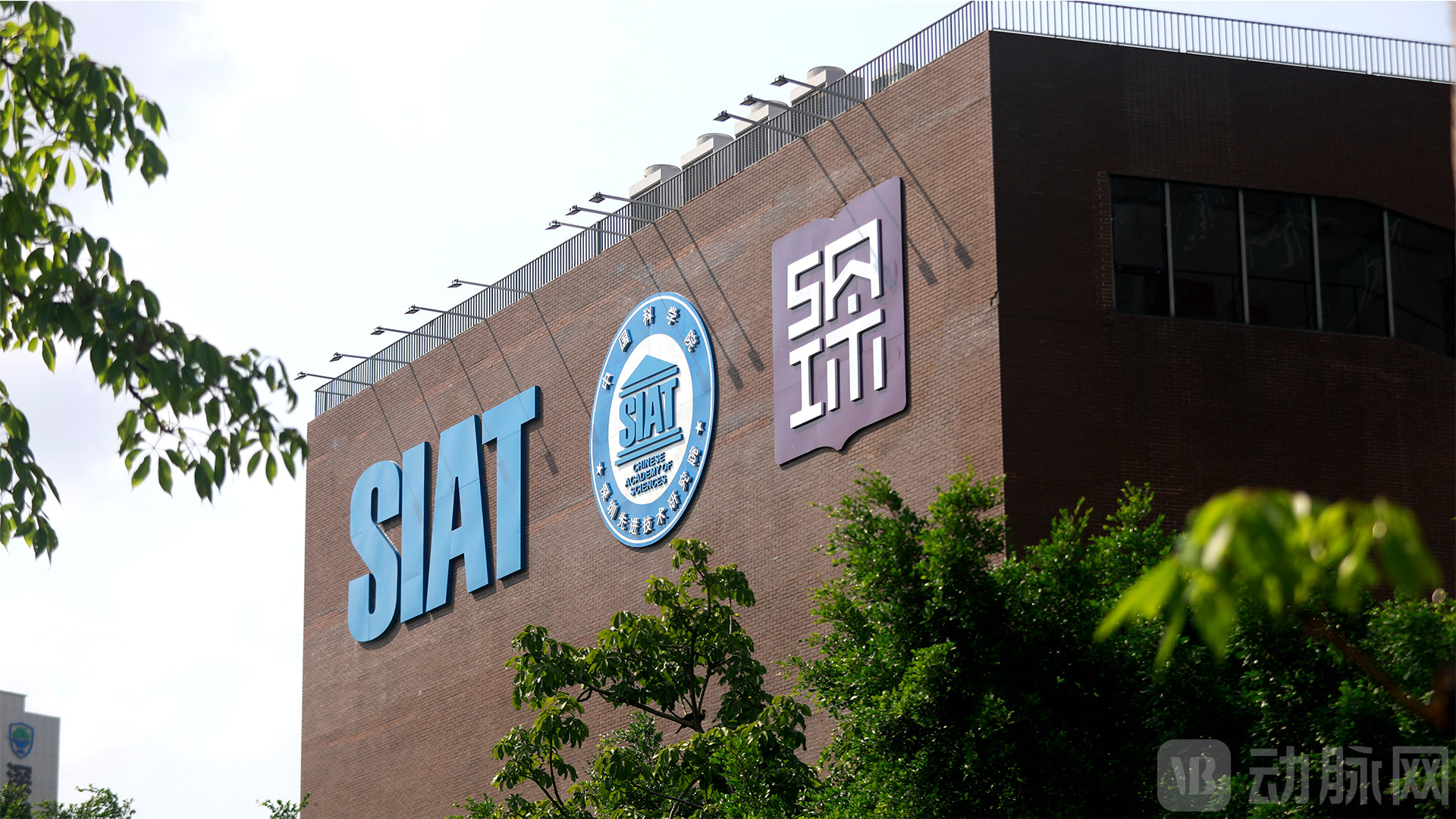
Why has the Shenzhen Institute of Advanced Technology become an innovation highland and a “hotbed” for intellectual property commercialization in the Guangdong-Hong Kong-Macao Greater Bay Area? What operational models and resource advantages have driven the innovative transformation of medical technology? Which aspects are worthy of learning and reference by research institutes? To unravel these mysteries,VCBeat’s Orange Fruit Bureau seeks to map out the developmental trajectory and systemic layout of the Shenzhen Institute of Advanced Technology, showcasing the youthful forces driving technological innovation and translation in China’s healthcare sector.
How Did the Shenzhen Institute of Advanced Technology Embark on the Path of Innovation and Translation?
Looking back to 2006, the National Science and Technology Conference proposed the overall strategic goal of independent innovation and building an innovative nation, and promulgated the Outline of the National Medium- and Long-Term Plan for the Development of Science and Technology. Shenzhen promptly responded to national policies by establishing independent innovation as its core urban development strategy, yet it faced a significant challenge—National Research Institutions Lacking in Source Innovation.
Chinese Academy of SciencesAssess the situation and proactively adjust the nationwide layout of scientific and technological resources, joining hands withShenzhen Municipal People's Government, The Chinese University of Hong Kong, closely aligning national strategic needs with regional economic development,Shenzhen Institute of Advanced Technology, Chinese Academy of Sciences (SIAT, hereinafter referred to as "the Advanced Institute"))emerged as the times required.
Located in Shenzhen, the “City of Peng” on the shores of the South China Sea, the Advanced Institute has rapidly become a robust force among new-type research institutions in building an international industrial research institute within this youngest megacity in the world.
According to public information, the Shenzhen Institute of Advanced Technology currently has a staff of over 4,900 people. It has cumulatively secured funding totaling RMB 13.5 billion, undertaken 8,027 projects, filed more than 12,000 patent applications (with 4,903 granted and 2,137 PCT patents), achieved a technology transfer rate of 27.5%, accumulated industry collaboration funds exceeding RMB 2.9 billion, established 180 joint laboratories with enterprises, and incubated 1,346 companies.
Its venture capital fund inHigh-End Medical Equipment, Precision Instruments, and Advanced Softwarehas made multiple equity investments in fields such as these and achieved substantial returns, among whichUnited Imaging Healthcare, Zhongke QianghuaSuch companies have even become leading brands in their respective niche sectors.
The Shenzhen Institute of Advanced Technology boasts a highly diverse range of disciplines with deeply interdisciplinary research directions, comprisingNine Research Institutes, respectively the Shenzhen Institute of Advanced Integration Technology, Chinese Academy of Sciences and The Chinese University of Hong Kong,BirthInstitute of Biomedical and Health Engineering, Institute of Advanced Computing and Digital Engineering,Institute of Biomedicine and Technology, Guangzhou Institute of Advanced Technology, Chinese Academy of Sciences,Institute for Brain Cognition and Brain Diseases, Institute of Synthetic Biology, the Institute of Advanced Materials Science and Engineering, and the Institute of Carbon Neutrality Technology (proposed).
In terms of quantity, institutes under the Shenzhen Institute of Advanced Technology in the life and health sector account for half of the total, continuously creating“Shenzhen Speed”and “"Shenzhen Quality"。
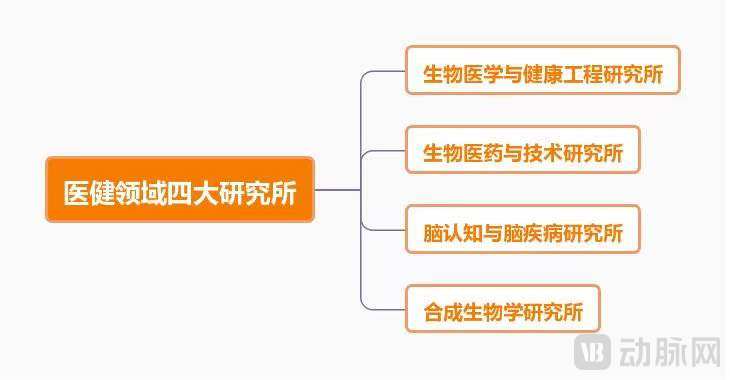
Institute of Biomedical and Health Engineering (IBHE), established on August 15, 2007, is the largest research unit within the Chinese Academy of Sciences in the field of biomedical and health engineering, and one of the earliest institutes founded by the Shenzhen Institutes of Advanced Technology.
Advanced Institute’s ““One + Three + N”The “Three” Major Breakthroughs in —High-End Medical Imaging, Low-Cost Healthcare, Medical Robots, and Functional Rehabilitation Technology, are all research achievements from the Institute of Medical Engineering. The Institute of Medical Engineering is undoubtedly the “vanguard” of the Advanced Institute’s research centers and a typical representative of its innovation and commercialization model.
Notably, the Advanced Medical Imaging Team at the Institute of Biomedical Engineering, Chinese Academy of Sciences, collaborated with United Imaging Healthcare for over a decade to successfully develop China’s first 3.0 T whole-body magnetic resonance imaging (MRI) system and achieve its industrialization, thereby breaking the international monopoly in this field and transforming the long-standing dominance in the MRI sector byG (GE), P (Philips), S (Siemens)The monopolized international industrial and technological landscape has made China one of the very few countries, following the United States and Germany, to independently master all core technologies and complete system manufacturing for magnetic resonance imaging (MRI).
This is a successful model of cross-disciplinary, multi-sector collaboration in industry, academia, research, and healthcare undertaken by the Shenzhen Institute of Advanced Technology (SIAT), as well as an important practice demonstrating SIAT’s commitment to addressing industrial demands through source innovation. Underpinning this achievement is SIAT’s goal and determination to establish a world-class industrial research institute.
In addition to the Institute of Biomedical Engineering, the Shenzhen Institute of Advanced Technology (SIAT) has targeted industrial sectors such as healthcare, robotics, big data, and brain science. It successively established the Institute of Biomedicine and Biotechnology (hereinafter referred to as the Institute of Biomedicine) in 2013, the Institute of Brain Cognition and Brain Diseases (hereinafter referred to as the Institute of Brain Science) in 2016, and the Institute of Synthetic Biology (hereinafter referred to as the Institute of Synthetic Biology) in 2017, thereby embarking on an innovative journey integrating research, education, industry, and capital.
Currently, China has achieved remarkable progress in basic research; however, compared with developed countries, significant weaknesses remain, particularly in the capacity to achieve breakthroughs in key core technologies.
The reasons behind this are as follows:These “chokehold” technologies are, in fact, “brain blocks.”, many fundamental and underlying aspects remain unclear, leading to problems in the critical area of basic theoretical research.
Basic research is the source of technological innovation. As the national “team” in science and technology on the shores of the South China Sea, the Shenzhen Institute of Advanced Technology naturally bears the important responsibility of achieving dual breakthroughs in both basic research and technological innovation.
In 2018, the Shenzhen Institute of Advanced Technology was approved to lead the construction of two majorMajor Scientific and Technological Infrastructure: Brain Analysis and Simulation, Synthetic Biology Research, and broke ground in Guangming Science City in 2019; it spearheaded the establishment of the Shenzhen Institute of Advanced Electronic Materials International Innovation Research Institute,Shenzhen Institute of Synthetic Biology Innovation, Shenzhen-Hong Kong Institute of Brain Science InnovationAll three foundational research institutions were officially inaugurated in 2019.
The major infrastructure development and strategic layout of the Brain Institute and the Institute of Synthetic Biology reflect the Shenzhen Institute of Advanced Technology’s key focus on tackling challenges in basic and applied research and achieving the translation of scientific achievements. But why prioritize these directions?
withSynthetic BiologyFor example, according to McKinsey statistics, products from bio-manufacturing can cover 70% of those from chemical manufacturing and continue to expand their boundaries. The economic impact of synthetic biology and bio-manufacturing is expected to reach $100 billion by 2025.
Breakthroughs in the research and application of synthetic biology are expected to trigger"The Fifth Industrial Revolution"In recent years, the technological high ground of synthetic biology has become a “battleground” fiercely contested by the world’s major scientific and technological powers.
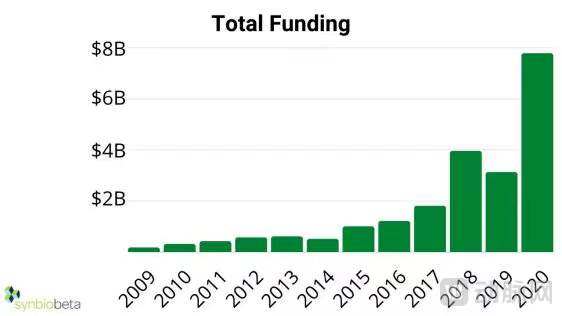
 Total Funding in Synthetic Biology, 2009–2020. Image source: SynBioBeta
Since 2000, fundamental research in synthetic biology has accelerated; since 2011, patent landscaping for synthetic biology technologies has entered an acceleration phase, with a rapid increase in related patent applications; and since 2015, investment in the synthetic biology industry has accelerated.
Nevertheless, this remains a sector with long-term growth potential and substantial accumulation. Key challenges confronting industrial development include advancing fundamental theories, enhancing research efficiency, and bridging the “research–translation–industry” chain.
How Does the Shenzhen Institute of Advanced Technology Solve These Challenges?
As one of the key projects prioritized for launch and deployment in the construction of the Guangming Science City in Shenzhen, the Major Scientific and Technological Infrastructure for Synthetic Biology Research has a total equipment investment of nearly RMB 1 billion. This isThe World’s First Large-Scale Infrastructure Project Initiated for Establishment in the Field of Synthetic Biology, it will create a dual-integrated synthetic biology research platform comprising a “Cloud Laboratory” for users and an “Intelligent Laboratory” for operators, which will be open to both the academic and industrial sectors.
Synthetic biology generally involves extremely high complexity, necessitating extensive engineering-based trial-and-error experimentation. Synthetic biology facilities achieve this by establishing intelligent production units based on cyber-physical systems, and by incorporating concepts of personalized customization and Internet-enabled factories.A short-duration, high-throughput, low-cost, multi-cycle closed loop of “design–synthesize–test–learn”, significantly enhancing the capabilities for synthetic biology design and construction.
Leveraging this facility, the Shenzhen Institute of Advanced Technology (SIAT), in collaboration with universities and research institutes, is capable of conducting a series of fundamental, applied, and developmental studies in synthetic biology. This integration bridges the “validation gap” from concept to prototype, achieving breakthroughs in transforming scientific and technological achievements from zero to one. In January 2021, the main building of the Major Science and Technology Infrastructure for Synthetic Biology Research was officially topped out, with completion acceptance and delivery expected in early 2023.
Once a technological achievement has reached the prototype stage, transforming it into a viable product and helping biotechnology companies cross the entrepreneurial “valley of death” presents a significant challenge.
To this end, the Shenzhen Institute of Advanced Technology has explored“The Upstairs-Downstairs Innovation and Entrepreneurship Complex”—Shenzhen Engineering Biology Industry Innovation Center.This innovative model for aligning technology with industry supports “upstairs” researchers in conducting original innovation activities, while “downstairs” entrepreneurs engage in engineering development and pilot-scale translation of these innovations. By facilitating interaction between scientists and entrepreneurs within the same building, this approach effectively breaks down spatial barriers between research institutions and startups, overcomes the bottleneck of limited facilities and technical platforms faced by early-stage companies, and shortens the time cycle from original innovation to industrial commercialization.
It is reported that the Shenzhen Institute of Advanced Technology’s innovative “upstairs-downstairs” model has been included in the National Development and Reform Commission’s list of 47 measures and best practices from the Shenzhen Special Economic Zone for promotion and reference. To date, the innovation center has completed the selection of over 60 enterprises, with 13 high-growth companies already stationed there, including Shenzhen Boyin Biotechnology Co., Ltd. and Shenzhen Saiqiao Biological Innovation Technology Co., Ltd. The valuations of these related enterprises have reached hundreds of millions of yuan.
Addressing the Challenges in the Industrialization of Scientific Research Achievements“1 to 10”Subsequently, the product enters the mass production and facility construction phase. Startups that have “graduated” from the Innovation Center can access greater room for development in the Guangming Science City Synthetic Biology Industrial Park, located less than two kilometers away.
The Synthetic Biology Industrial Park is committed to creating a first-class spatial carrier for the development of the synthetic biology industry and taking the lead in fostering an innovative cluster for the synthetic biology sector. Established in March 2020,Shenzhen Saiqiao BioAfter "graduating" from the Innovation Center, it moved into the Synthetic Biology Industrial Park in May 2021. It has currently secured nearly RMB 100 million in financing led by several well-known domestic investment institutions and is on the verge of closing a Series A funding round worth hundreds of millions of RMB.
It is reported that Guangming District is formulating a three-year action plan for the integrated development of the synthetic biology innovation chain and industrial chain, with at least to be built next year3 Synthetic Biology Industrial Parks, Offering Over 100,000 Square Meters of Specialized Industrial Space, striving to establish Guangming as a globally influential hub for the synthetic biology industry in a relatively short period, thereby supporting the development of Shenzhen’s Comprehensive National Science Center and fostering innovative growth in the Guangdong-Hong Kong-Macao Greater Bay Area.
“Laying eggs along the way” is a“Research-Translation-Industry”A vivid metaphor for the innovation ecosystem chain of sustainable development. “Along the way” refers to a continuous process, while “laying eggs” signifies that scientific and technological achievements can be translated into practical applications, serving industries and driving economic and social development.
The strategic layout and practical implementation of the Shenzhen Institute of Advanced Technology (SIAT) serve as a paradigm for the “laying eggs along the way” model of scientific achievement commercialization and the co-construction of frontier industrial clusters, effectively bridging the entire translation chain from “research to commercialization to industry,” scaling from 0 to 1, from 1 to 10, and onward to infinity.
Notably, as one of the youngest emerging research institutions among the many academies under the Chinese Academy of Sciences (CAS), the Shenzhen Institute of Advanced Technology (SIAT) focuses on national needs, prioritizes strategic research, and strives to address critical gaps. By 2020, its staff size had risen to rank first within the CAS system.
In just over a decade, the Advanced Institute has spearheaded the development of the low-cost healthcare industry from scratch, expanded the robotics industry from small beginnings to significant scale, and strengthened the medical imaging industry from weakness to robustness. The successful experiences behind these achievements are invaluable.
Talent Drives Achievements, and Talent Fuels Innovation. The Advanced Institute adopts a global recruitment strategy, ensuring that over 65% of its doctoral employees are recruited from overseas. This has created a workforce predominantly composed of international talent, characterized by a high degree of internationalization and openness. Over the years, the Advanced Institute has attracted numerous top-tier international talents and AF professors, nurtured many leading experts, introduced 19 innovative teams, and established itself as a premier talent hub in South China.
In terms of basic research, the Shenzhen Institute of Advanced Technology (SIAT) addresses industrial needs by focusing on the integration of information technology (IT) and biotechnology (BT), with strategic emphasis onRobotics, Biopharmaceuticals, Big Data, Brain Science, Synthetic Biology, Materials Science...and other frontier disciplines, providing support for consolidating the foundation of Shenzhen’s Comprehensive National Science Center and comprehensively strengthening basic scientific research.
In terms of scientific research achievements, the Shenzhen Institute of Advanced Technology has successfully developed novel non-human primate models simulating human autism; elucidated biological migration and evolutionary strategies through quantitative formulas; obtained clinical trial approval for its original macromolecular new drug AS1501; developed a 140-nanometer super-resolution 3D in vivo biological optical microscope; and achieved multiple breakthrough technologies, including the independent development of ultra-thin chip temporary bonding adhesive materials to replace U.S. imports.
In terms of translational achievements, as of now, the Shenzhen Institute of Advanced TechnologyConversion rate reaches 27.5%, cumulative industry collaboration amountOver RMB 2.9 billion, establish corporate alliances180 laboratories, Incubation1,346 enterprises, including ShanghaiUnited Imaging HealthcareTechnology Co., Ltd., ShenzhenZhongke Lepu Medical"Unicorns" in industries such as Technology Co., Ltd.
Meanwhile, the Advanced Institute has injected capital to establish two investment management companies and already possessesMultiple Angel Funds and Venture Capital Funds, helping enterprises continuously grow and expand through industrial investment funds.
Unlike traditional research institutions, most new-type research institutions adopt a director responsibility system under the leadership of a council, which is jointly composed of the government and the initiating entities. The Shenzhen Institute of Advanced Technology was co-established by the Chinese Academy of Sciences, the Shenzhen Municipal Government, and The Chinese University of Hong Kong.
In terms of management models, universities and traditional institutions mostly implement an academic team system, emphasizing free exploration and the principle that “slow work yields fine results,” whereas the Shenzhen Institute of Advanced TechnologyImplement a center-based system, emphasizing collaborative team efforts.。
Meanwhile, the Advanced Institute adopts an innovative talent management mechanism, with its distinctive managerial feature being a system of full-staff employment that fixes staffing quotas rather than specific individuals. The Advanced Institute adheres to the public institutionCorporate Operation, all personnel are subject to 360-degreeYear-End Assessment, implementLast-Place Elimination System, break the rigid human resource structure of traditional research institutions, and achieve"Upward and downward mobility, entry and exit flexibility"liquidity, which not only safeguards the innovative vitality of the talent pool at the Advanced Institute but also feeds back into the economic development of upstream and downstream industries through the infusion of scientific and technological talent.
As a key planned area for China’s next phase of opening-up, the Guangdong-Hong Kong-Macao Greater Bay Area will become a national demonstration zone for pioneering deeper reforms, the most dynamic region in the global economy, and a highland for global innovation-driven development.Situated within the Guangdong-Hong Kong-Macao Greater Bay Area, the Shenzhen Institute of Advanced Technology (SIAT) is the first new-type research institution jointly established by the Chinese Academy of Sciences and Hong Kong, China. From its inception, SIAT has carried the “gene” of Shenzhen-Hong Kong cooperation, leveraging complementary advantages to attract a large cohort of top-tier international scientific and technological talent, thereby unlocking boundless development prospects.
How to leverage the pivotal role of “science and technology as the primary productive force” in the construction and development of the Guangdong-Hong Kong-Macao Greater Bay Area? The Shenzhen Institute of Advanced Technology has long provided the answer within its mission and vision—Enhance the independent innovation capabilities of advanced manufacturing and modern services in the Guangdong-Hong Kong region and across China, promote the establishment of new industries with independent intellectual property rights, and become a world-class industrial research institute.
According to publicly available information, over the 15 years since its establishment, the Shenzhen Institute of Advanced Technology (SIAT) has leveraged its joint development partnership with The Chinese University of Hong Kong (CUHK) and its geographical proximity to Hong Kong and Macao to attract 12 professors from Hong Kong, China, to lead the establishment of research centers at SIAT. Furthermore, SIAT has jointly established eight joint laboratories with The Chinese University of Hong Kong, The University of Hong Kong, The Hong Kong University of Science and Technology, The Hong Kong Polytechnic University, City University of Hong Kong, Hong Kong Baptist University, the University of Macau, and Macau University of Science and Technology. These collaborations encompass comprehensive cooperation across multiple fields, including scientific research, education, and industrialization, facilitating the cross-border flow of innovation and technology resources and establishing an effective institutional framework for cooperation.
At the 2019 China Hi-Tech Fair, four laboratories, including the Guangdong-Hong Kong-Macao Joint Laboratory for Human-Machine Intelligent Collaborative Systems, were unveiled and officially established at the Shenzhen Institute of Advanced Technology. These laboratories will pool innovation resources from Guangdong, Hong Kong, and Macao, pioneer new models of scientific research collaboration, and advance research on major scientific challenges and key core technologies.
At the 2020 China Hi-Tech Fair, the Shenzhen Institute of Advanced Technology also signed the “"Framework Agreement on 6+1 Cooperation to Jointly Build a World-Class Innovative Pharmaceutical Hub in the Greater Bay Area"jointly established the “Greater Bay Area Institute of Innovation in Chinese and Western Medicine” and the “Greater Bay Area Innovative Chinese and Western Pharmaceutical Co., Ltd.” to enhance the pharmaceutical innovation capabilities of the Greater Bay Area.
Looking to the present, the Shenzhen Institute of Advanced Technology has played a “locomotive” role in China’s scientific research innovation and translation. It is making significant strides toward becoming a new type of world-class industrial research institute by enhancing independent innovation capabilities in the Guangdong-Hong Kong region and across China in sectors such as manufacturing, modern services, and healthcare and pharmaceuticals.
However, having only the Shenzhen Institute of Advanced Technology is not enough; we need more research institutes across China to step forward as soon as possible, take up the mantle of innovation and translation, and truly accelerate their own progress.
Only in this way can we address the current pain points in innovation and commercialization in China, incubate more innovative projects, realize localized innovations one by one, and propel China’s healthcare industry to new heights.
"Though the road is long, you will arrive if you keep walking."