

2021 Internet Healthcare Development Review: Regulatory Framework and Systematic Growth
“Tempered” by the pandemic, the value of internet healthcare no longer requires extensive proof.
In June, the General Office of the State Council issued the “Opinions on Promoting High-Quality Development of Public Hospitals,” which requires: promoting the deep integration of next-generation information technology with medical services, vigorously developing telemedicine and internet-based diagnosis and treatment, and building smart hospitals;
In July, the National Health Commission, the National Administration of Traditional Chinese Medicine, and the Health Bureau of the Logistics Support Department of the Central Military Commission jointly formulated the “Opinions on Further Strengthening Traditional Chinese Medicine Work in General Hospitals to Promote the Coordinated Development of Traditional Chinese and Western Medicine,” which proposes that entities establishing internet hospitals to provide online medical services are encouraged to offer online diagnosis and treatment services of traditional Chinese medicine.
In August, the National Health Commission and the National Healthcare Security Administration jointly formulated the "Administrative Specifications for Long-Term Prescriptions (Trial)," encouraging primary healthcare institutions to issue long-term prescriptions under the guidance of qualified higher-level medical institutions within medical consortiums, through channels such as remote consultations, internet-based follow-up visits, and hospital consultations.
In October, the Medical Administration and Hospital Management Bureau of the National Health Commission released an announcement on the “Detailed Rules for the Supervision of Internet-Based Diagnosis and Treatment (Draft for Comments)” (hereinafter referred to as the “Draft”), establishing regulatory guidelines for the operation and development of internet-based healthcare.
In November, the General Office of the National Health Commission issued the "Notice on Launching Pilot Programs for Elderly Medical and Nursing Care Services," proposing that pilot regions and medical institutions should actively explore and innovate diversified models of elderly medical and nursing care services, and support qualified medical institutions in providing "Internet + Nursing Services" and extended nursing care services;
……
A Review of the Official Healthcare Policies Released and Formulated in 2021 Conveys a Clear Signal: The Internet Healthcare Industry Will Achieve Rapid and Diversified Development Under Policy Guidance.
According to statistics from VCBeat, as of November 2018, approximately 119 internet hospitals were in operational implementation across China. In August this year, relevant officials from the National Health Commission reported that the cumulative number of internet hospitals established nationwide reached 1,004 by December 31, 2020, and grew to more than 1,600 by June 2021.

After three years of development, the challenges and risks facing internet healthcare have become more clearly defined. Most visibly, the rapid growth of internet hospitals has been accompanied by an increasing number of irregular practices, such as the unauthorized collection of users’ private information, unclear registration details for physicians practicing online, and the use of AI to automatically issue prescriptions. These issues pose significant risks to patients seeking online medical consultations and purchasing medications.
The release of the "Draft Guidelines" provides a detailed definition of professional conduct in internet-based diagnosis and treatment, proposing specific requirements in terms of supervision of medical institutions, personnel, operations, quality and safety, as well as regulatory responsibilities, urging internet-based diagnosis and treatment to return to its essential medical nature.
To further discuss the requirements and standards set forth in the Draft Guidelines, and to promote standardized and innovative applications of internet-based healthcare within the health industry, People’s Daily Health Client and Health Times jointly hosted the “Expert Symposium on the Value of Internet-Based Healthcare” this month. The event invited more than ten authoritative experts from academia and industry, including Jin Xiaotao, former Deputy Director of the National Health and Family Planning Commission and President of the Chinese Society for Health Informatics and Medical Big Data; Lu Lin, Academician of the Chinese Academy of Sciences and Dean of Peking University Sixth Hospital; Xiang Yanzhen, Chief Accountant of Peking Union Medical College Hospital; and Xiao Jianbo, General Manager of Internet Healthcare at JD Health. Together, they aimed to advance the integrated innovation of industry, academia, and research, as well as the development of the internet-based healthcare sector.
At the symposium, Xiao Jianbo, General Manager of JD Health’s Internet Healthcare Division, introduced that JD Health has consistently focused on maximizing the value of renowned medical experts in the field of internet healthcare. The company has taken the lead in establishing the “Internet Healthcare Expert Committee,” inviting academic leaders from JD Health’s 27 specialty centers, along with more than 30 chief and associate chief physicians from multiple Grade A tertiary hospitals across China, to serve as members of the inaugural committee.
To further promote the healthy development of the industry, the Yinchuan Internet + Medical Health Association, as China’s first internet healthcare industry organization, has successively issued multiple industry standards and initiatives with the support of the Yinchuan Municipal Health Commission, exploring pathways for industry self-regulation and self-governance.
The frequent issuance of official detailed rules on market access and supervision for internet healthcare has, on the one hand, raised operational requirements, and on the other, charted a clear course for its development. By systematically addressing the longstanding challenges of “difficult and expensive medical care” faced by the public, internet healthcare companies, having completed their foundational infrastructure, are actively exploring diverse avenues for breakthroughs and innovation.
The inherent advantages of internet-based healthcare—efficient connectivity, professional guidance, and real-time services—are naturally well-suited to the management of chronic diseases. According to data from the Chinese Diabetes Society (CDS), the prevalence of diabetes among Chinese adults has approached 11.6%, with the total number of patients exceeding 100 million.
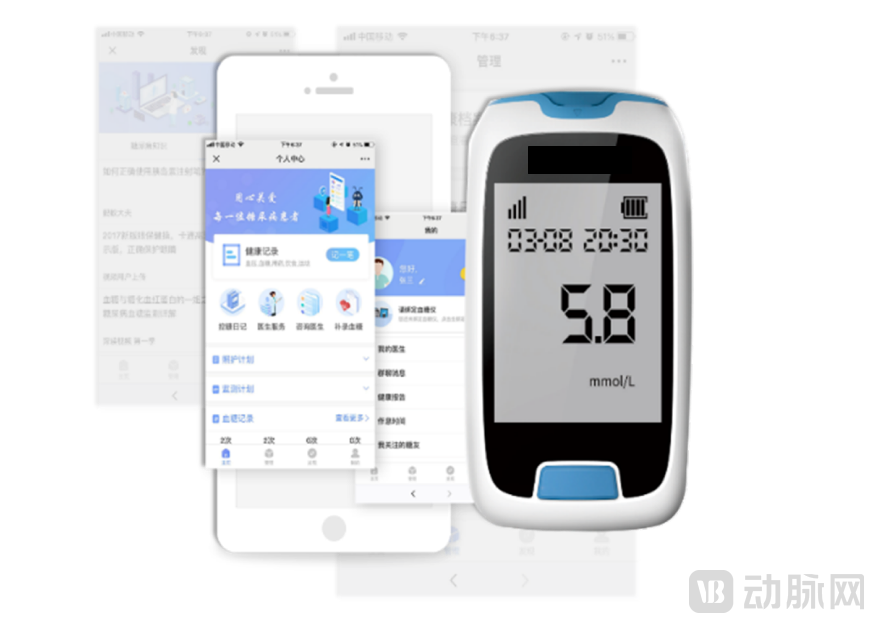
To meet the daily medical and health needs of patients with diabetes, JD Health has established a Diabetes Center. Leveraging JD’s full-industry-chain resources, supply chain advantages such as cold-chain logistics, and abundant medical resources, the center provides intelligent and efficient healthcare management services. After monitoring their blood glucose levels using smart glucometers, patients can voluntarily upload their blood glucose indicator data to the JD Health App, facilitating proactive follow-up and management by physicians. In addition to consultation and pharmaceutical services, JD Health offers users more refined health service packages, including blood glucose reversal services for early-stage diabetes, weight loss services for obesity-related diabetes, home monitoring guidance, personalized exercise plans, and dietary plans, thereby comprehensively improving the efficiency of diabetes diagnosis and treatment as well as blood glucose control rates.
Internet-based medical services are not developed in isolation from online advancements. In exploring innovative service models that integrate online and offline care, JD Health is leveraging its strengths in internet technology and operations to actively pursue deep collaborations with offline hospitals, thereby assisting traditional medical institutions in their digital and intelligent transformation.
In early 2021, JD Health and the First Affiliated Hospital of Henan University of Chinese Medicine jointly established Henan’s first Internet hospital for traditional Chinese medicine (TCM). This platform provides integrated online-to-offline medical services covering pre-consultation, consultation, and post-consultation stages, including online profile creation, appointment registration, consultations, follow-up visits, medication delivery, home-based rehabilitation guidance, post-diagnosis follow-ups, and patient evaluations. After nearly a year of exploratory operations, the platform has onboarded nearly 800 physicians, served a cumulative total of 130,000 users, and extended its service coverage to 30 provinces across China.
To continuously fulfill its social responsibility in internet healthcare, enhance public satisfaction and sense of gain in seeking medical care and purchasing medications, and explore innovations in internet healthcare within the philanthropic sector, JD Health has launched the “JD Health Public Welfare Platform.” As part of this initiative, a Rare Disease Care Center has been established specifically for patients with rare diseases. In collaboration with experts in the field of rare diseases, JD Health has co-established specialized centers and multidisciplinary consultation centers to provide patients with services such as remote follow-up consultations and prescription renewals by specialists, online medication purchases, home delivery of medicines, disease education, and post-diagnosis follow-up, thereby improving access to medications for more rare disease patients. Official data shows that over the past year, JD Health has cumulatively served more than 23,000 rare disease patients. “JD Health Rare Disease Care BasThe “Jin” project has cumulatively received 643 applications for assistance, covering 21 types of rare diseases.

As internet healthcare continues to evolve, it is gradually transitioning from a mere technological tool to a comprehensive service model. In 2021, internet healthcare companies represented by JD Health leveraged their respective strengths and delved deeper into user needs within a regulated framework, collectively enriching and refining the internet healthcare industry chain. Looking ahead, we can anticipate sustained and in-depth innovation in internet healthcare, delivering greater value to users in seeking medical care and purchasing medications.