

Bridging the Innovation and Translation Gap Between Overseas and Domestic Markets: An Exclusive Interview with Professor Yao Nengliang of Shandong University
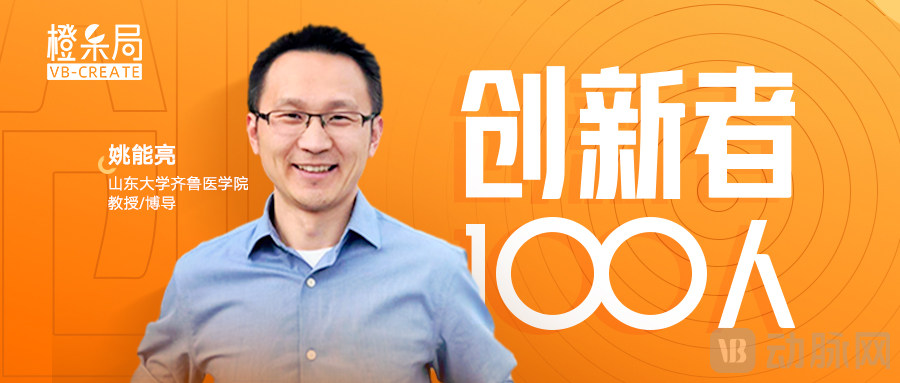
Personal Profile:Professor/Doctoral Supervisor, Qilu Medical College of Shandong University; Chief Scientist, American Academy of Home Care Medicine; Scientist, Division of Geriatrics, School of Medicine, University of Virginia
Research Focus:Dedicated to research, management, and teaching in home-based healthcare, with studies covering clinical science, healthcare management, and medical technology.
Research Findings:He has organized numerous international and domestic forums on home-based healthcare. Since 2018, he has been promoting the establishment of China’s system for home-based medicine and home-based healthcare to serve the elderly, frail, and disabled individuals. In 2019, he received the Gilden Scientist Award from the American Academy of Home Care Medicine. He has published more than 70 papers in many high-impact clinical and health services management journals, including JAGS, JCO, Cancer, JAMDA, Health Affairs, Health Services Research, and Medical Care.
In the summer of 2018, Professor Yao Nengliang from the University of Virginia School of Medicine returned to China with his family and joined Cheeloo College of Medicine at Shandong University. From today’s perspective, this may be regarded asThe Starting Point of Professor Yao Nengliang’s Research Career in Home-Based Medical Care and Elderly Care in China.
Professor Yao Nengliang earned his bachelor’s degree from Shanghai University of Finance and Economics, later obtaining a master’s degree in Software Engineering from Peking University. After working for several years in both the corporate sector and government, he pursued a Ph.D. in Health Policy and Management at Pennsylvania State University in the United States. Upon completing his doctorate in 2013, Professor Yao joined the faculty ofVirginia Commonwealth University School of Medicine.
Why did he choose to return to China? What initiatives has he undertaken since his return? From the niche perspective of home-based healthcare, what subtle shifts in medical innovation and translation within China has he observed? To unravel these mysteries,VCBeat Orange BureauAn exclusive interview with Professor Yao Nengliang.
Professor Yao Nengliang’s research on home-based medical care refers to a healthcare model in which medical professionals conduct thorough consultations in the patient’s living environment, appropriately assess the patient’s psychological status, family circumstances, and family/social relationships, identify caregiving resources within the family and community, formulate and implement medical and care plans, and ultimately re-evaluate and update these plans.
From a societal perspective, patients’ living environments are situated within the community. Therefore,Providers of home-based medical services should be community healthcare institutions, nursing facilities, or hospitals offering extended care services.such as primary healthcare institutions, nursing homes or extended care facilities, and hospital-based extended service departments, with services coordinated jointly by physicians, nurses, rehabilitation therapists, social workers, and other professionals.
According to the data from the Seventh National Population Census,China's population aged 60 and above has reached 264 million.It is projected that this figure will surpass 300 million during the 14th Five-Year Plan period, marking China’s transition from a mildly aging society to a moderately aging one. Furthermore, the number of disabled and semi-disabled elderly individuals in China currently exceeds 40 million. Against the backdrop of an accelerating aging trend, scarce per capita medical resources, and uneven distribution of resources across regions, there is an urgent need for new healthcare delivery models, particularly for disabled elderly individuals at the primary care level.
Practical experience in countries such as the United States and Japan has shown that,Home-based medical care can serve elderly patients and their families well at a lower cost, making it an effective strategy for the nation to actively address population aging.It can be said that the development of home-based medical care is not only a societal need but also a requirement for national governance.
The introduction of these policies affirms the validity of the home-based medical care model. In December 2020, the General Office of the National Health Commission and the General Office of the National Administration of Traditional Chinese Medicine jointly issued the “Notice on Strengthening Home-Based Medical Services for the Elderly.” The notice explicitly stipulates that secondary hospitals and below, as well as primary healthcare institutions, should serve as the main providers of relevant medical services. These services are targeted at elderly individuals with high age or disabilities who have limited mobility and require home-based medical care, as well as older patients suffering from chronic diseases, those in the rehabilitation or terminal stages of illness, and those who still require medical services after hospital discharge.
Facing a domestic patient population numbering in the hundreds of millions, Professor Yao Nengliang returned to China.He aims to promote home-based medical care across China, ensuring that seniors receive “whole-person” care in their later years.
Professor Yao Nengliang shared, “A human being is not merely a living body but also a social entity with psychological and spiritual needs. Therefore, the process of medical care and elderly care should be people-centered, requiring in-depth home visits to understand the specific circumstances. Home-based medical services can address patients’ physical, psychological, spiritual, and social needs, alleviate the caregiving burden on family members, and improve their quality of life.”
Currently, Professor Yao Nengliang leads an international, interdisciplinary research team conducting home-based healthcare research in response to the livelihood needs of China and the United States. For domestic research initiatives, the team collaborates with local governments, medical-elderly care enterprises, and renowned universities specializing in gerontology. By integrating and coordinating efforts across four major disciplines—clinical science, social science, engineering science, and basic medicine—the team has produced a series of research outcomes that are leading within China and world-class internationally.
As one of the first 20 experts selected for the Shandong Provincial Think Tank on Integrated Medical and Elderly Care Health Industry, Professor Yao Nengliang is actively promoting the development of China’s integrated medical and elderly care health sector.In 2019, Qilu Medical College of Shandong University, building on this think tank and integrating resources from related disciplines, applied to establish the Shandong Institute of Medical and Elderly Care Health Industry, with Professor Yao Nengliang serving as its director.
Since its establishment, the Institute of Medical and Elderly Care Industry at Shandong University has focused on two major areas: research on innovation and entrepreneurship in the medical and elderly care industry, and integrated research involving government, industry, academia, research institutions, and end-users. It provides urgently needed decision-making data, research findings, consulting services, and expert resources to government bodies and industry stakeholders, and regularly publishes the Global Briefing on Innovation in the Medical and Elderly Care Industry and the Home Care Innovation Weekly Update.
According to reports, Professor Yao Nengliang’s domestic research team is divided into four scientific research groups, composed of interdisciplinary talents including students from Shandong University, young faculty members, postdoctoral fellows, and dedicated research personnel, focusing onData Science, Data Visualization, Software Development, etc.. The team’s research areas primarily include geriatrics, gerontology, home-based healthcare, healthcare financing and payment, and research on the integrated medical and elderly care industry.
In terms of technological implementation, Professor Yao Nengliang’s team has practical case studies in both China and the United States.
Aging Tech Innovation PlatformXavor Technology (Xavor)as an example. The platform focuses on the development of artificial intelligence technologies and service support in the fields of general health and elderly care, as well as project incubation in the elderly care industry.As experts in home-based healthcare, Professor Yao Nengliang’s team supports Yawo Technology in conducting research on robotic algorithms and validating algorithms for assessing mobility in the elderly. Current or completed projects addressing population aging include companion robots for elder care, telemedicine, smart mobility vehicles, in-home care services, and sensitive olfactory sensors.
In China,Professor Yao Nengliang’s team also collaborates with organizations focused on medication adherence researchThe enterprise under study, Lianda Times, has a scientific research collaboration, providing product research recommendations from the perspective of home-based medicine.Lianda Times is an innovative enterprise founded by Chinese and American researchers. Focusing on chronic disease management, it connects patients with healthcare service institutions through smart pillboxes and software, providing more professional and personalized pharmaceutical care services.
In North America, Professor Yao has collaborated with multiple healthcare institutions and technology companies to apply various digital health products to home-based medical care scenarios. Additionally, Professor Nengliang Yao has developed a nationwide home-based medical care database in the United States, covering all home-based healthcare practitioners and institutions, with detailed calculations of the service quality and costs for each home-based medical care provider.
Professor Yao Nengliang candidly acknowledged that, at this stage, his research achievements have gained significantly greater recognition abroad than in China, with his project team still awaiting active collaboration from the government and enterprises domestically.
For instance, in 2018, when Professor Yao Nengliang’s team implemented an innovative model of integrated medical and elderly care services in Jinan, it took more than a year before they accepted their first home-based patient. The team consecutively held four sessions of international training on home-based medical care in Jinan, Tai’an, Shanghai, and Nanning, inviting experts in home-based medical care from countries and regions with well-developed elderly care industries, such as the United States and Japan. Although the response was positive, healthcare professionals who underwent the training encountered numerous challenges when launching home-based medical services.
Considering the national contexts of both countries, there are two primary reasons. First, countries such as the United States have established a robust foundation in research and practice within the home healthcare sector, featuring well-developed scientific research systems, market environments, and ecosystems for talent development. In contrast, China’s home healthcare industry is still in its nascent stage, with supporting policies and payment mechanisms remaining incomplete. Second, Professor Yao Nengliang has conducted research in the United States for many years and has garnered considerable influence within the industry, whereas market awareness of Professor Yao’s team remains limited in China.
Professor Yao Nengliang also mentioned that mature market experience has demonstratedThe development of a home-based medical care service system relies on the improvement of service personnel, service content, and healthcare payment mechanisms.
First, the service team should be diversified, comprising general practitioners, specialists, nurses, home care pharmacists, rehabilitation therapists, and caregiving aides. An interdisciplinary, multi-professional, and cross-sectoral home-based medical service team can provide more professional health services to patients across physical, psychological, and social dimensions.
Secondly, home-based medical services should encompass comprehensive medical nursing, daily living assistance, psychological counseling, and palliative care, thereby addressing the diverse health needs of service recipients. “We aspire to ensure that the elderly have support and care in their later years. At the same time, ‘death is not a medical event’; palliative care enables patients to pass away with comfort and dignity. This also reflects societal progress.”
Furthermore, regarding payment models, health insurance coverage may emerge as the most ideal approach. Currently, home-based nursing services are primarily paid out-of-pocket by patients; due to consumer habits and household income constraints, the development of these services has been less than satisfactory. However, with the advancement of long-term care insurance pilots, home-based medical care, under the guidance and direction of relevant policies, has seen numerous innovations in management, medical delivery, and service models.
Since 2018, Professor Yao Nengliang and his team haveHome-based medical services, training, forums, and scientific research, and summarized the three main home-based medical service models currently under development in China;
First, community health service centers should take the lead in developing and improving home bed services based on the family doctor contract system;
Second, public hospitals in transition serve as representatives by integrating internal and external medical resources to provide home-based medical services;
Third, private medical institutions serve as the primary providers, delivering personalized home-based medical services tailored to diverse patient populations and varied service demands in the market.
“Holistic” care is a high-frequency term in Professor Yao Nengliang’s research. In nursing, holistic care is based on the concepts of holistic healing and holistic health, providing appropriate treatment and care according to patients’ diverse physiological, psychological, and social needs. “Humans are not merely living bodies; they are social beings with spiritual aspirations. Therefore, the process of medical care and eldercare should be people-centered, and only by gaining insight into patients’ family environments can specific circumstances be fully understood. However, China’s existing medical resources still make it difficult to provide such healthcare services.”
Professor Yao Nengliang introduced that it is necessary to raise societal awareness of the importance of long-term care, encouraging more people to choose this option.China still faces bottlenecks such as the need to improve healthcare regulations, clarify payment methods, strengthen quality control systems, enhance talent and skills, and reduce the costs of technologies and products.
Professor Yao Nengliang called on society to shift its mindset, prioritizing the concept of long-term health management over acute care and post-acute care, and to establish a multi-stakeholder healthcare delivery system based on practical realities. Finally, Professor Yao expressed his hope to join forces with more talented individuals from various sectors who are committed to home-based medical care.