

SynRx Therapeutics Files IPO Prospectus: Pioneering Next-Generation Cancer Therapies Targeting DNA Damage Repair via Synthetic Lethality

SynRxTherapeutics
DNA Damage Repair Drug Developer
Cancer is currently one of the most severe diseases facing humanity, and its development is often closely linked to the process of cellular DNA damage.
It is well known that the intracellular genome is constantly challenged by various damaging factors from both exogenous and endogenous sources. If DNA damage is not repaired in a timely manner, it can lead to malignant outcomes such as cell cycle disruption, apoptosis, and carcinogenesis.
Therefore, the accurate repair of DNA damage and the maintenance of genomic stability play a crucial role in cell survival and, consequently, in preventing major diseases such as cancer. Research into the underlying molecular mechanisms constitutes the core of DNA damage repair biology and holds significant theoretical implications for tumor diagnosis and the design of anticancer drugs.
Professor Yu Xiaochun, Founder and Chairman of SynRxTherapeuticsDedicated to long-term research on the mechanisms of DNA damage repair and the development of cancer, his academic achievements have had a profound impact on the detection and treatment of familial breast cancer, ovarian cancer, pancreatic cancer, and leukemia.
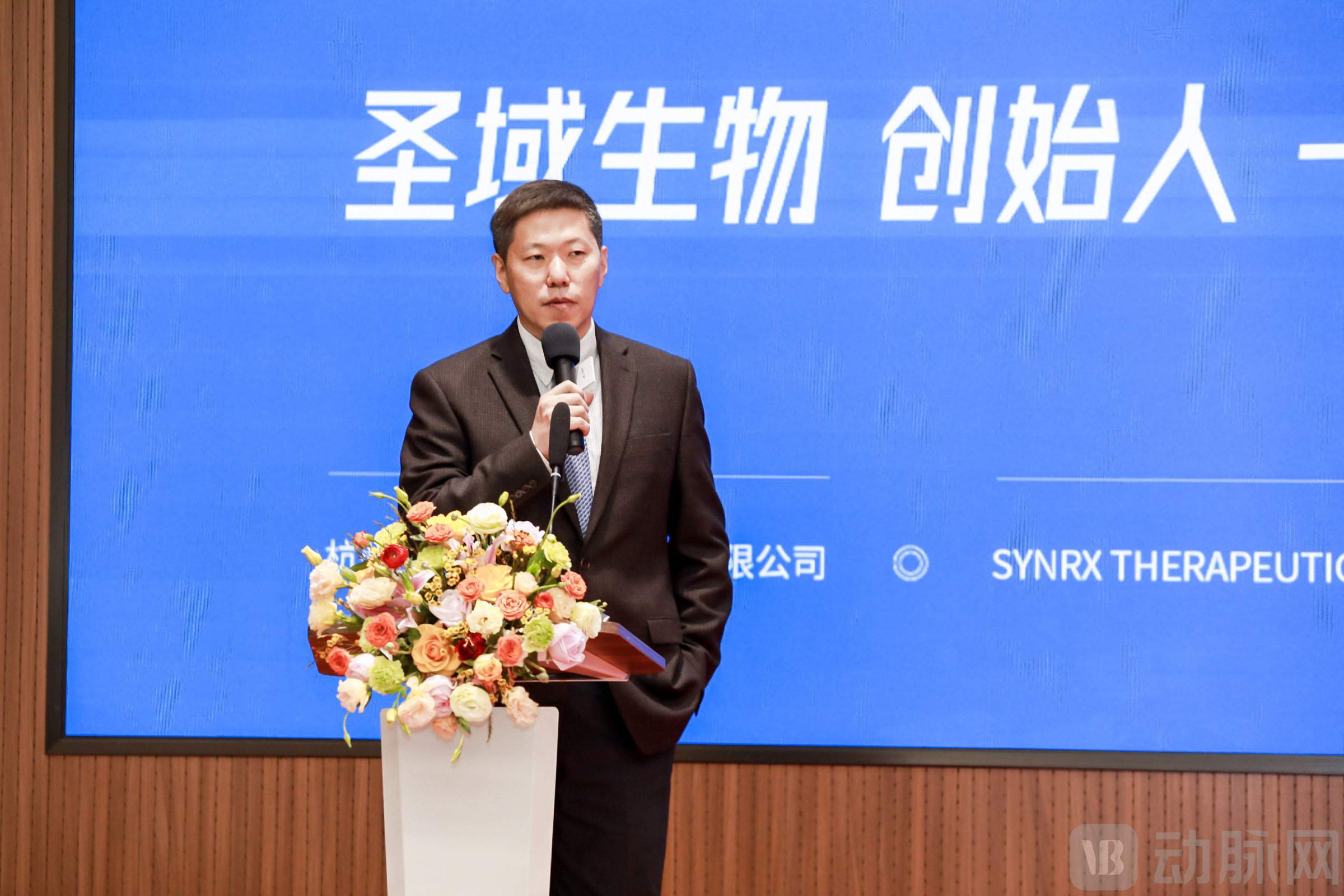
Professor Yu Xiaochun, Founder and Chairman of SynRx Therapeutics
SynRx Therapeutics, LLC.(SynRx Therapeutics, hereinafter referred to as: SynRxTherapeutics)is aAn Innovative Drug R&D Company Focused on DNA Damage Repair, with Professor Yu Xiaochun of the School of Life Sciences at Westlake University as the primary founder, focusing on precision therapy for targeted cancer treatment. The company has initiated preclinical research on multiple original Class 1 new drugs, gaining recognition from industry experts both domestically and internationally, and receiving multiple policy supports from the Zhejiang Provincial Government.
20 Years of Deep Expertise in the Field of DNA Damage Repair
For the past 20 years, Professor Yu Xiaochun has been dedicated to researching DNA damage repair mechanisms and the onset and progression of cancer.
“My research field is closely related to cancer treatment. After returning to China, I found that the domestic entrepreneurial environment is relatively lenient, with abundant opportunities. However, due to the relatively short history of original drug discovery and development in China, there exists a generational gap compared with foreign countries, especially the United States,” recalled Professor Yu Xiaochun.
Professor Yu Xiaochun received his Bachelor of Medicine in Clinical Medicine from Beijing Medical University in 1996 and his Ph.D. in Cell Biology from Kurume University in Japan in 2002, after which he conducted postdoctoral research at the Mayo Clinic. From 2006 to 2015, he served consecutively as Assistant Professor, Associate Professor, and Full Professor in the Department of Internal Medicine at the University of Michigan Medical School. In 2015, he joined the Beckman Research Institute of City of Hope as a Full Professor, a position he held until 2020.
Two decades of dedicated research have yielded substantial achievements,Professor Yu’s academic achievements have had a profound impact on the detection and treatment of familial breast cancer, ovarian cancer, pancreatic cancer, and leukemia, earning him numerous international awards.Recipient of the 2006 Ovarian Cancer Research Fund Alliance Independent Investigator Award, the 2007 American Association for Cancer Research (AACR)–Susan G. Komen Breast Cancer Scholar Award, the 2008 American Cancer Society (ACS) Scholar Award, the 2010 U.S. Department of Defense Breast Cancer Program Era of Hope Scholar Award, the 2014 Leukemia & Lymphoma Society Scholar Award, the 2018 Tower Cancer Research Foundation Scholar Award, the 2019 Pancreatic Cancer Action Network Translational Research Award, and the 2019 Taub Institute for Cancer Research Leukemia Research Award.
In late June 2020, Professor Yu Xiaochun returned to China to serve as a tenured professor at Westlake University, while also holding the position of Vice Dean of the School of Life Sciences, with responsibility for scientific research.
Upon returning to China, while participating in various review and exchange activities, Professor Yu Xiaochun observed the perspectives of domestic enterprises on innovative drugs and the prevailing macro environment, realizing that change was imperative: “I was deeply struck at the time, as the research being conducted by Chinese companies was effectively a generation behind the current hotspots in international academic and industrial research. I believe we should pursue truly meaningful original innovations, rather than following others with ‘me-too’ drugs.”
Through these review activities, Professor Yu Xiaochun established connections with many angel investors. With their introductions and assistance, the core team of SynRxTherapeutics began to take shape.
Focus on “small yet refined” innovation and R&D, letting professionals do what they do best.
On August 17, 2021, SynRx Therapeutics was officially registered and established. Its R&D headquarters is located in the Digital Health Town of Yuhang District, Hangzhou, occupying nearly 2,000 square meters of space that includes modern molecular and cell biology laboratories and office facilities, where drug R&D activities are conducted. Additionally, a branch office was established in Zhangjiang, Shanghai, serving as a talent acquisition hub.
“WeAim to build a “small but specialized” team“Every member of our team is a top expert in their respective field, allowing professionals to focus on what they do best,” stated Professor Yu. SynRxTherapeutics has rapidly assembled a leadership team comprising executives with extensive practical experience in industrial and investment sectors, specializing in preclinical new drug development, translational medicine research, and corporate operations management. Under Professor Yu’s leadership, the team’s research findings provide significant guidance for tumor diagnosis and the design of anti-tumor drugs, exerting a profound impact particularly on the detection of early-stage cancer and the treatment of advanced-stage cancer.
In November, the founding team of SynRxTherapeutics—the leading innovative team in DNA damage repair and cancer therapy—was recognized as one of Hangzhou’s Leading Innovation and Entrepreneurship Teams for 2020. Meanwhile, a new R&D team centered on this core group will facilitate the smooth implementation of SynRxTherapeutics’ novel drug development projects.
According to Professor Yu, DNA damage repair falls within the field of molecular biology, a domain that has not seen extensive development in China until relatively recently. “Prior to 2005, there were very few research groups in China focused on DNA damage repair; significant growth has occurred only over the past decade. In contrast, foreign countries have a longer history of development in this field and have achieved excellent translational outcomes. The greatest advantage of SynRxTherapeutics lies in our team’s comprehensive understanding of this field, including its current hotspots and the entire R&D process.”
SynRxTherapeutics primarily focuses on the research and development of novel anti-tumor drugs. Currently, multiple projects are being vigorously advanced, with some alreadyInComprehensive optimization of the novel compound structure, followed by preclinical studiesIn addition, several projects have completed early-stage target validation and are currently undergoing virtual screening of compounds and laboratory testing. Furthermore, the company has established strategic partnerships with multiple CRO platforms renowned for their outstanding professional capabilities and excellent industry reputation, covering areas such as the development of clinical candidate compounds, manufacturing scale-up and process research prior to IND filing, and regulatory submissions.
Professor Yu stated, “For certain projects, we plan to submit an Investigational New Drug (IND) application within approximately two years, followed by clinical studies across multiple solid tumor indications guided by biomarkers.”
Precision Drug Development for Targeted Cancer Therapy Based on Synthetic Lethality
According to Professor Yu, DNA damage repair is closely related to cancer treatment, especially the treatment of advanced-stage cancer. “Most first-line chemotherapy drugs currently in use are DNA damage-inducing agents that indiscriminately kill both normal and tumor cells. Therefore, most first-line chemotherapy regimens exhibit significant non-specificity and side effects, while also leading to the development of drug resistance in the human body. Consequently, we must identify specific therapeutic targets and establish personalized precision biomarkers, which represent a new direction for next-generation cancer therapies.”
Professor Yu stated, “Synthetic lethality is a highly intriguing direction that has emerged over the past decade, with its most representative application being in DNA damage repair in tumor cells. Since the DNA damage repair mechanisms are defective in most tumor cells, we can fully leverage these defects by targeting specific or highly expressed targets in tumor cells based on the principle of synthetic lethality, thereby minimizing impacts on normal cells and achieving an adequate therapeutic window for efficacy and safety.”
SynRx Therapeutics isPrecision Drug Development for Targeted Cancer Therapy Based on the Principle of Synthetic Lethality.
Synthetic lethality was originally a concept in genetics. In 1922, Calvin Bridge, a geneticist at Columbia University in the United States, first discovered that certain combinations of mutations were lethal when studying the model organism Drosophila melanogaster, whereas any single-gene mutation caused no harm to the fruit flies.
Twenty-four years later, Theodore Dobzhansky, also working at Columbia University, coined the term “synthetic lethality” to describe this type of genetic interaction similar to that observed in Drosophila. To date, the definition of synthetic lethality has expanded beyond the scope of classical genetics as it was understood at that time.
Synthetic lethality refers to the phenomenon where simultaneous inhibition of two non-lethal genes leads to cell death. Specifically, cancer cells harboring a mutation in a specific gene A become more dependent on the pathway of its complementary gene B. Inhibiting gene B kills these cancer cells while sparing normal cells; therefore, this complementary gene B can serve as a therapeutic target for novel drug development.
By leveraging the mechanism of synthetic lethality, it is possible to indirectly target many tumor-specific mutations, including some commonly recognized “undruggable” oncogenes, thereby significantly expanding the repertoire of therapeutic targets in oncology.
Furthermore, synthetic lethality holds the potential to overcome drug resistance caused by novel mutations emerging after conventional targeted therapy, and to achieve complementary or synergistic anticancer effects when combined with therapies employing other mechanisms, such as cancer immunotherapy. The application of synthetic lethality in drug development to selectively kill cancer cells with DNA damage repair defects presents broad prospects.
“The development of novel drugs for DNA damage repair requires highly precise target identification; following the crowd or going with the flow will never yield a truly innovative drug,” emphasized Professor Yu. “Generally, the development of new anticancer drugs takes approximately 5 to 10 years. This process demands continuous financial support, making it imperative that the research direction be correct. Only with the right direction can the success of the project be ensured.”
When discussing the company’s vision, Professor Yu stated, “SynRx Therapeutics aims to become a truly innovative biopharmaceutical company. We are currently at a very early stage, much like an infant just beginning to learn to walk. However, we have already established a professional, complementary, and highly capable R&D team, which provides us with a remarkably strong foundation. I am confident that through the team’s relentless efforts, we will build an internationally competitive innovative biopharmaceutical company focused on next-generation precision targeted therapies, thereby benefiting a broad population of cancer patients.”