

How the Bayh-Dole Act Skyrocketed U.S. Research Commercialization from 5% to 80% in a Decade
Undoubtedly, the United States is the current global “leader” in biotech innovation, a fact that can be verified across multiple key dimensions. However, the U.S. did not start its scientific research journey with inherent advantages; it once found itself at a “low point,” struggling for a long period with how to facilitate the translation of scientific research achievements into practical applications.
According to publicly available statistical data, prior to 1978,The commercialization rate of biotechnology-based research outcomes in the United States is only 5%., there remains a significant gap compared to innovative powerhouses in the biotechnology sector, such as the United Kingdom and Japan.
ButBy the early 1990s, the conversion rate of scientific research achievements in the United States had rapidly climbed to 80%., achieving the leap from “novice” to “elite” in just ten years.
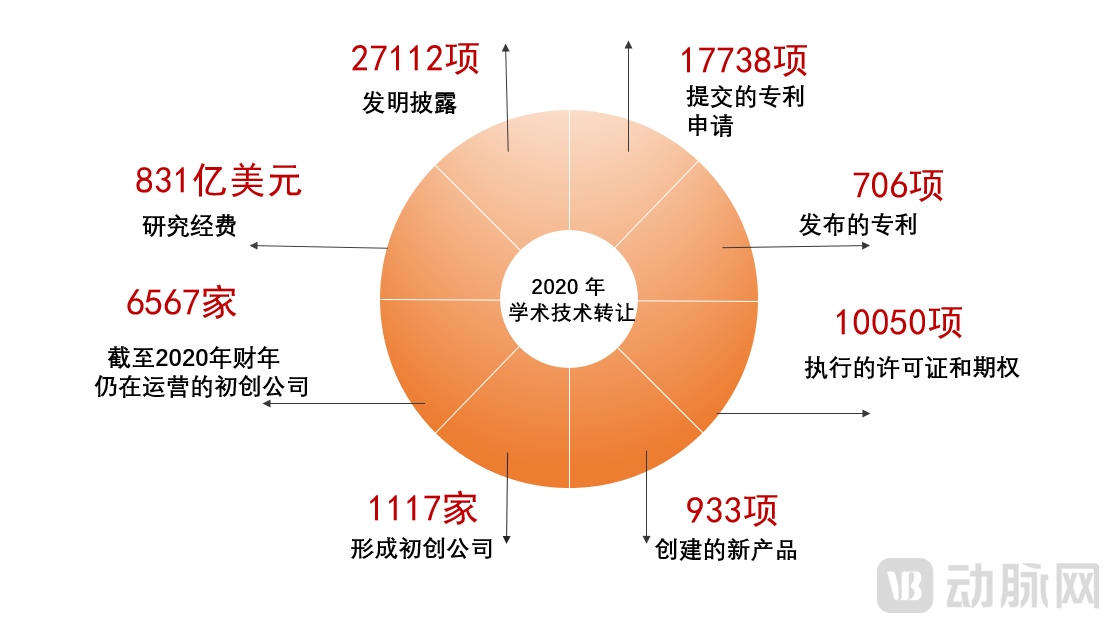
Figure 1 | The Bayh-Dole Act of 2020 Drives Innovation Economy and Technology Transfer Volume in the United States
In fact, all this is attributable to the promulgation in 1978 of the"Bayh-Dole Act", it is referred to as “The Most Inspiring Legislation Enacted in the United States Over the Past Half-Century”。
This is not without reason. Data show that between 1996 and 2015, licensing activities driven by the Bayh-Dole Act contributed to the U.S. gross domestic productNearly $591 billion。
Notably, in 2016 alone, the United StatesEstablished over 1,000 healthcare-related startups, provided to the patientNearly 800 Commercial Drugs Derived from University Research。
So, what exactly makes the Bayh-Dole Act so exceptional?
A Desperate Attempt: The Bayh-Dole Act Reverses the Decline of U.S. Technological Development
The “inspiration” for the Bayh-Dole Act stemmed from the severe economic recession in the United States during the 1970s.
At that time, the United States was mired in a chaotic and precarious business environment: the Vietnam War had just ended, leaving the U.S. military humiliated, while the nation’s once-proud automotive industry was being steadily pushed back by Japanese competitors. Soaring inflation and unemployment left Americans deeply disheartened and uncertain about the future.
Therefore,How to Revitalize and Overcome Decline Has Become the Primary Issue Facing the U.S. Government.
At this juncture, a professor at Purdue University in the United States sought assistance from federal senators, citing that the university had multiple government-funded projects affected by “"Who Funds, Who Owns"” policy and has remained stagnant.
The primary reason for this isThe government has firmly retained all rights and interests in its own hands, providing no incentives whatsoever to the personnel actually engaged in research and development.This has led scientists to feel that their research and development achievements have been completely “stolen” by the government, gradually eroding their passion for innovation and commercialization.
What perplexes scientists even more is that the government not only “shuts them out” but also appears “at a loss” regarding their achievements. Although government agencies wield authority, they lack the know-how to successfully translate scientific research into practical applications. Even though enterprises have an urgent demand for scientific outcomes and the capacity for commercialization, they still find it difficult to secure these innovative research projects from the government. Therefore,Patent certificates have become worthless pieces of paper, leading to serious idleness and waste of scientific and technological resources.。
According to statistical data, prior to 1980, the U.S. government had possessed more than30,000 patents, but only5% commercialized。
In stark contrast,The conversion rate of government-abandoned patent technologies is as high as 18%-20%.. The U.S. government, which should have served as a “catalyst,” has instead become a “stumbling block” to the translation of scientific research achievements.
To address this issue, Senators Birch Bayh and Bob Dole introduced a joint proposal, with both partiesThe original Senate bill was titled the "Small Business and Nonprofit Organization Patent Procedures Act.", which later became known as the Bayh-Dole Act.
The actual provisions of the Bayh-Dole Act formally took effect as Part 6 of the Patent and Trademark Law Amendments Act of 1980. According to the official text published on the website of the U.S. Government Publishing Office (GPO), the Bayh-Dole Act is, in essence,"Chapter 18 of the U.S. Patent Act: 'Patent Rights in Inventions Made with Federal Assistance'"。
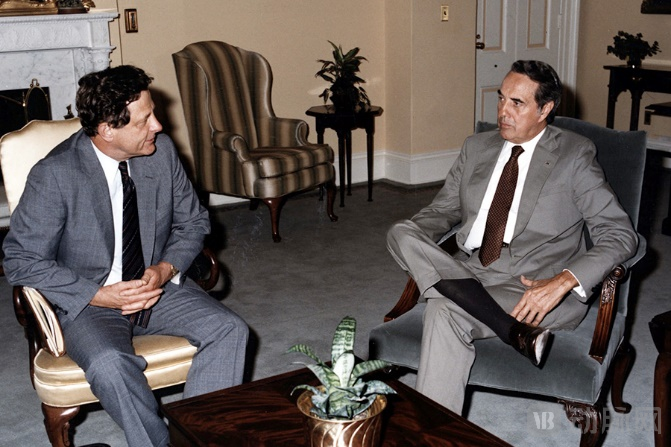
Figure 2 | Birch Bayh and Bob Dole in 1985 (Source: Official website of the Bayh-Dole Coalition)
This law, which contains merely 13 articles, yet"Pull the United States from the depths of economic stagnation back to its leading position in global innovation within a decade."In fact, the Bayh-Dole Act addressed the low rate of technology transfer for government-funded research by establishing just four fundamental principles.
First, it is generated by government-funded research.Rights to the outcomes are reserved by default by the university.; secondly,Universities Hold Exclusive Patent Licenses; proceeds from technology transfer should be reinvested in teaching and research, thirdlyInventors have the right to share in patent licensing revenue.; Fourth,The Government Retains the "Right of Intervention", the federal government may handle the invention under special circumstances.
Since the enactment of the Bayh-Dole Act, it has driven U.S. economic outputIncreased by $1.7 trillion, supporting 5.9 million jobs, and helpSpurred the emergence of over 14,000Healthcare-related startups.
“Government Decentralization” and “March-in Rights”: A Dual Approach to Resolving the Dilemma of Technology Transfer
The Bayh-Dole Act is undoubtedly a significant milestone in the history of translating U.S. scientific research achievements into practical applications. In the vast majority of discussions and viewpoints, its core essence is highly summarized in four Chinese characters:“Government Decentralization”。
First, for entities such as universities and companies that assume responsibility, they may choose to retain ownership of inventions made under federal funding, andPermit universities to commercialize inventions through licensing agreements with enterprisesThis, to a certain extent, ensures that universities share in the actual benefits derived from the commercialization of inventions with the inventors.
For funders such as the federal government, it is required that they can only acquire legal rights to funded inventions through the assignment of rights by the awardee in accordance with the contract.
Overall, the core philosophy of the Bayh-Dole Act is to foster collaboration among industry, academia, and research institutions by “devolving” patent rights, thereby enablingUniversities may retain ownership of inventions, while enterprises can commercialize them to generate profits., thereby incentivizing R&D in fundamental scientific and technological innovation, and leveraging such innovation to drive economic recovery.
The government has indeed decentralized its authority., yet still “"Kept a trick up one's sleeve"”. The relatively special provisions in the bill “Interventional Rights”, is something the government canMandatory RequirementsUniversities license their patent rights to third parties for implementation, or the government holds ownership and implements them. "March-in rights" are invoked in situations such as when an invention has not been put into practical use within a reasonable time, poses health or safety issues, or fails to meet other legal requirements.
It is precisely for this reason thatPatent rights held by universities or research institutions shall not be arbitrarily abandoned or transferred.. At the same time, the government can alsoBalancing the Commercialization of Invention Patents and Safeguarding Public Interest. From this perspective, the government’s regulatory and facilitative role in the translation of scientific research achievements is truly reflected, which is undoubtedly positive.
Overall, the success of the Bayh-Dole Act lies inAllow universities to patent new scientific research achievements and grant such patents to enterprises that commercialize these achievements.. In this process, universities charge enterprises patent licensing fees and reinvest the proceeds into further scientific research and teaching. This sustainable economic cycle alleviates the financial burden of research and ensures the continuous advancement of innovative projects.
It is precisely under such a virtuous cycle that the innovation and productivity of translating scientific research outcomes in U.S. universities have been continuously stimulated; meanwhile, the increased translation of research achievements and the establishment of new industries have further propelled the development of American universities, enhancing their competitiveness.
This seemingly unremarkable bill ultimately becameThe First National Intellectual Property Policy in the United States, and also isThe Classic of Internationally Recognized Technology Transfer Policies。
Crossing the River by Feeling the Stones: How China Is Resolving the Challenge of Unclear Property Rights Division?
Standing at this stage of the commercialization of scientific and technological achievements, we are currently equivalent to the United States before 1978, having just entered the transitional phase of translating research into practical applications, with low conversion rates and a lack of innovation drive.
According to the latest data released by the World Intellectual Property Organization (WIPO) of the United Nations, China filed a total of 68,720 international patents through the Patent Cooperation Treaty (PCT) in 2020, ranking first globally for the second consecutive year, representing a 16.1% increase from 2019.
However, it is imperative to acknowledge that, in contrast to the approximately 40% commercialization rate of scientific and technological achievements in developed countries in Europe and America,In China, this figure stands at only around 15%, indicating a remarkably low overall conversion rate.。
The primary reasons for this outcome include:Unclear Division of Intellectual Property RightsExecutive Director, Global Health Industry Innovation Center, Tsinghua Industrial Research InstituteWang Jingjing once stated in an interview“In some existing research projects, both universities and hospitals hold certain proportions of intellectual property rights. Therefore, during the commercialization process, approvals must be obtained through two different departments with distinct evaluation systems, making the procedure quite complex. Even within a single hospital or university system, discrepancies may arise due to differences among affiliated departments or institutions.”
However, we have not been without effort in the division of intellectual property rights.. In 2002, China promulgated the “Several Provisions on the Management of Intellectual Property Rights in Research Achievements of National Scientific Research Programs》 explicitly states that research projects funded by financial appropriations,Intellectual property rights transferred from state ownership to ownership by the undertaking entity, but it has never achieved the desired effect. This is because decision-makers along the technology transfer chain do not truly understand the process of translating scientific and technological achievements into practical applications, and the overarching mindset of the entire system has failed to evolve with the times.
Concerned about the loss of state-owned assets or constrained by existing performance evaluation systems, they adhered to the guiding principle that “doing less is better than doing more.” It was not until 2015 that recent revisions targeting these issues were initiated, followed by the continuous introduction of laws and regulations such as the Action Plan for Promoting the Transfer and Transformation of Scientific and Technological Achievements and the Plan for Building a National Technology Transfer System to supplement and improve the framework.
However, given the current practical realities, certain limitations persist. In light of this, we can draw valuable insights from the Bayh-Dole Act.
First, attach importance to the role of intellectual property in the translation of scientific research achievements.. Although China has enacted certain laws and regulations to promote technological innovation, their legal force is relatively weak, and enforcement remains quite limited.
Secondly, a collaborative mechanism among the government, research centers, and enterprises should be established.. The translation of scientific and technological achievements is not a solitary battle; it places great emphasis on teamwork, requiring the collaborative efforts of deep participants in the innovation ecosystem—including government bodies, researchers, clinicians, technology transfer institutions, and enterprises—to jointly promote the incubation of innovative projects.
Finally, universities and research institutions should establish specialized technology transfer centers.Within the entire ecosystem, universities and research institutions are undoubtedly the source of innovation and a critical vanguard. Therefore, it is essential to leverage technology transfer offices to strengthen ties between academia and external innovative forces, facilitating the successful translation of more innovative projects from the laboratory to practical application.
To Break the Ice, Policy Must LeadAt a time when enthusiasm for translating scientific and technological achievements in China’s healthcare sector is running high, we anticipate the swift introduction of a Chinese version of the Bayh-Dole Act. Much like it revitalized the U.S. research market in the 1980s, such legislation would genuinely break through industry bottlenecks by establishing a standardized chain from basic research to achievement translation and then to industrial application, thereby realizingThe Great Leap from “Made in China” to “Intelligently Made in China”。