

HopeMed Pharma Files for IPO: AI-Driven Patient Recruitment Platform Accelerates Clinical Trial Enrollment
Patient recruitment faces a dilemma: it is difficult to find patients, and even after finding them, conversion remains challenging.
The continuously rising number of clinical trials is driving the robust growth of the patient recruitment market. Patient recruitment is the most critical yet challenging phase of clinical trials. With a large concentration of trials currently underway, it has become a topic of significant attention within the industry.
In November 2021, the Center for Drug Evaluation (CDE) released the Annual Report on the Status of Clinical Trials for New Drug Registration in China (2020), providing a comprehensive summary and analysis of the status of clinical trials for new drug registration in China for the first time.
The report shows that the number of new drug clinical trials increased significantly in 2020, with a total of 2,602 clinical trials registered, representing an overall increase of 9.1% compared to 2019, and domestic sponsors accounting for more than 70%. Among them, less than half (45.4%) of the clinical trials initiated subject recruitment within one year after approval; Phase I clinical trials still dominated among those completed in 2020, with an average completion time of 95.7 days; only five Phase III clinical trials were completed, with an average completion time of 176.6 days.
It can be seen that clinical trials in China face challenges such as low implementation efficiency after approval. AndOne of the core factors affecting the efficiency of clinical trials is the inability to recruit eligible subjects as planned.
Patient recruitment is a time- and cost-intensive process. No matter how perfectly designed the clinical trial protocol or how excellent the team, failure to recruit suitable patients on schedule is akin to operating a machine without raw materials, leading to delays in the overall clinical trial progress or even rendering the trial unfeasible.
In recent years, clinical trial inclusion criteria have become increasingly refined, making patient recruitment a persistent and challenging bottleneck in the conduct of clinical trials. This has spurred the emergence of companies specializing in patient recruitment, among which is Hopemed PharmaStudies. Wang Yanan, founder of Hopemed PharmaStudies, previously served as a project manager for multiple clinical trials and participated in dozens of such studies. Having witnessed the rise, turning points, and substantial growth of the clinical trial sector, he has deep insights into the current state and pain points of patient recruitment development in China.
Wang Yanan, founder of Hopemed PharmaStudies, entered the drug R&D industry in 2009 and personally witnessed the tremendous changes in new drug clinical trials between 2009 and 2013.
“In 2009, the concept of ‘patient recruitment’ was virtually nonexistent. Patient inclusion criteria were relatively simple, and there was a sufficient pool of in-hospital patients, allowing clinical trial enrollment to be completed within the stipulated timeframe without any educational or outreach activities,” said Wang Yanan.
By 2013, domestic clinical trial guidelines had been continuously refined, study protocols had become increasingly rigorous, and patient recruitment criteria had grown more precise. While these developments significantly promoted the healthy development of new drug R&D in China, they also raised the bar for patient enrollment, making clinical trial patient recruitment increasingly challenging.At this time, health insurance coverage has become increasingly comprehensive, offering patients a wider variety of treatment options, which has consequently reduced their enthusiasm for participating in clinical research.
“In 2013, the projects I was involved in began to experience significant challenges in patient recruitment. How to enroll suitable patients within the specified timeframe became a focal point of discussion in clinical trials.”
This significant shift presented Wang Yanan with an opportunity. In 2013, he co-founded Hopemed PharmaStudies with several like-minded partners, focusing on patient recruitment for clinical trials to ensure timely completion of studies, accelerate the market launch of high-quality drugs, and provide patients with additional treatment options.
After its establishment, Hopemed PharmaStudies quickly amassed a substantial pool of physician and patient resources. However, Wang Yanan observed, “Our daily operations felt like a ‘tug-of-war.’ With each new project, we had to start from scratch—conducting training, organizing workflows, re-engaging hospitals, and recruiting patients. The team became physically and mentally exhausted due to the sheer volume of repetitive and tedious tasks.”
This solidified Wang Yanan’s resolve.Undergo digital transformation.
At the end of 2016, the company launched“Mu Haitang” Smart Service Platform for Clinical Trials, to retain target physicians for tiered management and retain patients for cohort management, thereby improving efficiency and precision.
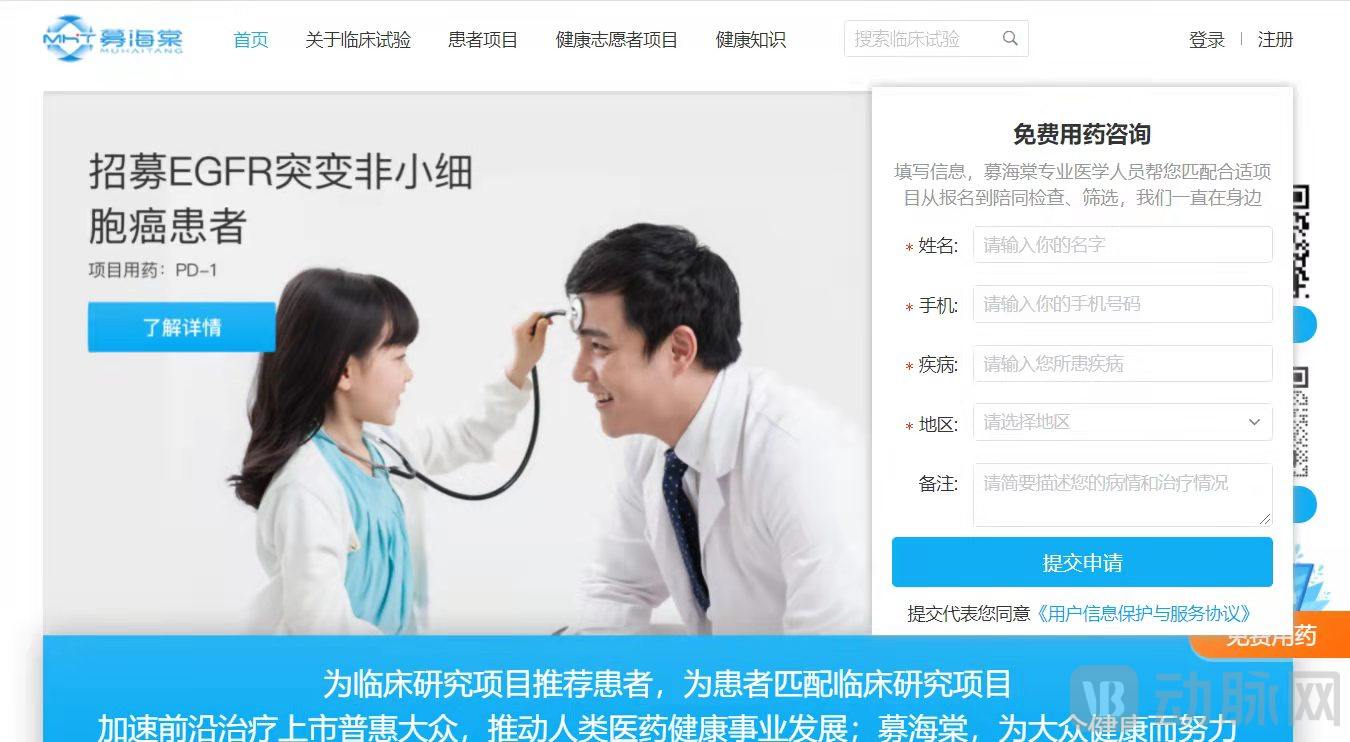
"Mu Haitang" PC Version
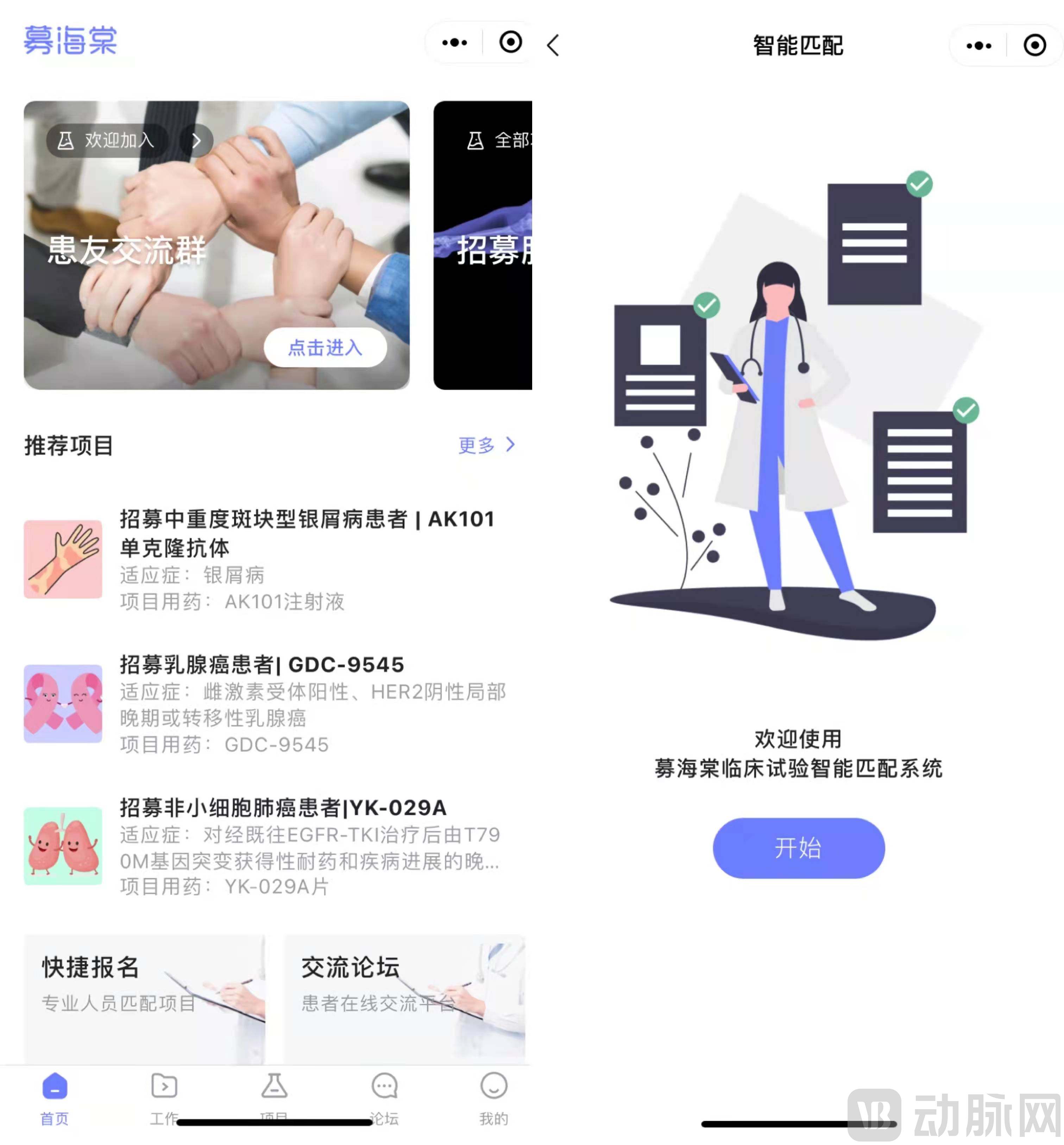
“Mu Haitang” Mini Program
Wang Yanan told VCBeat,The main challenges in patient recruitment are twofold: first, it is difficult to identify eligible patients; second, converting identified patients into enrolled participants is challenging.
Patients who participate in clinical trials can receive free examinations and medication, supported by a professional medical team, all conducted under standardized procedures and rigorous monitoring. However, most patients lack understanding of clinical trials, often associating them with negative connotations such as “guinea pigs” or “Unit 731,” making it difficult for them to consider trial participation as a treatment option from the outset. On the other hand, China sees 800,000 new lung cancer cases annually. Many patients only learn about clinical trials by chance after undergoing first-line chemotherapy, viewing them as a last resort. By that time, however, the window of opportunity for them to enroll in trials has become exceedingly narrow.
Yet greater challenges lie ahead—patient conversion. Many clinical trials require treatment-naïve patients or those who have not yet undergone surgical intervention; however, most patients present for enrollment while already receiving first-line therapy, or even second- or third-line regimens, thereby failing to meet eligibility criteria. In such cases, it is essential not only to provide psychological counseling to patients but also to leverage sufficient professional expertise to match them with appropriate clinical trials.
Overall, it is difficult to identify patients and achieve conversion.The key breakthrough lies in market education, it is necessary for relevant enterprises and institutions to continuously strengthen the popularization of knowledge on clinical trials.
Beijing Hopemed PharmaStudies Co., Ltd. has pioneered engagement with the B-side, leveraging this channel to influence the C-side and foster patients’ initial awareness of clinical trials. Subsequently, for patients expressing willingness to participate in clinical trials,Hopemed PharmaStudies manages its operations by subdividing them into distinct cohorts based on different diseases and targets.Long-term follow-up and engagement are conducted through dedicated follow-up specialists and a doctor–patient communication platform to address patients’ concerns, further promote awareness of clinical trials, enhance patient understanding, and encourage greater adherence to treatment.
“This is equivalent to establishing a community in advance, allowing us to understand the needs of every patient within it,”Ongoing clinical trials can be matched to their needs. When new clinical trials are launched, we can also quickly identify eligible patients.Meanwhile, the use of AI tools,“Greatly accelerated the matching speed for our clinical trials.”
It is worth noting that in practice, traditional offline ground promotion and patient education require significant manpower investment, often resulting in unsatisfactory efficiency. Hopemed Pharma has fully leveraged the power of patients and doctors within its database. By sharing authentic, detailed patient case studies and personal experiences, the company inspires surrounding patients, driving viral growth. This approach continuously attracts new patients to the Hopemed Pharma platform, creating a virtuous cycle.
Around 2018, the patient recruitment industry experienced explosive growth, driven by factors such as the consistency evaluation policy. From 2020 to the first half of 2021, numerous pharmaceutical sales teams and contract sales organizations (CSOs) transitioned into patient recruitment. Meanwhile, the industry’s digitalization trend became increasingly pronounced, with internet giants such as JD.com and Tencent actively expanding their presence in this space. Clearly, patient recruitment has emerged as a prime sector within the pharmaceutical industry.
Amid the surge in the patient recruitment industry, Hopemed Pharma has experienced rapid growth. Now,The company's service network has covered 63 cities in 30 provinces across China, and its database has accumulated records of nearly 200,000 patients and over 30,000 physicians.As of the end of 2021, “Mu Haitang” had established service collaborations with over 200 external platforms, including internet healthcare platforms such as Baidu Health, JD Health, Xiaohe Medical, and Ali Health, as well as numerous physician-patient service institutions.
After years of dedicated efforts by companies such as Hopemed PharmaStudies, what progress has been made in China’s patient recruitment industry? What are the future trends, and what challenges remain to be addressed? Hopemed PharmaStudies provided VCBeat with multi-dimensional data that may offer insights into these questions.
According to data provided by Hopemed Pharma, lung cancer, liver cancer, and breast cancer are the most frequently consulted cancer types. Patients with these three types of tumors constitute a large population, characterized by high incidence and mortality rates, as well as urgent treatment needs, making them the primary participants in clinical trials.
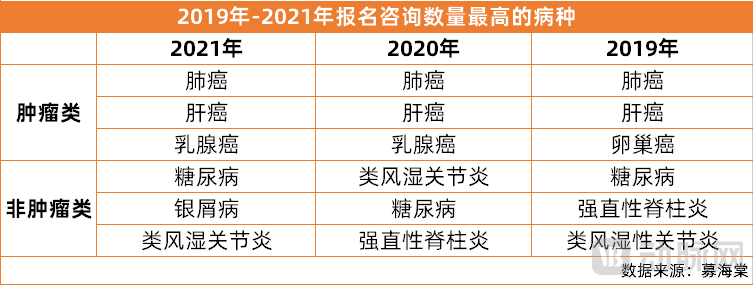
For lung cancer, liver cancer, and breast cancer, existing therapies are mature and advanced. These are the cancer types with the highest number of clinical trials, resulting in a substantial demand for patient enrollment. However, drug targets and indications are heavily concentrated, leading to homogenization of clinical trials. This has caused patient fragmentation and intensified competition.
CDE data shows that in 2020, the indications for chemical drugs and biological products were predominantly oncology drugs, accounting for 42.1% and 47.3%, respectively,In oncology, the supply and demand for patient recruitment are relatively balanced.
In non-oncology therapeutic areas, diseases such as diabetes and psoriasis have garnered significant attention; however, China conducts relatively few clinical trials for endocrine and dermatological drugs, resulting in a pronounced imbalance between supply and demand.
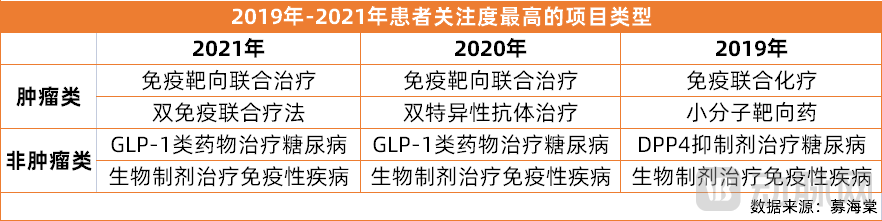
From the perspective of patient attention, in 2021, the oncology topics that garnered the highest patient interest were immuno-targeted combination therapy and dual immunotherapy combinations. In contrast, targeted therapies received more attention in the previous two years. This trend aligns closely with the recent surge in immunotherapy enthusiasm in China. In non-oncology fields, targeted drugs and biologics have attracted greater patient interest.
Furthermore, since September 2021, there has been a significant surge in inquiries and registrations for CAR-T projects, driven by the widespread media coverage of the “RMB 1.2 million per dose anti-cancer drug,” which substantially heightened patient awareness and attention toward CAR-T therapy.

In terms of total inquiry volume, China’s patient recruitment industry has continued to develop positively. Notably, the total number of patient inquiries in 2020 increased by 78% compared with 2019.
Data source: Mu Haitang
The pandemic has had a profound impact on patient recruitment for clinical trials. During the outbreak, hospitals implemented strict management protocols, and cross-provincial travel became inconvenient for patients, leading many to decline participation in clinical trials. However, for Hopemed PharmaStudies, the pandemic presented an opportunity. “The pandemic raised the expectations of both patients and physicians regarding the professionalism of patient recruitment teams. During this period, Hopemed PharmaStudies focused on strengthening its internal capabilities and further optimizing its service processes. In 2020, the company’s patient recruitment business continued to grow.”
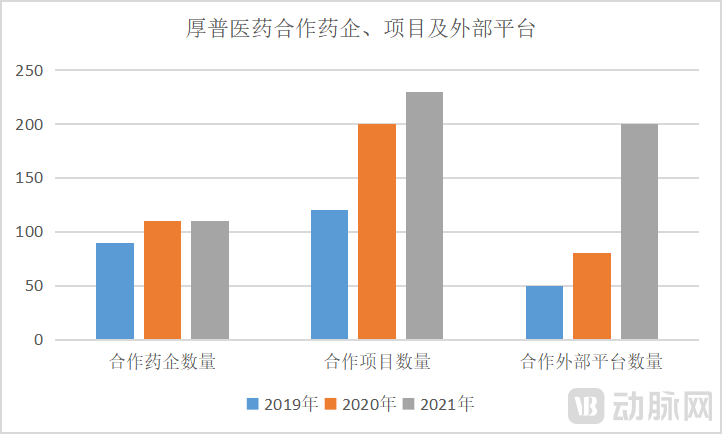
Data shows that,From 2019 to 2021, the number of partner pharmaceutical companies, collaborative projects, and external platforms for Hopemed Pharma all experienced steady growth., the number of partner pharmaceutical companies increased from over 90 to more than 110, collaborative projects rose from over 120 to more than 230, and external platform partnerships expanded from over 50 to more than 200. This demonstrates that the COVID-19 pandemic in 2020 did not exert an extreme negative impact on it.
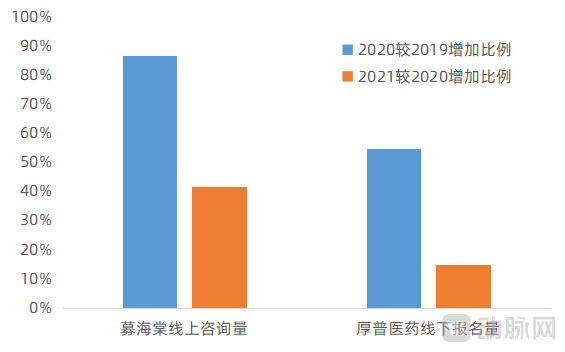
Accelerated Growth in Patient Enrollment and Inquiries for Clinical Trials via Online Channels (Source: Muhaitang)
Meanwhile,The pandemic has also accelerated the shift of patient recruitment to online platforms.During the pandemic, patient acceptance and utilization of online platforms increased significantly, leading to a substantial rise in the volume of online consultations.In 2020, the volume of online consultations for “Mu Haitang” surged by 87% compared to 2019, far outpacing the growth rate of offline services.
Compared to offline ground promotion, the online patient base is significantly larger, unrestricted by geography, and offers boundless potential. In the future, the proportion of online engagement will continue to grow. This also implies a higher barrier to entry for the industry, requiring companies to cultivate an internet mindset and prepare for the rapid expansion of online channels.
Wang Yanan stated that the patient profiles in online and offline channels are distinctly different. First,Cognitively, patients who register for clinical trials through online channels have a certain level of understanding, stronger willingness, and higher success rates.Offline patients are largely unfamiliar with clinical trials and rely heavily on the professional expertise of offline recruitment specialists and physicians, resulting in limited population coverage, low efficiency, and low success rates. In the post-pandemic era, the rapid rise of online channels will significantly boost the efficient development of patient recruitment efforts.
Secondly, in terms of disease types, patients on online channels mostly suffer from severe or complex and refractory diseases; offline channels mainly cover communities, where patients are mostly elderly with multiple chronic conditions. In terms of age distribution, online platforms predominantly serve younger patients, while offline services cater primarily to the elderly. This means that,An integrated online-offline approach is the ideal strategy,Select appropriate channels and recruitment strategies based on different disease types and patient populations to ensure service quality and achieve efficient, standardized enrollment.
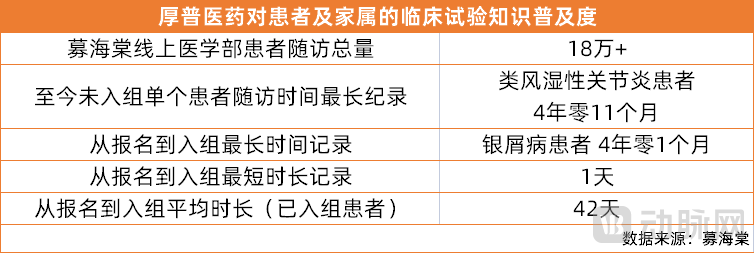
Today, Hopemed PharmaStudies has become a significant force in China’s patient recruitment industry, providing substantial support to enhance the dissemination of clinical trial knowledge and improve clinical enrollment efficiency. According to statistics,The total number of patient follow-ups conducted by the “Mu Haitang” Online Medical Department has exceeded 180,000.The shortest time from registration to enrollment was 1 day, and the average time from registration to enrollment among enrolled patients was 42 days.
It is worth noting that the longest interval from patient registration to enrollment was 4 years and 1 month, observed in a patient with psoriasis. This case precisely underscores Hopemed Pharma’s robust capabilities in patient follow-up. Through data-driven management and scientifically structured long-term tracking, Hopemed Pharma is able to facilitate patient participation in appropriate clinical trials at optimal time points.
It is evident that patient recruitment in China has entered a fast lane. Patient enrollment efficiency, awareness of clinical trial knowledge, enthusiasm for participating in clinical trials, and the emphasis placed by pharmaceutical companies and external platforms on patient recruitment platforms have all reached a notable peak.
“However, from the perspective of the overall industry environment,Patient recruitment remains a very young industry, still stuck in the 'labor-intensive' stage., primarily relying on traditional offline promotion. In addition, areas such as pediatrics, geriatrics, and rare diseases remain blind spots in patient recruitment,” pointed out Wang Yanan.
VCBeat believes that the changing balance between online and offline channels, more widespread industry collaboration, and broader disease coverage will be inevitable trends in the patient recruitment industry over the next two to three years.
The rising proportion of online channels is an inevitable trend, and the application of innovative technologies such as AI and big data will accelerate.Clients’ willingness to pay is rising rapidly, yet their expectations for the quality, volume, and efficiency of patient recruitment are also increasing. The recruitment capacity of offline channels can no longer meet these heightened demands, making online channels the primary avenue in the future. Companies currently relying predominantly on offline channels must accelerate their transformation by strengthening their AI and digital capabilities.
Industry collaboration will become more frequent and extensive.In addition to internet platforms, patient recruitment platforms can also integrate with CROs and pharmaceutical companies via interfaces to enable broader collaboration. Leveraging digital technologies, patient data will be rapidly structured, allowing for the provision of additional services to pharmaceutical and CRO enterprises, such as clinical trial protocol design assessment and site selection. This represents a key strategic focus for Beijing Hopemed PharmaStudies Co., Ltd. in its future development.
Patient recruitment challenges in fields such as pediatric diseases, geriatric diseases, and rare diseases are expected to be gradually resolved.In 2020, there were 3 and 33 clinical trials conducted in the elderly and pediatric populations, respectively, accounting for only 1.4% of the total number of trials registered throughout the year. As the patient recruitment industry continues to expand and the pool of recruitment professionals grows, the challenges associated with recruiting patients for pediatric diseases, geriatric conditions, and rare diseases will be overcome one by one. The patient recruitment industry is poised to achieve new growth in these therapeutic areas.
Moving beyond labor-intensive models and expanding coverage across disease areas will be Hopemed Pharma’s next key focus. Leveraging its accumulated data and resources, the company will enhance its online platform, fully unlock the value of its existing physician and patient networks, drive viral growth, and rapidly scale up its operations. Meanwhile, Hopemed Pharma will accelerate talent acquisition in pediatrics, geriatrics, and rare diseases to swiftly address patient recruitment challenges in these fields. “Having chosen to root ourselves in patient recruitment and tackle the ‘toughest nuts to crack,’ we bear an unshirkable responsibility.”