

How a 20-Year Veteran in Mental Health Thrives in the Big Data Era: Six Noble Xicheng Gains Trust from Thousands of Organizations
Nowadays, the public is no longer unfamiliar with mental health services.
Whether in everyday conversations or on public social media platforms, mental health topics are being mentioned by an increasing number of people, and the public’s attitude toward mental health services has become less avoidant.
Behind this trend, on one hand, the number of individuals in China experiencing suboptimal psychological well-being continues to rise. It is reported that the disease burden attributable to mental and psychological disorders accounts for 13% of the total burden from non-communicable diseases, making it a significant public health, social, and livelihood issue. On the other hand, the Chinese government has frequently issued policies related to mental health in recent years, demonstrating its emphasis on psychological well-being and thereby enhancing public awareness of mental health services.
Although the mental health industry is currently driven by multiple factors, including demand, policy, and capital, a look back to 1998 reveals that China’s mental health sector was in its very early stages. At that time, the market received little attention, and public awareness was limited. It was against this backdrop that Liuhe Psychological Research Center was established. Under the guidance of Professor Gong Yaoxian, the center developed the first generation of its psychological assessment scales. After years of product iteration, it now focuses on providing intelligent and digital psychological services to B-end clients (herein, “B-end” refers broadly to non-individual entities such as government agencies, enterprises, and social organizations).
As one of the earliest enterprises in China to provide professional mental health services, Liuhe Psychology has also demonstrated remarkable business performance. To date, it has served approximately 3,000 clients, reached 9,134 organizations and institutions, and covered a user base of 6.3 million.
Meanwhile, with the rapid advancement of technology, digital transformation has become a key term across various industries, and the mental health sector is no exception. In this trend, data has become an important production factor and support for enterprise development, and Liuhe Psychology has long since developed intoInternet-Based Big Data Service Enterprise for Mental Health。
In this process, to further integrate resources, strengthen data application, and promote the development of the psychological industry, Liuhe Psychology joined forces with Xicheng Education of the Financial Street Capital Operation Center to establish Liuhe Xicheng (Beijing) Information Technology Co., Ltd. (hereinafter referred to as “Liuhe Xicheng”) in May 2020.Dedicated to empowering emerging psychological needs with artificial intelligence, uncovering users' complex and multifaceted psychological signals, and constructing holistic psychological profiles for institutions and individuals., safeguarding the enhancement of efficiency and productivity in our clients' industries, as well as their employees' mental health and professional growth.
How has Liuhe Xicheng achieved its current success in an industry that was once “dormant” for decades? What underpins its digital services? And what path will Liuhe Xicheng explore in the future? In this article, VCBeat seeks to answer these questions through a conversation with the founding team of Liuhe Xicheng.
Exploring the Early-Stage Mental Health Market with a Focus on B2B
With its impressive achievement of covering over 6 million users at the current stage, Liuhe Xicheng has earned widespread user recognition and should arguably be well-known. In reality, however, Liuhe Xicheng is a remarkably low-profile company. On one hand, unlike most enterprises that enter the mental health market through the consumer (C-end) segment, Liuhe Xicheng has remained focused on business-to-business (B-end) needs since its inception. On the other hand, the Liuhe team’s diligent and hardworking ethos has cultivated the company’s distinctive understated character.
Compared with most clinical disciplines, mental health exhibits a distinct characteristic of "high demand but small market," meaning that while the market demand for mental health services is substantial, the effective demand that can be truly converted into commercial transactions remains limited.
From the perspective of the Liuhe team, for any discipline or industry to achieve industrialization and scaled development in its early stages, it should prioritize a B2B-first strategy. This is because, whether providing services to government entities or enterprises, the ultimate beneficiaries are their broad workforce. Furthermore, from an operational standpoint, entering the market through the B2B segment offers distinct advantages.
First, low cost. In contrast to the high costs associated with acquiring individual C-end customers one by one, precisely targeting B-end clients is an effective strategy for reducing customer acquisition costs.
Second, it facilitates the precise acquisition of user profiles.In practice, it is difficult to directly, rapidly, and accurately obtain user data from the consumer (C-end) side. In contrast, business (B-end) clients possess strong organizational capabilities, which not only significantly accelerate the acquisition of user information but also provide a certain level of assurance regarding its authenticity. Throughout this process, Liuhe Xicheng consistently prioritizes the privacy of user data, and the generated psychological assessment reports are not disclosed to external parties.
From this perspective, it is not difficult to understand why Liuhe Xicheng has chosen to focus on the B2B sector.
Thanks to years of dedicated efforts and the accumulated experience in providing professional psychological services for major national events, government agencies, and numerous enterprises and public institutions, Liuhe Xicheng has gained extensive recognition from clients and professional industry organizations.
In early 2020, during the pandemic, the Beijing Xingfu Public Welfare Foundation collaborated with the Department of Psychology at the School of Social Sciences, Tsinghua University, to launch the “Fighting the Epidemic: Psychological Support” 24-hour free psychological assistance hotline. The service covered eight provincial trade union systems and more than ten enterprise groups, receiving consistent recognition from both government authorities and mental health organizations. It was subsequently integrated as the “Tsinghua Hotline” into the State Council’s mini-client platform and featured across all national media platforms dedicated to epidemic response.
During the 2021 Henan rainstorm disaster, Liuhe Xicheng, in collaboration with the Henan Provincial Federation of Trade Unions, the China Workers’ Development Foundation, and the Department of Psychology at the School of Social Sciences, Tsinghua University, launched the “Standing Together Through Storms, Henan with You” psychological assistance hotline for workers in Henan Province, providing 24-hour free psychological support to provincial workers, their families, and the general public.
Furthermore, at the recent academic exchange event on family mental health promotion hosted by the National Center for Mental Health and Psychiatric Prevention and Control, Liuhe Xicheng also participated as a public welfare supporter, contributing to the development of Healthy China.
Recently, the Employee Mental Health Scale, independently developed by Liuhe Xicheng, successfully passed the professional appraisal conducted by the Psychometric Committee of the Chinese Psychological Society. The scale assesses employees’ mental health status across five key dimensions: occupational cognition, occupational efficacy, emotional stability, colleague relationships, and family harmony. It provides a scientific and effective reference for enhancing employees’ work-related well-being and improving corporate efficiency.
Big Data Empowerment: Building a One-Stop Integrated Service System
As previously mentioned, although Liuhe Xicheng has consistently focused on the B-side (business clients) since its inception, the ultimate end-users and beneficiaries remain on the C-side (i.e., individual users reached through B-side channels), thereby achieving an integrated B2C service model. In terms of practical implementation, Liuhe Xicheng has established two distinct service systems tailored respectively to the B-side and the C-side.
First, targeting the B2B sector, unlike traditional employee benefits that directly provide mental health services such as psychological courses and counseling to corporate employees, the core of Liuhe Xicheng’s B2B servicesNot only does it improve employees' psychological well-being, but it also encourages them to strengthen their mental health management., shifting from a reactive approach of identifying and resolving issues to a proactive strategy of prevention, thereby normalizing mental health management and enabling everyone to prioritize their subjective well-being.
During this process,B2B enterprises can also prevent issues at the source and detect them in a timely manner during the process by providing employees with self-directed, self-help mental health products and regular screening services., effectively saving enterprises time and labor costs while enhancing overall productivity.
To achieve this goal, Liuhe Xicheng is committed to providing enterprises with a digital mental health management platform, while fully protecting employees' personal privacy. The digital mental health management platform not only supports the automated generation of assessments and mental health plans for thousands of organizations simultaneously, but also rapidly increases the prevalence of mental health awareness among users.
By leveraging technologies such as big data, cloud computing, and AI, digital mental health management platforms can help enterprises understand their employees’ current mental health status as well as the organization’s overall condition, throughDigital early-warning systems enable enterprises to promptly identify, monitor, and track employees’ mental health status.。
On the other hand, building models for corresponding population groups can help enterprises uncover more potential and correlated factors, enabling a more comprehensive and multidimensional understanding of the ecological environment within the enterprise and among its employees. This also provides data support for Liuhe to deliver more precise service solutions. To some extent, this service system resembles a SaaS platform for enterprise employee mental health management.
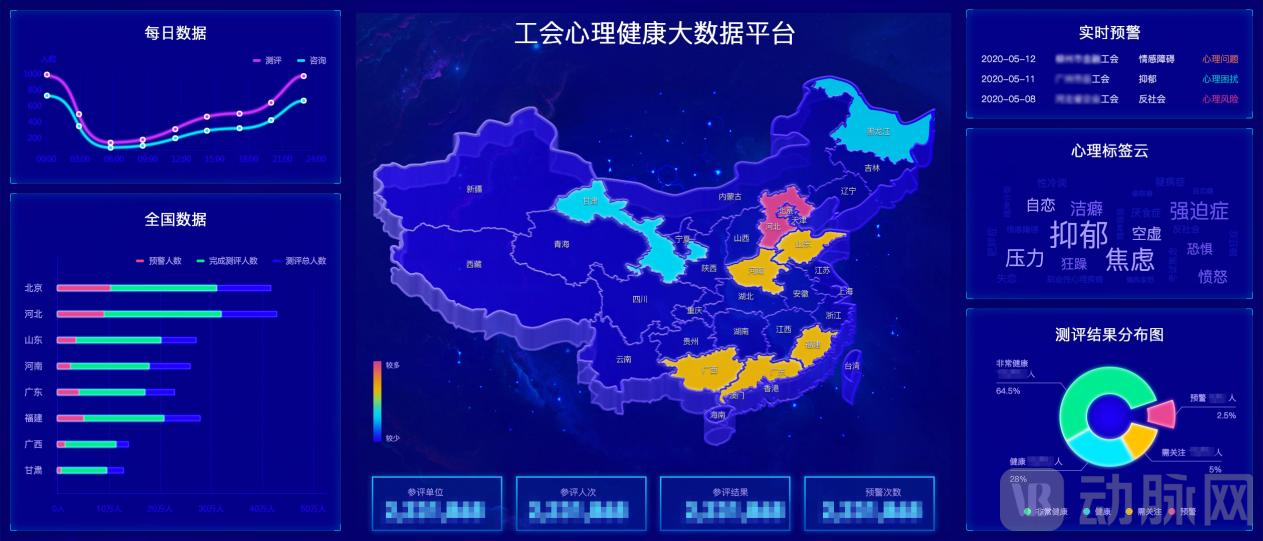
During the service delivery process, to address the varying needs of different clients, Liuhe Xicheng analyzes the most core and fundamental demands of B-side customers across various industries and sectors by leveraging data accumulated through platform operations. These insights are integrated into its service system, enabling Liuhe to automatically generate optimal service solutions tailored to each enterprise’s specific requirements, namelyFully meet customers' personalized needs on the basis of dynamic standardization。
It is precisely for this reason that the service solutions provided by Liuhe Xicheng can be effectively implemented at the operational level, leading to a continuous increase in customer repurchase rates. Evidently, the application of big data serves as the critical foundational support for Liuhe Xicheng’s standardized and scalable service delivery.
Next, in terms of consumer-facing services, Liuhe Xicheng can directly provide users with a full-process, one-stop mental health service and product solution. This covers the entire service cycle from prevention and identification to resolution of issues, ensuring effective integration across all service stages. Furthermore, regarding service content, Liuhe Xicheng leverages data accumulated over years of operation to develop services and products that achieve better localization and more closely align with user needs.
Meanwhile,To further deepen the integration of psychology with China’s social and cultural context, Liuhe Xicheng established the Oriental Psychology Center in 2019., continuously exploring psychology content with Eastern characteristics, thereby promoting more localized high-quality services to the general public.
Led by Expert Teams, Exploring More Possibilities in Psychological Services
Mere data accumulation yields no tangible benefits. Therefore, in terms of data application, Liuhe Xicheng has leveraged the vast amount of data information accumulated through extensive services, integrating technical models of artificial intelligence, deep learning, and cloud computing layer by layer to ultimately establish its proprietary underlying data architecture. It is precisely through the efficient processing of big data and the application of internet technologies such as cloud computing and AI—combining multiple scenarios, data, and platforms—that Liuhe Xicheng is able to provide comprehensive, intelligent mental health services to millions of users.
Complementing this system is Liuhe Xicheng’s multidisciplinary, integrated team, which ensures that every stage—from concept and R&D to implementation—remains customer-centric, with the aim of delivering higher-quality mental health services to clients.
For years, Liuhe Xicheng has been committed toEmpowering the sustainable development of the mental health industry with artificial intelligence, striving to evolve into a digital-based, full-ecosystem psychological services enterprise., and on this basis, join hands with nearly 100 industry experts and professors from Beijing Normal University, Tsinghua University, Capital Normal University, and the Institute of Computing Technology of the Chinese Academy of Sciences to safeguard the innovative research and development of Liuhe Xicheng’s philosophy and products.
Taking the brain-computer interface (BCI)-based psychological assessment system project, jointly developed with a team of experts from Tsinghua University, as an example, Liuhe Xicheng explores assessing users’ psychological states by analyzing electrical signals from different depths and locations of functional brain regions, thereby enhancing the accuracy of psychological tests. In collaboration with a team of experts from Beijing Normal University on the development of a digital training system for psychological capabilities, Liuhe Xicheng employs intelligent and gamified approaches to introduce new methods of psychological assessment, aiming to reach a broader population of younger individuals.
The aforementioned examples are merely glimpses of Liuhe Xicheng’s exploration into the integration of digital technology and psychological services.
In terms of user base, Liuhe Xicheng currently focuses its services on four primary groups: 390 million employees, 190 million primary and secondary school students, 80 million veterans, and 37.25 million domestic service workers. Taking the employee group as an example, Liuhe Xicheng has provided psychological services to employees in 12 provinces to date.
Amid the ongoing trend of deepening empowerment by big data, Liuhe Xicheng has also laid out clear plans for its future corporate development.
First, continue to focus on the B2B sector, vigorously expand into government and enterprise organizations as well as the education sector, while simultaneously exploring “cross-industry” services., for example, by conducting psychological health assessments and generating reports for domestic service practitioners and enterprises, thereby promoting the development of high industry standards.
Secondly, it is based on scenarios to realize the value of closed-loop data.Strengthen the optimization of AI and big data technologies, as well as the research and development of innovative products, enabling these solutions to not only further expand their reach among B2B clients but also gradually transition toward serving B2C consumers. For instance, the digital psychological resilience training system currently under intensive development focuses on cultivating employees’ positive traits and enhancing their cognitive abilities. This approach allows employees not only to address and resolve mental health issues but also to build robust internal support systems through diverse channels, thereby improving the prevention of mental health problems.
To this end, Liuhe Xicheng will continue to strengthen its efforts in team development.Assemble a Large Pool of Multidisciplinary Professionals to Upgrade Team Building, to support iterative product innovation. In addition, the infusion of capital is also a critical need for the company at present, as it can not only drive the rapid implementation of various strategies but also accelerate service enhancement and resource integration.