

Fraunhofer Society: The Powerhouse Behind Over 10,000 Patents and Annual Technology Transfer Exceeding €10 Billion
When Germany is mentioned, the first things that come to most people’s minds are well-known terms such as “industrial powerhouse” and “Made in Germany.” In fact, Germany is not only an industry benchmark in manufacturing,Medical technology is also its “golden brand.”。
Germany is the Hub of Europe’s Medical Innovation Industry, from the perspective of the Nobel Prize in Physiology or Medicine alone, 16 Germans have been honored with this prestigious award. In addition, Germany has given rise to numerous “leaders” in various global healthcare subsectors,Bayer, Siemens Healthineers, Merck, Boehringer Ingelheimbrands are renowned worldwide.
But behind these medical technology innovations, one institution is almost always involved:Fraunhofer Society。
The Fraunhofer Society, established in 1949, isEurope’s largest applied science research institution, currently comprising 81 independent research institutes, with over 29,000 employees and an annual budget of up to €2 billion (equivalent to RMB 14.3 billion).。
The Fraunhofer Society is committed to linkingTechnological Innovation and Talent DevelopmentandIndustrial Production...and other core dimensions, achieving a close integration of “industry, academia, and research.” This not only provides Germany with an innovation drive but also promotes business and cooperation worldwide, fully demonstrating the progress of future science and its role in fostering economic development.
So, this acclaimed““Technology Porter”What exactly are the “distinctive strengths” of the Fraunhofer Society?
Fraunhofer Society: A “Bridge” Between the Scientific Community and Industry
The Fraunhofer Society is named after a renowned German entrepreneur, scientist, and inventor in history.Joseph von Fraunhofer, he willClose Integration of Scientific Research and Practical Application, is regarded as the founder of modern applied research.
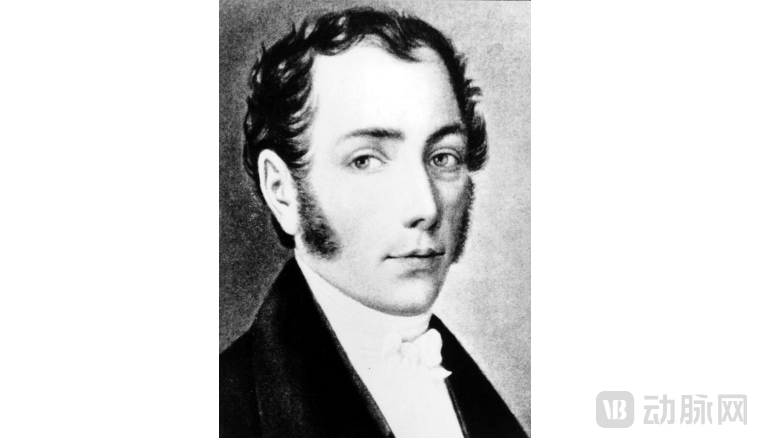
Figure 1 | Joseph von Fraunhofer
The very use of this name by the Association signifies a deep integration of scientists, inventors, and entrepreneurs, while also defining the Fraunhofer Society’s arduous mission of inseparably linking industry, academia, and research.
The Fraunhofer Society is positioned in applied research,Deeply focusing on key technologies related to the future and the development of commercial outcomes. The association effectively serves as a “bridge” between academic research and industrial production., closely linking higher education institutions engaged in basic research with enterprises involved in product development to form a synergistic force that jointly drives industrial innovation and translation.
After more than 70 years of development, the Fraunhofer Society has now becomeA Model of Technological Innovation in the Field of Engineering Applications, a world-leading applied science research institution. Currently possessesMore than 29,000 employees, with 81 institutes (as of July 2021) and other independent research institutions distributed globally.
It is worth noting that, as many technological innovations emerge at the intersection of medicine, natural sciences, computer science, and engineering applications, the Fraunhofer Society places strong emphasis onInterdisciplinary ResearchMore than half of the Fraunhofer Institutes and research institutions are engaged in the four major areas of health research—Drugs, Diagnostics, Devices, and Data。
The research primarily focuses on enhancing initiatives to secure the supply of medical products in Germany and Europe, thereby benefiting patients. Additionally, it emphasizes the automation of healthcare services to ensure medical quality.
It is precisely for this reason that the Fraunhofer Society,Medical FieldAchieved numerous results, mainly including:SaxoCell, Fraunhofer Lighthouse Project, High-Performance Center for Medical and Pharmaceutical Engineering, and Fraunhofer Cluster of Excellence for Immune-Mediated Diseasesand other research projects.
Talent Development + Flexible Hiring: The Fraunhofer Society Has Its Own “Way to Generate Revenue”
As of April 2020, the Fraunhofer Society had a total of13,942 Patents. This is consistent with its possession of sustainable developmentTechnology Transfer Modelis closely related, mainly includingContract Research, Licensing, Spin-off Incubation Companies, Personnel Exchange and Collaboration, Innovation ClustersThese Six Technology Transfer Pathways.
Among them, “Contract Research“is a key driver for the Fraunhofer Society in translating scientific research achievements into practical applications. According to data, out of the association’s annual research budget of €2.8 billion, €2.4 billion is generated through ‘contract research.’”
Under this model, enterprises can outsource various needs in the product development process, such as specific technological improvements or production management, to the research institute and pay the associated fees. Leveraging its professional expertise and scientific research team, the institute efficiently and conveniently tailors R&D solutions for clients, thereby helping enterprises bridge the “valley of death” between basic research and industrial application to a certain extent.
In addition to diverse technology transfer methods,High-Quality Talenta cornerstone of the Fraunhofer Society. How has the association managed to produce a steady stream of talent? The core lies in itsEfficient Talent Development SystemandFlexible Employment Models。
From the perspective of talent development, most of the institutes under the association are located within universities, whileMore than 50% of the institute’s leadership are professors from partner universities., they are well-versed in academic trends and also understand the technological needs of the industry. At the same time, they can absorbStudent Participation in Project R&D, guide students to conduct research in alignment with industry demands, cultivate a large number of innovative talents proficient in industrial technologies, and build a reserve force for scientific and technological innovation.
It is particularly important to note that, at the national level,Germany's education system implements a "dual-track" system.. Vocational education involves schools being responsible for imparting theoretical knowledge, enterprises arranging frontline practical training for students, and the Fraunhofer Society providing technical guidance in this process.
Approximately 90% of students complete their thesis during corporate internships, which has resulted in a large number ofStudents can identify projects from concrete practices and conduct research., thereby fostering communication and collaboration between universities and the business community, and achieving an integrated triad of industry, academia, and research.
So, fromTalent RecruitmentFrom this perspective, the Fraunhofer Society embodies “Immobilization" and "Fluidization"Two distinctive features."
Executive Director of the Fraunhofer InstituteAlbert Heuberger“It has been stated that ‘Fraunhofer aims to foster communication and mutual learning among researchers from diverse disciplines.’” Consequently, the Fraunhofer Society adopts a highly flexible approach to talent recruitment.
Generally, only professionals who have worked continuously at the research institute for more than 10 years are likely to become core senior researchers, and these core personnel can receiveLifetime Workposition, while passing on the Fraunhofer Society’s R&D capabilities, traditional philosophy, and advanced technologies.
Then, the remaining 60% of personnel possess a certain level ofLiquiditycontract-based employees, who sign contracts aligned with the project cycle, typically for 3–5 years. Upon contract expiration, employees generally resign.Enter Enterpriseor other project teams. During their tenure, researchers are also required toResident EnterprisesInternal development project. This establishes a connection with the enterpriseTalent SharingMechanisms that ensure the training and transfer of scientific researchers.
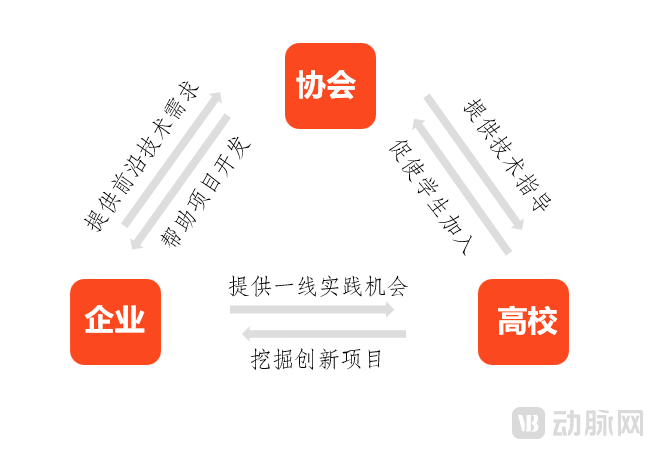
Figure 2 | The Fraunhofer Society’s Model of Close Integration among Industry, Academia, and Research
In summary, the Fraunhofer Society hasFlexible Combination of Core and Mobile Personnel, which not only preserves the core strengths of the association but also maintains the high competitiveness of its research team. Meanwhile, emphasis is placed onCultivating Students into Innovative Talents, thereby cultivating a high-quality reserve talent pool for the field of applied research.Facilitated cross-sector collaboration among research institutes, universities, and enterprises, bridged the gap between “industry” and “academia,” and achieved tight integration of industry, academia, and research.。
Lessons from Abroad: What Insights Does the Fraunhofer Society Offer Us?
As a leader in the innovation process and an economic engine for Germany and even the whole of Europe, the Fraunhofer SocietyThe core function is to organically integrate “production” and “academia” through “research,” enabling seamless flow and connectivity of resources.
On the one hand, it has built a bridge connecting technological innovation between research institutes and enterprises, enabling rapid translation of scientific achievements into marketable products. On the other hand, it has established a mutually beneficial talent circulation mechanism between “academia” and “industry,” fundamentally ensuring the cultivation and mobility of innovative talents.
It is precisely because of such successful technological innovation and R&D institutions that we must reflect on the current state of technological innovation in China.
From the hospital's perspective,West China Hospital, Sichuan University; Zhongshan Hospital, Fudan University, Shanghaiis a standout among them. In June 2020, West China Hospital of Sichuan University signed a patent licensing and joint project development agreement with the enterprise, involving two patents,Total amount reaches RMB 250 million. In the same year, Zhongshan Hospital of Fudan University in Shanghai successfully achieved the commercial translation of26 itemsPatented technology.
Although the translation of medical research achievements holds bright prospects, it still faces multiple barriers that urgently need to be broken. Data shows that the international standard conversion rate ranges from 10% to 15%, whereas the conversion rate in the vast majority of China’s research institutions and Grade III Class A hospitals remains below 5%.The drawbacks of insufficient capacity for translating scientific and technological achievements into practical applications are becoming increasingly prominent, and the mechanisms for talent development and cultivation need to be further improved.
How, specifically, can these pain points be addressed? We may draw on the successful experience of the Fraunhofer Society.
First and foremost, maximize the value of talent.. In technological innovation, talent is the primary resource. Jin Li, President of Fudan University, stated, “Young scientific and technological talents are important strategic talents for the future; strengthening their cultivation will support them in becoming the main force of national innovation and entrepreneurship in the years to come.”
Shifting the Mindset That Separates Scientific Research from Talent Development, establish the concept of integrating scientific research with the cultivation of innovative talents. Meanwhile, talent development requires interdisciplinary collaboration and academic exchange to broaden knowledge bases and expand horizons.
Encourage researchers to start businesses and actively transform their technologies into concrete application outcomes. AndProvide policy, technical, and financial incentives and support to scientific researchers.
Secondly, research institutions should implement an “enterprise-style” management model.. Establish modern institutional management structures within scientific research institutes; beyond providing financial and policy support, the government shall no longer intervene in specific management affairs. Meanwhile, enterprises should be engaged in research projects, granting them greater say in technological development and transfer.
Finally, a multi-faceted and objective evaluation of research institutions is required.By integrating the assessment of research quality with the evaluation of individual research capabilities, this approach aims to stimulate creativity and enthusiasm for scientific research, thereby actively promoting the generation of innovative research outcomes.
Innovation in the healthcare sector has never been a solitary endeavor; it requires deep engagement from every link in the innovation ecosystem, with each participant fully leveraging its respective role to collectively drive the implementation of more innovative projects.
Among these, third-party service organizations such as the Fraunhofer Society play a significant role, acting as a “binding agent.”Closely connect the two ends of different systems, and truly address the practical needs of all parties under a mature framework., while improving conversion rates, also enables innovative projects to achieve greater and more sustainable success in the future.