

Microsoft Completes $19.7 Billion Acquisition of Nuance to Accelerate Healthcare AI Strategy

Microsoft
Computer software development, manufacturing, licensing, and service provider

Nuance
Healthcare AI Solutions and Services Provider
Eight months ago, Microsoft announced its $19.7 billion acquisition of Nuance to strengthen its influence in the healthcare vertical. This deal marks Microsoft’s second-largest acquisition in history, surpassed only by its $26.2 billion purchase of LinkedIn in 2016.
On December 22, 2021, the European Union unconditionally approved Microsoft’s $19.7 billion cash acquisition (approximately RMB 128.9 billion) of voice technology company Nuance Communications, clearing the last major hurdle for what stands as the second-largest acquisition in Microsoft’s history, surpassed only by its purchase of LinkedIn.
Nuance also addressed this matter in its latest fiscal 2021 annual report (covering the period from October 2020 to September 2021), stating that Microsoft agreed to acquire Nuance at a price of $56.00 per share. Upon completion of the merger, Nuance will become a wholly-owned subsidiary of Microsoft. The merger is expected to be completed by the end of the first quarter or the beginning of the second quarter of fiscal year 2022. If the merger agreement is terminated under certain specific circumstances, Nuance will be required to pay Microsoft a termination fee of $515 million.
According to Nuance’s financial report for the fourth quarter of 2021, total revenue for the quarter reached $333 million, representing an 8% year-on-year increase. This indicates that, with Microsoft’s endorsement, Nuance’s business is showing signs of recovery. Nuance has also prominently featured its vision following the integration into Microsoft on its official website. The transaction has currently received unconditional approval from regulatory authorities in the United States, the European Union, and Australia, pending only approval from the United Kingdom. The acquisition is currently undergoing a public consultation phase in the UK (scheduled to last until January 10, 2022), after which it will proceed to the formal approval process.
In recent years, tech giants’ interest in the healthcare sector has been on the rise. Amazon, Apple, Google, Microsoft, and even Facebook have all shown keen interest in developing tools for tracking, monitoring, or other health-support functions. What exactly is attracting them to this field?
What Does Microsoft Want to Do?
We are all familiar with Microsoft; its ubiquitous Windows operating system and Office productivity suite are indelible marks of this era. However, what you may not know is that Microsoft had already been strategically positioning itself in the healthcare sector for many years prior to its acquisition of Nuance.
As early as May 1999, Microsoft invested $250 million in the health information website WebMD, thereby entering the healthcare sector. Subsequently, it acquired the medical database software Azyxxi in 2006, the health information search engine Medstory in 2007, and Sentillion, a software vendor focused on the healthcare industry, in 2009.
During this phase, Microsoft clearly did not treat healthcare as a core business, but rather as a strategic foothold for the future. Following its acquisitions, Microsoft primarily engaged these companies through business collaborations without making any major moves. However, as the acquired entities deepened their involvement in the healthcare industry, Microsoft grew increasingly interested in this sector.
In 2014, Microsoft announced a partnership with medical technology company Becton Dickinson (BD) to establish an incubator focused on healthcare technology startups. Since then, Microsoft has incubated more than ten healthcare companies worldwide and accumulated extensive experience in the medical sector.
By 2017, Microsoft had launched Healthcare NExT, an AI-driven medical research initiative. The full name of the project is New Experiences and Technologies Organization, which aims to leverage Microsoft’s strengths in AI and cloud technology to drive healthcare innovation.
The primary objectives of NExT include alleviating the data entry burden on physicians, triaging patients, and overseeing their out-of-hospital care. Its core components are divided into four modules: HealthVault, Microsoft Genomics, AI-driven intelligent chatbots, and Project InnerEye.
In terms of functionality, HealthVault and Microsoft Genomics primarily serve the purposes of data collection and organization, while Project InnerEye is an experimental segmentation research initiative. These two components can be integrated via AI-driven intelligent chatbots. Together, these four elements constitute Microsoft’s healthcare ecosystem strategy.
HealthVault is a cloud-based platform designed to empower individuals to control their health data, enabling them to collect, store, and share their medical information. The platform also integrates with various third-party applications and devices to help users manage fitness, dietary, and health data.
Microsoft Genomics is a service built on Microsoft’s Azure cloud platform that provides an easy-to-use web service for analyzing and comparing user genomes, offering speeds thousands of times faster than traditional methods. The service adheres to the consistency and accuracy guidelines established by the Broad Institute of MIT and Harvard. With its speed, simplicity, and accuracy, Microsoft Genomics can be widely applied in the fields of oncology, rare diseases, general wellness, and precision medicine.
AI-powered intelligent chatbots are designed to help healthcare partners easily provide smart and compliant medical virtual assistants and chat services. For example, insurance companies can deploy bots to enable customers to effortlessly check claim statuses and ask related questions; hospitals can equip bots with symptom checkers to triage patient conditions, answer patient inquiries, and assist patients in locating the nearest physicians.
Project InnerEye develops specialized machine learning algorithms for the automated segmentation of tumors and 3D radiological images. Its specific capabilities include extracting targeted genomic measurements for quantitative radiomics, accelerating radiation therapy planning, and enabling precise surgical planning and navigation. Built upon years of research in computer vision and machine learning, the project employs algorithms such as Deep Decision Forests (previously used in Kinect and HoloLens) and Convolutional Neural Networks (available in CNTK) for the automated analysis of medical images. This technology is designed to assist physicians. The machine learning outputs can be easily refined and adjusted by clinicians until they deem the results valid. Throughout the entire process, physicians maintain full control over the final outcomes.
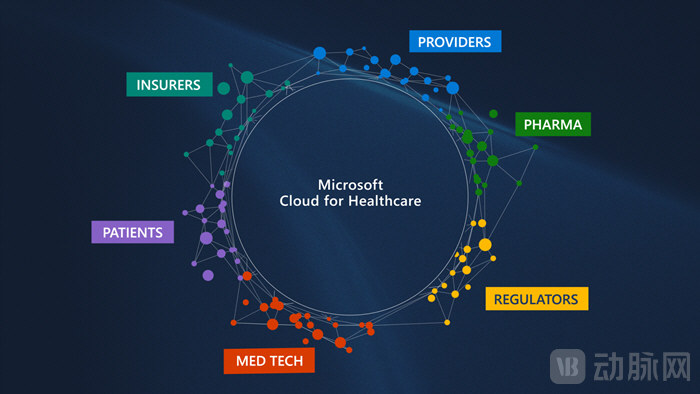
Building on this foundation, Microsoft Cloud for Healthcare was officially launched in October 2020, amid the raging COVID-19 pandemic. This marked Microsoft’s first industry-specific cloud computing solution. The solution provides capabilities for managing health data at scale, enabling healthcare organizations to more easily improve patient experiences, coordinate care, and enhance operational efficiency, while also supporting the security, compliance, and interoperability of health data.
Furthermore, Microsoft is continuously innovating its AI technologies and developing comprehensive Azure HPC solutions to accelerate AI-driven drug discovery. Azure HPC is a high-performance computing platform with outstanding capabilities across multiple dimensions, including accelerated computational performance, MPI parallelism, data bandwidth, storage performance, and service ecosystem. It supports hybrid cloud models, diverse resources, and a rich array of applications, while offering massive elastic scalability in the cloud. This empowers pharmaceutical companies to enhance drug R&D efficiency through artificial intelligence.
Thus, it is evident that Microsoft, as a participant in the digital transformation of healthcare, has been continuously empowering innovation in the pharmaceutical and health industries through the integration of artificial intelligence and cloud computing.
What Can Nuance Do?
In the mid-1990s, Nuance spun off from SRI International’s Speech Technology and Research Laboratory at Stanford University to become an independent company, primarily providing technical consulting services. As early as 1996, Nuance developed the first version of its voice interaction platform. By the time it went public on the NASDAQ Stock Exchange in 2000, Nuance had released a series of voice interaction software products (such as Nuance 7 and Nuance Verifier) along with supporting developer tools.
At this time, 203 companies worldwide had directly or indirectly adopted Nuance’s products, including Fidelity International, American Airlines, and Lloyds TSB Group, spanning industries such as finance, aviation, retail, and telecommunications, as well as voice portal providers like BeVocal, General Magic, and GoSolo Technologies.
As a technology company, Nuance helps clients embed voice interaction capabilities into their applications, with use cases including stock quote trading, travel planning, shopping, and traffic navigation.
Since the turn of the 21st century, Nuance has successively acquired more than 40 companies, spanning fields such as speech recognition, input methods, and healthcare. Through these acquisitions, Nuance has accumulated an industry-leading number of patents and gradually established its dominance in the speech technology sector. Subsequently, Nuance successfully entered the market for end-user devices such as mobile phones and gained Apple’s favor, becoming the developer of the Siri speech engine. By 2012, Nuance’s market share in the global intelligent voice market had reached 62%.
According to IBISWorld data, the global smart voice market size registered a compound annual growth rate (CAGR) of 23.7% from 2013 to 2015. However, Nuance’s revenue growth began to slow during this three-year period. What was the cause?
The answer is that major tech giants have reached a consensus on voice as the gateway to future artificial intelligence.
In 2012, Google launched its intelligent voice assistant, Google Now. In 2014, Microsoft introduced its first personal intelligent assistant, Cortana. That same year, Amazon released the Echo, a smart speaker equipped with a voice assistant. Leveraging their substantial resources, these tech giants initiated a wave of acquisitions. According to incomplete statistics, from 2011 to 2019, intelligent voice companies were acquired by tech giants every year.
After acquiring the technology, tech giants continued to invest heavily in R&D for product iteration. In contrast to the tens of billions of dollars these giants routinely spend on R&D, Nuance faced tight financial constraints. Furthermore, Nuance had to contend with talent poaching by these industry leaders. For instance, in 2004, Google recruited co-founder Mike Cohen to lead its speech recognition team.
Apple, a partner of Nuance, also established a speech technology R&D team in Boston and recruited former Nuance Chief Mobile Technology Architect Gunnar Evermann, former Chief Scientist Don McAllaster, and former Vice President of R&D Larry Gillick between 2011 and 2013.
The entry of tech giants has severely squeezed Nuance’s market share, prompting Nuance to refocus its business on the healthcare sector.

Leveraging its long-term technological expertise, Nuance has made smooth progress since entering the healthcare sector. Nuance provides physicians with speech recognition and transcription services that intelligently identify doctor-patient conversations and input the data into electronic health records (EHRs), thereby enhancing the efficiency of clinical diagnosis.
Having already reaped the benefits of its healthcare initiatives, Nuance is expanding its footprint in the medical sector beyond voice products to now focus on medical imaging. Nuance’s imaging business primarily provides enterprise document imaging solutions. Its healthcare-related products include PowerScribe 360, mPower Clinical Analytics, and the PowerShare Network. In collaboration with radiology departments and healthcare institutions, these products deliver comprehensive, timely, and high-quality data and diagnostic reports, facilitate medical image exchange, and aim to extract greater value from radiology reports.
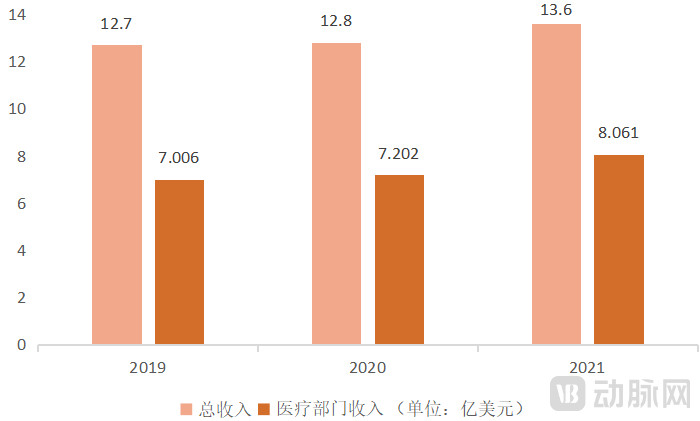
According to the 2021 annual report, for the fiscal year ended September 30, 2021, total revenue was $1.36 billion, with a gross margin of 61.2%. In fiscal years 2021, 2020, and 2019, Nuance’s Healthcare segment generated revenues of $806.1 million, $720.2 million, and $700.6 million, respectively. In these same fiscal years, the Healthcare segment accounted for 59.2%, 56.1%, and 55.0% of total revenue, respectively.
As revealed in the financial reports, Nuance’s revenue structure primarily consists of five segments: 1. SaaS services (hosting); 2. on-premise software licensing; 3. maintenance and upgrade support; 4. professional services (primarily training fees); and 5. hardware. Among these, SaaS hosting revenue constitutes the largest portion, accounting for approximately 60% of total revenue. The combined share of on-premise product licensing and subsequent maintenance and support revenue is less than 40%. This reflects a typical revenue structure characteristic of a SaaS service provider.
Specifically in the healthcare sector, Nuance’s product portfolio is primarily composed of the following offerings.
Dragon Medical One: A cloud-based, cross-platform speech solution primarily used for documentation.
Computer-Assisted Physician Documentation: Leveraging artificial intelligence to provide physicians with guidance, clinical strategies, and care recommendations within their workflows.
Diagnostic Imaging Solutions: Cloud-based diagnostic imaging solutions designed primarily to help radiologists improve work efficiency, thereby enhancing clinical and financial outcomes across the entire care continuum.
Dragon Ambient eXperience: This is an AI-powered, end-to-end voice solution that leverages ambient sensing technology to securely listen to doctor-patient conversations, provide workflow support and clinical documentation, and automatically enter patient information into the Electronic Health Record (EHR). This frees physicians from documentation burdens, allowing them to better serve their patients. Notably, this solution is built on the Microsoft Azure cloud platform.
Clinical Documentation Improvement and Coding: Primarily used to summarize and organize clinical documentation, and to code it for compatibility with various systems. To ensure security and compliance, this service is also built on the Microsoft Azure cloud platform.
Beyond healthcare, Nuance’s largest revenue stream is its enterprise services, which primarily serve industries such as finance, telecommunications, travel, retail, and government. According to financial reports, the enterprise segment generated revenues of $535.4 million, $530 million, and $510.8 million in fiscal years 2021, 2020, and 2019, respectively. During these three fiscal years, the enterprise segment accounted for 39.3%, 41.3%, and 40.1% of total revenue, respectively.
The company’s primary business is providing various AI solutions. For instance, the Intelligent Engagement Solution is a comprehensive smart interaction solution, primarily comprising three components: Conversational AI, Interactive AI, and Security AI. Nuance can customize various functional modules according to enterprise needs to replace manual services.
As can be seen, whether in the healthcare sector or enterprise services, Nuance leverages AI-powered speech recognition and image processing technologies to empower traditional industries, thereby creating new markets. Looking ahead, a key development anticipated by the market is that Microsoft will likely integrate Nuance’s healthcare capabilities into Microsoft Cloud for Healthcare.
What Does Microsoft See in Nuance?
Following the launch of Microsoft Cloud for Healthcare, Microsoft established a “strategic partnership” with Nuance. Microsoft even integrated Nuance’s Dragon Ambient eXperience (DAX) ambient clinical solution directly into its own cloud services. When physicians use this service, the system automatically captures and records conversations between doctors and patients, performs contextual analysis using AI, and automatically generates clinical documentation.
Although many functional modules of Microsoft Cloud for Healthcare utilize speech recognition technology, is a single module truly worth Microsoft’s $19.7 billion investment? Clearly, Microsoft’s ambitions extend far beyond this.
In the field of medical AI, Microsoft has long been deeply engaged and strategically positioned. This acquisition not only accelerates Microsoft’s progress in digital health but also provides Nuance with a powerful backing. Leveraging Microsoft’s substantial R&D investment, channel advantages, and foundational AI capabilities, Nuance can revitalize its team’s R&D capacity and focus on technological iteration. After all, other tech giants are also eyeing the lucrative healthcare market.
For example, as early as 2017, Apple Inc. partnered with Stanford University to conduct research on whether the sensors in the Apple Watch could detect cardiac abnormalities. Data published by CB Insights, a venture capital data firm, shows that Apple has acquired 25 AI companies over the past five years, many of which are dedicated to cardiac research.
In 2018, Google filed an invention patent titled “Diagnostic Efficacy Tool.” In the same year, it also developed an AI system capable of identifying protein crystals in drugs. Leveraging AI-based medical imaging and trained on extensive clinical case data, the system assists radiologists in image analysis.
As early as 2018, Amazon secretly established a health and wellness team within its Alexa project to develop healthcare-related features. In the same year, Amazon launched Amazon Comprehend Medical, which enables developers to process unstructured medical text and identify information such as pathological diagnoses, treatment plans, medication dosages, symptoms, and signs. The core of this service lies in applying artificial intelligence and machine learning to healthcare, primarily targeting hospital clients with the aim of reducing the cost of processing medical documents and rapidly and accurately extracting information from medical records.

These competitors’ businesses overlap with Microsoft’s healthcare cloud to varying degrees, so how could Microsoft, which has long focused on cloud computing and AI, afford to be complacent? Only by continuously strengthening its own capabilities can Microsoft meet the challenge, and Nuance represents the upgrade path Microsoft has chosen.
As an enterprise whose primary revenue stream comes from its SaaS model, Nuance has demonstrated strong profitability and operating cash flow, characteristic of the financial performance typical of B2B companies. However, constrained by its own scale, Nuance was unable to achieve high growth rates through substantial investment. At this stage, joining forces with a giant like Microsoft was a highly desirable opportunity for Nuance. For Microsoft, the $19.7 billion acquisition of Nuance was not driven by Nuance’s current market share, but rather by the future possibilities the acquisition would unlock for Microsoft.
For instance, Microsoft can integrate Nuance’s technologies with its cloud services to further solidify its path toward AI-driven cloud growth. At the very least, Nuance has already demonstrated the disruptive power of its technology in the healthcare sector, leaving open the possibility that Microsoft may replicate this model in other fields.
In addition to its core healthcare business, Nuance is also involved in core technologies related to speech and imaging, consumer-grade voice products such as DragonGo, in-vehicle voice solutions, and enterprise services, indicating a broad market potential. For instance, Cerence, a publicly listed company specializing in intelligent in-vehicle voice conversation solutions, was spun off from Nuance’s automotive division. According to statistics from Haitong Securities Research Institute, Cerence currently serves nearly 325 million vehicles in over 70 languages, covering almost all mainstream automakers, including Tesla, Audi, BMW, Toyota, Geely, SAIC Motor, Ford, and General Motors. This demonstrates that Nuance’s technology has ample room for expansion when the right entry point is identified.
Backed by substantial financial resources, Microsoft’s strategic focus over the years has shifted from deciding what to do to determining what not to do. For instance, in early 2021, Microsoft announced a $2 billion equity investment in Cruise, the autonomous driving subsidiary of General Motors. Under this partnership, Cruise’s self-driving vehicles will leverage Microsoft’s Azure cloud and edge computing platforms. Does this not present an ideal opportunity to deploy Nuance’s technologies? Market feedback indicates that most traditional automakers and new electric vehicle manufacturers in China have already adopted Microsoft’s native speech technology (Azure Text to Speech). It is therefore reasonable to anticipate that Microsoft will deeply integrate its own speech capabilities with Nuance’s technologies, thereby strengthening its footprint in vertical markets within voice-enabled scenarios.
Therefore, Nuance serves as a crucial complement to Microsoft’s AI and cloud computing strategy, as well as a technological reserve for its future expansion into other sectors. With only final approval from the UK remaining, Microsoft is poised to secure this prized asset. As a technology platform and service-oriented enterprise, Microsoft remains steadfast in empowering the digital transformation of the pharmaceutical industry.