

LAMH: A Hidden Gem in Cancer Early Screening with Leading Commercialization of Liver Cancer Tests in the U.S. and China
In December 2021, Helio Health, a U.S.-based subsidiary operating independently under LAMH (Laboratory for Advanced Medicine & Health), officially launched the commercial availability of its early liver cancer screening product, Helio Liver™, in the United States. This test employs multi-parametric analysis of cell-free DNA (cfDNA) methylation and serum protein biomarkers in blood samples to assess the risk of hepatocellular carcinoma.
LaiMeng Health (LAMH) is an AI-driven enterprise specializing in early cancer screening, co-founded by top-tier scientists and authoritative physicians who uphold the mission of “making cancer screening more accurate, earlier, and simpler.” The company has published numerous research findings in prestigious international journals such as Nature, Science, Cell, PNAS, and their subsidiary journals, and has established a comprehensive product pipeline for the early screening and diagnosis of liver cancer, colorectal cancer, lung cancer, and pan-cancer types. Leveraging LAMH Group’s AI-driven multi-omics testing technology, both physicians and patients can gain powerful insights from accurate, accessible, and convenient blood test results.
Measured by fundraising performance and brand recognition, LAMH is not a star player in the industry. However, whether in terms of R&D progress, regulatory approval, or commercialization, LAMH has taken a leading position in the sector, making it a “hidden gem” in the field of early cancer screening.
In early 2019, Helio Liver™ received the FDA Breakthrough Device Designation, making LAMH Health (Laimeng Health) theThe First Cancer Early Screening Enterprise in China to Receive U.S. Breakthrough Device Designation; The company concluded the clinical trials of its early liver cancer screening product in China at the end of 2020,The product has a sensitivity of 92.5% and a specificity of 97.5%., its early liver cancer screening product is expected to soon obtain the first Class III IVD certificate for liver cancer methylation detection. LAMH Health (LAMH) was the first to release early liver cancer screening data at the 2021 American Association for the Study of Liver Diseases (AASLD) conference in the United States, and its product performance has been recognized by mainstream medical institutions in the U.S.
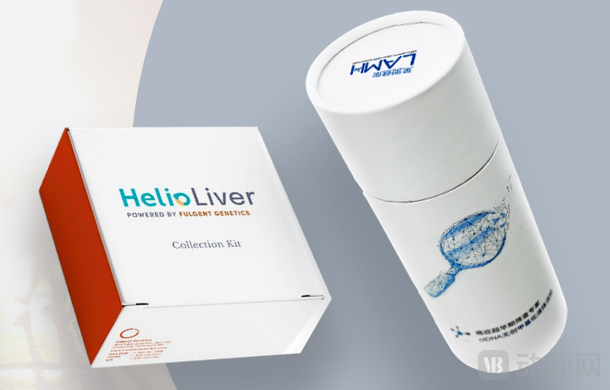
Furthermore,LAMH has become the first and only company in the global early cancer screening sector to establish a fully integrated presence in both China and the United States, encompassing R&D, manufacturing, regulatory approval, laboratory operations, and commercialization.
Why Has LAMH Health Advanced So Rapidly? With Numerous Technical Pathways and Product Portfolio Strategies for Early Cancer Screening, How Should One Choose? How Can Suitable Commercialization Solutions for Early Cancer Screening Be Identified? Recently, VCBeat conducted an exclusive interview with Zhang Zeyue, CEO and Chairman of LAMH Health.
Niche Team, Leveraging Small Resources for Big Gains, Clear Strategy
“A keyword for both the business school’s strategy and entrepreneurship courses is ‘leveraging small resources to achieve big gains,’ which aptly summarizes our characteristics.” Discussing the reasons behind LAMH Health’s rapid progress, Zhang Zeyue stated, “Laimeng Health (LAMH) has raised approximately $150 million in cumulative funding, leveraging relatively modest capital to simultaneously establish a presence in both the Chinese and U.S. markets.“It is one of the few companies in the early cancer screening sector that has avoided missteps, maintaining a correct strategic layout from start to finish.”
“Our competitive advantage over other cancer early screening companies lies in:By integrating the world’s earliest accumulated methylation technology with extensive clinical sample validation data, and combining exclusive AI algorithm patents with feasible clinical regulatory approval pathways, we have achieved true implementation that makes cancer screening more accurate, earlier, and simpler.!”
Early cancer screening involves numerous challenges in technological pathways, product portfolios, and commercialization strategies. In this context, the DNA of the team members, particularly that of the “leader,” serves as a “lighthouse” for the startup’s development. Therefore, it is crucial to build a founding team with expertise in technology, corporate operations, and commercialization.
Founder and Co-Chairman of LAMHDr. Li Shu holds a Ph.D. in AI from Harvard University and is a serial successful entrepreneur., founded multiple enterprises including J&J Investment, CBMG (listed on NASDAQ), WA Zhenjing Medical Center (acquired by iKang Guobin), Jiezhi Semiconductor (listed on NASDAQ), and Hua Hong Semiconductor (listed in Hong Kong).
Company Technical Founder and Chief Technical AdvisorProfessor Kang Zhang is a world-renowned expert in genomics,The first individual from mainland China since the founding of the People's Republic of China to earn dual doctorates—a M.D. from Harvard Medical School and a Ph.D. in Genetics from the Massachusetts Institute of Technology—was named one of the Top 10 Scientists Worldwide in 2018, alongside distinguished leaders such as Stephen Hawking.
In 2010, Professor Kang Zhang pioneered the world’s first methylation-based cancer screening test at UCSD, which isInventor of Methylation Technology,Professor Zhang Kang’s 2017 article in Nature Materials on the detection of early-stage hepatocellular carcinoma using ctDNA methylation is one of the most highly cited papers in the field of methylation to date.
Zhang Zeyue, Chairman and Chief Executive Officer of the Company, isEMBA, CEIBS, has held positions at multiple leading pharmaceutical companies and precision medicine enterprises,With a proven track record of successive successful commercialization across hospitals, government entities, B2B, and B2C sectors, pragmatic and results-driven, with expertise in growth.
Leveraging its team advantages and having established its core competitive barriers and market positioning, LAMH Health has adopted a more composed and systematic approach to sample accumulation, technology platform development, biomarker selection, product portfolio strategy, and commercialization.
Accumulated 300,000 sample resources, covering 22 cancer types
High-quality cancer early screening products require the accumulation of large-scale sample data. LAMH Health, with Professor Kang Zhang at its core, collaborates with multiple top-tier hospitals,Accumulated over 300,000 sample data resources, leveraging AI algorithms and models to identify more than 3,000 effective biomarkers covering 22 types of cancer.LAMH has commercialized this research achievement, sequentially launching a portfolio of products for early screening of liver cancer, pan-cancer, breast cancer, lung cancer, and nasopharyngeal cancer.
PCR is a more practical and viable technical platform for regulatory approval and implementation at this stage.
“On the technology front, most companies regard NGS as next-generation sequencing technology. However, enterprises adopting the NGS platform encountered difficulties during the regulatory approval process, leading many to pivot back to PCR, thereby wasting time, financial resources, and effort,” said Zhang Zeyue.
“‘Submit for regulatory approval using the most appropriate technology at the optimal time."is a key strategy of LAMH Health. The company has conducted in-depth research on the domestic approval environment and believes that '"PCR is a more practical and implementable technical platform at present, with smoother regulatory approval processes.’, since its inception, LAMH Health has adopted the ddPCR platform. ddPCR offers multiple advantages, including high detection sensitivity, more accurate quantitative results, and greater intuitiveness. The company’s liver cancer early screening product, based on the ddPCR technology platform, ensures excellent detection performance while also facilitating regulatory approval efficiency.”
LAMH is also deploying early-stage liver cancer screening products based on the NGS platform, promoting them as LDTs to further meet market demand for high-performance early cancer screening solutions.
From Methylation to Multi-Omics
In terms of biomarker selection, LAMH Health remains committed to the methylation approach, leveraging Professor Zhang Kang’s extensive expertise in methylation technologies. Early cancer screening biomarkers include miRNA, gene mutations, and methylation, among others. Multiple studies have confirmed that methylation detection is the most effective method for early cancer screening. In 2018, Grail also established methylation as its core technology, sparking a wave of adoption for methylation-based approaches.
Meanwhile, as an increasing number of multi-omics studies confirm the improved accuracy of testing, LAMH Health has also begun toFrom Methylation to Multi-Omics, while simultaneously deploying biomarkers such as methylation, proteins, nucleosome footprints, and fragmentomics, to develop multi-omics-based pan-cancer early screening products.
LAMH's Pan-Cancer Early Screening ProductSimultaneous detection of methylation, nucleosome footprints, fragmentomics, and proteomics from a single sample type within the same kit, whereas traditional enterprises require 2–3 test kits to achieve the same results, significantly reducing testing costs while ensuring convenience and high accuracy.
Liver cancer is one of the cancers for which commercialized early screening is easiest to implement.
Commercialization remains a major industry challenge for cancer early screening. LAMH Health has advanced from technological accumulation and product development into the critical phase of commercial implementation. Zhang Zeyue believes, “China’s commercial insurance sector is underdeveloped, and the population’s ability and willingness to pay are relatively weak,”The Concept of Early Screening Has Not Yet ‘Taken Root’, we must provide consumers with a compelling and explicit rationale for undergoing cancer screening. We do not advocate early liver cancer screening for low-risk healthy individuals, as market education is challenging and would lead to resource wastage.Only by accurately identifying the high-risk population for liver cancer can the benefits be maximized.”
Liver cancer is one of the easiest cancers to commercialize for early screening. The high-risk population for liver cancer is well-defined, including individuals with hepatitis B, hepatitis C, liver cirrhosis, or a family history of liver cancer. As China has a large burden of hepatitis B, with approximately 120 million carriers, and millions more affected by hepatitis C, liver cirrhosis, or a family history of liver cancer, these clearly identified high-risk groups demonstrate a strong willingness to undergo early liver cancer screening.
Furthermore, the gold standard for diagnosing liver cancer is pathological biopsy; however, clinical diagnosis is complex and not suitable for early screening. Existing screening methods, such as ultrasound and alpha-fetoprotein (AFP) testing, lack sufficient sensitivity and specificity for Stage I liver cancer, failing to meet screening requirements. There is an urgent market demand for non-invasive, convenient, and highly accurate molecular detection technologies for the early screening of liver cancer.
In the Chinese market,LAMH Health has strategically focused on channels such as hospitals and health management centers., to efficiently reach high-risk populations for liver cancer. Meanwhile,The Company and Multiple Hospitals Jointly Establish a Collaborative Laboratory, to facilitate the rapid implementation of early screening for liver cancer within hospitals, and in conjunction withChinese Anti-Cancer Association, National Cancer Center, Pharmaceutical Companies, Pharmaciesand other collaborations to increase the penetration rate of early screening for liver cancer.
On online channels, LAMH Health has established a presence on e-commerce platforms such as JD.com and internet healthcare platforms such as Baidu Health. In the 2021 “Double 11” online sales rankings across various product categories,The company achieved the second-highest sales in the cancer early screening category and the highest sales in the liver cancer early screening category.
In the U.S. market, LAMH Health has partnered with Fulgent Genetics to target two major channels: private insurers and national health insurance programs. The company’s product has received the U.S. FDA’s Breakthrough Device designation, enabling automatic inclusion in the U.S. national health insurance system.
Zhang Zeyue, Chairman of LAMH (Laimeng Health), revealed: “The company’s liver cancer early screening product is leading the industry in regulatory approval progress and is expected to be approved in early 2022, obtaining the world’s first Class III registration certificate for a methylation-based liver cancer early screening product. Early screening products for colorectal cancer, lung cancer, and pan-cancer will also rapidly enter the market in the following years.”
Amidst the relentless tide of progress, driven by continuous corporate innovation and development, as well as sustained attention and support from government and capital, LAMH Health (LAMH) has increasingly become an indispensable force in promoting industry growth and facilitating industrial upgrading. While numerous early screening and diagnostic products for colorectal cancer have already received regulatory approval in China, the market for early liver cancer screening is still on the verge of explosive growth. LAMH Health (LAMH) is poised to lead this more commercially viable and practical sector of early liver cancer screening.
Healthy China 2030 aims to achieve chronic disease health management for the entire population across the full life cycle, with an overall increase of 15% in the five-year cancer survival rate. In the future, LAMH Health will be driven by user health needs, advancing cancer prevention and screening, early diagnosis and treatment, and scientific research breakthroughs, focusing on addressing the critical challenges of liver cancer in China and contributing to the realization of the Healthy China 2030 national strategy.