

Helicobacter pylori Emerges as Hot Investment Concept; This Company's Consumer-Focused Solution Launches Alongside IPO Filing
On January 6, 2022, a group of concept stocks suddenly became a major hotspot in the secondary market—Helicobacter pylori. This event was triggered by the U.S. Department of Health and Human Services listing chronic Helicobacter pylori infection as a known human carcinogen for the first time in its updated 15th Report on Carcinogens.
Later that same afternoon, New Horizon Health also joined the ranks of these highly sought-after concept stocks. Its self-developed Helicobacter pylori detection product, YouYouGuan®, received approval from the National Medical Products Administration (NMPA) for its Class III medical device registration application. Furthermore, New Horizon Health emphasized in its promotional materials that YouYouGuan is the “first Helicobacter pylori detection product suitable for ‘consumer self-testing’.”
Why has a simple designation triggered such a strong market reaction? How does the product recently approved for New Horizon Health differ from its previous offerings? Why has “consumer self-testing” become a critical element for a serious medical product?
As early as 1994, Helicobacter pylori was classified by the International Agency for Research on Cancer (IARC), an agency under the World Health Organization (WHO), as a Group 1 carcinogen for gastric cancer. However, the issue of H. pylori infection has never received due attention in China.
In December 2021, a meta-analysis published in the Journal of Gastroenterology and Hepatology compiled data from a series of studies on the prevalence of Helicobacter pylori infection, which were published between 1990 and 2019 in PubMed and China National Knowledge Infrastructure (CNKI).
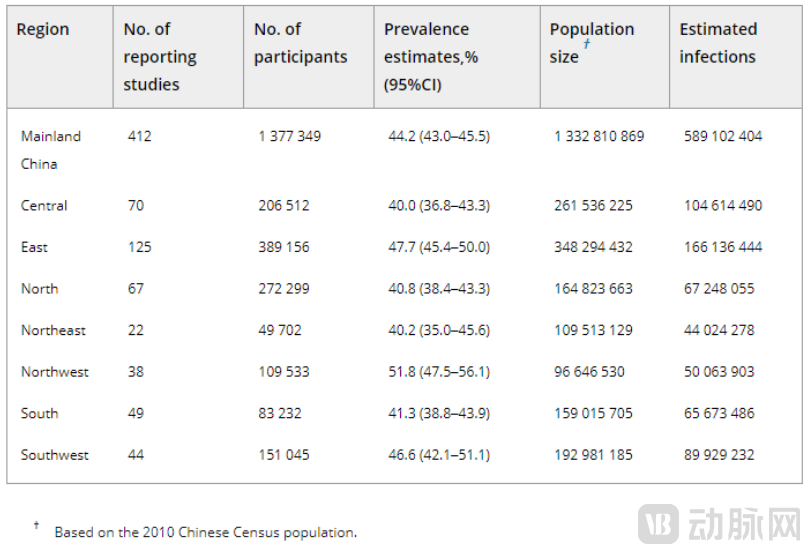
Data source: Ren S, Cai P, Liu Y, Wang T, Zhang Y, Li Q, Gu Y, Wei L, Yan C, Jin G. Prevalence of Helicobacter pylori infection in China: A systematic review and meta-analysis. J Gastroenterol Hepatol. 2021 Dec 3. doi: 10.1111/jgh.15751. Epub ahead of print. PMID: 34862656.
The aggregated statistical data encompassed studies involving more than 1.37 million individuals, among whom 44.2% were infected with Helicobacter pylori. The authors further extrapolated these findings based on China’s 2010 demographic data, estimating that approximately 590 million people in the country were carriers of H. pylori. If calculated using the latest data from the Seventh National Population Census, this figure would rise further to 624 million.
In fact, the conclusion drawn by this study represents almost the most optimistic figure for Helicobacter pylori infection rates observed in China. Most studies suggest that the prevalence of Helicobacter pylori infection in China exceeds 50%. In contrast, the incidence of Helicobacter pylori infection is relatively lower in developed countries and regions such as Europe and the United States, with relevant data indicating a rate of approximately 35%.
The relatively high prevalence of Helicobacter pylori infection in China is closely linked to local dietary habits. The primary modes of transmission for H. pylori are the fecal-oral and oral-oral routes, with additional risk factors including shared meals and consumption of raw foods. The common practice of communal dining in China facilitates the spread of H. pylori; furthermore, limited sanitary conditions in certain regions and a preference for raw foods contribute to the persistently high rates of H. pylori infection in the country.
Among individuals infected with Helicobacter pylori, more than 70% remain asymptomatic, 10%–15% develop peptic ulcers, and approximately 1% eventually progress to gastric cancer. While these figures may seem insufficient to highlight the association between Helicobacter pylori infection and gastric cancer, reverse epidemiological data substantiate this link.The Helicobacter pylori infection rate among gastric cancer patients is extremely high.In a study based on the Chinese population published in The Lancet, the Helicobacter pylori infection rate was as high as 94.4% in non-cardia gastric cancer and 92.2% in cardia gastric cancer. The study also pointed outAt least half of gastric cancer cases in China can be attributed to Helicobacter pylori infection.
This also explains why the incidence of gastric cancer remains high in China.In China, gastric cancer consistently ranks among the top three cancers in terms of incidence, far exceeding the global average, with new annual cases accounting for 42.6% of the global total. According to the 2018 Annual Report on Cancer Statistics in China, the incidence rate of gastric cancer reached 19.51 per 100,000 population. Notably, the incidence rates in East China and Northwest China were as high as 24.3 and 32.0 per 100,000 population, respectively, significantly higher than the national average. The aforementioned meta-analysis on Helicobacter pylori infection also indicated markedly higher H. pylori infection rates in eastern and northwestern regions of China.
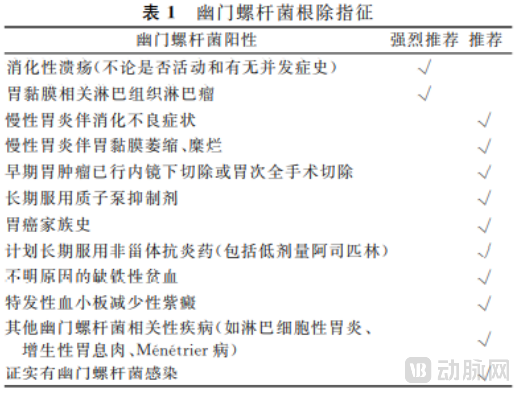
Image source: “Fifth Chinese National Consensus Report on the Management of Helicobacter pylori Infection” (Chinese Journal of Digestion, June 2017, Vol. 37, No. 6)
A body of evidence underscores the intricate link between gastric cancer and Helicobacter pylori infection, highlighting the need to prioritize H. pylori infection management even in asymptomatic individuals.The “Fifth National Consensus Report on the Management of Helicobacter pylori Infection,” published in 2017, states that “Helicobacter pylori infection can be transmitted from person to person. Therefore, H. pylori gastritis is an infectious disease regardless of the presence or absence of symptoms and/or complications, and the indications for eradication therapy can be extended to asymptomatic individuals.”
To eradicate Helicobacter pylori, testing and treatment are two critical steps.
On the treatment front, clinical solutions for Helicobacter pylori infection are already well established. The quadruple therapy regimen, comprising bismuth agents, proton pump inhibitors, and two antibiotics, is widely used and has demonstrated favorable efficacy. ThereforeThe key to eradicating Helicobacter pylori infection lies in the detection phase.
The most accurate method for detecting Helicobacter pylori infection is culture, which involves obtaining samples via gastroscopy and culturing them for 5–7 days. However, due to the complexity of the procedure and the prolonged turnaround time, the culture method is rarely used in clinical practice.
13C/14The 13C/14C urea breath test system is currently recognized as the gold standard for Helicobacter pylori detection.The subject's oral cavity is equipped with13C/14After ingesting the capsule containing 13C-labeled urea molecules, the patient exhales into a collection bag. If Helicobacter pylori is present in the stomach, the labeled urea molecules are hydrolyzed, producing CO2. The collected exhaled gas can then be tested for the presence of13C or14C-labeled CO2.
However, the clinical adoption of breath tests is constrained by isotope production capacity. Data from a 2019 report by LeadLeo Research Institute shows that in the Chinese market13C-urea breath test products can only meet the testing needs of 6 million people per year on average. If we consider the principle of testing all who should be tested, such supply is far from sufficient to meet the domestic demand for Helicobacter pylori testing in China.
Therefore,Detection methods based on Helicobacter pylori antibodies or antigens have emerged.The samples tested are primarily blood or stool specimens; the detection methods mainly employ colloidal gold or latex agglutination assays, with a small number of products utilizing immunohistochemistry or PCR.
Youyou Tube is one of many antigen detection products. Its registered product name is Helicobacter pylori Antigen Test Kit (Latex Method), which employs the well-validated double-antibody sandwich method to detect the presence of Helicobacter pylori antigens in stool samples.
In the selection of test samples and technical approaches,Youyou Tube has opted for a solution that has been validated through long-term practice: stool samples + latex method.
Selection of Stool Samples for Testing: Helicobacter pylori colonizes the surface of gastric mucosal epithelial cells in the human body and is shed with the turnover of these cells. Therefore, stool antigen testing is currently one of the most direct and effective diagnostic methods, widely recommended by domestic and international medical guidelines and consensus statements.
The latex agglutination assay was selected as the detection method: its superior color development helps prevent misinterpretation by users during home testing.
To validate its clinical value, Youyou Tube used the urea breath test as the gold standard and enrolled a total of 1,644 eligible subjects with suspected Helicobacter pylori infection across three tertiary hospitals: Sir Run Run Shaw Hospital Affiliated to Zhejiang University School of Medicine, Zhejiang Provincial People’s Hospital, and Peking University Shougang Hospital. The sensitivity reached 96.5%, and the specificity reached 99.1%.
However, such data alone is insufficient to propel Youyou Tube ahead of its competitors. The key differentiator between Youyou Tube and other products lies in its positioning as a consumer good.
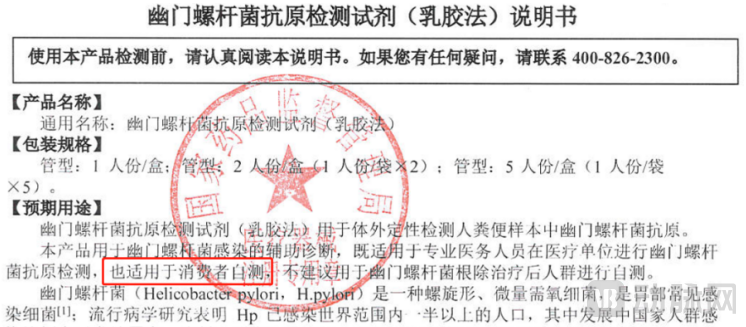
Excerpts from the Youyou Tube Instructions for Use
The instruction manual for Youyouguan, stamped by the National Medical Products Administration (NMPA), specifically includes a statement that“The Youyou Tube is suitable for both professional medical personnel to conduct Helicobacter pylori antigen testing in medical institutions and for consumer self-testing.” This statement endows the Youyou Tube with the dual attributes of a medical product and a consumer good.
The evidence that led the National Medical Products Administration to endorse this statement comes from the results of the clinical studies on Youyou Tube.In clinical studies conducted with Youyouguan, a direct comparison was made between self-test results obtained by participants and those obtained by healthcare professionals, demonstrating a 100% concordance rate between the two.In other words, the Youyou Tube is virtually unaffected by user operation, making it easy to use regardless of whether the user has received professional training.
This feature is attributed to New Horizon Health’s streamlined product design. Youyou Tube is the first to integrate sampling and testing into a single, pregnancy-test-style device. It offers simple operation, is painless and non-invasive, requires no medication prior to testing, does not require fasting, and imposes no special requirements for sample collection. After sampling, users simply reinsert the swab into the reagent tube, shake gently for 10 seconds, and press down the cap; results can be read in 10 minutes.
The three core design concepts—fecal sample collection, latex agglutination assay, and an integrated workflow—are ultimately embodied in the Youyou Tube, creating this unique “medical consumer product.”
Why is New Horizon Health so preoccupied with the consumer-product nature of its offerings? To explore this issue in depth, we must once again turn to stocks associated with Helicobacter pylori.
Following the sudden surge in popularity of the Helicobacter pylori concept, related concept stocks in the secondary market showed mixed performance.Among diagnostic and pharmaceutical companies, reactions are mixed: some hit the daily upper price limit rapidly during trading hours, while others remain completely flat.However, one category of companies saw nearly universal limit-ups: probiotics targeting Helicobacter pylori.Such companies include Ketuo Biology, Juneyao Health, and Jiaoda Onlly. Jiaoda Onlly even promptly issued an announcement after market close to clarify that its probiotic products associated with the Helicobacter pylori concept are no longer in production.
In the serious medical context of Helicobacter pylori’s carcinogenic potential, what has gained unanimous recognition in the secondary market is actually probiotic products with consumer-goods characteristics. The key lies in the prevalence of Helicobacter pylori infection.
High prevalence indicates a broad market, but it also poses significant challenges to the implementation of widespread screening. In particular, Helicobacter pylori continues to spread through daily interpersonal interactions, making its long-term prevention and control exceptionally difficult.
Even if everyone were to go to hospitals for testing, regardless of whether there is an adequate supply of breath test kits, hospitals would not have sufficient capacity to handle the demand from all individuals.For such a widely prevalent infection issue in China, unless there is mandatory guidance from national policies, the only viable solution is likely to be consumer-grade home testing products.Home-based testing products have alleviated the capacity burden on hospitals, significantly reduced the time costs for gastroenterologists, and substantially lowered the time costs of testing for the target population.
In light of this reality, New Horizon Health chose to invest more costs in the Youyou Tube, ultimately launching such a product in the form of a “medical consumer good.”
Although there are many similar testing products on e-commerce platforms, the accuracy of home-based testing lacks endorsement from authoritative institutions and the disclosure of relevant data. Consequently, reviews of existing products reveal inconsistent results across different testing kits, leading to consumer confusion during product selection and anxiety during use.
The key to Youyouguan’s market entry as a latecomer lies in its pioneering registration clinical trials for “consumer self-testing” products, adhering to compliance as a point of product differentiation to earn consumer trust. Consumer trust is product strength.
Unlike Changweiqing, the functional definition of Youyouguan still falls under auxiliary diagnosis. Therefore, even if the results from Youyouguan are sufficiently accurate, users need to follow their doctor’s advice for subsequent disease management. Considering the prevalence of Helicobacter pylori infection,Does this mean that half of the users still need to visit a hospital for physician consultation and prescription after testing?
If this were abroad, the issue might remain unresolved. However, the high penetration of China’s internet healthcare industry has addressed the follow-up challenges of at-home testing for Youyou Tube.
The internet healthcare industry, which experienced rapid growth during the pandemic, has gained widespread public trust. Particularly while the pandemic has not yet fully subsided and people continue to harbor certain reservations about visiting hospitals, internet healthcare remains a vital resource. As an auxiliary diagnostic product that has obtained a Class III medical device registration certificate, Youyou Guan can serve as important clinical evidence to help physicians at internet hospitals assess patients’ infection status online and prescribe medications in accordance with regimens recommended by clinical guidelines.
Therefore, if New Horizon Health can establish partnerships with the internet healthcare industry for its Youyou Tube product in the future, the Youyou Tube will gain ample traffic entry points; internet hospitals can convert Youyou Tube users into consultation and medication users, thereby expanding their sphere of influence; meanwhile, Helicobacter pylori infection issues can be effectively managed and addressed, creating a win-win-win situation.
From Changweiqing to Youyouguan, although both products target the home-use scenario and exhibit significant differences in their actual testing procedures, the underlying logic behind the two products is consistent.Disease prevention and control are evolving from a hospital-centric model to home-based testing. For home-testing products to increase their market penetration, it is essential that they possess consumer product attributes. This characteristic is already evident in Changweiqing, and it is even more pronounced and necessary for Youyouguan.
“YouYouGuan” is not an early screening product in the strict sense, but its strong correlation with gastric cancer in its intended use scenario inevitably lends it an air of early screening. While we may still be unable to conquer cancer at this stage, circumventing direct confrontation by taking an alternative approach might prove to be a better strategy.