

Harvest Capital Completes RMB 800 Million Fundraising for Early-Stage Healthcare Fund, Advancing Full-Stage Investment Strategy

Huagai Capital
Private Equity Investment Institution
VCBeat recently learned that Huagai Capital has completed the fundraising for its early-stage healthcare fund, with a total size of RMB 800 million.The fund has successively invested in more than ten companies, including Libang Medicine, Ruilaipu, Yiming Cell, Chengyi Biopharma, Juyi Technology, Innovent Bio, Jijing Pharma, Lanma Medical, Chuanxin Bio, Mozhuo Bio, and Derui Pharma. The average holding period for these investments was less than six months, with an overall return on investment of approximately 2x.
The successful fundraising of Huagai Medical’s early-stage fund has sent an important signal:Huagai Capital to Intensify Early-Stage Healthcare Investments, marking another key step following the establishment of the “Capital Health Fund” in December 2021, a fund focused on PIPE investments with a target size of RMB 3 billion and managed by Huagai Capital.At this point, Huagai Capital’s “full-stage + full-industry-chain” healthcare investment layout, encompassing early-stage funds, growth funds, and PIPE funds, has been initially established.
It is understood that Huagai Medical Fund has also seized the opportunity to establish its early-stage team, focusing on investing in early-phase projects in the fields of innovative drugs and medical devices, while strengthening its strategic layout in cutting-edge technologies and enhancing project incubation efforts.
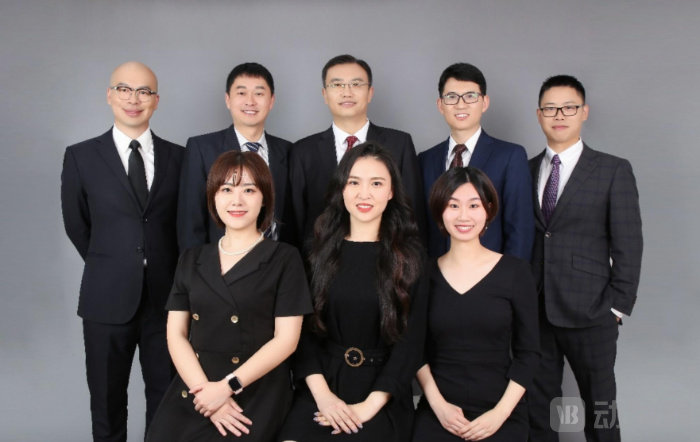
Huagai Capital Early-Stage Fund Team
Spotting New Opportunities, Huagai Capital Doubles Down on Biopharma and Medical Devices
Huagai Capital believes that the healthcare sector is now receiving significant attention, with its maturity steadily increasing. The value potential of the traditional investment model—where investors leveraged information asymmetry to identify opportunities in the market—is being continuously compressed. As the market approaches saturation, new opportunities can be explored by deeply analyzing this issue from two perspectives.
First, what changes have occurred in the supply-side system, and what new drivers have emerged to meet market demand?
Second, where are the new products and services that can fill the supply gap in the pharmaceutical industry?
From the perspective of supply and demand, China's healthcare market is in a state of imbalance.
On the one hand, China’s total healthcare expenditure has continued to rise in recent years, with a compound annual growth rate exceeding 15%, driving steady growth in demand markets such as pharmaceuticals. On the other hand, the supply side of the healthcare sector is undergoing reform. With the successive implementation of policies such as the “Two-Invoice System,” “Consistency Evaluation,” and “Volume-Based Procurement,” the value capture potential for relatively mature products is gradually shrinking.
The sustained rise in demand and the maturation of the healthcare industry are driving innovation from within the sector. Companies in their early stages possess significant growth potential. This characteristic is particularly evident in the innovative pharmaceuticals and medical device industries.
According to data from the National Bureau of Statistics and the Qianzhan Industry Research Institute, the capacity of China's pharmaceutical market will continue to expand, with its scale growing at a rate of 14%–17%.As pharmaceutical demand grows and the healthcare system becomes more robust, China will become one of the fastest-growing regions for global drug consumption.
Meanwhile, supply-side reforms driven by pharmaceutical policies—such as the review and approval system reform, the consistency evaluation, the two-invoice system, and volume-based procurement—have propelled the pharmaceutical industry into a new upcycle. This cycle is characterized by the dominance of innovative products, high-quality products, and leading enterprises, with continuously increasing industry concentration. R&D-focused pharmaceutical companies are poised to continue benefiting from policy dividends.
On the other hand, the market size of China's medical device industry has also shown a continuous upward trend.In recent years, relevant policies have been supporting the domestic substitution of medical devices. Some policies aim primarily to enhance the innovation capabilities of Chinese medical device manufacturers, laying the foundation for achieving domestic substitution. Other policies focus onGradually strengthen the regulation of procurement practices for imported medical devices, with a focus on increasing the market share of domestically produced medical equipment in healthcare institutions.
Nowadays, an increasing number of high-quality domestically produced medical devices are entering the market, with the market share of domestic brands continuously expanding. There remains significant potential for import substitution.Meanwhile, the medical device industry remains relatively fragmented, with the top ten domestic manufacturers accounting for only 10% of the market, indicating a strong trend toward industry consolidation in the future.
In this regard, Zhang Yi, Managing Partner of Huagai Capital’s Early-Stage Healthcare Fund, commented:“From our perspective, we aim to maintain a sharper focus within the healthcare sector. We are not only concentrating on biopharmaceuticals, medical devices, and consumables, but also zeroing in on specific niche scenarios within these areas. Huagai Capital’s early-stage funds focus on innovative biotechnologies within the biopharmaceutical sector; in the realm of devices and consumables, we avoid ‘red ocean’ markets and instead concentrate on the field of life science tools. We believe this segment exhibits the highest technological diversity, the most frequent technological iterations, and the most rapid advancements across the entire healthcare landscape.”
A Detailed Analysis of Huagai Capital's Early-Stage Fund Investment Roadmap in Healthcare
Huagai Capital's early-stage fund investment strategy can be divided into two parts.
First, seize the opportunities arising from the segmented development of domestic industries to invest in or build companies with platform potential. By cultivating synergistic capabilities of “platform + innovation,” enable the platform to bridge and serve innovative companies."Leverage platform resources to mitigate innovation risks, and drive platform value through innovation."
Second, focusing on significant unmet clinical needs, strategically positioning in specific innovative fields, investing in the most innovative and promising companies at early stages, and incubating and establishing frontier innovation enterprises.with the aim of achieving high returns.
Zhang Yi Elaborates on the Underlying Logic of Huagai Capital’s Early-Stage Fund Investments to VCBeat: “In fact, everything should be viewed from the perspectives of both supply and demand. We believe that domestic demand in China remains robust, which is a constant. On the supply side, the stringent implementation of national regulatory policies, coupled with intensifying competition, has created significant opportunities for innovation.”
However, innovation does not refer solely to product-level innovation. The overall development of innovative biopharmaceuticals, innovative medical devices, and innovative life science tools all relies on the existing industrial ecosystem. Therefore, within new tracks or new production and marketing systems, there is both the advancement of innovative technologies and the growth of platform-based enterprises that support such innovation. Both segments hold substantial commercial potential and investment significance.
Therefore, our investment strategy primarily focuses on incubating and providing in-depth support to early-stage enterprises.Foster innovation by building platforms, identify opportunities for platform-based companies within them, and achieve co-development with enterprises.Meanwhile, through deep and strategic collaborations with these platforms, we identify, create, and nurture a succession of new companies in the healthcare sector that possess strong technological attributes.We maintain a proactive investment stance, focusing not merely on identifying project investment opportunities, but on creating and developing them to drive industrial growth.。”
Huagai Capital is not fighting an unprepared battle. As mentioned earlier,Huagai Medical has established a relatively independent team for early-stage investments, with core members possessing extensive experience in both investment and the healthcare industry.
It is reported that Zhang Yi, Managing Partner of Huagai Capital’s early-stage healthcare fund, holds a Master’s degree in Clinical Medicine. He previously served as a Founding Partner of Sinopharm Capital and was a key member of the healthcare sector team at CCB International Industrial Investment Fund. His career also includes tenures at Sanofi-Aventis and US-based Bole Capital. With 20 years of experience spanning clinical practice, operations, and investment in the healthcare and life sciences sector, he has led the investment and incubation of numerous outstanding companies, including Abbisko Therapeutics, Good Doctor Hui Technology, Juyi Technology, Lanma Medical, Chuanxin Biologics, Ruilaipu, and Mozhuo Biotechnology.
Deng Liang, another partner at an early-stage healthcare fund, holds a Bachelor’s degree in Chemistry from Peking University, a Master’s degree in Medicinal Chemistry from the State University of New York, and an MBA from INSEAD in France. He has previously served as a key executive at Starr Capital, Sinopharm Capital, and Bristol-Myers Squibb, among other institutions. With over 15 years of experience in R&D, strategy, and investment within the healthcare industry, he has led the investment and incubation of numerous outstanding companies, including Abace Therapeutics, InnoCare Pharma, Chengyi Biopharma, LinkMed Pharmaceuticals, GenFleet Therapeutics, Ribon Therapeutics, Aier Eye Hospital Group (Note: "Aibo Nuode" typically refers to Aier or similar; however, based on common translations in biotech, it may refer to a specific entity like Eyebright Medical if context implies ophthalmology, but strictly phonetically it is often associated with Aier. Given the list includes biotechs, let's use the standard English name if known, otherwise pinyin/translated name. *Correction*: "爱博诺德" is **Eyebright Medical** or **Aibo Medical**? Actually, **Beijing Aibo Medical Technology Co., Ltd.** is commonly known as **Aibo Medical**. Let's stick to accurate industry names: **Abace Therapeutics**, **InnoCare Pharma** (Yifang), **Chengyi Biopharma**, **LinkMed**, **GenFleet**, **Ribon Therapeutics**, **Aibo Medical**, **Jijing Medicine**, and **Semma Therapeutics**.)*Refined Translation for Precision:*Deng Liang, a partner at an early-stage healthcare fund, earned a B.S. in Chemistry from Peking University, an M.S. in Medicinal Chemistry from the State University of New York, and an MBA from INSEAD in France. He has held senior leadership positions at institutions such as Starr Capital, Sinopharm Capital, and Bristol-Myers Squibb. With more than 15 years of experience in healthcare R&D, strategy, and investment, he has spearheaded the investment and incubation of leading companies including Abace Therapeutics, InnoCare Pharma, Chengyi Biopharma, LinkMed Pharmaceuticals, GenFleet Therapeutics, Ribon Therapeutics, Aibo Medical, Jijing Medicine, and Semma Therapeutics.
Huagai Capital’s early-stage healthcare fund team possesses a robust knowledge framework, enabling it to rapidly grasp the underlying logic of industry development and equipping the team with sharper insights. This allows them to deeply identify industry opportunities, seize strategic advantages, and drive industrial growth.
# About the Future
“The emergence of opportunities in the early-stage healthcare market is a notable phenomenon. For us, however, the priority is to look beyond this phenomenon and achieve our goal of staying closely aligned with the industry. Whether we co-incubate projects with entrepreneurs or proactively initiate incubation efforts, these are merely means to an end. What truly matters is deepening our engagement with the industry, gaining a sharper understanding of its trends, and ultimately deploying our capital and related resources in ways that best support industrial development. By combining these resources with entrepreneurs’ original vision and technological expertise, we aim to create both social and economic value."Zhang Yi remarked.
While uncertainties may arise in the industry’s development, our original aspiration—to solve problems, create value, and continuously drive industry progress—will never change.
Going forward, Huagai Medical’s early-stage fund will adopt an industry-centric approach, focusing on unmet market needs and early-stage projects, while consistently and steadily deploying resources to drive industry development.