

German Radiopharmaceutical Leader ITM Files IPO Prospectus Following Strategic Partnerships with China National Nuclear Corporation and United Imaging
As the flaming arrow of centralized procurement sliced through the silent night sky, the scattered sparks seared a chorus of screams from pharmaceutical companies.
Amid headwinds, nuclear medicine drugs have forged ahead with greater vigor due to the unique characteristics of their industry, emerging as a pharmaceutical “safe haven” that has weathered centralized volume-based procurement.
During China’s planned economy era, the nuclear industry was part of the nation’s strategic system, with all sectors involving nuclear resources strictly controlled by the central government. This sector was not liberalized toward a market economy even after the reform and opening-up. In the field of radiopharmaceuticals, institutions involved in the research and development, production, and use of radiopharmaceuticals are strictly regulated under the Administrative Measures for Radioactive Pharmaceuticals. Particularly in the upstream segment, the supply of radiopharmaceuticals relies heavily on two leading companies: China Isotope & Radiation Corporation (CIRC) and Dongcheng Pharmaceutical. Every decision made by these two enterprises plays a pivotal role in the development of China’s radiopharmaceutical industry.
Abroad, nuclear resources are relatively open, and innovation in radiopharmaceuticals is more advanced. Consequently, over the past two years, a number of innovative companies in the radiopharmaceutical sector have gradually emerged worldwide and begun to engage with the domestic industry.
In 2019, China Isotope & Radiation Corporation signed a cooperation agreement with Germany’s ITM (ITM Isotopen Technologien München, hereinafter referred to as “ITM”) for the large-scale production of GMP-grade Germanium-68/Gallium-68 generators and carrier-free Lutetium-177. As the collaboration deepened, the two parties formally signed a joint venture agreement in 2021, marking the establishment of the first Sino-German joint venture in China dedicated to supplying domestically produced next-generation theranostic medical isotopes.
This is not the only interaction between this German company and China. In April 2019, Germany’s ITM signed a strategic cooperation agreement with United Imaging Healthcare to collaborate in areas such as marketing, sales, imaging, and related products, joining forces to provide innovative products and high-quality services to customers in China and global markets.
Under the agreement, ITM will provide matched radiopharmaceutical solutions for United Imaging’s PET-CT devices in the Chinese market. Meanwhile, both parties will join forces to expand their presence in the global market by establishing joint on-site support teams, ensuring timely product supply, and providing relevant customer training. Furthermore, the two companies will collaborate on the innovation and optimization of precision diagnostic imaging, covering areas such as radiopharmaceuticals, image processing, digital imaging, patient workflows, and patient management and support.
Why has ITM continuously garnered favor from China’s “national team” in nuclear medicine and the leading players in medical imaging? What kind of company is ITM, which rarely appears in news reports both domestically and internationally? Who comprises its core management team, and what sets it apart? VCBeat (WeChat ID: vcbeat) seeks to answer these questions.
ITM is a globally leading biotechnology group specializing in radiopharmaceuticals, dedicated to the research and development, production, and global supply of novel diagnostic and therapeutic radioisotopes and radiopharmaceuticals.
Since its establishment in 2004, ITM and its subsidiaries have built GMP manufacturing capabilities and a robust global supply network, including innovative, state-of-the-art medical radioisotope and generator platforms for next-generation targeted cancer diagnosis and therapy.
Figure: ITM’s Historical Financing Rounds
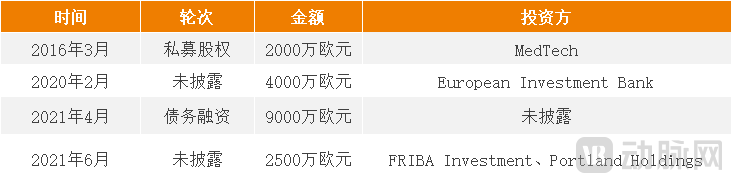
Data source: Crunchbase; chart by VCBeat
As can be seen from the table above, over the past seven years from 2016 to the present, ITM has raised more than €175 million (approximately RMB 1.26 billion) in funding support. Capital has demonstrated strong confidence in the radiopharmaceutical sector and ITM through substantial financial commitments.
Although capital has bet on its passion, ITM remains somewhat enigmatic, rarely making public appearances online. This may be attributed to the low-profile nature of its two executive directors.
The Executive Board of ITM consists of Steffen Schuster and Klaus Maleck.
Both individuals possess profound academic foundations and extensive management experience, with a combined total of over 50 years in management roles.

ITM Group CEO Steffen Schuster
Steffen graduated from Saarland University with a Master’s degree in Economics.
Steffen Schuster has served as CEO of ITM since December 2011, bringing nearly 30 years of executive experience.
He was previously a partner at TVM Capital and served as Chief Financial Officer of the publicly listed company cycos AG. Early in his career, Steffen also worked in the Networks Division of Siemens, where he held various leadership roles, including in international mergers and acquisitions, and co-founded the Silicon Valley–based Mustang Ventures fund.
During his tenure at ITM, he significantly expanded the international development and production of medical radioisotopes and radiopharmaceuticals, successfully leading ITM’s transformation from a pure radioisotope manufacturer into a global biotechnology and radiopharmaceutical company. Furthermore, he established key strategic partnerships, secured relevant equity and debt financing—including loans from the European Investment Bank—and opened new ITM growth sites in Germany and the United States.

ITM Group CFO Klaus Maleck
Dr. Klaus Maleck holds an MBA and a Master’s degree in Biotechnology from the École Supérieure de Biotechnologie de Strasbourg, as well as a Ph.D. in Biochemistry from the Max Planck Institute in Cologne, Germany.
Dr. Klaus Maleck joined ITM in June 2021 as Chief Financial Officer.
Prior to joining ITM, he served as Chief Executive Officer of TETEC AG, a fully integrated developer and manufacturer of regenerative medicine within the Aesculap/B. Braun Group. Under Klaus’s leadership, the company grew from 30 employees to become one of the largest manufacturers in the field. Previously, he also held the positions of Chief Financial Officer and Chief Business Officer at Evotec AG, where he witnessed the company’s listing on the NASDAQ stock exchange.
In the early stages of his career, Klaus was a co-founder and Chief Financial Officer of BioGeneriX AG and Ratiopharm’s biosimilars business, as well as a senior advisor in the life sciences practice at McKinsey & Company. He began his career as a research scientist at Novartis Biotechnology and at the Genomics Center in North Carolina, USA. He has over 25 years of executive experience in the biopharmaceutical industry.
Two executive board members, each with their own strengths, are driving ITM toward steady and sustainable growth.
ITM is headquartered at the Technical University of Munich (TUM) and features GMP-certified laboratories dedicated to the manufacturing of next-generation radiopharmaceuticals. The laboratory space currently exceeds 900 square meters (with an additional 4,600 square meters to be added in the near future) and is equipped with cleanrooms and dedicated hot cells for GMP-compliant radiolabeling, achieving up to ISO Class 5 (Grade A) standards.
Backed by the FRM-II neutron source and Munich Airport, ITM enjoys superior logistics capabilities—shipping within 24–48 hours in Europe and within 72 hours overseas.
ITM’s product portfolio encompasses pharmaceuticals, equipment, and services, corresponding to radiopharmaceuticals and medical radioisotopes, radiolabeling and quality control equipment, and GMP-compliant radiolabeling services.
Medical Radioisotopes
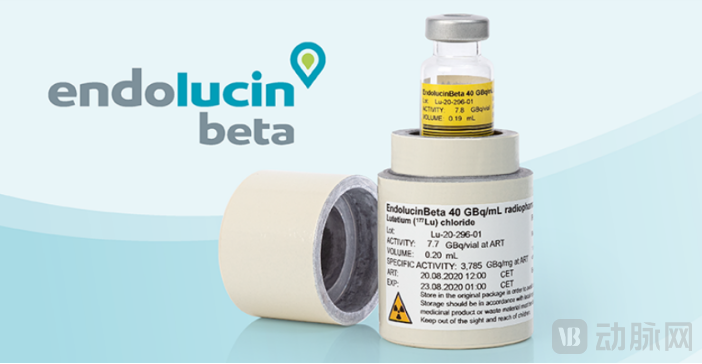
EndolucinBeta Product Image
The active ingredient of EndolucinBeta is no-carrier-added (n.c.a.)177Lu。
177Lu is currently the most promising and market-dynamic radionuclide for integrated targeted radiotheranostics. It can be used to prepare radiopharmaceuticals with tumor-targeting capabilities for both diagnostic and therapeutic purposes. In recent years, it has been widely applied in research and clinical applications of targeted radionuclide therapy in developed countries in Europe and the United States, achieving favorable outcomes.
177Lu has two preparation methods, yielding carrier-added177Lu and no-carrier-added (n.c.a.)177Lu。
With Carrier177Compared with Lu, no-carrier-added (n.c.a.)177Lu Product with Intermediate-to-Long Half-Life177The 177Lu impurity content is extremely low, with a specific activity exceeding 3000 GBq/mg. It offers the advantages of saving precursor materials for labeled compounds, extending the shelf life of radiolabeled drugs, and facilitating the disposal of radioactive waste; therefore, it is no-carrier-added (n.c.a.).177Lu has broader prospects for clinical application.
No-carrier-added (n.c.a.) ¹⁷⁷Lu is a next-generation radiopharmaceutical precursor for targeted radionuclide therapy, used to treat prostate cancer, neuroendocrine tumors, and other diseases.
EndolucinBeta has a half-life of 6.647 days and a maximum specific radioactivity exceeding 3000 GBq/mg. EndolucinBeta features extremely high radionuclidic purity and is free of the metastable isomer Lutetium-177m (Lu-177m); therefore, there is no need to store or transport radioactive waste associated with these impurities during use. Furthermore, this product can serve both as a therapeutic agent and as a tracer for diagnostic purposes, enabling the monitoring of drug distribution in vivo.
EndolucinBeta is the first-in-class no-carrier-added (n.c.a.)177Lu’s brand name, and the first no-carrier-added (n.c.a.) product to apply for marketing authorization in the European Union177Lu’s drug. The product received authorization in the European Union in 2015.
EndolucinBeta is inherently radioactive and, like any other radiopharmaceutical, carries certain side effects and risks. For instance, the most common side effects of EndolucinBeta include anemia, nausea, vomiting, and mild, temporary hair loss. However, in clinical practice, physicians exercise caution in dosing, administering very small amounts to ensure that the expected benefits for patients outweigh the risks.
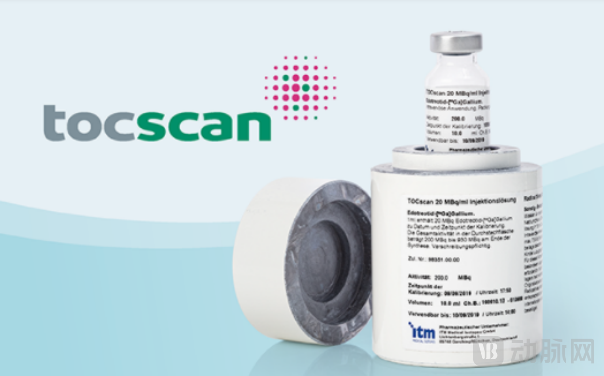
TOCscan Product Image
TOCscan is a ready-to-use radiopharmaceutical for the diagnosis and staging of neuroendocrine tumors (NETs), and serves as the diagnostic companion to Edotreotide to ensure high-quality PET imaging.
This product is used for diagnosis in positron emission tomography (PET) scans and is administered prior to such examinations. The radioactive substance contained within is detected by PET and visualized as images.
This product is currently sold in Germany, Austria, France, and other regions.
Radioactive Labeling and Quality Control Equipment
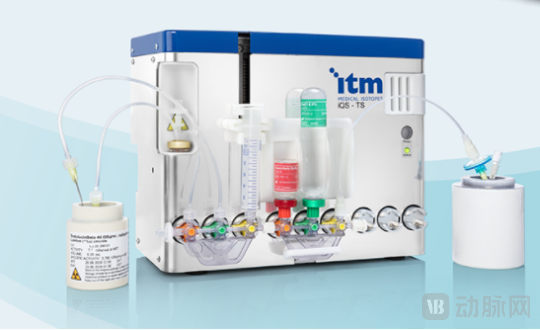
iQS-Theranostics Synthesizer Product Image
The iQS-TS is a fully automated cassette-based theranostic synthesizer that facilitates the routine preparation of radiolabeled biomolecules.
The computer-controlled iQS-TS module employs predefined labeling protocols for the GMP-compliant production of radiolabeled biological tracers, such as peptides, antibodies, small molecules, or hormones, targeting a broad range of biomarkers including somatostatin receptors, prostate-specific membrane antigen (PSMA), bone tissue, bombesin receptors, or integrins.
The production of radiopharmaceuticals using the iQS-TS complies with current GMP standards. This module offers simple, intuitive software-guided processing, rapid production, and convenient filter integrity testing.
Prior to each synthesis, the product performs a self-check. RFID tags ensure proper GMP documentation and prevent the use of expired consumables.
Real-time control and visualization of the synthesis process include volume, temperature, and activity control (intelligent radiochemical yield protection). The fully functional iQS-TS features a compact footprint of only 26 x 21 x 18 cm and requires no additional components or installation prerequisites, such as gas supply.
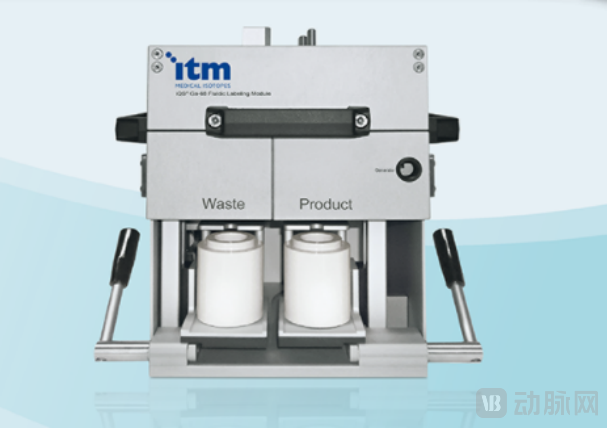
iQS® Ga-68 Fluidic Labeling Module Product Image
⁶⁸Ge/⁶⁸Ga generators produce the medical radioisotope ⁶⁸Ga, which is used in the field of targeted radionuclide therapy for diagnosing various cancers, including prostate cancer and neuroendocrine tumors.
⁶⁸Ga has a half-life of 68 minutes and a positron decay branching ratio of 89%, making it suitable for labeling small-molecule compounds that can rapidly distribute and reach target sites in vivo, thereby enabling high-quality imaging approximately one hour after intravenous injection. The relatively short half-life effectively reduces the radiation dose received by patients.
Thanks to its favorable radionuclide properties, the availability of ⁶⁸Ge-⁶⁸Ga generators, straightforward radiolabeling chemistry, and ease of kit formulation, the application of ⁶⁸Ga has become increasingly widespread, ranking second only to ¹⁸F in PET imaging.
⁶⁸Ga-labeled radiopharmaceuticals have been widely used to investigate targeted receptors (such as G protein-coupled receptors, human epidermal growth factor receptors, folate receptors, and urokinase receptors), enzymes, antigens, and biological processes including tumor angiogenesis, hypoxia, proliferation, apoptosis, and glycolysis. Other applications under investigation include myocardial perfusion imaging, lung perfusion imaging, and imaging of inflammation and infection.
iQS ® The Ga-68 Fluid Labeling Module is a compact, self-shielded system designed for the rapid, reliable, and convenient preparation of ⁶⁸Ga-labeled PET tracers.
Radiation protection for this product is provided by a compact lead shielding design and the intelligent integration of fluid systems. Expensive hot cells are not required. This reduces costs while ensuring the daily operational safety of personnel.
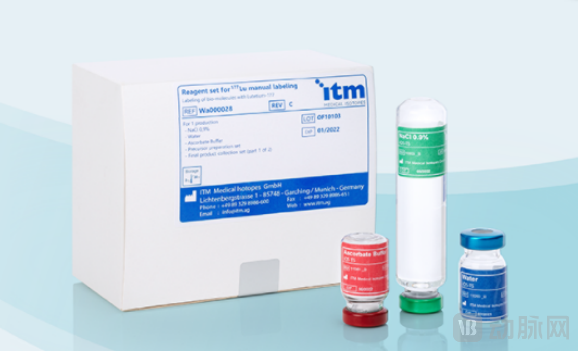
Reagent Kit Product Image
This reagent kit enables simple and convenient preparation of 177Lu-labeled targeting molecules.
The reagent kit includes all items required for manual labeling: reagents, filters, syringes, and needles. Moreover, the labeling process takes only a few minutes. It is easy to use and cost-effective.
Furthermore, ITM is developing a proprietary portfolio and continuously advancing its pipeline of precision oncology targeted therapies through various stages of clinical development to address a range of cancers, such as neuroendocrine tumors, glioblastoma, and prostate cancer.
Whether for existing products or those under development, ITM boasts a comprehensive product portfolio, strategically positioned across the “diagnostics + therapy” spectrum of radiopharmaceuticals, demonstrating strong growth potential.
Why Have China Isotope & Radiation Corporation and United Imaging Healthcare Chosen to Partner with ITM? There Are Approximately Five Key Reasons.
1. China's development of radiopharmaceuticals started late.The global development of nuclear medicine has a history spanning a century, whereas China’s nuclear medicine industry started relatively late in the 1950s. Despite more than six decades of development, most radionuclide production can now be localized. However, compared with developed countries in Europe and the United States, there remains a gap in both the variety of medical isotopes available and the number of approved products. High-volume medical isotopes such as Molybdenum-99, Iodine-125, Strontium-89, and Lutetium-177 are entirely dependent on imports. The initial collaboration between the two parties primarily focused on GMP-grade Germanium-68/Gallium-68 generators and carrier-free Lutetium-177.
2. Shortage of Nuclear Medicine Professionals.Specialized professionals are a vital productive force driving industry advancement. In China, medical institutions must obtain the License for Radioactive Diagnosis and Treatment, the License for Use of Radiopharmaceuticals, and the Radiation Safety License from relevant national authorities in accordance with applicable laws and regulations to conduct radionuclide therapy. Furthermore, related personnel must acquire professional qualifications, practice licenses, and complete relevant training in nuclear medicine before they can assume their duties.
As of 2019, there were 12,500 individuals engaged in nuclear medicine-related work in China, including 5,400 physicians, 3,700 technologists, and 2,600 nurses, while only 210 were radiochemistry personnel, indicating a severe shortage of nuclear medicine professionals.
At its core, the competition in the “radiopharmaceutical” market hinges on two key barriers: technology and talent. International collaboration can accelerate the overcoming of technological lags, drive the development of domestic talent, provide high-quality and economically sustainable treatment options for cancer patients in China, and advance the development of nuclear medicine and public health in the country.
3. The people's growing demand for a healthy lifestyle.With cancer incidence rates continuing to rise, data released by the National Cancer Center indicates that China sees 4.29 million new cancer cases annually, averaging seven diagnoses per minute. Nuclear medicine, based on radioactive medical isotopes and their associated pharmaceuticals, stands as a hallmark of modern medicine. It is closely linked to the life and health of the general population and plays an irreplaceable role in the diagnosis and treatment of malignant tumors, cardiovascular and cerebrovascular diseases, among others. The combination of Lutetium-177 (Lu-177) with various targeting molecules to treat multiple systemic metastatic malignancies is currently recognized by the medical community as a solution with revolutionary potential. The people’s growing demand for healthier lives and higher-quality healthcare has become an invisible yet powerful force driving industry development.
4. A Duopoly of Evenly Matched Competitors,Aligning with international standards to drive new growth. Currently, China’s radiopharmaceutical market is characterized by a duopoly dominated by China Isotope & Radiation Corporation (CIRC) and Dongcheng Pharmaceutical. To introduce new variables and reshape the competitive landscape, it is essential to look beyond domestic borders and bring in new international partners.
5. Meanwhile, ITM is also actively seeking external partners.
With favorable timing, geographic advantages, and strong interpersonal synergy, the collaboration between the two parties came to fruition naturally.
References
1. Huachuang Pharma’s Song Kai Team: “In-Depth Report on Dongcheng Pharmaceutical (002675): The Global Nuclear Medicine Market Enters an Explosive Growth Cycle”
2. China National Nuclear Corporation Magazine: "Radiopharmaceuticals: Breaking Through at the Source"
3. China Isotope & Radiation Corporation: “Cooperation for Win-Win Results, Building on Past Successes” — CNNC High-Tech and Germany’s ITM Officially Sign Joint Venture Agreement
4. China Science Daily, Li Sijin: “Nuclear Phobia, Shortages of Nuclear Materials and Radiopharmaceuticals, and Talent Gaps! How Can Nuclear Medicine in China Develop Healthily?”