

ZBD Pharmaceutical's Strategic Growth Leveraging Traditional Chinese Medicine: IPO Prospectus Summary
ZBD Pharmaceutical
Traditional Chinese Medicine (TCM) Product Developer
The year 2021 will undoubtedly be remembered by the pharmaceutical industry.
From the perspective of the secondary market, the frenzy surrounding pharmaceutical stocks in 2020 has faded, with 2021 being a year of “pain mixed with pleasure.” The fact that shares of multiple A-share listed pharmaceutical companies fell below their IPO prices on their first day of trading sends a clear message to the outside world: the pharmaceutical industry has entered a period of significant transformation.
However, in contrast to the cooling secondary market, the pharmaceutical industry continues to exhibit a thriving landscape. According to Frost & Sullivan, although the overall market size declined in 2020 due to the pandemic, the total scale of China’s pharmaceutical market is expected to maintain a sustained upward trajectory and is projected to surpass RMB 2 trillion by 2023.
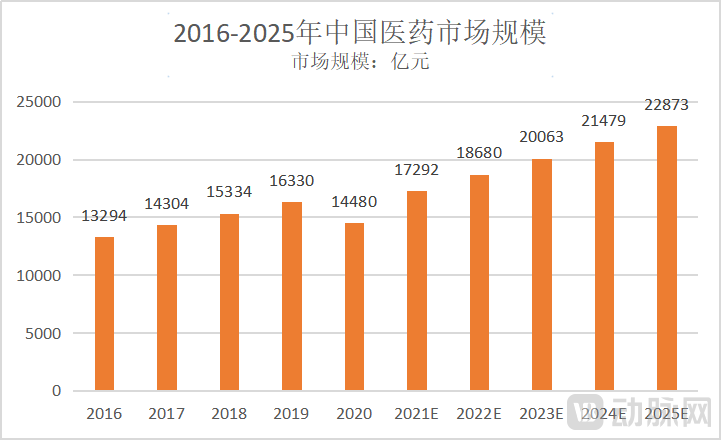 Data from Frost & Sullivan, compiled by VCBeat
Why Is the Secondary Market Cooling Down Amid Overall Market Expansion? The Reason May Lie in Innovation—Which Takes Time.
Generally speaking, the primary source of profit in the pharmaceutical industry stems from the successful development of new drugs. However, this is often closely tied to the strength of a pharmaceutical company’s independent research and development capabilities.
New drug development may face challenges such as “high risk, long cycles, and high investment.” Perhaps it is also due to these pain points in new drug development,A large number of pharmaceutical companies are more willing to allocate capital and human resources to the improvement of marketed drugs rather than to new molecular entities (NMEs)., thereby mitigating risks in new drug development and enhancing their own returns.
Even in the United States, the vanguard of “blockbuster drugs,” the number of newly approved drugs has not exceeded 60 per year over the past decade. In 2021, first-in-class (FIC) new drugs accounted for 54% of approvals, marking the highest proportion in the last ten years. This underscores the considerable challenges associated with innovation, particularly FIC innovation. Preliminary statistics indicate that in 2021, China’s National Medical Products Administration (NMPA) approved a total of 76 new drugs (excluding new indications and vaccines), comprising 37 imported new drugs, 12 innovative traditional Chinese medicines, and 27 domestically produced innovative drugs. This further highlights the difficulties inherent in pharmaceutical innovation. Nevertheless, the high returns offered by innovative drugs continue to encourage pharmaceutical companies to sustain their investments in this field.
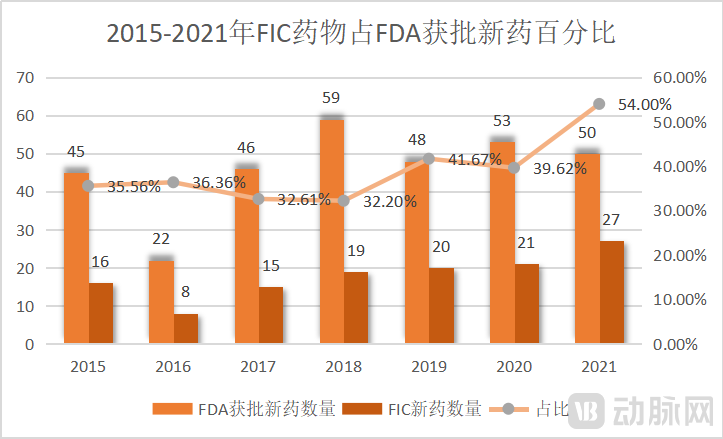 VCBeat, compiled from public sources
In the context of increasing difficulty in new drug development,Some pharmaceutical companies have also chosen to focus on marketing., aiming to further expand its market share by increasing investment in marketing, with the expectation of achieving substantial profit returns.
Chen Hai, President of ZBD Pharmaceutical, who has worked at multiple pharmaceutical companies and boasts decades of experience in the industry, has a clear understanding of the factors influencing its development:
First and foremost, policy exerts the most critical influence on the pharmaceutical industry. As a sector vital to national stability and public welfare, it is guided by state policies; “pharmaceutical companies must rapidly adjust their strategic planning and industrial layout during development to align with the requirements and standards for high-quality growth in the pharmaceutical industry.” Secondly, some pharmaceutical enterprises remain constrained by habitual thinking and path dependence, resulting in insufficient emphasis on innovation. Finally, there is still a shortage of core talent in China’s pharmaceutical industry, representing an area that requires improvement.
How Pharmaceutical Companies Can Innovate: A Question Requiring Industry-Wide Reflection
Pharmaceutical companies in the same industry as ZBD Pharmaceutical have maintained rapid growth for a long period of time.
Chen Hai, President of ZBD Pharmaceutical, remarked, “The 1990s witnessed a flourishing era for Chinese pharmaceutical companies. This was driven, on one hand, by China’s abundant resources of traditional Chinese medicinal materials, making the modernization of traditional Chinese medicine an inevitable trend in historical development; on the other hand, market economy forces created the potential for structural changes within the pharmaceutical industry.”
Taking ZBD Pharmaceutical as an example, from its establishment in 1996 to its listing in 2015, the company, like other pharmaceutical enterprises, experienced steady and rapid development and further expanded its production scale. ZBD Pharmaceutical has diversified its portfolio beyond a primary focus on R&D of innovative traditional Chinese medicine (TCM) drugs to include multiple sectors, such as “global-first” innovative drugs—a path that Chinese pharmaceutical companies are inevitably destined to follow. ZBD Pharmaceutical has achieved a strategic restructuring of its pharmaceutical industrial system, which serves as a microcosm of the entire pharmaceutical industry.
A turning point may have emerged around 2011, “when the entire pharmaceutical industry shifted from quantitative expansion to qualitative development. This was largely driven by the state’s strengthened regulatory oversight of the pharmaceutical sector at the policy level. The introduction of a series of healthcare reform policies—such as the restrictions on antibiotic use, the new version of Good Manufacturing Practice (GMP), and centralized procurement for essential medicines—also propelled innovation and transformation within the industry. Numerous pharmaceutical companies actively pursued strategic transitions, moving away from previous steady-state growth models toward refined, precision management.”
Looking back from today’s perspective, most pharmaceutical companies at that time tilted their business focus toward marketing, and the majority lacked experience in refined internal management. This was also closely related to the industry’s development environment and historical stage; Chinese pharmaceutical enterprises were operating in a relatively lenient era, with insufficient awareness of high-quality development and operational excellence. However, driven by national policy initiatives, more pharmaceutical companies have come to recognize the importance of R&D and internal governance.
However, ZBD Pharmaceutical demonstrated a more forward-thinking vision. As early as 2007, the company proposed a strategic framework to gradually expand from traditional Chinese medicine (TCM) into innovative drugs, reflecting its keen sensitivity to changes in the broader market environment. Public data indicates that in 2008, China had more than 200 biotechnology enterprises, with over 40 companies having obtained trial production or manufacturing approvals for genetic engineering drugs. Meanwhile, the output value of biochemical drugs reached RMB 10.4 billion, predominantly driven by generic products. Therefore, starting in 2009, ZBD Pharmaceutical began planning the construction of its Drug Research Institute, which was completed and put into operation in 2011. While intensifying R&D efforts in TCM, the institute also diversified its portfolio to include chemical drugs and innovative therapeutics.
In 2015, amidst the broader transformation of the pharmaceutical industry, ZBD Pharmaceutical listed on the A-share market, embarking on a dual strategy of “product operation + asset management,” while simultaneously intensifying its efforts to achieve breakthroughs in innovative transformation. Subsequently, it basically established a growth pattern driven by the “three carriages” covering traditional Chinese medicine, chemical drugs, and biological drugs (via equity investments).
From the 2016 “Outline of the Strategic Plan for the Development of Traditional Chinese Medicine” to the late-2021 “Notice on Several Policy Measures to Accelerate the Characteristic Development of Traditional Chinese Medicine,” national ministries and commissions have progressively intensified policy support, while various regions have continuously advanced measures to encourage the development of traditional Chinese medicine (TCM). The positive signals released by these policies have also been perceived by the market. On the first trading day of China’s A-share market in 2022, TCM-related stocks rose by nearly 4%, bringing TCM back into the spotlight of capital flows and creating visibility for ZBD Pharmaceutical’s earlier strategic investments in the TCM sector.
In fact, in addition to successfully filing 550 commonly used TCM formula granules and gaining market access, ZBD Pharmaceutical has conducted secondary development of its existing products in collaboration with renowned universities and research institutions. Meanwhile, the company has intensified R&D efforts for in-house hospital preparations; among the 49 completed formulations, 39 have been approved for dispensing use across all Grade II-A and above hospitals throughout Heilongjiang Province and have qualified for medical insurance reimbursement. Furthermore, ZBD Pharmaceutical is also expanding upstream in the traditional Chinese medicine industry.
The Bozhou Chinese Herbal Medicine Commodity Trading Center, established and operational since 2019, is the first national spot trading platform for bulk Chinese herbal medicines approved by the Anhui Provincial Government. By adopting a novel business model integrating “Chinese herbal medicines + Internet + warehousing and logistics + quality testing + financial services + industrial support,” it has built a modern market circulation system for Chinese herbal medicines in the Internet era, promoting the transformation and upgrading of the traditional Chinese medicine industry. Supported by offline exhibition markets and an online trading platform, it provides online trading services for bulk Chinese herbal medicines to farmers, merchants, and pharmaceutical enterprises, thereby addressing information asymmetry, trading difficulties, and lack of quality assurance among upstream and downstream industry participants.
In the field of chemical drugs, the company adheres to a strategy that combines imitation with innovation, collaborative introduction with independent R&D, and domestic registration with import/export registration, facilitating a transition from generic drug development to the research and development of high-end formulations and innovative drugs. Its generic drug portfolio covers 67 products across nine therapeutic areas, while its innovative drug pipeline spans eight therapeutic areas; notably, multiple products for anti-tumor and anti-liver cancer indications have successively obtained patents in Europe and the United States. In the realm of biological drugs, guided by clinical needs and leveraging high-quality R&D resources both domestically and internationally, the company has achieved diversified product development and comprehensively laid out its R&D pipeline for monoclonal antibodies, bispecific antibodies, nanobodies, and antibody-drug conjugates (ADCs).
In fact, as a member of the pharmaceutical industry, ZBD Pharmaceutical has maintained its capacity for independent thinking in the face of industrial transformation. “The biggest problem facing most pharmaceutical companies is habitual thinking and path dependence; past achievements have gradually become a ‘burden’ for these enterprises,” ZBD Pharmaceutical pointed out. “Another issue constraining corporate development is weak innovation awareness and insufficient capabilities. However, ZBD Pharmaceutical has been able to break through the limitations of habitual thinking and geographical constraints, actively shifting its talent acquisition focus to developed regions such as Beijing and Shanghai, thereby attracting more high-quality talents to join the company.” These efforts have created the conditions for ZBD Pharmaceutical’s rapid growth.
ZBD Pharmaceutical’s strategic innovation primarily focuses on the following aspects:
Strengthen R&D Layout.For pharmaceutical companies, innovation is the lifeblood. Prior to its transformation, the company primarily established a “five-in-one” R&D model, comprising independent R&D, secondary development, joint R&D, investment-driven R&D, and collaborative introduction. Following the transformation, ZBD Pharmaceutical has continuously strengthened its in-house R&D capabilities and established a “One Center, Four Institutes” R&D system. This system is led by the Beijing R&D Management Center and supported by the Beijing Institute of Pharmaceutical Research, Harbin Institute of Pharmaceutical Research, Bozhou Institute of Pharmaceutical Research, and Hangzhou Institute of Pharmaceutical Research, forming an integrated R&D framework for traditional Chinese medicine, chemical drugs, and biological products.
Building a research institute from the ground up requires greater boldness and more time. To catch up with pharmaceutical companies possessing advanced technologies, ZBD Pharmaceutical initially opted to establish its own research institute, but later also chose to build institutes through equity investments, as exemplified by the Bozhou Drug Research Institute. Furthermore, recognizing the importance of innovative talent and acknowledging the disadvantages of its location in Harbin, ZBD Pharmaceutical decided to set up research institutes in other cities and offer competitive compensation packages to attract top talent.
Currently, ZBD Pharmaceutical has established a core R&D team of more than 200 members, dedicated to fields such as TCM formula granules, secondary development of proprietary Chinese medicines, consistency evaluation of generic drugs, and the research and development of innovative and biological drugs. Through years of investment, ZBD Pharmaceutical has significantly reduced its reliance on CRO companies and further enhanced its own project management capabilities. In 2021, ZBD Pharmaceutical submitted applications for more than 10 drug products (currently under review), and it is expected to maintain an annual submission rate of five new drug applications in the future. Thus, the innovation capability of ZBD Pharmaceutical has been further strengthened.
Strengthen Production Quality Control.Production quality determines a company’s market response. ZBD Pharmaceutical has accelerated its digital and intelligent transformation in production. Chen Hai stated, “In terms of digital transformation and intelligent manufacturing layout for traditional Chinese medicine (TCM), ZBD Pharmaceutical has ranked among the top 20 TCM pharmaceutical enterprises.” In the field of TCM manufacturing technology, ZBD Pharmaceutical collaborated with Zhejiang University to digitally and intelligently upgrade its whole-process quality control system, laying the foundation for cost control and refined management. Furthermore, last October, ZBD Pharmaceutical was included in Heilongjiang Province’s key incubation pool for smart factories.
Strengthen marketing transformation.Over the past four years, ZBD Pharmaceutical has gradually transitioned from a traditional agency-based model to a sales strategy dominated by “self-operated operations” and supplemented by “commercial distribution.” Today, the company maintains clear visibility into clinical usage at each hospital and feedback from both doctors and patients. Furthermore, leveraging these in-depth insights from post-market feedback, ZBD Pharmaceutical is using its marketing transformation to inform and improve R&D project initiation, incorporating recommendations from clinical experts during the project approval process.
Strengthen internal governance.From the perspective of ZBD Pharmaceutical, the ultimate measure of the quality of a company’s products and marketing lies in the construction of its internal systems. Starting with its management framework, ZBD Pharmaceutical has established a comprehensive modern corporate governance structure, leveraging collective wisdom and effort to maximize the value of its management team. Furthermore, the company has introduced a wide range of advanced digital management tools—spanning from operational and production management systems to KPI performance evaluation tools—to facilitate its digital transformation. This enhancement of operational and management capabilities further supports the company’s overall development.
The importance of digital transformation is self-evident.Chen Hai added that ZBD Pharmaceutical had already implemented an ERP system as early as 2004. In 2021, the company partnered with Deloitte and selected SAP S/4HANA, a world-class enterprise management software, to build its “Integrated Platform.” That same year, ZBD Pharmaceutical was honored with the “Annual Outstanding Digital Solution” award at the Heilongjiang Provincial Digital Economy Summit.
ZBD Pharmaceutical firmly believes that digital transformation will provide data support and basis for strategic decision-making in pharmaceutical companies, and can further reduce the impact of human factors in product manufacturing. For ZBD Pharmaceutical, early investment in digital transformation has also helped to further improve personnel efficiency.
Strategic transformation is not something that yields immediate results. However, ZBD Pharmaceutical has indeed obtained some verifiable data. Currently, while peer companies are experiencing declining performance, ZBD Pharmaceutical continues to maintain steady growth in its business performance. According to the 2020 financial report, despite the impact of the pandemic, the company still achieved growth in revenue and profits, which seems to indirectly validate the effectiveness of its strategic innovation.
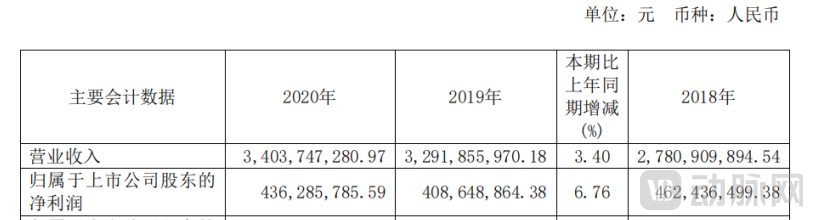 Screenshot fromZBD Pharmaceutical 2020 Annual Report
From the perspective of ZBD Pharmaceutical, strategic innovation in pharmaceutical companies will continue indefinitely, adjusting to changes in the dynamic environment. Even with past achievements, there is no room for complacency, as reliance on current paths and habitual thinking may emerge and hinder further corporate development. For enterprises, innovation will remain the central theme.
Under the current landscape, the potential changes in the entire pharmaceutical industry in the future are also quite evident:
I. With the further advancement and implementation of national policies, the pharmaceutical industry will increasingly prioritize high-quality development, internationalization, and refined management. This trend is also driving domestic pharmaceutical companies to enhance their internal governance capabilities.
II. Intensified competition will accelerate the reshuffling of the pharmaceutical industry. In recent years, domestic pharmaceutical companies have also accelerated restructuring and integration, leading to increased market concentration. Companies with more prominent comprehensive strengths, such as ZBD Pharmaceutical, will have greater room for development.
III. The future development of the industry will be more clinically oriented. This does not merely refer to products with technological leadership, but rather to those that offer unique therapeutic benefits to patients in clinical practice. Such products, which address unmet clinical needs, will garner greater market attention. ZBD Pharmaceutical is also continuously deepening its strategic layout in these relevant fields.
Chen Hai pointed out that, as a member of the pharmaceutical industry, ZBD Pharmaceutical will continue to advance with an innovation-driven strategy amidst the wave of healthcare transformation. Leveraging policy support for Traditional Chinese Medicine (TCM), ZBD Pharmaceutical will further strengthen its core competencies in TCM, while continuously expanding into innovative chemical drugs and biologics, thereby unlocking new avenues for profit growth.