

MicroSmart Files IPO Prospectus: Revolutionizing Clinical Practice with Proprietary Special Light Imaging Technology
In recent years, the incidence of thyroid diseases has been rising year by year. Among them, thyroid cancerBecomeThe solid tumor with the highest increase in incidence.2017Data from the National Cancer Center show that thyroid cancer ranks seventh in incidence among all malignant tumors. The incidence is even higher in women, ranking5position.
Although thyroid cancer has a high incidence rate, its survival rate is very high.However, due to the small volume of the parathyroid glands, their subtle coloration, significant anatomical variability, and their tendency to be symbiotic with or embedded within the thyroid gland, iatrogenic injury to the parathyroid glands is highly likely during treatment.
Transient hypoparathyroidism causes transient hypocalcemic symptoms, whereas permanent hypoparathyroidism results in persistent hypocalcemia, characterized by long-term paresthesia of the hands and feet and tetany of the extremities.Intraoperative severe damage to the parathyroid glands is classified as a Grade II, Class D medical malpractice incident, equivalent in severity to bilateral lower limb paralysis.
It is reported that over 50% of patients develop postoperative hypoparathyroidism. Therefore, “"Identification and Protection of Parathyroid Glands" has become one of the three globally recognized major challenges in thyroid surgery. Currently, the accuracy of the primary clinical methods for identifying parathyroid glands is less than 60%.Accurate localization and identification of the parathyroid glands hold significant clinical importance for both patients and physicians.
Based on feedback from clinicians, Micro Intelligent Technology has developed a parathyroid imaging system leveraging its proprietary autofluorescence imaging technology, effectively addressing the global challenge of parathyroid gland identification. It is reported that only three companies worldwide currently possess the capability to productize and commercialize related technologies: the French company Fluoptics, the U.S. company Ai Biomed (acquired by Medtronic), and the Chinese company Micro Intelligent Technology.
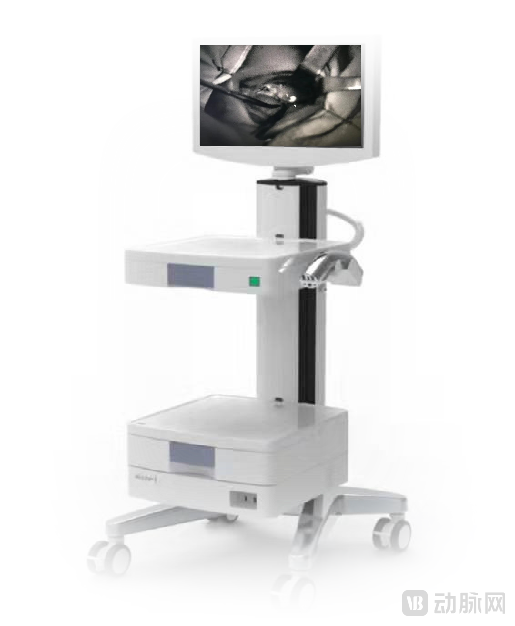
Product Image Source: Micro Intelligent
“Parathyroid Imaging System” is one of the representative products of Micro Intelligent.Given the product's high clinical application value, leading top-tier tertiary hospitals in China have spearheaded its inclusion in expert consensus guidelines.
Founded in 2017, the company has completed its nationwide layout across China after two rounds of financing, establishing management, R&D, production, and sales centers in Shanghai, Hangzhou, Changsha, and Jinan, respectively. The company possesses a globally leading special light imaging technology platform, holds more than 30 related patents, and ranks among the top three worldwide in terms of related patent search volume.
VCBeat Interviewed Mr. Yang Cong, Founder of Micro Intelligent Technology, to Gain Insights into the Company’s Development Strategy.
“Not Wanting to Be Controlled by Others”: Seizing the Historic Opportunity for Domestically Produced Medical Devices
In his view, “timing” has always been critical. For the founding of Micro Intelligent Technology, this “timing” was “domestic substitution.”
Some argue that the history of China’s medical device industry is a chronicle of domestic substitution. The traditional trajectory of “distribution–imitation–substitution” has been arduous and slow, particularly in the face of formidable technological patent barriers and established brand dominance erected by imported products. This challenge is especially pronounced for high-value-added devices with significant technical complexity.
Focusing on upstream technological innovation may offer a new pathway to drive transformative, root-cause changes, enabling domestically produced medical devices to achieve "overtaking on the bend."
The founding team of Micro Intelligent possesses extensive experience in the agency and sales of medical devices. Exemplified by Yang Cong himself, who has been engaged in the medical device trade for 15 years, the team has witnessed the industry’s rapid evolution and personally felt the predicament of being “constrained by others.”
Amidst the industry trends driven by China’s new healthcare reforms in recent years, the centralized procurement of drugs and medical devices, and strong policy support for medical device innovation and domestic substitution, Yang Cong has focused on driving innovative product development through breakthroughs in foundational technologies. He spearheaded the formation of a senior technical team within the industry, stating, “United by shared beliefs and values, we have collectively decided to fulfill our responsibilities to the nation and the industry.”
Amid the wave of domestic substitution, medical imaging diagnostic equipment has emerged as a key focus. Leveraging its technical team’s R&D expertise in specialized optical imaging, Micro Intelligent Technology has achieved breakthroughs by focusing on fluorescent molecular imaging technology.
This technology enables the detection of cellular and molecular abnormalities during disease progression, aligning with the development trends of modern precision surgery. It holds significant value in improving lesion clearance rates, enhancing organ protection, and controlling injury.
It has a wide range of applications. In addition to sentinel lymph node biopsy, assessment of tissue perfusion, and intraoperative tumor imaging, it can also be used in clinical scenarios such as parathyroid localization and identification, visualization of the gallbladder and bile ducts, detection of colorectal anastomotic leaks, visualization of lymphatic return, nerve bundle localization, and visualization of revascularization in coronary artery bypass grafting., covering virtually all surgical specialties.
Over the past two years, with the successful commercialization of relevant technologies, Micro Intelligent’s specialized optical imaging products for open and minimally invasive surgeries have all obtained regulatory approval and been launched on the market.Notably, the parathyroid fluorescence imaging system obtained a Class II registration certificate from the National Medical Products Administration (NMPA) in November 2020, making it the only such product in China and ranking among the top three globally. Additionally, its fluorescence endoscopic imaging system has positioned the company as one of the first in China to secure such registration certification.
“Walking on Two Legs”: Complete Product Loop and Three Core Technologies
Parathyroid products have entered an iterative phase, addressing clinical pain points through a “qualitative + quantitative” approach and establishing a closed-loop “equipment + consumables” business model.
Overall, Micro Intelligent’s product portfolio is divided into three major segments:Special-light imaging devices for breast and thyroid surgery, special-light imaging devices for minimally invasive surgery, and associated surgical consumables.
The founding team of Micro Intelligent has been deeply immersed in the healthcare industry for many years. They understand that, as a start-up medical device company, relying solely on the R&D, production, and sales of equipment entails significant cost pressures. Therefore, to enhance the company’s self-sustaining viability in the short term, consumables represent a highly promising strategic direction.
“Equipment + Consumables” not only enhances the company’s product portfolio in the surgical field and safeguards its cash flow, but also strengthens stickiness with channel distributors and end customers.
"Born from clinical practice and applied back to it, Micro Intelligent Technology emphasizes the integration of technology with clinical care. The company maintains close, long-term interactions with clinicians and experts, enabling it to promptly grasp frontline clinical needs. Its early entry into the field of thyroid surgery was driven by this very area being the initial 'challenge' presented by clinical experts."
Specifically regarding products, Micro Intelligent's first-generation parathyroid fluorescence imaging system has filled a domestic gap.It helps surgeons identify the parathyroid glands more easily, significantly improving surgical efficiency. The principle relies on the high expression of calcium-sensing receptors in parathyroid cells; upon illumination with light of a specific wavelength, the glands emit near-infrared autofluorescence, thereby distinguishing them from surrounding tissues.
Currently, the first-generation parathyroid imaging system has been deployed in over 100 tertiary hospitals across China, with dozens of units sold. Incorporating feedback from clinicians during practical use, the company has further optimized product performance and is now preparing to submit regulatory filings for the second-generation product.
The second-generation product not only enables the prediction of parathyroid glands by leveraging their intrinsic autofluorescence property, but also performs quantitative fluorescence analysis on the predicted fluorescent tissues. Since the fluorescence intensity of the parathyroid glands is constant, the second-generation product can determine whether the fluorescent tissue is truly parathyroid gland based on the brightness value of the fluorescence. Thus, it achieves a combination of “qualitative + quantitative” assessment for parathyroid glands.
Additionally, the second-generation product consists of three components: a miniaturized imaging system, optoelectronic sensors, and fluorescent probes. In contrast to the first-generation product, which was purely device-based, the second generation achieves a closed-loop business model combining devices with consumables.
In addition to fluorescence navigation devices for thyroid surgery, Micro Intelligent has established a comprehensive product portfolio in the field of minimally invasive surgery, launching endoscopic fluorescence imaging systems, 4K endoscopic fluorescence imaging systems, and supporting products such as cold light sources, insufflators, and endoscope holder arms.In addition, pre-market testing and validation for product registration are also underway for 3D laparoscopic systems, single-use fluorescence endoscopes, and fluorescence laparoscopes.
As a sector with significant potential for domestic substitution, endoscopy also implies vast market opportunities for Chinese companies in the future, which is the primary reason why capital has remained bullish on companies in China’s domestic endoscopy field over the past two years.
In addition, to further improve the precision of endoscopic surgery and reduce postoperative complications, fluorescence endoscopy—a technology combining intraoperative fluorescence imaging with minimally invasive endoscopic techniques—has been gradually adopted in clinical practice in recent years.
Fluorescence endoscopy presents a high technological barrier. In 2017, Stryker acquired Novadaq for $700 million, thereby becoming the leader in the endoscopy industry; in 2021, Olympus acquired Quest for $60 million, formally entering the field of fluorescence endoscopy.
Numerous outstanding Chinese enterprises specializing in the research and development of innovative medical devices have emerged, demonstrating R&D capabilities in emerging technological pathways that are on par with international giants, and even identifying opportunities to leapfrog competitors. Fluorescence endoscopy technology represents such a strategic avenue for Chinese companies to gain a competitive edge in the endoscopy market.
In this regard, Yang Cong stated that the company currentlyIt has established three core technologies: optical design, ultra-low-noise electronic circuit design, and image algorithms.Taking image processing technology as an example, Micro Intelligent has redefined the capabilities of “cameras,” enhancing sensor sensitivity to the picomolar level and above.It not only effectively acquires feedback information from minimal amounts of drug fluorescence but also captures autofluorescence signals that are several orders of magnitude weaker than the drug fluorescence signals.。
"Three-Step Strategy": Aiming for Global Reach
In 2019, Yang Cong invited an expert to a hospital in Guangdong to trial the product. According to his recollection, the expert remained deep in thought for a long time after examining the device. He asked, “What are you thinking about?”
Experts stated that they had just returned from a conference in Italy. While it was known that foreign institutions were engaged in research and development in this field, they did not anticipate that domestic companies had already achieved commercialization.
It is highly encouraging to see the product receive positive recognition from users. It is reported that at a recent exhibition, experts stated that two of the three world-class challenges in thyroid surgery have already been addressed by energy devices and recurrent laryngeal nerve electrophysiological monitoring systems, while Micro Intelligent’s parathyroid imaging system has conquered the final challenge!
In terms of clinical integration, Micro Intelligent has received support from top-tier Grade A tertiary hospitals across China, including the PLA General Hospital (301 Hospital), West China Hospital, Xiangya Hospital, and Fudan University Shanghai Cancer Center. The company is currently collaborating with multiple experts on multi-center clinical studies, has published over 30 related papers, and has initiated efforts to incorporate its product into expert consensus guidelines. More breakthrough research findings are expected to be released in the future.
In 2021, Micro Intelligent Technology successfully completed its Pre-A round of financing. The funds from this round were allocated to the research and development and registration of new products, academic marketing promotion, and team expansion.Micro Intelligent Plans to Launch Its Next Funding Round in the Near Future.
During the interview, Yang Cong revealed the company's future development plans:To become a leading enterprise in thyroid surgery in China within 2–3 years; to emerge as a leader in the field of special light imaging for minimally invasive surgery within 3–5 years; and to build an international special light imaging technology platform within 5–10 years, becoming a global solutions provider in this sector. Currently, the company has initiated preparatory work, including product certification for overseas markets and the establishment of an overseas business division.
“We met our current technical team by chance,” and “we were fortunate to achieve a breakthrough in this field”... Throughout the 50-minute interview, the company’s founder remained consistently approachable and humble. Yet behind this demeanor lies a keen ability to detect industry opportunities and a deep immersion in technology. We look forward to Micro Intelligent Technology’s continued innovations in the field of special light imaging, and we anticipate that China’s innovative medical enterprises will stand at the forefront of the global stage.