

Medtronic Bets $925M on Affera as Cardiac Electrophysiology Emerges as a Battleground for MedTech Giants
Recently, interest in cardiac electrophysiology has been on the rise.
First, Medtronic announced its acquisition of Affera, a cardiac ablation company, for $925 million. Affera is an innovative enterprise dedicated to the development of cardiac ablation technologies, with a particular focus on pulsed field ablation (PFA)—an emerging technology in the field of cardiac electrophysiology. Medtronic’s significant investment has once again drawn capital market attention to the cardiac electrophysiology sector.
Secondly, Chinese cardiac electrophysiology companies completed five financing rounds in just four months. This concentrated and rapid completion of multiple large-scale financings has sent a shockwave through those focused on healthcare investment: the rise of cardiac electrophysology is unstoppable.
Finally, in terms of clinical attention, the number of cardiac electrophysiology procedures in China has grown from 118,000 in 2015 to 212,000 in 2020, and it has now become one of the mainstream treatment methods for arrhythmia. Along with the rapid growth in the number of procedures, domestic cardiac electrophysiology devices are also advancing rapidly.
The fundamental drivers behind the rising attention to the cardiac electrophysiology industry are the high incidence and severe risks of arrhythmia diseases, as well as the efficacy and safety advantages of electrophysiological interventional procedures.
ElectrophysiologyTechnology refers toA technology that stimulates organisms with various forms of energy (such as electricity, sound, and lasers) and measures, records, and analyzes the electrical phenomena and electrical properties of organisms.
AndCardiac ElectrophysiologyCardiac electrophysiology involves stimulating specific areas of the heart with energy sources such as electrical or acoustic signals, measuring, recording, and analyzing intracardiac electrical activity, and enabling physicians to make comprehensive assessments. Currently, cardiac electrophysiology is primarily used for the diagnosis and treatment of arrhythmias.
In the cardiac electrophysiology market, which domestic companies possess comprehensive technology platforms and robust product pipelines? Who has the strength to compete with overseas medical device companies for this rapidly growing market? VCBeat has conducted an overview of this sector.
The field of cardiac electrophysiology is primarily associated with arrhythmic disorders. Arrhythmia refers to irregular heartbeats caused by abnormalities in the heart’s electrical conduction system, manifesting as either tachycardia (abnormally fast heart rate) or bradycardia (abnormally slow heart rate). Publicly available data indicate that there are 30 million patients with arrhythmias in China, including approximately 11.39 million with atrial fibrillation and 10 million with sinus tachycardia.
Clinically, arrhythmias are classified into tachyarrhythmias and bradyarrhythmias based on heart rate during the episode: Tachyarrhythmias refer to a heart rate exceeding 100 beats per minute, including conditions such as sinus tachycardia, premature atrial contractions (PACs), atrial flutter, and atrial fibrillation; Bradyarrhythmias refer to a heart rate below 60 beats per minute, including conditions such as sinus bradycardia, sinus arrest, atrioventricular block, and sick sinus syndrome.
In the treatment of arrhythmias, the clinical efficacy and advantages of electrophysiology procedures are increasingly recognized. Consequently, the volume of cardiac electrophysiology procedures in China has continued to grow, rising from 118,000 cases in 2015 to 212,000 cases in 2020, and is projected to reach 489,000 cases by 2024, representing a compound annual growth rate (CAGR) of 23.3%.
Driven by a large patient population and rapidly increasing surgical volumes, the market size for cardiac electrophysiology devices grew from RMB 1.48 billion in 2015 to RMB 5.15 billion in 2020, representing a compound annual growth rate (CAGR) of 28.3%. It is projected to reach RMB 21.11 billion by 2024, with a CAGR of 42.3%.
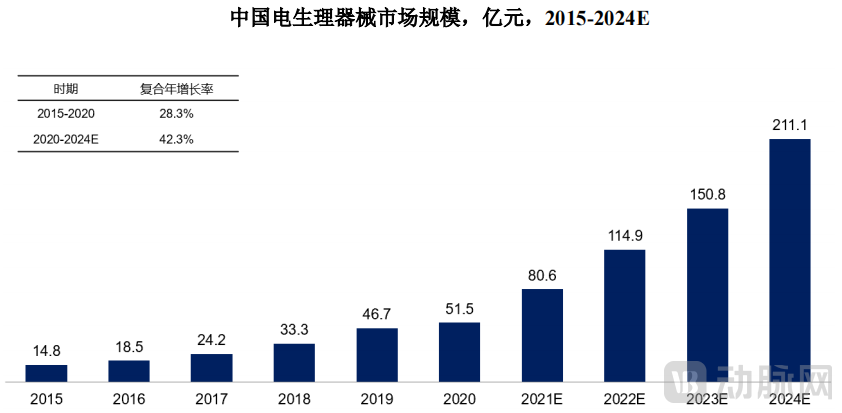
(Data source: MicroPort EP’s prospectus)
On the other hand, domestically produced products are continuously narrowing the gap with imported ones, and national policies encourage the use of domestic medical devices. Under these two factors, domestic electrophysiology devices are expected to occupy the major market in China, recreating the miracle of domestic substitution. Meanwhile, domestic electrophysiology companies are also expected to gradually grow during the process of domestic substitution, providing unlimited potential for the development of China's cardiac electrophysiology industry.
Tachyarrhythmias are characterized by a heart rate exceeding 100 beats per minute and primarily include sinus tachycardia, atrial flutter, atrial fibrillation, supraventricular tachycardia, ventricular flutter, and ventricular fibrillation. Patients with mild tachyarrhythmias may be asymptomatic, whereas severe cases can present with symptoms such as palpitations, dizziness, fatigue, nausea, and angina pectoris. More severe cases may lead to complications including heart failure, stroke, vascular embolism, shock, and sudden cardiac death, necessitating prompt medical intervention.
Clinical experts stated, "For conditions such as atrial fibrillation, atrioventricular reentrant tachycardia, ventricular tachycardia, and premature ventricular contractions, patients with frequent episodes or severe symptoms can be cured through catheter ablation. In the event of serious conditions such as ventricular fibrillation, ventricular flutter, and atrial flutter, timely electrical cardioversion is required; some patients may prevent sudden cardiac death by implanting an implantable cardioverter-defibrillator following electrical cardioversion."
Among these, catheter ablation is an etiologic treatment that can ablate the lesion and cure tachyarrhythmias; cardiac cardioversion and similar interventions are symptomatic treatments that do not eliminate the underlying cause, leaving patients at a substantial risk of recurrence.
Catheter AblationVascular access is obtained under local anesthesia, followed by the insertion of mapping catheters for electrophysiological study and localization of the pathological focus. Ablation energy is then delivered via an ablation catheter to destroy the targeted cells, thereby restoring normal sinus rhythm. A final electrophysiological study is performed to confirm the procedural success.
Cardiac CardioversionThis involves delivering a rated, brief, high-voltage, high-intensity current through the heart during severe tachyarrhythmias to instantaneously depolarize all or most myocardial cells, causing a transient cessation of cardiac electrical activity, after which the pacemaker with the highest automaticity resumes control of the cardiac rhythm.
Bradycardic arrhythmias are characterized by a heart rate of less than 60 beats per minute and primarily include sinus bradycardia, sinus arrest, sick sinus syndrome, and sinoatrial block. Currently, there is no comprehensive and effective consensus or strategy for the treatment of bradyarrhythmias.
Currently, cardiac pacing is widely used in clinical practice to treat bradyarrhythmias, aiming to prevent the risk of inadequate cardiac perfusion caused by bradycardia and reduce the likelihood of sudden cardiac death. For instance, conditions such as sinus arrest, sinoatrial block, and sick sinus syndrome are commonly managed with cardiac pacemakers.
Cardiac Pacing TherapyIt refers to the procedure in which a physician implants a cardiac pacemaker into a patient’s body, where the device delivers electrical impulses to stimulate the myocardium, thereby simulating or substituting for the normal cardiac electrical conduction pathway, ultimately enabling normal cardiac contraction and activity while maintaining a regular heart rhythm.
It is worth noting that in recent years, a new therapeutic approach—cardiac neuromodulation ablation—has emerged in clinical practice, which can effectively suppress bradyarrhythmias caused by autonomic nervous system imbalance. However, this procedure currently requires further support from evidence-based medical data.
A 2021 study by Wu Lingmin, Ding Ligang, Yao Yan, et al., titled “Therapeutic Value of Cardiac Neuroablation in Neurocardiogenic Bradycardia,” indicates that the autonomic nervous system influences cardiovascular physiological functions by maintaining a dynamic balance between the sympathetic and vagus nerves, playing a crucial role in regulating sinus rhythm and blood pressure.Sympathetic or vagal tone also significantly influences the occurrence of bradyarrhythmias.。
Cardiac NeuroablationThis is achieved by mapping and locating the cardiac ganglionated plexi and performing catheter ablation to inhibit vagal hyperactivity, thereby providing therapeutic effects on bradyarrhythmias caused by increased vagal tone.
As mentioned above, the field of cardiac electrophysiology primarily includes subfields such as catheter ablation, cardioversion, and cardiac pacing. Among these, catheter ablation is mainly associated with medical devices and consumables including ablation systems, ablation catheters, cardiac mapping systems, mapping catheters, electrophysiology stimulators, and electrophysiology recorders; cardioversion is mainly associated with implantable cardioverter-defibrillators (ICDs), manual external defibrillators, automated external defibrillators (AEDs), and wearable cardioverter-defibrillators (WCDs); and cardiac pacing is mainly associated with pacemakers.
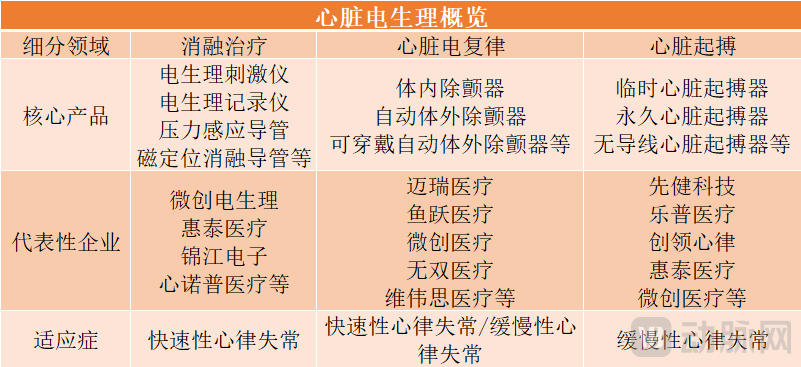
Catheter ablation primarily involves two major steps: first, identifying the critical lesion and the type of arrhythmia through electrophysiological study; second, eliminating the lesion via ablation therapy to achieve a cure for the arrhythmia.
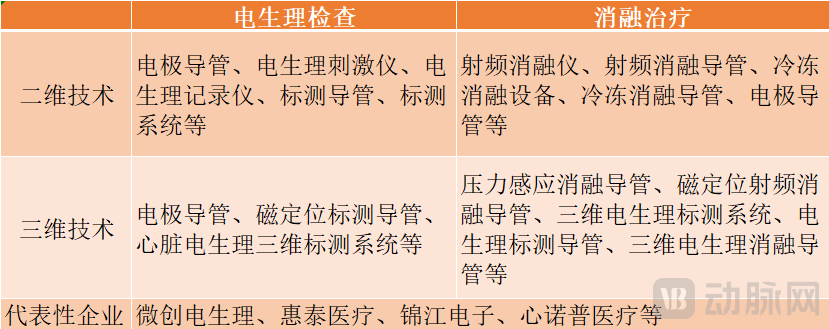
In terms of electrophysiological examination, clinicians use devices and consumables such as electrode catheters, electrophysiology stimulators, and electrophysiology recorders to determine the type of arrhythmia, and then identify key lesions using products such as mapping catheters and mapping systems.
Notably, electrophysiology studies have evolved to incorporate three-dimensional (3D) technology. By utilizing devices and consumables such as electrophysiological electrode catheters, magnetic location mapping catheters, and 3D cardiac electrophysiology mapping systems, this approach generates 3D anatomical images of the heart while displaying electrocardiographic information and identifying key lesion sites.
In addition, three-dimensional electrophysiological technology has also been applied to ablation therapy, whereby clinicians perform ablation based on three-dimensional anatomical imaging of the heart and precise localization of the lesion. Today, 3D catheter ablation is gradually surpassing 2D catheter ablation, becoming the mainstream procedure in cardiac electrophysiology interventions.
Previously, electrophysiological studies could only generate two-dimensional images, failing to accurately integrate intracardiac electrograms with the three-dimensional structure of the heart. Consequently, clinicians had to rely on their experience for mapping, which was associated with significant error, prolonged procedure times, and high technical difficulty. The application of three-dimensional technology enables physicians to visualize both the 3D anatomical structure of the heart and electrophysiological data, substantially reducing the complexity of mapping and ablation procedures while enhancing surgical precision.
A review of public information reveals that multinational medical device companies such as Johnson & Johnson, Abbott, Boston Scientific, and Medtronic have all launched three-dimensional electrophysiological mapping systems, capturing the vast majority of the domestic electrophysiology market. Meanwhile, Chinese enterprises including MicroPort EP, Huitai Medical, and Jinjiang Electronics are actively advancing the research, development, upgrading, or commercialization of their own 3D electrophysiological mapping products.。
For example, MicroPort EP’s 3D cardiac electrophysiology mapping system has been upgraded to its third-generation product, which received market approval in 2020. Huitai Medical’s 3D cardiac electrophysiology mapping system was approved by the National Medical Products Administration (NMPA) in January 2021. Additionally, according to MicroPort EP’s official website, the global number of procedures performed using its 3D cardiac electrophysiology mapping system surpassed 20,000 cases in May 2021.
In terms of ablation therapy, clinicians deliver various forms of energy via an ablation catheter to the focal areas within cardiac tissue, thereby destroying the origins of arrhythmias or abnormal conduction pathways and restoring normal cardiac rhythm.
Based on the type of ablation energy used, cardiac electrophysiological ablation therapy can be classified into radiofrequency ablation, cryoablation, and pulsed field ablation. Currently, radiofrequency ablation is the most widely used modality in clinical practice, followed by cryoablation. Pulsed field ablation was first applied to atrial fibrillation ablation by U.S. cardiac electrophysiology experts in 2018 and has since evolved; however, it still requires further support from evidence-based medicine.
From a mechanistic perspective, radiofrequency ablation technology utilizes radiofrequency current to generate thermal effects in diseased tissue, leading to gradual dehydration, cellular protein denaturation, and coagulative necrosis, thereby achieving curative treatment of arrhythmias. Cryoablation technology leverages the endothermic effect of refrigerant evaporation to remove heat from diseased tissue, lowering the temperature at the target site and blocking electrical signal conduction in specific areas, thus treating arrhythmias. Pulsed field ablation technology employs the irreversible electroporation effect of pulsed electric fields to induce apoptosis of diseased cells, ultimately achieving the treatment of arrhythmias.
Currently, multiple companies in China have launched electrophysiological ablation devices with varying energy modalities. These include radiofrequency ablation catheters developed by MicroPort EP, Huitai Medical, Lepu Medical, Medtronic Peak (Maidi Dingfeng), and Cossel Medical; cryoablation catheters developed by MicroPort EP; and pulsed field ablation systems for the treatment of atrial fibrillation developed by Jinjiang Electronics and Ruidi Biotechnology, among others.
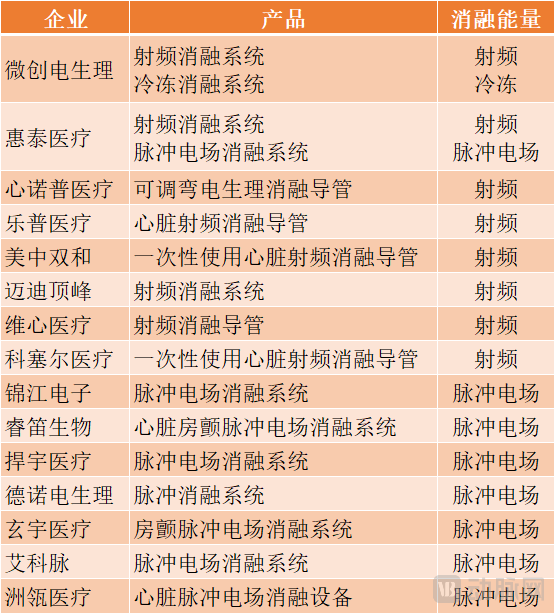
(Data source: Compiled from public information by VCBeat)
Furthermore, driven by the development and application of 3D technologies, numerous innovative devices have emerged for the ablation treatment of arrhythmias, such as 3D electrophysiological mapping systems, pressure-sensing ablation catheters, magnetically localized mapping catheters, and magnetically localized ablation catheters. Currently, domestic companies such as Huitai Medical and MicroPort EP are engaged in the research and development or commercialization of these innovative products.
Driven by 3D technologies and related innovative products, traditional 2D ablation procedures have evolved into 3D ablation procedures. It is reported that 3D ablation leverages a 3D electrophysiological mapping system to precisely localize lesions, visualize the heart’s three-dimensional anatomical structure and electrocardiographic data, thereby enabling more accurate contact of the ablation catheter with the target tissue and delivering more precise ablation therapy.
Huitai Medical stated, “Three-dimensional ablation procedures can shorten operative and X-ray exposure times, reduce procedure-related complications, help ensure the transmurality and continuity of ablation lesions, enhance ablation efficacy, and lower the postoperative recurrence rate of atrial fibrillation.”
Driven by the numerous advantages of three-dimensional ablation procedures, their utilization has been increasing year over year. According to the "Research Report on the Chinese Cardiac Electrophysiology Device Market," the number of 3D cardiac electrophysiology procedures rose from 71,000 in 2015 to approximately 164,000 in 2020, and is projected to reach 430,000 by 2024.
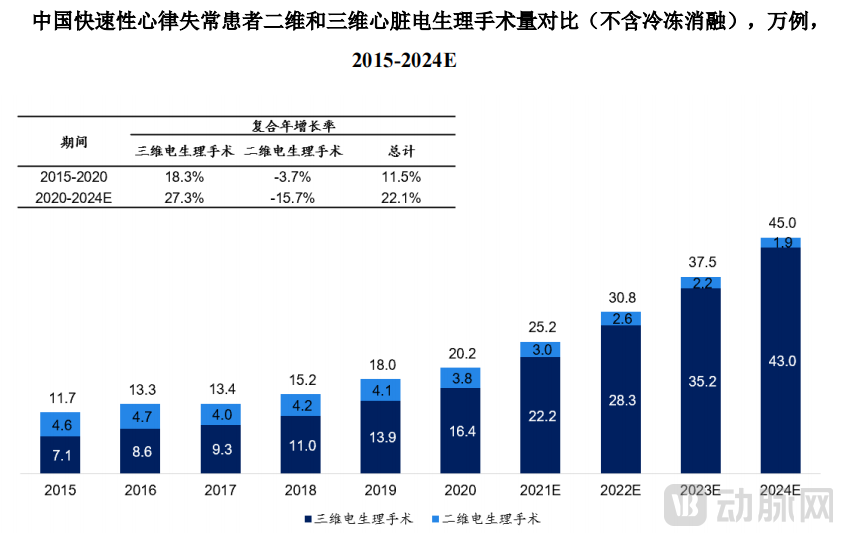
(Data source: MicroPort EP prospectus)
From a macro perspective, the domestic market for electrophysiology catheter ablation is still in its early stages of development. Only a small number of products from Chinese manufacturers have been approved for market launch, while the majority of companies’ products remain in the research and development or clinical trial phases.
Against this backdrop, the domestic catheter ablation market remains dominated by multinational medical device companies such as Johnson & Johnson, Abbott, Medtronic, and Boston Scientific, while Chinese manufacturers hold a relatively small market share. Nevertheless, domestically produced products that have already been launched are reaping the first wave of benefits. For instance, Huatai Medical’s electrophysiology segment reported revenues of approximately RMB 96.98 million, RMB 120 million, RMB 170 million, and RMB 160 million in 2017, 2018, 2019, and 2020, respectively. MicroPort Electrophysiology recorded revenues of approximately RMB 84.15 million, RMB 110 million, and RMB 140 million in 2018, 2019, and 2020, respectively.
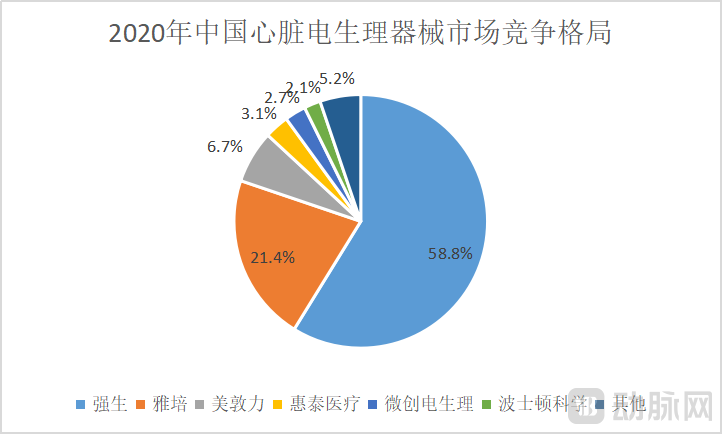
(Data source: Research Report on the Cardiac Electrophysiology Device Market in China)
For most domestic companies, it is currently imperative to accelerate product launches and formulate appropriate market strategies to navigate the complex and volatile market landscape. Although Chinese enterprises hold advantages in terms of policy support, localization, and centralized procurement, they still need to achieve breakthroughs in product development and technology, thereby increasing the localization rate through high-quality offerings.
From a micro perspective, the electrophysiology catheter ablation market will evolve toward three-dimensional procedural navigation and high-precision catheters.Three-dimensional electrophysiology procedures not only enable more precise ablation but also shorten the learning curve, helping to significantly increase procedural penetration rates and expand the market. High-precision catheters make surgeries more minimally invasive and accurate, reduce postoperative complications, lower surgical risks, and improve therapeutic efficacy and safety.
Currently, ablation catheters have integrated pressure sensing capabilities, providing physicians with real-time feedback on the contact force between the catheter and the endocardial wall. This facilitates ablation of target sites with appropriate force, thereby enhancing ablation precision. MicroPort EP believes that future catheter technologies will integrate multiple parameters—including impedance, power output, tissue temperature, and catheter stability—to achieve higher-precision ablation therapy.
Cardiac Cardioversion: In cases of severe arrhythmia, clinicians deliver a calibrated, brief, high-voltage electrical current through the heart to simultaneously depolarize all or most myocardial cells instantaneously. This induces a transient cessation of cardiac electrical activity, allowing the pacemaker with the highest automaticity to subsequently re-establish control over the cardiac rhythm.
Currently, companies in the cardiac cardioversion sector include those involved with implantable cardioverter-defibrillators (ICDs), manual external defibrillators, automated external defibrillators (AEDs), and wearable cardioverter-defibrillators (WCDs).

An implantable cardioverter-defibrillator (ICD) is a device implanted in the patient’s body that automatically identifies arrhythmias using artificial intelligence algorithms and delivers electrical pulses to stimulate the heart, thereby restoring normal rhythm. Additionally, the ICD features defibrillation and pacing capabilities, making it suitable for both tachyarrhythmias and bradyarrhythmias.
AED is a portable, automated medical device for external use that can automatically diagnose specific arrhythmias and deliver defibrillation shocks. WCD is a wearable medical device that has emerged in recent years; it can be carried on the person and enables automatic diagnosis and electrical defibrillation.
Currently, the domestic niche market for cardiac cardioversion is predominantly occupied by overseas companies such as Medtronic, Abbott, Boston Scientific, and ZOLL Medical. However, Chinese enterprises including Mindray Medical, Yuwell Medical, Jiuxin Medical, MicroPort Medical, Wushuang Medical, ViewRay Medical (Weiweisi), and Maibang have also developed automated external defibrillator (AED) products, with multiple domestically produced AEDs already launched and commercially available. Furthermore, innovative products such as implantable cardioverter-defibrillators (ICDs) and wearable cardioverter-defibrillators (WCDs) are under development by companies like Wushuang Medical and ViewRay Medical, with related products having entered clinical trial stages.
In the specialized field of cardiac electrical cardioversion, AEDs, ICDs, and WCDs are poised to become the mainstream products in the market. The combination of “AED + ICD + WCD” not only addresses cardioversion needs in homes, public spaces, and hospitals, but also meets the requirements of patients with varying clinical conditions.
Among them, domestic enterprises have not only gained the confidence to compete with overseas companies in AED products, but have also made rapid progress in innovative products such as ICDs and WCDs.. For example, AED products launched by companies such as Mindray Medical, Yuwell Medical, Maibang, and Vivasys Medical have begun to compete with multinational medical device companies for market share, achieving certain results: Mindray’s 2020 annual report showed that its defibrillator sales volume increased by more than 30%; Yuwell’s 2020 annual report indicated that its AED product growth rate reached 20% year-on-year.
In the field of ICDs, Wushuang Medical has developed ICD products equipped with Bluetooth functionality. As for WCDs, ZOLL Medical’s WCD product is currently the only one approved for market launch globally, while the WCD product developed by the Chinese manufacturer Weiweisi Medical was approved by the National Medical Products Administration in 2021 and entered the special review procedure for innovative medical devices.
As can be seen, in the niche field of cardiac cardioversion, domestic companies are strong and progressing rapidly. Products such as AEDs have embarked on the path of localization, and related enterprises are entering a harvest period.
In addition, implantable cardioverter-defibrillators (ICDs) were included in the “First Batch of National Key Governance Lists for High-Value Medical Consumables” in 2020, subject to centralized national efforts to address issues such as inflated pricing. As policies like centralized volume-based procurement of medical consumables are progressively implemented, domestically produced ICDs will break the monopoly held by foreign manufacturers, sparking a new wave of localization in cardiac cardioversion technology.
Cardiac pacing primarily targets bradyarrhythmias, wherein an implanted pacemaker fully or partially replaces the heart’s electrical excitation and conduction to restore a normal rhythm.
Currently, the cardiac pacemaker market remains dominated by imported products. Medtronic, Abbott, and Boston Scientific hold market shares of 43%, 23.7%, and 17.8%, respectively, while Biotronik and the Sorin Group collectively account for 11.2%. Overall, imported products capture 95.7% of the domestic cardiac pacemaker market.
However, Chinese manufacturers such as LifeTech Scientific, Lepu Medical, Shanghai Leadheart Medical Technology, Huitai Medical, and MicroPort have multiple cardiac pacemakers in development or already commercialized, covering both temporary and permanent cardiac pacemakers. Meanwhile, multiple provincial alliances spanning 27 provinces across China have implemented centralized procurement of cardiac pacemakers, which has not only reduced the financial burden on patients but also supported the growth of domestic cardiac pacemaker enterprises.
Additionally,Cardiac pacemakers are evolving toward leadless designs, and domestic companies such as Dunbo Medical are developing leadless cardiac pacemakers, with the product poised to become China’s first leadless cardiac pacemaker.。
In addition, domestically produced permanent cardiac pacemakers also demonstrate strong competitiveness. For instance, MicroPort, in collaboration with the Sorin Group, has launched the smallest pacemaker currently available on the market, with a service life of 10–12 years.
With the innovative development of domestically produced cardiac pacemakers, their quality will gradually catch up with and even surpass imported products. Meanwhile, supported by factors such as favorable policies and localization advantages, domestic cardiac pacemaker manufacturers are poised to accelerate their growth.
Overall, the compound annual growth rate (CAGR) of electrophysiology medical devices from 2019 to 2024 reached 26.2%, surpassing other subsectors of the medical device industry and making it one of the fastest-growing segments. Amid this rapid industry expansion, domestic Chinese companies are poised to become a significant force in the global cardiac electrophysiology market.
Among them, companies such as MicroPort EP, Huipu Medical, Jinjiang Electronics, and Meizhong Shuanghe have already commercialized their products. They are among the fastest-moving players in China’s electrophysiology (EP) field and have kept pace with innovation trends by developing and laying out product portfolios related to 3D mapping-guided procedures. Meanwhile, innovative enterprises such as Ruidi Biotech, Wushuang Medical, Viwise Medical, and Dunbo Medical have positioned themselves in the next-generation products of the global EP industry, positioning them to take a proactive role in the competition for next-generation solutions.
Both industry veterans and emerging players have demonstrated compelling commercial prospects, which will draw the attention of investment institutions to the electrophysiology sector. The domestic electrophysiology market is expected to remain highly active in the capital markets in 2022.