

How Mayo Clinic Masters Both Clinical Excellence and Scientific Innovation at the Apex of Global Healthcare
Known to the world as “Medical Mecca“How ‘arrogant’ is the Mayo Clinic (Chinese name: ‘Mayo Medical International,’ formerly known as ‘Mayo Clinic’)? We can find the answer from three key dimensions.”
First is its influence. According to the global hospital rankings published by U.S. News & World Report,Mayo Clinic has ranked first for many consecutive years.。
Next is its revenue-generating capability. Using 2018 data as an example, Mayo Clinic’s annual revenue reached $12.6 billion, exactly double that of the Cleveland Clinic, which ranked second.is the only healthcare organization globally with annual revenue exceeding $10 billion。
Finally, there is its research capability. According to statistics, Mayo Clinic currently possesses nearly140,000 Medical Innovations, and it has achieved countless world firsts in the history of human medicine. The first intracardiac direct-vision surgery, the first total hip arthroplasty, and the first combined heart, lung, and liver transplantation were all performed here.
It can be said that Mayo Clinic possesses both world-class clinical capabilities and cutting-edge medical innovation technologies along with translational capacity.
But in fact, between these twocannot be simply equated, excellence in clinical capabilities does not necessarily equate to strong research prowess. As seen in most healthcare institutions worldwide, while they can ensure exceptionally high quality in clinical care, they often appear "stretched thin" in medical innovation and translation.Insufficient innovation capacity, low rate of achievement transformation, etc.These are their common ailments.
How, exactly, has Mayo Clinic achieved excellence in both clinical practice and research?
The “Three-Horse Carriage” Driving Mayo Clinic’s Medical Innovation
Mayo Clinic was founded in 1864 by British physician Mayo in Rochester, Minnesota, and was further developed by him together with his two sons and other like-minded physicians. At its inception, Mayo endowed the clinic with a great historical mission, namelyInspiring hope and promoting health through the integration of clinical practice, education, and scientific research.
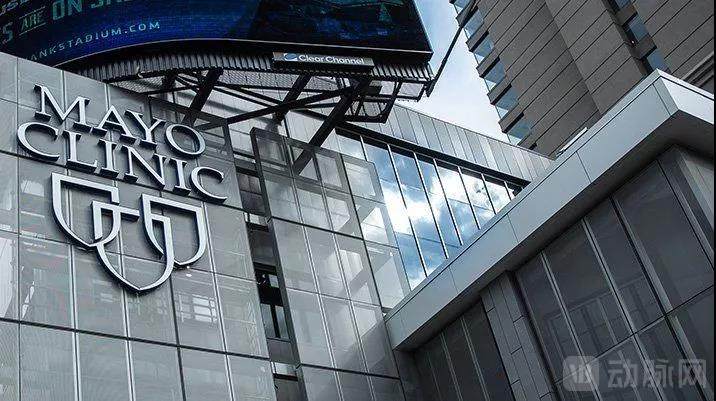
This mission is fully embodied in the Mayo Clinic logo. It is reported that its logo features three prominent shields, each representingClinical Services, Education, and ResearchThese are also regarded as the three core competencies of Mayo Clinic, serving as the “three pillars” that have truly propelled it to the pinnacle of the global healthcare institution hierarchy.
These three elements are, in fact, interconnected in a progressive manner. First, clinical practice can continuously uncover latent needs, thereby guiding the direction of scientific research; second is education. Mayo Clinic is"The World's Largest Training Base for Residents and Specialists", capable of training tens of thousands of top-tier medical professionals annually, which effectively alleviates concerns over the shortage of research talent and, to some extent, provides a source of sustained innovative vitality for research teams.
Finally, there is scientific research. It is reported that Mayo Clinic currently has a total of57 research centers and over 3,800 professional researchers, with annual investment in medical innovation research reaching as high asHundreds of Millions of US Dollars, which enables Mayo Clinic to produce a large volume of cutting-edge research findings each year.
These achievements will continuously enhance Mayo Clinic’s clinical capabilities, creating a complete value chain that provides sustained momentum for medical innovation and ensures its enduring leadership in the industry.
As of now, Mayo Clinic has incubated140,000 Medical Innovation Achievements, and currently there are stillOver 12,000 Innovative TechnologiesCurrently in the research and translation phase.
Collaborative Efforts Pave the Way for Medical Innovation and Translation
It is undeniable that “Clinical-Education-Research"This incubation model offers significant advantages; however, successfully implementing it requires establishing a comprehensive and efficient operational mechanism, which constitutes the true core competency of Mayo Clinic in medical innovation and translation."
To advance medical innovation and commercialization, Mayo Clinic has established a dedicatedBusiness Development Department(Business Development), which is positioned as equivalent to the well-known Technology Transfer Center, but unlike traditional technology transfer centers, it is first and foremost aMultidisciplinary Communication Platform, which can help research teams stay abreast of the latest medical technologies and gain insights into evolving market trends.
In addition, the Business Development Department also serves as a bridge between the research team and the market, primarily manifested through its specially established “right-hand man,” namelyMayo Clinic Venture Capital(Mayo Clinic Ventures) andEnterprise Development Department(Corporate Development)。
Mayo Clinic Ventures (hereinafter referred to as MCV) is the gateway to Mayo’s intellectual property assets, which canDevelopment, Management, Protection, and LicensingMayo Clinic’s Innovative Technologies. Its core competencies are primarily reflected in the ability to evaluate and protect intellectual property, fully leverage technology funding, execute and manage licensing agreements, and ultimately facilitate the establishment of startup companies.
It is reported that these startups, which have undergone “rigorous multi-tier screening,” can not only gain access to Mayo Clinic’sIntellectual Property Licensing, it can also establish a long-term strategic partnership with Mayo Clinic and gain access toMillions of Dollars in Risk Growth Funds。
For the Mayo Clinic research team, they canDirect PassMCV Collaborates with External Enterprises, and commercialize medical research through MCV-driven research protocols, invention licensing, and consulting activities.
This series of initiatives has undoubtedly empowered startups during their growth phase. First, Mayo Clinic safeguarded the research team’s tangible interests in intellectual property, thereby boosting their motivation to a certain extent. Second, it provided substantial support in team building and angel funding, supplying the initial momentum needed in the early stages of these startups. Finally, Mayo Clinic continuously introduced market resources to the startups, facilitating collaborations with external enterprises to drive commercialization.
According to official statistics, by the end of 2020, there were a total of startups founded using Mayo Clinic’s innovative technologies.262 institutions, primarily concentrated in the two high-tech sectors of biopharmaceuticals and medical devices.
Taking Resoundant as an example, this is a company focused onMagnetic Resonance Elastography(hereinafter referred to as MRE), a globally leading medical device company. The company initially stemmed from a cutting-edge technology invented by Richard Ehman, a professor of medical research, and later underwentMCVIt was incubated into a startup and co-founded in 1995 by Professor Richard Ehman and Mayo Clinic.
Resoundant’s core technology is compatible with virtually any 1.5T and 3T MRI scanner currently on the market, and has been deployed globally1800on multiple MRI scanners,Philips Healthcare, GE HealthCare, Siemens Healthineersare all its long-term business partners.
It is worth mentioning that Resoundant’s successful global expansion would not have been possible without the efforts made by MCV behind the scenes. This indicatesMCVNot only can itBringing the Mayo Clinic research team’s new ideas to market and driving their monetization., beyond that, of greater social significance is its role in promoting the widespread adoption of new technologies from the world’s leading medical institutions, enabling patients around the globe to rapidly benefit regardless of location.
As forExternal Commercial Companies, they canBridging via MCVCollaborate with world-class physicians and secure licenses for technologies with commercial potential. Even more enticing is the fact that partner companies gain direct access to Mayo Clinic’s relevant data and information, placing them in a privileged position to lead in innovation and translation.
Another strong arm of the Mayo Clinic isCorporate Development Department, primarily responsible for Mayo Clinic'sStrategic Transactions, including but not limited to the evaluation, analysis, and development of new businesses, mergers and acquisitions, and equity investments.
Literally speaking, the Corporate Development Department resembles a financial advisor (FA), engaging primarily in finance-related activities. In reality, however, all its business activities and key focus areas are fundamentally built on supporting Mayo Clinic’s “three shields”: clinical practice, education, and research.
This is vividly reflected in its strategic layout. The Corporate Development Department primarily focuses on four key strategic areas: first,High-Value Opportunities, by expanding assets to develop groundbreaking therapies for patients, thereby delivering high value to Mayo Clinic; secondly,International Cooperation, through globalization, enabling more patients to access Mayo Clinic’s model of care in a variety of ways.
Third,Establishing a Laboratory, enabling Mayo Clinic to develop and implement comprehensive clinical diagnostics for people around the world; fourthly,Platform Development, helping to create a healthier world where everyone has access to personalized, predictive treatments.
In a sense, healthcare institutions inherently possess advantages in driving medical innovation and translation, as they are deeply embedded in clinical practice and equipped with robust core technical capabilities.
However, this has also become its disadvantage to some extent, overlyFocusing solely on clinical practice and technology itself often leads to a disconnect from market demands., making it difficult for the resulting products to be “grounded in reality”; most innovative technologies lack broad application prospects and ultimately fall into the “valley of death.”
Therefore, how to balance clinical practice and scientific research while fully leveraging their dual benefits is a challenging issue that healthcare institutions worldwide must currently confront. In this regard, Mayo Clinic has clearly paved a broad and promising path.However, how to draw lessons and apply them still depends on medical institutions themselves to “choose the good and follow it.”。