

Li Rui, Innovator in Medical Imaging: The Spring of Original Innovation Will Bloom After Domestic Substitution

BOHE Angel Fund
Pharmaceutical and Healthcare Angel Investment Fund
Preface: Innovation is the true force that transcends time, driving societal progress while documenting the transformations of each era. In recent years, we have observed a growing number of young researchers stepping out of their laboratories to dedicate themselves to the noble cause of medical innovation, bringing disruptive change to the market through technological advancements. They are the new generation of entrepreneurs. We believe that the next wave of transformation in medical innovation will be led by this group.
To this end, VCBeat has specially curated the “Young Entrepreneurs Speak” series. By engaging in close dialogue with young entrepreneurs at the forefront of innovation, we aim to thoroughly elucidate the underlying logic of their innovations, thereby providing inspiration and food for thought for the new generation of entrepreneurs just setting sail.
Today, we are introducing to youLi Rui, Deputy Director of the Center for Biomedical Imaging Research, Tsinghua University, his proprietary plaque imaging technology has brought new solutions to the clinical diagnosis and treatment of cerebrovascular diseases. The medical imaging company he foundedQingying HuakangNot only has it secured RMB 10 million in Pre-A financing from the Peppermint Angel Fund, but by integrating clinical practice with engineering, it has also translated multiple imaging technologies into products and solutions, gradually emerging as a leading enterprise in high-resolution magnetic resonance vessel wall imaging technology.
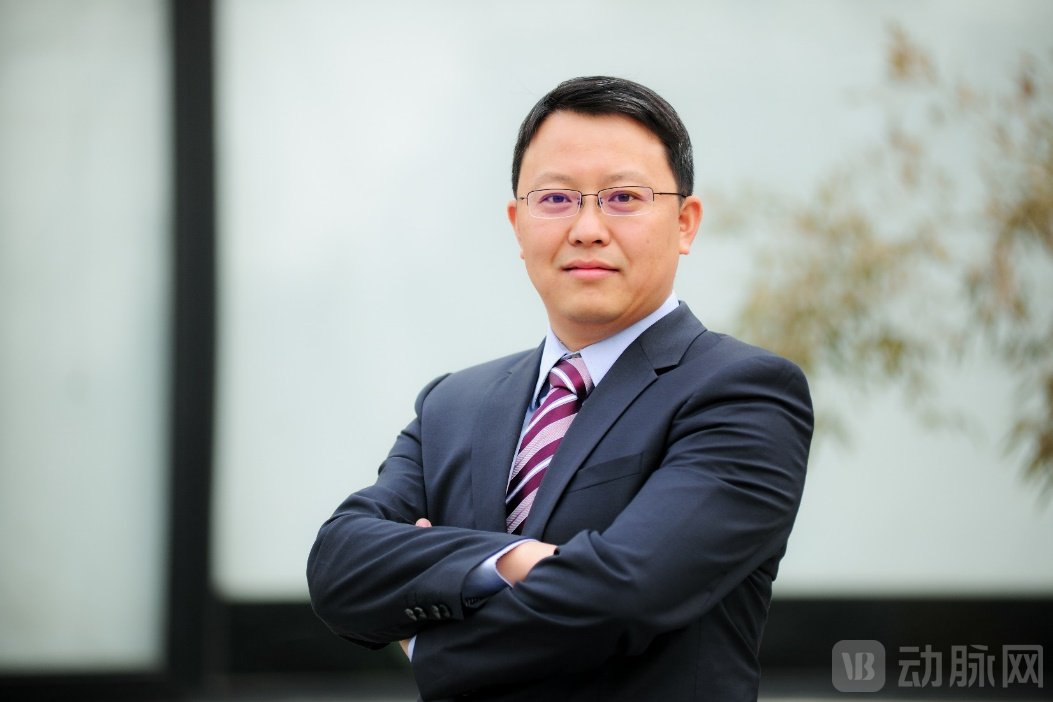
Researcher at the School of Medicine, Tsinghua University; Deputy Director of the Center for Biomedical Imaging Research
Dr. Li Rui specializes in magnetic resonance research integrated with advanced technologies such as artificial intelligence, focusing on the development of imaging techniques and clinical application studies for atherosclerotic plaques, aneurysms, pulmonary hypertension, intracranial venous disorders, and cardiac and cardiovascular diseases. Dr. Li’s technological achievements have been successfully translated into industrial applications, realizing a full-chain, closed-loop innovation model that originates from clinical needs and returns to clinical practice, serving as a paradigmatic example of the integration of medicine and engineering in the field of biomedical engineering.
From Image Processing to Imaging, from Research to Industry
Looking back on his career, Li Rui has continually navigated between scientific research and industry, a trajectory that seems to have destined him to play a role in the translation of scientific achievements into practical applications.
In 2005, Li Rui, who earned his Ph.D. from Tsinghua University, joined Wandong Medical and worked as an engineer for four years. Prior to this, he was primarily engaged in image processing research at Tsinghua University. Since image acquisition is a prerequisite for image processing, involving image capture techniques, Li Rui had been contemplating whether he should delve further into the field of imaging. He believed that only by having more diverse methods of image acquisition could richer information be obtained during the image processing stage.
During his four years at Wandong Medical, Li Rui was exposed toMagnetic Resonance Imaging—a more functional imaging technology. Compared with X-ray and ultrasound, magnetic resonance imaging is more distinctive in terms of both structural visualization and contrast. In 2009, Li Rui returned to the research community and conducted postdoctoral research at the University of Washington in Seattle, before returning to Tsinghua University in 2011.
At this time, a favorable wind for the translation of scientific and technological achievements began to blow quietly. In 2010, Tsinghua University established the Biomedical Imaging Research Center, aiming to leverage its strong engineering background to develop new imaging methods in the field of medical imaging. The goal was to transform clinical diagnosis and treatment pathways, improve the diagnostic and therapeutic capabilities for major diseases, and thereby reduce the burden these diseases impose on the nation and society.
Li Rui primarily focuses on imaging research in the field of cerebrovascular diseases. In China, cerebrovascular disease has become the leading cause of death. Clinically, there is an ongoing expectation for better imaging modalities that can play a role in both primary and secondary prevention, thereby enhancing the diagnosis and treatment of cerebrovascular diseases. In this process, Li Rui and his team have achieved some results in plaque imaging.
The Biomedical Imaging Research Center itself maintains scientific research collaborations with numerous clinicians. Through this process, Li Rui recognized the immense clinical value of plaque imaging technology:Collaborating clinicians are not only utilizing this technology in scientific research but are also actively exploring its clinical applications.
“Both the subjects and the clinicians had high expectations for this technology,” recalled Li Rui. It was precisely this realization that led him to understand that such advanced imaging technologies should not be confined to academic institutions or limited to a small number of Grade 3A hospitals, but rather should be widely disseminated. However, this goal cannot be achieved through scientific research alone; it requires a commercial entity.
In 2016, Li Rui founded Qingying Huakang., and transferred the relevant intellectual property to this company through equity contribution based on valuation, officially embarking on the journey from achievement transformation to commercialization. The establishment of Qingying Huakang also marks that Li Rui and his team have completed the process of advancing plaque imaging technology from scientific research to clinical trials and finally to a marketable product.
This is also one of the few instances of original innovation in China’s medical imaging field. Li Rui believes that the establishment of a technology transfer system in universities has greatly facilitated the conversion of research outcomes into commercial products, signaling that the springtime for original innovation is imminent.
Upon Completion of Domestic Substitution, the Era of Original Innovation Will Dawn
Innovation in China's medical device industry can currently be divided into two categories,One category is domestic substitution, and the other is original innovation.
In the early years, the high-end medical device market was long monopolized by overseas giants, with no domestic companies of sufficient scale. Against this backdrop, companies such as United Imaging and MGI Tech achieved import substitution, marking a milestone for the industry.
“However, once the substitution with domestically produced alternatives is complete, we will need to confront the next challenge: original innovation.”Li Rui stated.
When it comes to original innovation, a common pathway is “Lab to Market,” along which Europe and the United States have achieved substantial success. However, China’s medical device industry still exhibits relatively weak capabilities in original innovation. The transition from domestic substitution to original innovation is an inevitable path for China’s medical device industry to evolve from large to strong.
“To truly embark on the path of innovation and transform laboratory breakthroughs into actual products, thereby benefiting both patients and physicians,” he emphasized.
How to Achieve Original Innovation?
So, how should one pursue the path of original innovation, and how can it be achieved? Drawing on his own experience, Li Rui summarized four key insights:
1Technological R&D Must Address Genuine Clinical Needs
As Thomas Edison once said,“I identified what the world needed, then moved forward and invented it.”Innovation often arises from demand. However, not all demands are as real as the laws of physics; if innovators are misled by illusory demands, they may ultimately fall into the trap of “futile innovation,” hindering subsequent product translation and commercialization.
For “new-generation entrepreneurs” engaged in original innovation, the identification of needs is particularly crucial. Li Rui believes that genuine needs must address objective problems existing in clinical diagnosis and treatment processes, and should be uncovered within clinical settings.
“The types of patients physicians encounter daily, and the issues they encounter or identify during disease diagnosis and treatment, represent the most authentic clinical needs.” He added, “We develop imaging technologies specifically to address these needs, ultimately translating them into commercial products.”
It is understood that Li Rui’s team has maintained close collaboration with the leading medical teams in the field of cerebrovascular disease in China. In addition, the Biomedical Imaging Research Center is a university-level research platform established under the auspices of the School of Medicine at Tsinghua University. Clinicians are also key research personnel in Li Rui’s research group, participating in the entire process from scientific research to translation and product development.
“After the product is applied in clinical settings, we still need to continue conducting physician training and market promotion efforts, which also rely on the support of clinicians. Their participation is crucial,” stated Li Rui. Whether in hospitals or universities, the integration of medicine and engineering is gradually becoming a trend. Compared with working in isolation, this collaborative approach enables the joint identification and resolution of problems with clinicians, thereby accelerating the translation of research achievements into practical applications. Li Rui believes that a large number of industrialization projects based on the integration of medicine and engineering may emerge in the industry in the future.
2Let Professionals Handle Professional Matters
Another challenge faced by researchers starting businesses is the lack of experience in corporate operations.Specialization Matters: Researchers Stand at the Forefront of Technological Innovation, Yet Lack Experience in Business Operations
“It is important to find like-minded partners.”Li Rui candidly stated that, personally, although he was deeply involved in the company’s founding and establishment, his focus shifted to strategic direction and R&D innovation after the company began formal operations, leaving daily management to his partners. In his view, the involvement of professional managers can accelerate the process of translating research outcomes into practical applications, but researchers currently lack channels to connect with such professionals.
“At present, more people choose to have their students take charge of specific operational tasks, but these students also lack experience. Business operations require a substantial accumulation of knowledge and expertise,” he stated.
3Bridging Scientific Research and Entrepreneurship
Of course, for the new generation of entrepreneurs, starting a business also brings about a change in identity. “Everyone already has heavy responsibilities, so it is even more important to foster synergy within the team.” When discussing the balance between their roles as researchers and entrepreneurs, Li Rui stated this.
However, from another perspective,Rather than a balance between dual identities, it is more accurately described as a fusion of two identities.Researchers are inherently responsible for guiding students in their research endeavors, and the outcomes of these scientific projects may eventually be translated into commercial products. On one hand, enterprises can provide financial support to fund the research group’s studies and experiments; on the other hand, the group’s research findings can offer technical support and validation for the company’s product development.
“But there is a prerequisite: you need to find good partners who can jointly discuss the company’s strategic direction and effectively execute your ideas,” he emphasized again.
It is reported that Qingying Huakang has established a technology transfer platform to create a streamlined intellectual property commercialization process in collaboration with research institutes, fostering a mutually beneficial cooperative ecosystem. Looking ahead, the company will also build a product commercialization platform and partner with hospitals to establish a resource network. By jointly advancing research with hospitals to gather evidence-based medical data for its products, the company aims to position its standardized solutions as strong clinical necessities.
4Innovation Is Just the Starting Point
Finally, Li Rui also discussed the self-awareness of technology holders in the process of achievement transformation. The journey from scientific achievements to commercial products involves numerous stages and requires contributions from multidisciplinary talent. While innovation is a critical component of original innovation, it serves merely as the starting point rather than the entirety of the process.
“Before becoming a commodity, the value of innovation is not truly realized,” said Li Rui. In this process, technology holders must have a clear understanding of the value of innovation and strictly adhere to regulations throughout the entire transformation process. “All our inventions are service-related, so we need reasonable and compliant transformation processes; otherwise, we’re setting ourselves up for future problems,” he added. “The current mechanism for transforming achievements is already very good.”
Leveraging its technological advancements and precise understanding of market needs, Qingying Huakang achieved profitability from its inception. In August 2020, Qingying Huakang completed its first external institutional financing round, led by Peppermint Angel Fund. “Peppermint Angel Fund has invested in numerous startups founded by scientists. They have a clear understanding of the challenges scientist-entrepreneurs face and can provide us with valuable experience and resources,” said Li Rui when discussing the selection of investors.
Currently, leveraging industry-academia-research collaborations with the Biomedical Imaging Research Center at Tsinghua University and clinical practitioners, Qingying Huakang has successively launched several exclusive products and solutions in the field of medical imaging. Li Rui told VCBeat’s Orange Bureau that only a portion of the research outcomes has been commercialized to date. In the future, the company will continue to bring scientific achievements to market through such industry-academia-research partnerships, thereby creating more closed-loop product ecosystems.