

How Tencent, Baidu, Alibaba, and JD Are Advancing in Healthcare: A 2021 Year-in-Review
Armed with abundant resources, industry giants have carved out their own paths by leveraging stable ecosystems and commercial channels, as well as through extensive experimentation. Their entry has injected greater imagination and vitality into the industry.
However, the unique characteristics of the healthcare industry, such as low frequency and strict regulation, seem to dictate that internet practitioners cannot innovate without boundaries in this field.
In 2021, the introduction of policies such as the “Detailed Rules for the Supervision of Internet-Based Diagnosis and Treatment (Draft for Comments)” prompted the internet healthcare sector to return to a state of calm and standardization after a period of explosive growth. Both tech giants and industry pioneers have largely adjusted their development trajectories as the regulatory framework has become increasingly robust and the logic underlying industry development has grown clearer.
Baidu Health is deeply expanding into AI-driven drug research and development, fully leveraging its technological advantages. Tencent is focusing on informatization and connecting with pharmacies, continuing to deepen its “C2B” strategy. JD Health’s revenue continues to rise, closely integrating with the development of the real economy and accelerating the construction of specialized internet hospitals. Alibaba Health is accelerating strategic investments, acquiring Xiaolu TCM, and making multiple significant bets on digital healthcare, ushering in a new era of digital medicine for Alibaba Health.
Amid Industry Shifts, What Exactly Have Baidu, Alibaba, Tencent, and JD.com Been Doing in Healthcare Over the Past Year?
“Internet + Health” or AI Drug Discovery? Baidu Wants Both
Having been involved in the healthcare sector for many years, Baidu holds two key strategic assets: one is its content ecosystem, centered on its user connectivity capabilities, which forms the foundation accumulated over the past 20 years; the other is its AI-driven core competencies, representing the potential Baidu harnesses in the era of big data.
Baidu aims to build a content ecosystem through its search engine as an entry point, connecting users with doctors. Meanwhile, leveraging its technological capabilities, it is conducting in-depth exploration of the industry chain and driving the entire ecosystem toward service-oriented and personalized upgrades.
What can be clearly perceived is that,Baidu Health’s Significant Expansion into Content Ecosystems, Including Health Science Popularization, in 2021.
Not only has it partnered with Gushengtang Traditional Chinese Medicine to integrate all doctors from Gushengtang’s affiliated public hospitals into the Baidu Health platform, but it has also launched initiatives such as the “Doctor+ Plan” and the “Merchant Empowerment Plan,” continuously deepening its content ecosystem strategy.
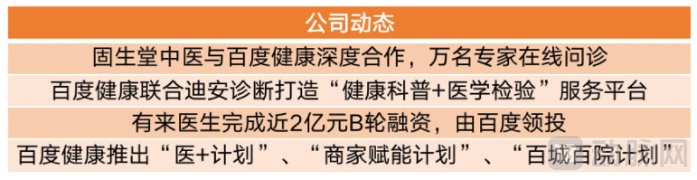
Last June, Baidu led the investment in Youlai Doctor, a medical science popularization and health education platform, marking a significant milestone in the construction of Baidu Health’s content ecosystem.After all, this RMB 200 million financing round is the largest investment in the healthcare content sector.
From a data perspective. As of October 2021, Baidu Health had established collaborations with more than 1,500 top experts in the industry and over 200 leading authoritative institutions. Baidu Health serves more than 100 million users daily, responds to over 200 million medical searches per day, and has indexed more than 500 million pieces of popular science health content on its platform.
As can be seen,Baidu Health is continuously strengthening its “content + service” ecosystem, which is primarily supported by a science popularization platform and a service platform. By precisely connecting authoritative resources with patients, it enhances its ability to acquire both patients and physicians, thereby building Baidu Health’s own closed-loop ecosystem in the broader health sector.
Once the closed loop is established, the internet hospital naturally becomes Baidu Health’s next strategic focus.
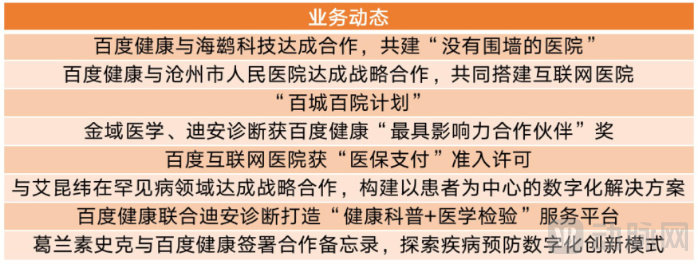
Baidu Health Internet Hospital’s Strategic Layout in 2021
Baidu Health clearly understands the core demands of future healthcare and has identified the right entry point. Given that medical care is a low-frequency need, extending into broader health sectors such as health management is a natural strategy to increase engagement frequency. However, merely addressing users’ superficial and singular needs, without leveraging content to profoundly reshape their understanding, makes it difficult to achieve genuine connectivity between patients and physicians.
Baidu, holding the two most critical resources of doctors and patients, is undoubtedly playing a bigger game.
Leveraging traditional strengths for secondary development is a standard practice among major internet companies; to break through, enterprises must demonstrate their core competitiveness.
On one hand, leveraging its existing technological strengths, Baidu has entered the booming field of AI-driven drug discovery by founding BiotoLife, an AI-based new drug R&D company. On the other hand, on the supply side, Baidu Health is empowering physicians with comprehensive solutions, capitalizing on its leading AI capabilities and refined operational expertise.
In 2021, Baidu leveraged its AI technology to strategically focus on the biopharmaceutical sector.
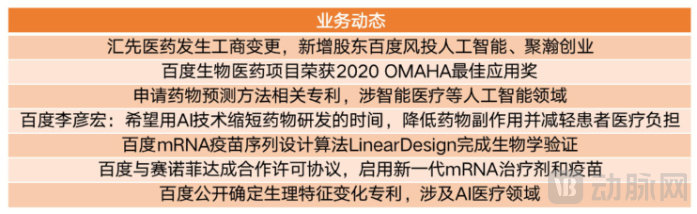
Baidu Health's 2021 Strategic Layout in Biopharmaceuticals
Not only that,Of the 11 investment and financing deals initiated by Baidu last year, seven were related to the biopharmaceutical sector, with BioMap also making frequent moves.
Robin Li has publicly stated his hope to leverage AI technology to shorten drug development timelines, reduce adverse drug reactions, alleviate the medical burden on patients, and create more possibilities for every life.
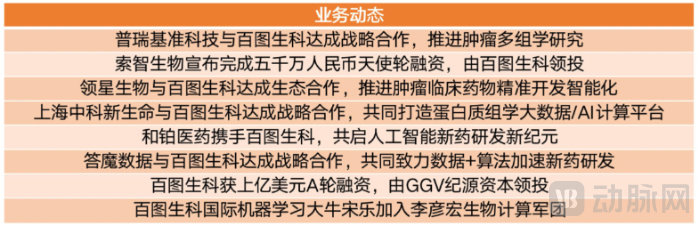
2021 Strategic Layout of BioMap
In light of BioMap’s initiatives in 2021, it can be observed thatIn the biopharmaceutical sector, Baidu is leveraging its robust computing power and algorithm development capabilities to rapidly expand its operational boundaries and penetrate deeply into the field of AI-driven drug discovery through extensive collaborations with biopharmaceutical companies.
By reviewing BioMap’s key developments in 2021, we have identified several keywords: data accumulation, precision medicine, and autoimmune diseases.
AI capabilities are naturally Baidu’s strength, but as a newly established company, it may be difficult to surpass traditional pharmaceutical companies in data accumulation in the short term.Therefore, what Baidu needs to do is achieve mutual empowerment through collaboration: empowering pharmaceutical companies with its technological capabilities, while leveraging the data assets and specialized expertise of these companies to enhance its own capabilities.
Thus, in the collaborations between Baidu’s BioMap and Damo Data, Lingxing Biology, and Purui Benchmark Technology, we can see Baidu transitioning from independence to symbiosis, achieving rapid development through mutual empowerment.
It is not difficult for Baidu to leverage its AI technology to achieve a leapfrog advantage in new drug development.
In 2021, BioMap secured over $100 million in Series A financing, less than a year after the biomedical platform company was founded.However, the pharmaceutical industry has long moved beyond the development logic of the traditional internet era. In the field of biomedicine, Baidu must consciously regulate the pace of new drug development and the intensity of competition. To establish a firm foothold in the healthcare sector, it was essential to identify in 2022 a management model aligned with the pace and underlying logic of medical industry development.
Has Baidu Health made the right choice in re-entering the market after its previous exit? While a definitive answer may not yet be available, this internet giant has certainly found its own direction and is making concerted efforts to transform the traditional model of doctor-patient matching.
Digitalization, Connected Pharmacies... Tencent Continues to Deepen Its “C2B” Strategy
In the medical field, Tencent has an ambitious vision—connectivity.
Six years ago, when discussing Tencent’s strategic vision, Ma Huateng stated, “In the process of ‘Internet Plus,’ Tencent’s role is to ‘connect everything.’” This philosophy has naturally extended to Tencent’s initiatives in the healthcare sector. But how exactly should this seemingly ambitious concept of “connecting everything” be implemented and realized?
From today’s perspective, Tencent’s official launch of the medical and health module on the WeChat Pay interface (commonly known as the “WeChat 9-grid”) in 2020, which provided healthcare services to over one billion users, can be regarded as its first step in implementing this strategic approach. Perhaps at that time, Tencent had already formulated the core strategy for tackling the challenges in this healthcare journey—“C2B.”
What Tencent needs to do now isBy driving deep industry integration through the “C2B Dual-Wheel Drive” strategy, with users and the industry as its two pillars and electronic health cards, electronic medical insurance vouchers, medical consultation aids, and popular science medical information as its four bridges, it constructs a “Two Pillars, Four Bridges” digital healthcare framework, ultimately realizing its vision of “connecting everything” in healthcare.
Its ace card is WeChat, the “connector” with over a billion users.
“Tencent Health” mini-program has connected with over 3,000 public hospitals across China; its vaccine services are available in 70 cities nationwide, covering more than 7,200 vaccination institutions. Through WeChat’s connectivity, electronic health cards have been rolled out in 21 provincial-level administrative regions and adopted by more than 2,400 hospitals, enabling a single QR code for seamless access to medical facilities, healthcare services, and health management.
Through Tencent's business performance, it is clearly evident thatOver the past year, Tencent has been leveraging WeChat as its foundation to unlock the medical potential embedded within its social media ecosystem. By harnessing the power of its platform to enhance the accessibility of healthcare services and transferring its highly mature capabilities into the medical sector, Tencent is constructing a robust “healthcare” edifice.。
On one hand, Tencent shortens the path for users to access services through touchpoints such as Official Accounts and Mini Programs on its WeChat platform. On the other hand, it leverages this connectivity to link medical institutions, facilitating local health administrative departments in issuing electronic health cards to healthcare facilities and promoting interoperability among medical institutions.

Over the past year, Tencent’s product launches—ranging from the “WeChat Electronic Health Card Open Platform 3.0” to “Medical Insurance WeChat”—have underscored the internet giant’s healthcare ambitions to extend its reach into the government (G-end) and business (B-end) sectors.
Tencent is leveraging its technological capabilities to facilitate the digital transformation of hospitals. By building on its user connectivity and technical strengths, it has established various user service touchpoints—including Official Accounts, Mini Programs, self-service kiosks, and service windows—and integrated three key scenarios: medical care, health management, and public health.

Tencent Healthcare’s Self-Built Business in 2021 (Compiled from Relevant Information)
In October last year, Tencent launched its emerging product, the “Smart Pharma SaaS Solution,” to strengthen its presence in the pharmaceutical sector.
Compared with Tencent’s extensive previous initiatives in medical services, hospital management, and health insurance, the launch of its “Smart Pharmaceutical SaaS Solution” marks a significant stride in the healthcare sector. This initiative serves as a crucial piece in completing Tencent’s internet healthcare ecosystem, effectively filling the gap in its pharmaceutical e-commerce landscape.
As internet healthcare matures, pharmaceuticals are poised to become one of Tencent’s key strategic focuses this year, with WeChat Mini Programs serving as the lever to rapidly reach pharmacies.
After all, WeChat not only provides a payment gateway but also enables integration with Official Accounts, facilitating user sharing and other functionalities.Leveraging the WeChat ecosystem, Tencent can capture the traffic of 1.1 billion users first and, on this basis, further empower new retail pharmacies through a series of strategies to build a pharmaceutical e-commerce ecosystem.
On the one hand, its deployment of electronic health cards and WeChat-based medical insurance services has helped further refine this ecosystem, enabling users and merchants to complete medical insurance reimbursements entirely through the WeChat social platform.
On the other hand, Tencent is leveraging the SaaS model to onboard private hospitals, specialized hospitals, clinics, and pharmacies.Last January, Tencent officially launched the “Xinglin Initiative,” extending an olive branch to partners in the healthcare sector, including health IT vendors, ISV service providers, designated medical institutions and pharmacies under the national health insurance scheme, and pharmaceutical companies. By collaborating with firms such as Yidu Cloud, Novartis Health, and Eli Lilly China to expand its healthcare ecosystem channels, Tencent has taken a critical step in its strategy to strengthen grassroots healthcare informatization.
Looking back at 2021, Tencent’s healthcare initiatives may have appeared fragmented, but they were in fact consistently aligned with its “C2B” strategy. Leveraging WeChat as a massive “connector,” the tech giant sought to set a “flywheel” in motion. In the future, by capitalizing on advantages accumulated through investments, partnerships, and in-house development, Tencent is poised to expand into broader frontiers of innovation.
Accelerating Internet Healthcare Expansion: JD Health Remains Committed to Strengthening and Deepening Its Medical Services
In 2021, JD Health released its interim results announcement. In the “Management Discussion and Analysis” section, a noteworthy statement was made: “As a subsidiary group of JD.com, JD Health is also rooted in, grows from, and serves the real economy. Compared with the traditional internet ‘platform model,’ it differs fundamentally in terms of development direction and business philosophy.”
From this perspective, making internet healthcare “substantive and in-depth” has become the core of JD Health’s future development.
Guided by this strategy, JD Health has divided its operations into two segments: retail pharmacy and online medical and health services. By leveraging its self-built retail pharmacy business and supply chain capabilities, the company continues to expand the scope of its online medical and health services.
Through various online-to-offline integrated physical business formats, including JD Pharmacy, JD Health Internet Hospital, and alliance pharmacies, as well as its own supply chain connecting numerous upstream, midstream, and downstream entities in the industry—such as industrial manufacturers, medical institutions, offline pharmacies, medical aesthetics clinics, and dental clinics. Meanwhile, it continues to make substantial investments in businesses serving the real economy, promoting the deep integration of digital technologies with the real economy.
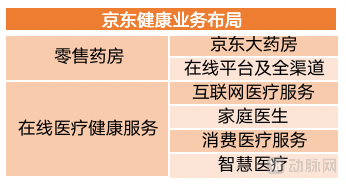
JD Health's Business Layout
Created by VCBeat
Starting from JD Health’s strategic positioning and reviewing its business activities over the past year provides a clearer understanding of the company’s development trajectory.
Retail pharmacy business is the main source of JD Health's revenue and also the core of its operations.
As of June 30, 2021, JD Health’s retail pharmacy had offered more than 400 million SKUs. This extensive SKU assortment has given JD Health a differentiated advantage over other e-commerce platforms and further helped it achieve economies of scale in pharmaceutical e-commerce. Leveraging its strong e-commerce DNA, JD Health has turned its broad SKU selection and supply chain system into its greatest competitive advantage.
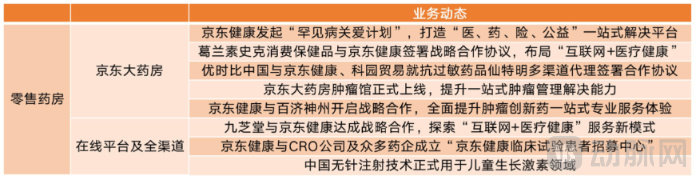
JD Health's 2021 Retail Pharmacy Business
In 2021, JD Health entered into strategic partnerships with UCB, GlaxoSmithKline, BeiGene, and Jiuzhitang.
These initiatives include serving as the national channel distributor for UCB’s anti-allergy medication Zyrtec; collaborating with GlaxoSmithKline on the “Internet + Healthcare” strategic layout; and partnering with Jiuzhitang in areas such as retail, supply chain development, and “Internet + Medical Services.” Additionally, JD Health has established the “JD Health Clinical Trial Patient Recruitment Center” in collaboration with CRO companies and pharmaceutical manufacturers to accelerate and enhance the efficiency of new drug development, thereby further optimizing services to expedite the approval and market launch of new drugs.
On the other hand, JD Pharmacy is also accelerating the expansion of its portfolio of specialty medications, such as those for rare diseases.
Through the collaboration between JD Health and pharmaceutical companies, we can seeJD Health has expanded its business scope beyond merely assisting merchants with online marketing. By establishing a supply chain network that encompasses industry-leading pharmaceutical companies and health product suppliers, it has further developed diverse forms of collaboration with enterprises, thereby empowering businesses, the industry, and itself.
Looking inward, whether it is the retail pharmacy-related business or the online healthcare services business,JD Health has long extended its “tentacles” into the “internet healthcare” sector by leveraging its early-established supply chain network.
JD Health’s mature supply chain has naturally laid a solid foundation for the development of internet healthcare.
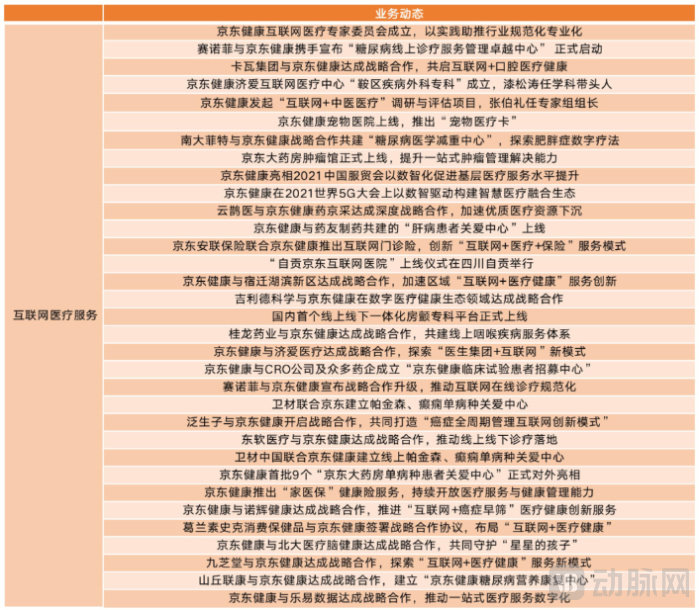
According to incomplete statistics, there were approximately 33 news items in the past year showing a strong correlation between JD Health and internet medical services.The importance of internet healthcare operations to JD Health is self-evident. Areas such as traditional Chinese medicine diagnosis and treatment, management of chronic diseases and chronic infectious diseases, oncology management, early cancer screening, atrial fibrillation, brain health, and veterinary hospitals are all part of JD Health’s strategic roadmap.
JD Health initially entered into a strategic partnership with Leyi Data to promote the digitalization of one-stop medical services. Subsequently, it has frequently collaborated with enterprises such as Shanqiu Liankang, Yuwell Medical, and Nanda Feite, while also establishing the “JD Pharmacy Single-Disease Patient Care Center” to advance JD Health’s management services for patients with chronic conditions, such as diabetes and obesity, as well as other single-disease categories.
In addition, over the past year, JD Health has successively partnered with Boehringer Ingelheim to establish China’s first online-to-offline integrated specialty platform for atrial fibrillation; collaborated with Eisai China to launch single-disease care centers for Parkinson’s disease and epilepsy; entered into a strategic partnership with Genetron Health to create an “internet-based innovative model for full-cycle cancer management”; signed a strategic cooperation agreement with New Horizon Health to jointly build innovative services for “Internet + early cancer screening”; and joined forces with Peking University Medical Brain Health to develop a one-stop pediatric rehabilitation platform.
An analysis of JD Health’s strategic initiatives in the internet healthcare sector over the past year reveals three clear trends: first, its internet healthcare business is continuously deepening its presence across multiple domains through partnerships; second, chronic disease management and early cancer screening constitute a significant proportion of its internet healthcare services; and third, JD Health is actively expanding into emerging areas such as brain science, chronic infectious diseases, veterinary care, and Traditional Chinese Medicine (TCM).
Based on this,JD Health’s Smart Healthcare Initiative prioritizes city-level projects, leveraging this approach to integrate its ecosystem and reach hospitals. In areas such as An District, Zigong, and the Hubin New Area of Suqian, JD Health has already deployed its internet healthcare capabilities at the city level.
Based on JD Health’s developments and revenue data over the past year, this tech giant is entering the healthcare sector by leveraging its digital and e-commerce DNA. Its B2C business has already formed a self-contained ecosystem and become its primary source of revenue.
Today, JD Health is leveraging its robust B2C capabilities, supply chain, and medical service expertise to rapidly expand into multiple sectors through in-depth development. It is further extending its reach into offline operations, utilizing its B2C strengths to accelerate penetration into B2H (Business-to-Hospital) and B2G (Business-to-Government) segments. Meanwhile, by establishing offline hospital support systems in various cities and prefectures, JD Health is driving the development of local healthcare industry ecosystems, thereby solidifying and deepening its medical service offerings.
In fact, JD Health’s strategic path has always been clear: a digital-driven health management platform covering the full user lifecycle and all scenarios, with supply chain as the core and medical services as the key lever. Today, JD Health continues to accelerate the implementation of this strategic approach.
Acquisition of Xiaolu TCM and Accelerated Strategic Investments: Alibaba Health Places Multiple Bets on Digital Healthcare
As an Alibaba-affiliated enterprise, AliHealth naturally possesses a strong e-commerce DNA. This has enabled AliHealth to make significant strides in the pharmaceutical e-commerce sector since its entry and to continuously strengthen its pharmaceutical business layout during its development. By the end of the interim reporting period for 2021, AliHealth’s pharmaceutical e-commerce platform had served 25,000 merchants, an increase of 3,000 from six months earlier, with inventory exceeding 40 million SKUs, up by 7 million from six months prior.
Following the explosive growth of pharmaceutical e-commerce in 2017, Alibaba Health has deepened its pharmaceutical e-commerce services while closely tracking changes in the healthcare industry to continuously identify new opportunities. In 2018, Alibaba Health entered the internet healthcare sector, embarking on the development of an integrated online-to-offline internet-based tiered diagnosis and treatment system. In 2020, it ushered in the era of digital healthcare for Alibaba Health by strategically laying out digital infrastructure for the medical industry.
Although the pharmaceutical e-commerce business continues to occupy a core position in Alibaba Health’s ecosystem, an examination of Alibaba Health’s development trajectory and strategic layout revealsWe can still clearly perceive that the “Healthcare and Digital Services” segment, despite its relatively low absolute revenue, holds a particularly critical strategic position within Alibaba’s Health ecosystem.
In 2020, Alibaba Health’s net profit pulled back while its healthcare assets surged. After achieving profitability for the first time, Alibaba Health doubled down on digitalization, investing in six leading industry startups in 2021, including LinkDoc Technology, Genetron Health, and Xiaolu TCM. Data from Qichacha shows that since its first investment in Wanli Cloud in 2016, Alibaba Health has made only 19 investments, with one-third of them occurring last year.
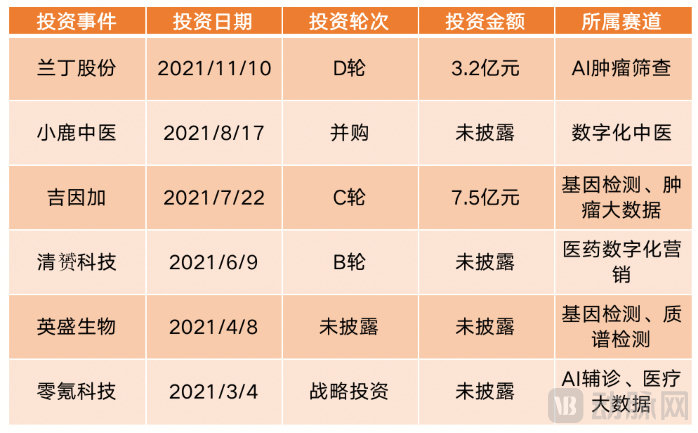
Alibaba Health’s 2021 Investment Events
Moreover, in 2021, Alibaba Health partnered with Xiaolu TCM to deepen its presence in the vertical sector of internet-based Traditional Chinese Medicine (TCM); collaborated with Mindray Cloud, Organon, Huirui Gene, and Bayer Healthcare to pioneer new models of pharmaceutical services; explored digital innovation in oncology hospital services with LinkDoc Technology; joined forces with Qingyun Technology, Xiniu Medical, ZhongAn Insurance, Eisai China, Deshengtang, and Boehringer Ingelheim to expand digital healthcare service offerings; and co-established a “Smart Elderly Care” platform with the Chinese Gerontological Society.
Furthermore, Alibaba Health works in close synergy with its Alibaba-affiliated counterparts, such as Alipay, DingTalk, and Cainiao Network, to support the digital transformation of the pharmaceutical industry, drug traceability, and convenient medical services. Through platforms including Tmall Medicine & Health, the Yilu App, and Xiaolu Chinese Medicine, it provides a wide range of services to more patients with chronic diseases.
By delving into the strategic rationale behind its partnership with Xiaolu Yiguan, strategic investment in Lingke, collaborations with ZhongAn and top-100 pharmaceutical companies, as well as joint ventures with Xinu Medical, Organon, and Deshengtang, one can clearly perceiveWhile strengthening its pharmaceutical business, Alibaba Health is continuously consolidating its layout in healthcare and digital services. It is expanding the reach of its B-side and C-side businesses, further enhancing its “medical-pharmaceutical-insurance” closed-loop capabilities based on its e-commerce platform.
Data supports this. In 2021, Alibaba Health disclosed platform data on chronic disease patients for the first time. Its self-operated “Chronic Disease Welfare Program”—which offers a suite of services including discounted high-quality medications, dedicated physicians, medication follow-ups, and patient education—has now reached 5 million chronic disease users on the platform, representing a 170% year-on-year increase.
A business line for “Internet + Chronic Disease Management” has been quietly established.
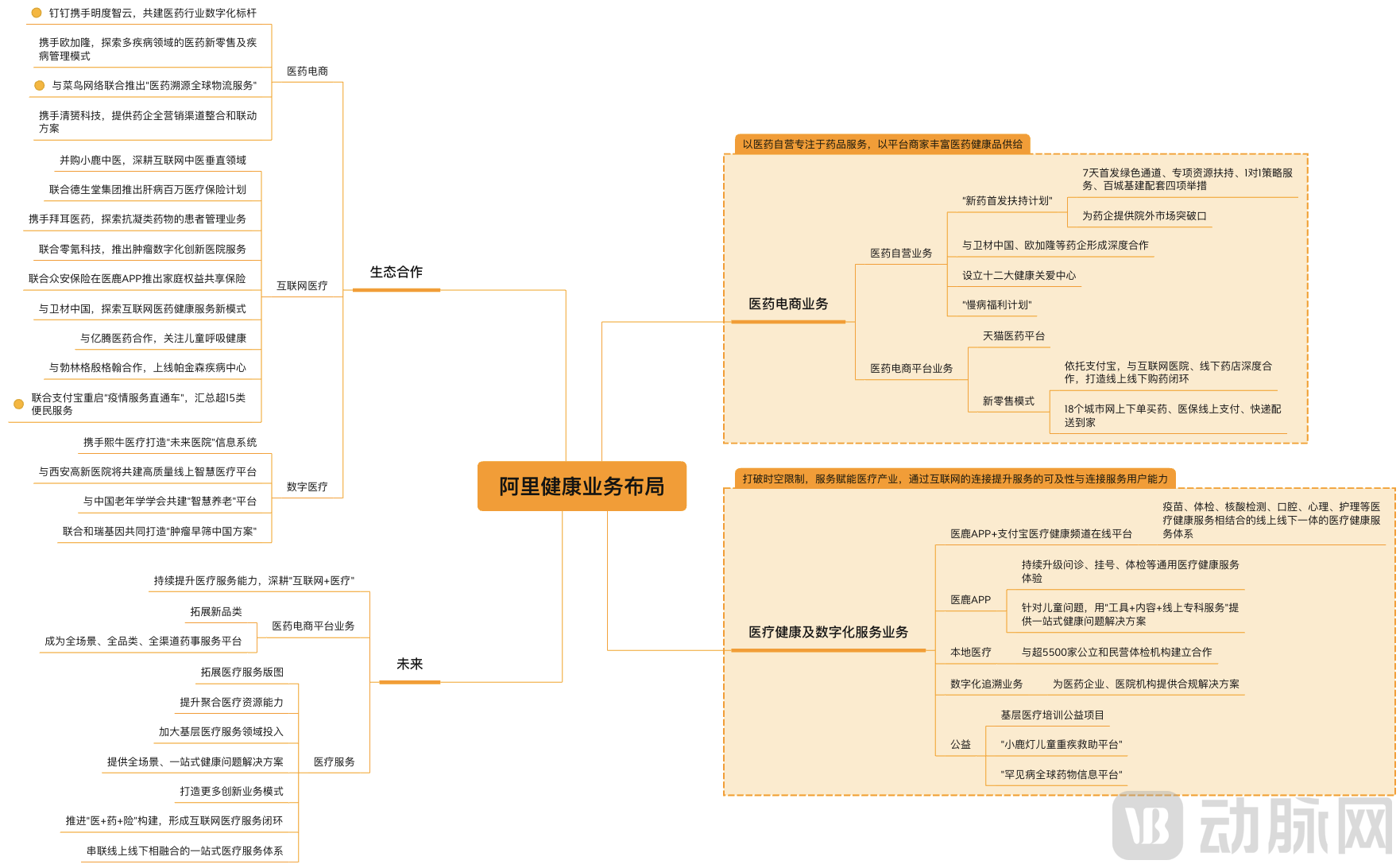
Alibaba Health's Business Layout
Compiled based on Alibaba Health (00241.HK)'s interim results announcement for the 2021 fiscal year and related materials
Last year, Alibaba Health disclosed platform data on chronic disease users for the first time and made a significant bet on digitalization, marking a major milestone in its progress in healthcare and digital services. However, looking back at Alibaba Health’s strategic layout in 2021, its pharmaceutical e-commerce business still holds significant importance within the Alibaba Health ecosystem.
In October 2021, Alibaba Health launched the “New Drug Launch Support Program,” introducing four concrete measures at once to consolidate its previous collaborations.
Under the new initiative, multiple new drugs from renowned pharmaceutical companies have chosen to make their debut launches on Alibaba Health Pharmacy. While addressing patients’ challenges in accessing novel and specialized medications—such as unavailability, difficult procurement, and improper usage—Alibaba Health has transformed its previous one-off collaborations with top-100 pharmaceutical enterprises into structured projects. This systematic approach resolves pharmaceutical companies’ marketing challenges and enables new drugs to reach needy patients more efficiently.
Meanwhile, the entry of ZhongAn Insurance has completed the final piece of Alibaba Health’s “healthcare-pharmaceuticals-insurance” ecosystem.
With the involvement of pharmaceutical companies and insurance institutions, solutions have been found for both the lack of service providers in chronic disease management and the generally insufficient duration of treatment (DoT) for drugs in China.
In summary, the core of Alibaba Health’s e-commerce segment lies in securing the primary point of entry into the out-of-hospital market for new drugs and expanding drug selection. It also aims to leverage its pharmaceutical care services to provide whole-course patient management. Underpinning its pharmaceutical e-commerce business are its internet healthcare and smart healthcare initiatives.
Since its listing in Hong Kong in 2014, Ali Health has undergone seven years of development, continuously iterating and innovating. By exploring new business models centered on user needs, it has progressed through three eras: pharmaceutical e-commerce, internet healthcare, and digital healthcare. During this process, Ali Health has quietly established an integrated online-to-offline one-stop healthcare service system.
As the focus of the future health industry expands from treatment to “treatment + prevention + wellness,” Alibaba Health, with its keen market insight, will certainly not miss this emerging opportunity.
Final Thoughts
Whether it is Baidu, Alibaba, Tencent, or JD.com, each leverages its own understanding of the healthcare industry to refine its corporate “closed-loop healthcare ecosystem.” Although these tech giants have differing interpretations of healthcare, common trends are evident: Tencent’s “digital-physical integration” and “C2B” strategy; JD Health’s commitment to making healthcare services “substantive and robust”; Baidu’s use of its search engine to bridge patients and physicians; and Alibaba’s heavy investment in digital healthcare through the establishment of internet hospitals. In all cases, their businesses are expanding beyond their initial online footprints to extend continuously into offline settings, thereby grounding healthcare delivery in tangible, in-depth practices.
Nowadays, public attention to health is gradually shifting from disease treatment to preventive care. Traditional models of medical consultation are continuously expanding into online platforms. In addition to focusing on their personal health, users are increasingly prioritizing health management for the entire family. Tech giants such as JD.com and Baidu are strategically deploying family doctor services, while Baidu and Tencent are emphasizing connections through popular science content. As healthcare transitions from a low-frequency to a high-frequency service, the broader health industry has become the next frontier for lucrative opportunities.
Baidu and Tencent leverage their traffic entry points to focus on connectivity, while Alibaba and JD.com use pharmaceutical e-commerce as a foothold, prioritizing the establishment of supply chain management. However, regardless of whether it is Baidu, Tencent, Alibaba, or JD.com, their ultimate goal lies in establishing connections with hospitals.
Tech giants entering the healthcare sector must identify their core strengths and establish alignment between these advantages and the medical industry. After all, healthcare differs from the internet industry, involving relatively low-frequency interactions. While leveraging inherent corporate DNA is important, it is even more critical to pinpoint the right direction, align with prevailing trends, sustain efforts, and undertake difficult yet correct initiatives.